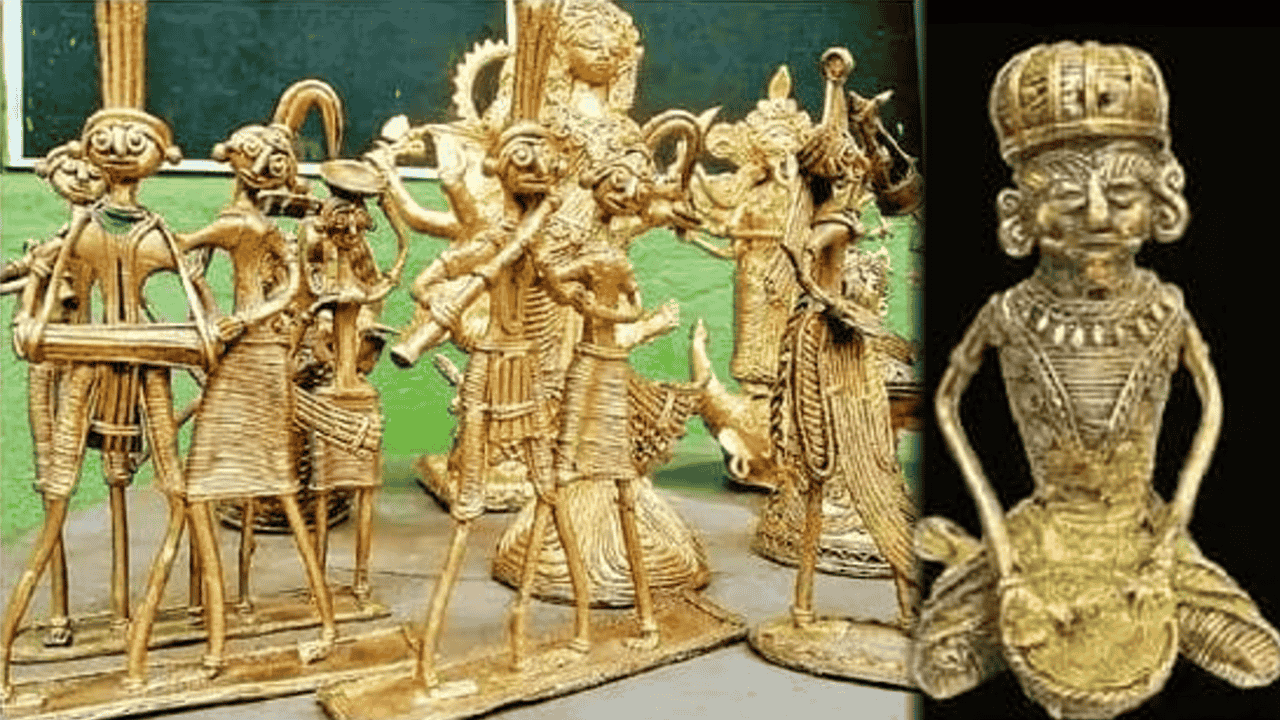
Introduction: Preserving India's Living Heritage Through Ancient Craftsmanship
Bikona Dokra village, located in Bankura district of West Bengal, stands as a living testament to India's extraordinarily rich and ancient handicraft traditions. This small village, barely 15 minutes from Bankura railway station, represents far more than a tourist destination—it embodies the preservation of one of humanity's oldest metalworking techniques, the lost-wax casting method, which dates back 4,000 to 5,000 years. For UPSC aspirants and competitive exam candidates, understanding Bikona Dokra provides crucial insights into India's cultural heritage, government preservation initiatives, and the intersection of tradition with modern tourism economics.
What is Dokra Art? Understanding an Ancient Technique
The Lost-Wax Casting Method
Dokra art (also spelled Dhokra) is a non-ferrous metal casting technique using the ancient lost-wax casting method. This intricate process represents one of the world's oldest metalworking traditions, with archaeological evidence tracing its origins back to the Mohenjo-daro period of the Indus Valley Civilization (around 4,000-5,000 years ago).
The lost-wax casting technique achieved international recognition when archaeologists discovered the famous Dancing Girl figurine from Mohenjo-daro, which was crafted using this very method. This ancient artifact serves as definitive proof that Indian artisans possessed sophisticated metalworking knowledge millennia before modern industrial civilization.
The Craft Process: A 13-Step Artistic Journey
The Dokra creation process is remarkably labor-intensive and requires exceptional skill:
Step-by-Step Process:
Clay Core Creation – Artisans first create a clay core in the rough shape of the final metal piece
Wax Layering – The clay core is covered with pure beeswax, combined with natural resin from the Agathis dammara tree and nut oil
Intricate Carving – Using traditional hand tools, artisans meticulously carve fine details and decorative patterns into the wax layer
Clay Mold Application – Multiple layers of clay are applied over the wax, forming a negative mold that captures every detail
Drain Duct Creation – Small holes are carefully left in the clay mold to allow the wax to escape during firing
Firing Process – The entire mold is heated in traditional furnaces; the wax melts and drains away (hence "lost"-wax), leaving a hollow cavity
Molten Metal Preparation – Brass or bronze (usually from scrap metal or recycled materials) is melted to extremely high temperatures
Pouring – The molten metal is carefully poured into the hollow cavity where the wax once existed
Cooling – The metal cools and solidifies, taking the exact shape of the original wax design
Mold Breaking – Once cooled, the outer clay mold is carefully broken away to reveal the metal casting
Core Removal – The inner clay core is extracted from the metal piece
Finishing – Artisans polish, smooth, and refine the metal surface using traditional tools
Quality Control – Each piece undergoes careful inspection for defects and artistic integrity
Key Materials Used:
Primary metals: Brass and bronze (non-ferrous metals)
Wax source: Pure beeswax with natural tree resin
Raw materials: Often recycled scrap metal, ensuring sustainable practices
Why Each Piece is Unique
A critical aspect of Dokra art is that each creation is entirely one-of-a-kind. The lost-wax process means the mold is destroyed during the casting process; therefore, no two pieces can ever be identical. This uniqueness makes Dokra artifacts highly valued by collectors and museums worldwide.
Bikona Dokra Village: The Cultural Epicenter
Location and Geographic Significance
Location Details:
State: West Bengal
District: Bankura
Distance from Bankura town: Approximately 2 km
Distance from Kolkata: Approximately 220 km
Accessibility: 15-minute drive from Bankura Railway Station
Bankura district itself is historically significant—its name derives from Raja Bir Hambir of the Malla dynasty, who founded the town in the medieval period. The district is part of the "Rarh" region of Bengal, characterized by red laterite soil and rich cultural traditions.
The Dhokra Damar Community
The artisans of Bikona belong to the Dhokra Damar community, an ancient metalsmith tribe believed to have originated in Chhattisgarh and gradually spread eastward through Jharkhand, Odisha, and West Bengal. The community's surname "Dhokra" directly refers to their hereditary profession—metal casting through lost-wax technique.
Community Characteristics:
Multi-generational knowledge transfer from master artisans to apprentices
Tribal traditions deeply integrated with artistic practice
Knowledge passed down through oral tradition and practical apprenticeship
Strong preservation of traditional methods despite modernization pressures
Government Initiatives: Supporting Bikona's Artisans
UNESCO Partnership and Rural Craft Hubs (2013-2014)
A transformative moment for Bikona occurred when the West Bengal government signed a Memorandum of Understanding (MoU) with UNESCO in 2013. This collaboration led to the establishment of Rural Craft Hubs (RCH) across West Bengal, with Bikona being one of the earliest locations selected.
Key Implementation Points:
Model: UNESCO-endorsed "Art for Life" development model
Initial Rollout: 10 craft locations in West Bengal, including Bikona (2014)
Expansion: Later expanded to 15 Rural Craft and Culture Hubs
Beneficiaries: Supporting approximately 20,000 craft families across West Bengal
Biswa Bangla Initiative: Market Linkage and Global Reach
The Biswa Bangla Corporation, West Bengal's official handicraft promotion body, has been instrumental in reviving Dokra sales and international recognition.
Biswa Bangla Interventions:
Quality Standardization – Expert consultation from National Metallurgical Laboratory, Jamshedpur, led to development of customized furnaces
Market Access – Dedicated showrooms in major Indian cities connecting artisans with both domestic and international buyers
E-Commerce Integration – Online platforms enabling direct global sales, eliminating middlemen
Brand Packaging – Professional packaging with artisan profiles and craft documentation
Geographical Indication (GI) Tag – Dokra handicrafts from Bikna and Dariyapur have received the prestigious GI tag, protecting the brand and ensuring authenticity
Trade Fair Participation – Artisans invited to major national and international handicraft fairs
Product Diversification – Innovation combining traditional Dokra with contemporary design (e.g., ceramic trays with Dokra handles)
Tourism Integration: "Linking Textile with Tourism"
While Bikona Dokra is not among the official eight craft villages selected under the central government's "Linking Textile with Tourism" initiative (which includes Raghurajpur in Odisha, Tirupati in Andhra Pradesh, Vadaj in Gujarat, and others), the West Bengal government has developed similar tourism infrastructure independently.
Tourism Development at Bikona:
Village Resource Centre – Facilities for visitor accommodation and cultural immersion programs
Live Demonstrations – Regular workshops where visitors witness the complete Dokra creation process
Annual Festival – November festival celebrating Dokra art with exhibitions and sales
Direct Artisan Interaction – Visitors can purchase directly from craftspeople, ensuring fair compensation
Products and Artistic Expression
Traditional and Contemporary Creations
Dokra artisans at Bikona create diverse products that blend ancient tradition with market demands:
Religious and Devotional Items:
Hindu deity figurines (Shiva, Kali, Lakshmi, etc.)
Buddhist and Jain religious sculptures
Temple decorative pieces
Ritual objects and religious jewelry
Traditional Craft Items:
Bankura horses – The famous terracotta-inspired brass version
Peacocks, owls, elephants, and other fauna representations
Human figurines depicting daily life scenes
Traditional measuring bowls and ceremonial vessels
Contemporary and Decorative Items:
Table lamps and lighting fixtures
Jewelry and ornamental pieces
Wall hangings and sculptures
Home décor items with tribal motifs
Modern Innovations:
Ceramic trays with Dokra metal handles
Contemporary figurines with traditional techniques
Fashion accessories blending tribal patterns with urban aesthetics
Artistic Motifs and Cultural Significance
Dokra pieces are distinguished by:
Primitive simplicity – Unrefined, authentic aesthetic
Folk motifs – Traditional tribal patterns and symbols
Enchanting designs – Intricate hand-carved details
Spiritual symbolism – Religious and cultural narratives embedded in designs
Unique textures – The casting process creates natural surface variations impossible to replicate in industrial production
Economic and Social Impact
Artisan Livelihoods and Income Generation
The revival of Dokra craft has transformed economic conditions for Bikona residents:
Employment Statistics:
Hundreds of families depend directly on Dokra production
Multi-generational apprenticeships providing skill-based employment
Women increasingly participating in value-added activities (finishing, packaging, marketing)
Tourism-related employment creating ancillary opportunities (guides, hospitality, retail)
Market Expansion and Export
Sales Channels:
Domestic: Biswa Bangla showrooms, handicraft exhibitions, e-commerce platforms
International: Export through online platforms, international craft fairs, museum acquisitions
Tourism Revenue: Direct sales to village visitors
B2B Sales: Supply to high-end interior designers, hotels, and institutional buyers
GI Certification Impact:
Protected brand identity for "Dokra from Bikna and Dariyapur"
Premium pricing justified through authenticity documentation
Legal protection against counterfeit products
Enhanced market credibility in international trade
Challenges and Future Sustainability
Contemporary Challenges
Despite revival efforts, Bikona's artisans face persistent challenges:
Economic Pressures:
Competition from machine-made metalware and cheaper alternatives
Inconsistent income due to seasonal demand fluctuations
High raw material costs (beeswax, metals)
Time-intensive production (individual pieces take weeks to months)
Middlemen reducing artisan profit margins
Skill Transmission Issues:
Youth migration to urban areas seeking steady employment
Younger generations viewing traditional crafts as economically unviable
Educational pressure favoring mainstream academic pathways over apprenticeship
Loss of oral knowledge transmission as families disperse
Market Volatility:
Dependence on seasonal tourism influx
Global economic fluctuations affecting international sales
Changing consumer preferences toward mass-produced items
Future Prospects and Government Support
The long-term sustainability of Bikona Dokra depends on:
Continuous government support through skill development and market access
Integration with national tourism circuits and heritage trails
School and college curriculum inclusion of craft heritage
Premium pricing recognition through improved branding
E-commerce adoption without compromising artisan dignity
Climate resilience and sustainable raw material sourcing
Why This Matters for Your Exam Preparation
1. Pattern Recognition in Current Affairs
Bikona Dokra exemplifies a recurring UPSC theme: the intersection of traditional knowledge, government policy, international cooperation, and sustainable development. Questions on Indian handicrafts have appeared in multiple UPSC examinations, including:
The ancient origins of Indian metalwork (Mohenjo-daro connection)
Government schemes for artisan support
GI tagging and its economic implications
UNESCO partnerships in heritage preservation
2. Integrated Knowledge for Mains Answers
Bikona Dokra serves as an ideal case study for Mains answers on diverse topics:
Preserving Cultural Heritage: How does India balance modernization with cultural preservation?
Rural Development Models: Can traditional crafts provide sustainable livelihoods?
UNESCO and International Cooperation: How do international organizations support heritage preservation?
Gender Equality: How are women artisans being empowered through craft initiatives?
Sustainable Tourism: How can tourism support rather than exploit local communities?
3. GS Paper II Relevance (Governance and Social Issues)
Government initiatives like Biswa Bangla, Rural Craft Hubs, and the "Linking Textile with Tourism" program demonstrate:
Effective implementation of cultural policies
Public-private partnership models
E-governance and market access solutions
Social entrepreneurship in action
4. GS Paper III Relevance (Economy and Infrastructure)
Dokra's revival illustrates:
GI tagging as intellectual property protection
Export promotion for handicrafts
Tourism as economic multiplier
Technology upgradation of traditional sectors
Informal economy formalization
5. Ancient History and Civilization (GS Paper I)
The lost-wax technique's connection to Mohenjo-daro civilization is crucial for:
Understanding Indus Valley craftsmanship
Appreciating the continuity of Indian traditions over millennia
Analyzing how archaeology reveals technological sophistication of ancient Indians
6. Current Affairs Integration
Recent developments to follow:
Government announcements on heritage preservation funding
New craft village initiatives
International handicraft trade agreements
Climate-sustainable practices in traditional crafts
Digital transformation in handicraft marketing
Quick Facts for Revision
| Aspect | Details |
|---|---|
| Craft Name | Dokra (Dhokra) – Lost-wax casting |
| Village Name | Bikona (also spelled Bikna) |
| Location | Bankura district, West Bengal |
| Age of Craft | 4,000-5,000 years (traced to Mohenjo-daro) |
| Primary Community | Dhokra Damar (tribal metalsmith caste) |
| Main Materials | Brass, bronze, beeswax, natural tree resin |
| Production Process | 13-step lost-wax casting method |
| UNESCO Partnership | Established 2013; Rural Craft Hubs created 2014 |
| GI Tag Status | Protected – "Dokra from Bikna and Dariyapur" |
| Government Body | Biswa Bangla Corporation (West Bengal) |
| Unique Feature | Each piece is one-of-a-kind |
| Access | 15 min from Bankura railway station; ~220 km from Kolkata |
| Annual Festival | November celebration of Dokra art |
| Export Status | International sales through e-commerce and trade fairs |
Conclusion: From Ancient Technique to Modern Opportunity
Bikona Dokra represents far more than a quaint village craft—it embodies the resilience of ancient knowledge systems, the power of government-community partnership, and the possibility of sustainable development rooted in cultural pride. For UPSC aspirants, it serves as a rich repository of interconnected concepts spanning history, culture, governance, economics, and sustainable development.
The 4,000-year journey of the lost-wax casting technique from the Indus Valley Civilization to modern-day Bikona demonstrates that preserving tradition is not about resisting change, but about ensuring that timeless knowledge guides contemporary progress. As India continues to develop economically, villages like Bikona stand as testament to the idea that cultural heritage and economic prosperity are not mutually exclusive—they are mutually reinforcing.
For your UPSC preparation, keep Bikona Dokra in your memory not as an isolated cultural tidbit, but as a comprehensive case study in heritage preservation, rural development, international cooperation, and sustainable livelihoods. The next time you encounter questions on Indian culture, handicrafts, or rural development, you'll have the depth of knowledge to craft sophisticated, nuanced answers that demonstrate genuine understanding rather than superficial memorization.
Master the threads of tradition, and you'll master the complexities of the Indian Administrative Services examination.
This article is part of Atharva Examwise's comprehensive current affairs coverage tailored for competitive exam aspirants. Subscribe to our platform for daily updated current affairs notes, detailed analysis, and exam-focused content.