Understanding K4: Bhutan's Fourth Druk Gyalpo
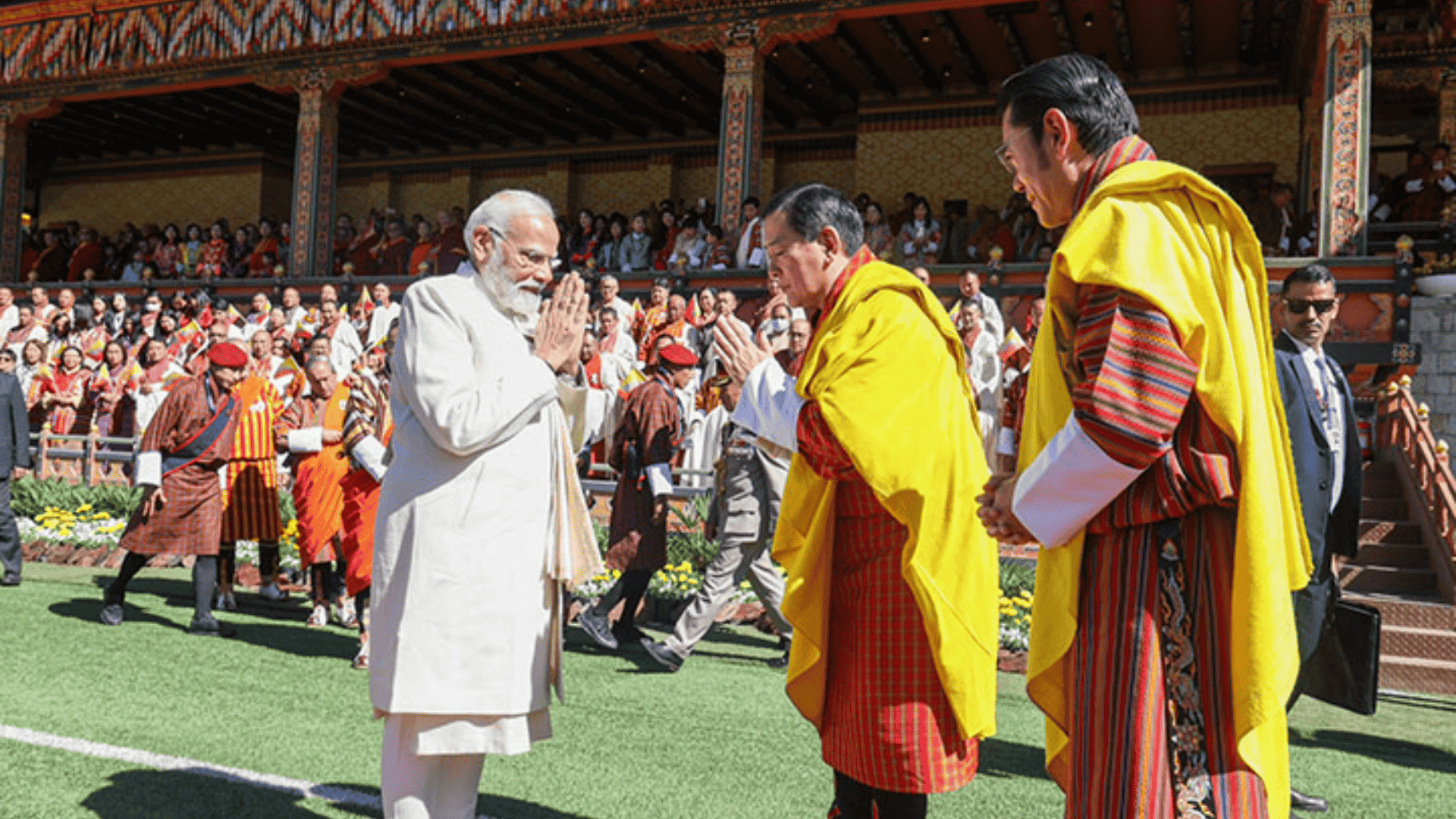
Jigme Singye Wangchuck, popularly known as K4, is Bhutan's Fourth Dragon King (Druk Gyalpo in Dzongkha language). On November 11, 2025, K4 celebrated his 70th birth anniversary, with Indian Prime Minister Narendra Modi attending the celebrations as a special guest. The visit underscores India's "Neighbourhood First Policy" and the deep-rooted partnership between the two Himalayan nations.
K4 ascended to the throne on July 21, 1972, at just 16 years of age, following the death of his father, King Jigme Dorji Wangchuck (the Third King). He ruled Bhutan as the Dragon King for 34 years until his abdication in 2006, making way for his son, Jigme Khesar Namgyel Wangchuck (the current Fifth King).
The Foundation Years: Building India-Bhutan Relations
Early Exposure to Governance and India Ties
K4 was well-prepared for his royal responsibilities. In 1971—a year before ascending the throne—his father appointed him as Chairman of the Planning Commission, a strategic move that exposed him to Bhutan's development governance. This role became instrumental in shaping his understanding of India's developmental model, as Bhutan's Five-Year Plans were modeled on India's framework, initiated under PM Jawaharlal Nehru in 1961.
Through this position, K4 developed crucial relationships with Indian leadership, particularly Prime Minister Indira Gandhi. His early diplomatic engagement laid the groundwork for one of the most exemplary bilateral relationships in the region.
The Ngultrum and Monetary Sovereignty
A pivotal early decision was K4's move to peg the Bhutanese currency (Ngultrum) 1:1 to the Indian rupee in 1974, after consulting with PM Indira Gandhi. This decision minimized foreign exchange risks for Bhutan and facilitated seamless day-to-day trade with India. Remarkably, this peg continues today, demonstrating the enduring nature of K4's strategic vision.
K4 also prioritized continuous engagement with key stakeholders—important leaders of Assam, West Bengal, Odisha, and senior government officials in Delhi—ensuring Bhutan maintained strong regional connections.
K4's Diplomatic Expansion: Opening Bhutan to the World
Despite deepening India ties, K4 pursued a balanced foreign policy, establishing diplomatic relations with numerous countries during his reign:
Bangladesh (1973) and Nepal, Kuwait (1983)
Maldives (1984)
European nations: Denmark, Norway, Sweden, Switzerland, Netherlands (1985)
Asian nations: Japan, Finland (1986); South Korea, Sri Lanka (1987); Thailand (1991); Australia (2002); Canada (2003)
Critically, K4 kept India well-informed about Bhutan's international engagement, including with its northern neighbor, China. When he initiated border negotiations with China in 1984, he took both PM Indira Gandhi and later PM Rajiv Gandhi into confidence, ensuring India's interests were protected.
SAARC Membership
K4 coordinated closely with PM Rajiv Gandhi during the establishment of SAARC (South Asian Association for Regional Cooperation) in 1985. Bhutan became one of the founding members, significantly enhancing its regional diplomatic profile and demonstrating that India supported Bhutan's broader integration into South Asian affairs.
The Energy Partnership: Hydropower as a Development Pillar
One of K4's most transformative contributions was building an unprecedented hydropower partnership with India, transforming it into the centerpiece of bilateral relations.
Major Hydropower Projects
| Project Name | Capacity | Year Signed | Year Commissioned | Significance |
|---|---|---|---|---|
| Chukha | 336 MW | 1974 | 1988 | First mega hydro-project; 60% grant, 40% loan model |
| Kurichhu | 60 MW | 1995 | 2002 | Powered eastern Bhutan; surplus exported |
| Tala | 1,020 MW | 1996 | 2008 | Largest joint project; signed long-term energy deal |
| Punatsangchhu-II | 1,020 MW | — | 2025 | Inaugurated during PM Modi's November 2025 visit |
The Chukha Hydropower Project, formally inaugurated by PM Rajiv Gandhi in October 1988 (with President R. Venkataraman in attendance), was revolutionary. It kickstarted power exports to India and contributed approximately one-third of Bhutan's internal revenue at its inception.
These projects exemplify a win-win cooperation model: Bhutan gains revenue and development infrastructure while India secures clean energy from a reliable partner.
Operation All Clear (2003-2004): Security Cooperation Under K4
K4's tenure witnessed a pivotal security cooperation operation that demonstrated India-Bhutan partnership at its strategic best.
The Threat: Militant Safe Havens
By the early 2000s, militant groups active in northeastern India—particularly ULFA (United Liberation Front of Asom), NDFB (National Democratic Front of Boroland), and KLO (Kamtapuri Liberation Organisation)—had established over 30-40 camps across southern Bhutanese territory. These groups used Bhutan as a safe haven to launch attacks into Indian territories.
Operation All Clear: The Response
In June 2003, the Bhutanese National Assembly passed a resolution authorizing military intervention. After failed negotiation attempts (October-November 2003), Bhutan issued a final ultimatum to the militants.
On December 15, 2003, K4—acting as Supreme Commander—personally led Operation All Clear, Bhutan's first military operation in 140 years. In close coordination with Indian National Security Advisor Brajesh Mishra, India sealed its border and provided logistical support.
Operation Outcomes
35 militant camps were destroyed within days
Approximately 485 insurgents were flushed out into India where Indian security forces arrested them
By December 25, 2003: ~120 militants killed; several senior ULFA commanders captured
By January 3, 2004: All observation posts dismantled; 500 AK-47 rifles and heavy weapons confiscated
This operation marked a watershed in bilateral security cooperation and demonstrated India's trust in K4's strategic judgment.
Democratic Transition and Constitutional Reform
K4 took a historic bold step by converting Bhutan from a hereditary monarchy to a constitutional monarchy and establishing democratic governance in 2008. This transformation was unique in the region and earned international recognition for Bhutan's commitment to responsible governance.
The 2007 Friendship Treaty
While K4 abdicated the throne in 2006, he remained instrumental in negotiating the 2007 India-Bhutan Friendship Treaty with PM Manmohan Singh. This treaty replaced the 1949 India-Bhutan Treaty of Friendship, which had stated that Bhutan would be "guided by India" in external affairs.
The 2007 treaty elevated Bhutan's status by:
Granting Bhutan full sovereignty in foreign policy decisions
Replacing the guidance clause with a mutual cooperation framework
Allowing Bhutan to import arms and weapons independently
Maintaining security cooperation through a modern framework
This reform reflected India's mature partnership approach—supporting Bhutan's sovereignty while maintaining strategic ties.
The "Guiding Hand": K4's Continuing Influence
After abdicating in 2006, K4 transitioned from formal kingship but retained significant influence over India-Bhutan relations. Senior leaders and officials from both nations' strategic establishments maintain regular engagement with K4, seeking his counsel on strategic matters of shared concern.
The Fifth King, Jigme Khesar Namgyel Wangchuck, values K4's wisdom, particularly on issues affecting both nations' security and development. K4 represents the institutional memory and deep understanding of India-Bhutan ties that transcends formal office—truly earning the sobriquet of Bhutan's "guiding hand."
PM Modi's November 2025 Visit: Continuing the Legacy
PM Modi's visit on November 11-12, 2025, to attend K4's 70th birthday celebration reaffirms India's commitment to the India-Bhutan partnership. During the visit, several significant achievements underscore the ongoing bilateral relationship:
Key Highlights
Participation in Global Peace Prayer Festival, reflecting India-Bhutan's spiritual bonds
Exposition of Sacred Relics of Lord Buddha from India at Thimphu's Tashichhodzong, symbolizing civilizational and spiritual ties
Inauguration of Punatsangchhu-II Hydropower Project (1,020 MW), a major energy milestone
Bilateral discussions covering energy, capacity building, connectivity, technology, defense, and security
PM Modi emphasized: "India and Bhutan enjoy exemplary ties of friendship and cooperation, rooted in deep mutual trust, understanding, and goodwill. Our partnership is a key pillar of our Neighbourhood First Policy and a model for exemplary friendly relations between neighbouring countries."
India-Bhutan Relations: By the Numbers
| Metric | Details |
|---|---|
| First Five-Year Plan Agreement | 1961 (under PM Nehru) |
| UN Membership | September 21, 1971 (128th UN member state) |
| Bhutan UN Delegation Led By | Prince Namgyel Wangchuck (K4's brother) |
| SAARC Founding Member | 1985 |
| Total Hydropower Capacity Target | 10,000 MW (joint vision) |
| K4's Interactions with Indian PMs | 12 Prime Ministers (Indira Gandhi to Manmohan Singh) |
| Indian Leaders K4 Interacted With | Indira Gandhi, Rajiv Gandhi, Atal Bihari Vajpayee, Manmohan Singh |
Why This Matters for Your UPSC Exam Preparation
Understanding K4 and India-Bhutan relations is crucial for multiple UPSC examination segments:
1. Current Affairs & International Relations
The India-Bhutan relationship exemplifies the Indian government's "Neighbourhood First Policy"—a recurring theme in UPSC papers. K4's diplomatic engagement model—maintaining strong India ties while pursuing independent foreign policy—offers insights into regional diplomacy relevant to questions on India's role in South Asia.
2. Security Studies & Strategic Affairs
Operation All Clear (2003-04) frequently appears in UPSC context questions because it demonstrates:
India-Bhutan security cooperation mechanisms
Cross-border coordination against insurgencies
The role of NSA in foreign policy execution
India's counter-insurgency strategy in Northeast India
3. Energy Security & Development
The India-Bhutan hydropower projects exemplify:
Clean energy cooperation as an alternative development model
Revenue-sharing frameworks between developing nations
Infrastructure development as a tool for bilateral cooperation
The Tala Project's role in India's power shortage mitigation
4. Governance & Constitutional Studies
K4's transformation of Bhutan from hereditary monarchy to constitutional democracy (2008) offers comparative governance perspectives relevant to UPSC optional papers and general studies on democratic transitions.
5. Exam-Relevant Keywords to Master
Neighbourhood First Policy
Druk Gyalpo (Dragon King)
SAARC founding membership
Operation All Clear
1949 vs. 2007 Friendship Treaties
Hydropower cooperation models
India-Bhutan security architecture
6. Map-Based Questions
Be prepared for questions on:
Bhutan's geographic location (eastern Himalayas)
Border with India (Assam, Meghalaya, Mizoram, Arunachal Pradesh)
Hydropower project locations (Chukha, Tala in western/central regions)
Strategic significance in India's regional strategy
7. Timeline Mastery
Key dates for memorization:
1972: K4 becomes Dragon King at age 16
1974: Chukha agreement signed
2003-04: Operation All Clear
2006: K4's abdication
2007: New Friendship Treaty signed
2008: Bhutan becomes a constitutional democracy
Conclusion
Jigme Singye Wangchuck (K4) represents the golden age of India-Bhutan bilateral relations. His transformative leadership—from early monetary cooperation to landmark hydropower projects, from pioneering security cooperation to democratic transition—shaped modern Bhutan and set a benchmark for India's regional partnerships.
As PM Modi's 2025 visit reaffirms, K4's vision of an India-Bhutan relationship based on mutual trust, shared development, and strategic cooperation continues to guide both nations forward. For UPSC aspirants, mastering the nuances of this relationship provides not just examination-relevant knowledge but also insights into how a smaller nation can maintain sovereignty while partnering strategically with a larger neighbor—a lesson applicable to multiple geopolitical scenarios.