
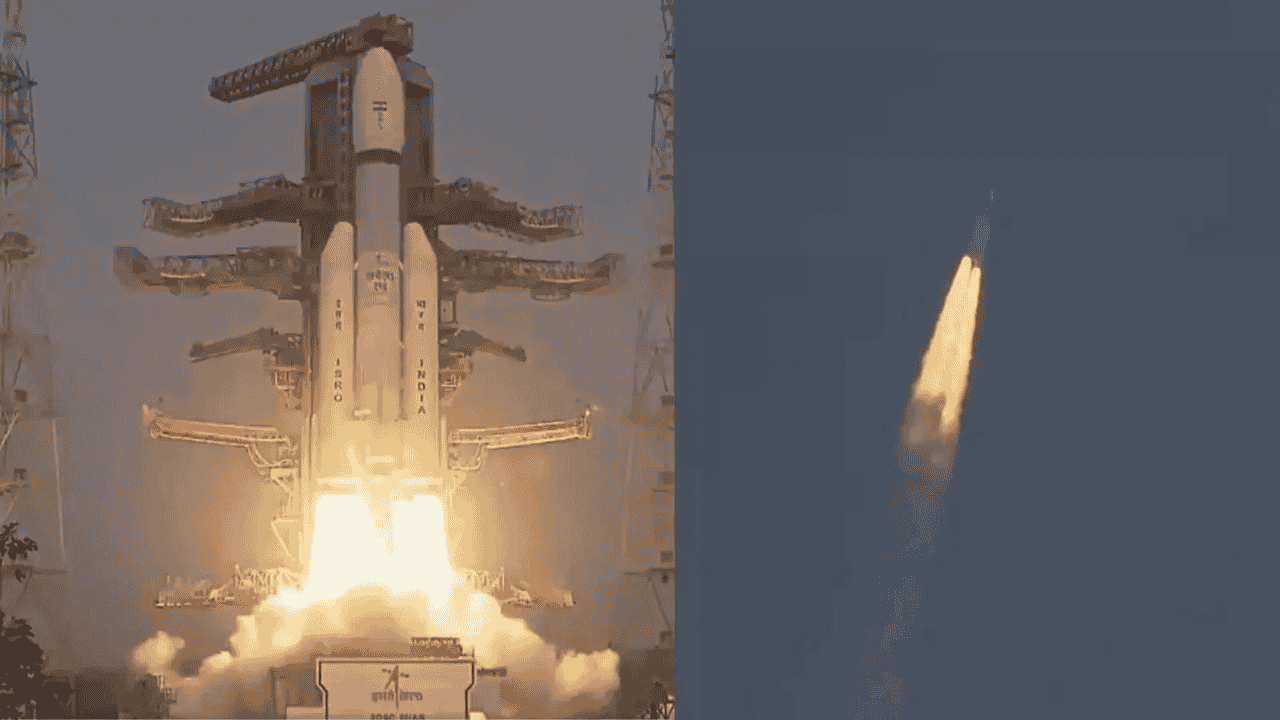
India Launches Heaviest Satellite Ever: ISRO's Historic LVM3-M6 'Bahubali' Mission Explained | Current Affairs 2025
Introduction
On December 24, 2025, the Indian Space Research Organisation (ISRO) achieved a landmark milestone in India's space journey by successfully launching the BlueBird Block-2 communication satellite—weighing 6,100 kilograms—making it the heaviest payload ever deployed into low Earth orbit (LEO) from Indian territory. The launch aboard the LVM3-M6 rocket, affectionately called 'Bahubali' for its immense lifting capacity, represents a strategic watershed moment for India's ambitions in the global commercial space market and demonstrates the nation's technical prowess in heavy-lift satellite deployment.
This mission is more than a technological achievement; it signifies India's emergence as a competitive and reliable player in the global space industry—a sector valued at over $400 billion globally and growing rapidly. For UPSC aspirants and competitive exam candidates, this development carries significance across multiple domains including space technology, commercial partnerships, economic policy, and India's strategic autonomy in critical infrastructure.
Mission Overview: Key Facts and Figures
Launch Details:
Date & Time: December 24, 2025, at 8:55 AM IST
Launch Site: Satish Dhawan Space Centre, Sriharikota, Andhra Pradesh
Launch Vehicle: LVM3-M6 (Launch Vehicle Mark-3, Mission 6)
Payload: BlueBird Block-2 Communication Satellite
Payload Weight: 6,100 kilograms (6.1 metric tons)
Orbit Altitude: 518 km circular orbit (planned target: 520 km—deviation of just 1.5 km, demonstrating exceptional accuracy)
Flight Duration to Deployment: Approximately 15 minutes
Historic Milestone:
This mission holds the distinction of being the heaviest satellite launch from Indian soil, surpassing the previous record set by India's CMS-03 (GSAT-7R) satellite weighing 4,400 kilograms, which was launched on November 2, 2025. Remarkably, ISRO accomplished two successful LVM3 launches within just 52 days—a significant operational achievement demonstrating increased mission cadence and reliability.
Understanding the LVM3-M6 'Bahubali' Rocket
The Launch Vehicle Mark-3 (LVM3), commonly known as 'Bahubali,' is ISRO's flagship heavy-lift launch vehicle. The name derives from the fictional character known for extraordinary strength, reflecting the rocket's powerful capacity to carry India's heaviest payloads.
Technical Specifications:
| Parameter | Value |
|---|---|
| Height | 43.5 meters |
| Lift-off Mass | Approximately 640 tons |
| Payload Capacity to LEO | Up to 8,000 kg |
| Payload Capacity to GTO | Up to 4,000 kg |
| Configuration | 2 × S200 strap-ons + L110 core stage + C25 cryogenic upper stage |
Rocket Architecture:
The LVM3 operates on a three-stage configuration:
Strap-On Stages (2 × S200): Solid-fueled boosters providing massive thrust for liftoff and initial ascent. Each booster contains approximately 204.5 tons of HTPB (hydroxyl-terminated polybutadiene) solid propellant.
Core Stage (L110): A liquid-fueled stage using UH25 + N₂O₄ propellants (approximately 115.9 tons), designed to operate after booster burnout and continue the vehicle's ascent.
Cryogenic Upper Stage (C25): Uses cryogenic propellants (liquid hydrogen and liquid oxygen) totaling approximately 28.6 tons, providing the precision needed for exact orbital insertion.
The payload fairing diameter is 5.0 meters, accommodating diverse satellite configurations.
BlueBird Block-2: Direct-to-Mobile Satellite Technology
The BlueBird Block-2 satellite represents a paradigm shift in satellite-based communication. Unlike traditional satellite internet services requiring specialized ground equipment, BlueBird Block-2 provides direct-to-mobile connectivity using standard smartphones.
Key Technical Features:
Phased Array Size: 223 square meters—the largest commercial communications satellite array ever deployed in LEO
Coverage: Over 2,000 active cells per satellite, enabling simultaneous millions of connections daily
Data Speeds: Peak performance of 120 Mbps per coverage cell
Operating Standards: 4G and 5G voice, video calls, text messaging, streaming, and data services
Core Technology: AST's proprietary AST5000 chip enabling direct smartphone integration without special terminals
Signal Penetration: Low-band spectrum signals pass through foliage, vehicles, and buildings
Operational Advantage:
The satellite operates as a virtual "space-based cell tower constellation," combining hundreds of cellular base stations into a single orbital platform, thereby eliminating dead zones across remote and underserved regions globally.
Commercial Partnership & Strategic Significance
This mission exemplifies India's growing role in international space commerce and demonstrates the successful collaboration between government and international commercial entities.
Commercial Framework:
The BlueBird Block-2 launch was executed under a commercial agreement between NewSpace India Limited (NSIL) and AST SpaceMobile, a US-based satellite communications company. NSIL, the commercial arm of ISRO, manages India's commercial satellite launch services and has been instrumental in monetizing India's launch capabilities.
Global Partnerships:
AST SpaceMobile has established partnerships with over 50 mobile network operators and technology companies worldwide, including major telecommunications giants like AT&T, Verizon, Vodafone, Google, and Rakuten. These partnerships underscore the global demand for satellite-based connectivity solutions.
ISRO's Commercial Space Roadmap
India's space commercialization strategy extends far beyond individual missions. NSIL has set ambitious targets to transform India's space infrastructure into a revenue-generating sector.
Strategic Objectives:
| Metric | Target |
|---|---|
| Annual Revenue by FY27 | ₹5,000–6,000 crores |
| Commercial Launches (annual by 2027) | 8–10 missions |
| Manufacturing Capacity | Private sector involvement (HAL, L&T) |
| Operational Model | Launch on Demand with increased production capacity |
Expansion Strategy:
NSIL is implementing a "Launch on Demand" model by involving private Indian companies—Hindustan Aeronautics Limited (HAL) and Larsen & Toubro (L&T)—in LVM3 manufacturing. This approach aims to increase production from the current 2–3 launches annually to 6–8 launches, while reducing per-unit manufacturing costs through economies of scale. This public-private partnership model mirrors successful commercialization patterns by NASA and ESA.
International Context: Global Space Launch Market
India's positioning in the commercial satellite launch market must be understood within the global competitive landscape.
Global Comparison:
| Launch Vehicle | Manufacturer | LEO Capacity | GTO Capacity |
|---|---|---|---|
| Falcon Heavy | SpaceX (USA) | 63,800 kg | 26,700 kg |
| Ariane 6 | ESA (Europe) | 21,900 kg | 11,500 kg |
| Long March 5 | CNSA (China) | ~25,000 kg | ~14,000 kg |
| LVM3 (ISRO) | ISRO (India) | 8,000 kg | 4,000 kg |
While LVM3's payload capacity ranks at the lower end of heavy-lift vehicles, its cost-efficiency, reliability (100% success rate across all missions), and fully indigenous technology provide distinct competitive advantages in the emerging satellite market. ISRO is actively pursuing technological upgrades, including a proposed C32 cryogenic upper stage and semi-cryogenic engines, to enhance payload capacity to GTO to approximately 5 tons and LEO to around 10 tons.
Technical Achievement: Precision and Accuracy
One of the most noteworthy aspects of the LVM3-M6 mission was the exceptional precision in orbital insertion. ISRO targeted a 520 km circular orbit but placed the satellite at 518.5 km altitude—a deviation of just 1.5 kilometers.
ISRO Chairman V. Narayanan characterized this as "one of the best launches made anywhere in the world" and described it as demonstrating "the best accuracy so far achieved from Indian launchers." This precision is critical because it minimizes the fuel correction burns required from the satellite, thereby extending its operational lifespan—a crucial economic factor for commercial operators.
Gaganyaan Connection: Foundation for Human Spaceflight
The LVM3-M6 mission carries indirect but significant implications for India's Gaganyaan human spaceflight program. The same LVM3 rocket will eventually carry India's astronauts to low Earth orbit as part of the Gaganyaan mission, India's indigenous crewed spaceflight initiative.
The successful demonstration of the LVM3's capability to carry a 6,100 kg payload reinforces confidence in its reliability for future crewed missions. The Gaganyaan crew module and service module together weigh approximately 8,200 kg, which falls comfortably within LVM3's LEO payload capacity of 8,000 kg (with optimization margins). Each successful commercial mission generates operational data and refines ISRO's systems, contributing to the technical foundation for human spaceflight safety and success.
Strategic Autonomy and National Interests
For a nation of 1.4+ billion people, achieving indigenous heavy-lift launch capability carries profound strategic implications.
Sovereignty Dimensions:
Communication Infrastructure Independence: India no longer depends entirely on foreign satellites or foreign launch services for national communication requirements, ensuring strategic autonomy in critical infrastructure.
Economic Resilience: Commercial satellite launch services generate foreign exchange and create high-value employment in advanced technological sectors.
National Security: Indigenous space capabilities ensure continuity of service during geopolitical tensions or international embargoes—a lesson underscored by global satellite market dynamics.
Technology Leadership: Successful commercial launches establish India as a trusted technology partner, enhancing diplomatic soft power and international collaborations.
Future Trajectory: Upcoming Milestones
The LVM3-M6 mission is not an isolated achievement but represents a waypoint in India's broader space ambitions:
Gaganyaan Human Spaceflight: Crewed missions to LEO scheduled for subsequent years, with LVM3 as the primary launch vehicle
NavIC Constellation Expansion: Next-generation navigation satellites will enhance independent satellite navigation capabilities and reduce reliance on GPS
Lunar and Deep Space Missions: ISRO's Chandrayaan and future Mars missions leverage technologies and operational experience from commercial missions
Private Sector Growth: The New Space Policy 2023 and IN-SPACe (Indian National Space Promotion and Authorization Center) framework are accelerating private space sector participation, creating an ecosystem of startups and enterprises
Reusable Launch Vehicle (RLV): ISRO is developing reusable rocket technology to further reduce launch costs and increase flight cadence
Why This Matters for Your Exam Preparation
UPSC General Studies Relevance:
GS Paper II (Governance, Constitutional Frameworks):
India's policy framework for space commercialization (New Space Policy 2023, IN-SPACe initiative)
Public-Private Partnership (PPP) models in infrastructure and technology sectors
Institutional structures: ISRO, NSIL, and regulatory mechanisms
GS Paper III (Technology, Infrastructure, Economic Development):
Technology & Infrastructure: Indigenous space launch capability as critical infrastructure; technological self-reliance in strategic sectors
Economic Development: Commercial space economy potential; revenue generation through satellite services; job creation in high-tech sectors
Science & Technology: Understanding heavy-lift rocket systems, satellite communication technology, and orbital mechanics
National Capacity Building: ISRO's role in building national technological capabilities and human resources
Competitive Exam Relevance:
Current Affairs Sectioning: This mission falls under "Science & Technology," "National Achievements," and "Infrastructure Development"—common UPSC current affairs themes
Connected Concepts:
Gaganyaan human spaceflight program
India's digital infrastructure initiatives (5G rollout, satellite internet)
Global space market dynamics and India's competitiveness
Bilateral relations with the USA (commercial partnerships)
Potential Exam Questions:
"What are the strategic advantages of indigenous heavy-lift launch capability?"
"How does India's space commercialization strategy align with the New Space Policy 2023?"
"What role does NSIL play in monetizing India's space infrastructure?"
"Compare India's launch vehicle capabilities with global counterparts"
"How does satellite-based direct-to-mobile connectivity address connectivity gaps in India?"
Knowledge Integration:
Geography: Sriharikota launch facility location, geosynchronous and LEO orbit concepts
International Relations: Partnerships with AST SpaceMobile (USA), global satellite constellations
Economics: Commercial space market valuation, revenue models, foreign exchange generation
Governance: Regulatory frameworks, institutional structures, and policy instruments
Mains Writing Practice:
Potential essay topics derived from this mission:
"India's Space Sector: Transitioning from Government-Led Exploration to Commercial Enterprise"
"Satellite Technology and Bridging India's Digital Divide: Opportunities and Challenges"
"Strategic Autonomy in Critical Infrastructure: India's Indigenous Space Capabilities"
Note-Making Suggestions:
Create concise notes capturing:
Mission parameters (date, weight, orbit, accuracy)
Institutional players (ISRO, NSIL, AST SpaceMobile)
Strategic implications (autonomy, economic, security)
Policy context (New Space Policy 2023, IN-SPACe)
Comparative data (global launch vehicles, market position)
Key Takeaway
The LVM3-M6 BlueBird Block-2 mission represents India's transition from a space-faring nation focused primarily on scientific missions to a commercially competitive space economy player. At 6,100 kilograms, this payload is not merely a satellite—it symbolizes India's technological maturity, operational excellence, and capacity to compete and collaborate in a globalized space industry. For aspirants, understanding this achievement provides essential context for grasping India's current development trajectory, technological capabilities, and strategic positioning in the 21st-century global order.