UPSC Current Affairs January 2026: Atharva Examwise Daily GK Update on Kerala’s Traditional Dance Mangalamkali
Introduction to Mangalamkali: A Cultural Jewel of Kerala
In the landscape of Indian classical and folk performing arts, the southern state of Kerala holds a position of immense prominence. The region's performing arts serve as a vibrant canvas reflecting centuries of socio-cultural integration, religious coexistence, and historical transitions. A prime example of this heritage is Mangalamkali, a traditional dance form that represents a significant component of Kerala's intangible cultural identity.
To assist civil services aspirants in tracking crucial art and culture developments, this daily GK update examines the origins, performance dynamics, socio-cultural contexts, and modern-day relevance of Mangalamkali. Candidates preparing for competitive examinations can access comprehensive study resources via the Atharva Examwise Daily Current Affairs platform to monitor evolving cultural current affairs January 2026 and competitive exam news today.
Etymological and Historical Origins of Mangalamkali
The term Mangalamkali is etymologically derived from two Malayalam words: Mangalam, which translates to an auspicious ceremony, welfare, or marriage, and Kali, which denotes a dance, play, or performance. Literally translating to the "dance performed on auspicious occasions," this folk art highlights the celebration of life-cycle milestones within regional communities.
The historical development of Mangalamkali presents a dual narrative across different regional and social groups in Kerala:
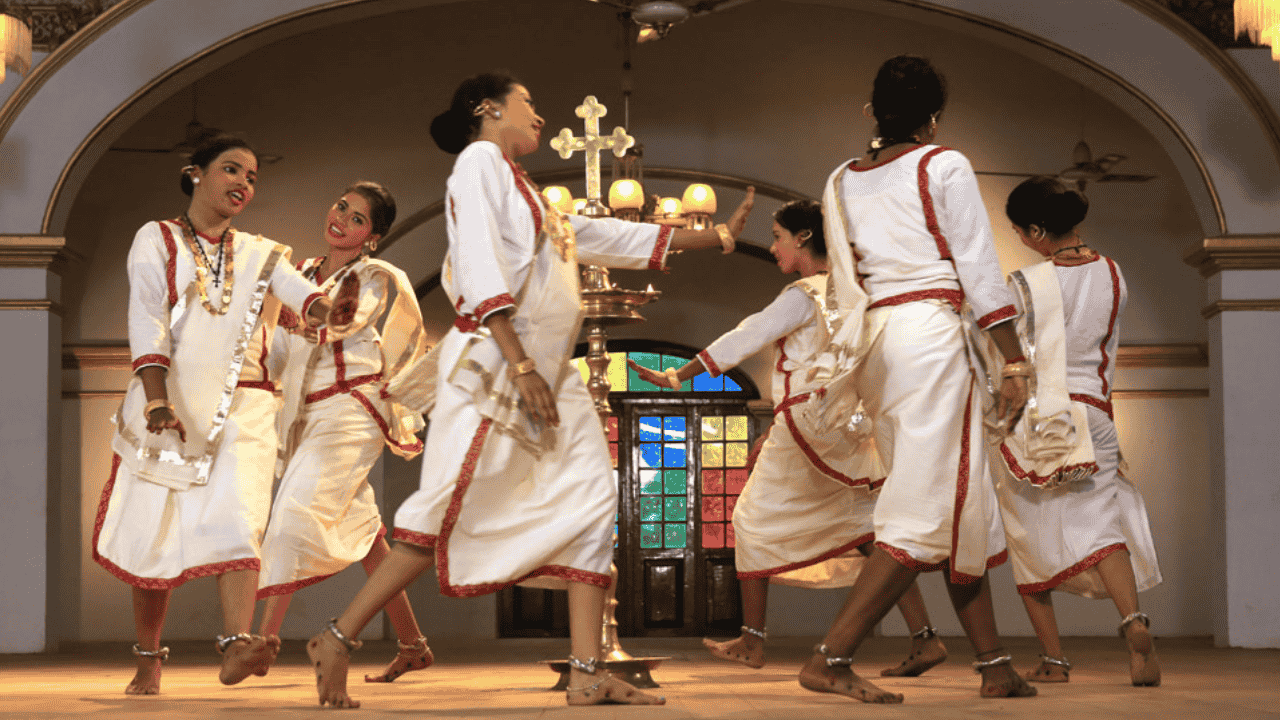
The Syrian/Eastern Christian Tradition: In central Kerala—specifically across the districts of Kottayam, Ernakulam, Idukki, Pathanamthitta, and Thrissur—Mangalamkali has historically existed as a traditional folk dance practiced by the Eastern Christian community. Developed over several centuries, this form represents a synthesis of indigenous Malayali culture and regional Christian traditions. It is performed with enthusiasm during Christian wedding ceremonies and other auspicious familial celebrations to invoke blessings and promote communal solidarity.
The Tribal Malabar Tradition: In the northern Malabar region—predominantly within the hilly pockets of the Kasaragod and Kannur districts—Mangalamkali is practiced as an essential ritual dance by the Mavilan and Malavettuvar Scheduled Tribes. In this tribal context, the dance is deeply intertwined with their self-sufficient agrarian lifestyles and historic Dravidian heritage.
Technical Performance Dynamics and Accompanying Music
The performance structure of Mangalamkali emphasizes collective rhythm, simplicity, and emotional expression over complex physical postures.
Choreography and Social Context
The dance is a collective art form performed by men or women (and in tribal contexts, both genders together) who arrange themselves in a rhythmic circle. In tribal areas, the performance traditionally takes place under a temporary marquee or canopy (pandal), arranged around a central decorated wooden post. The choreographic movement starts at a slow, measured tempo and gradually accelerates into rapid, highly coordinated steps.
Historically, the performance is tied to key life-cycle events, including:
Thalikettu Mangalam / Kalyanamangalam: Marriage ceremonies where the dance serves as a primary mode of celebration and community entertainment.
Kathukuthu Mangalam: The maiden ear-piercing ritual of a girl.
Thirandu Mangalam: Celebrating a young girl's physical maturity and menarche.
Pungamangalam: Marking the ninth month of a woman's pregnancy.
Instrumental and Vocal Music
The music of Mangalamkali plays a defining role in its presentation. In the Christian folk style, the dancers sing traditional songs that describe marriage, family life, social customs, ethical standards, and religious beliefs. The performance relies primarily on collective singing and the synchronized clapping of hands to maintain rhythm, though local percussion instruments are occasionally introduced.
In the tribal Malabar tradition, the vocal music is sung in a mixture of regional Malayalam and Markodi (also known as Marakoli Tulu), an unscripted Dravidian language unique to the Mavilan tribe. The instrumental backing is dominated by the Thudi, an hourglass-shaped traditional percussion drum made from jackfruit or Murikku wood, with drumheads crafted from animal hides. Up to seven Thudis are played simultaneously, utilizing a distinct "call-and-response" rhythm between the larger Perumthudi and smaller Panathudi to guide the dancers.
Comparative Analysis of Traditional Art Forms
For competitive exam news today, aspirants must clearly distinguish between Mangalamkali and other phonetically similar regional art forms such as Margamkali, a prominent Syrian Christian dance.
The table below contrasts the features of these traditional performances:
| Feature | Mangalamkali (Christian Folk Context) | Mangalamkali (Tribal Context) | Margamkali (Syrian Christian Context) |
|---|---|---|---|
| Primary Performing Community | Eastern/Syrian Christian community | Mavilan and Malavettuvar Scheduled Tribes | Knanaya / Saint Thomas Christian community |
| Geographical Distribution | Kottayam, Ernakulam, Idukki, Pathanamthitta, and Thrissur | Kasaragod and Kannur districts (North Malabar) | Primarily Kottayam and Thrissur districts |
| Thematic Focus | Marriage, family values, moral ethics, and religious faith | Agriculture, hunting, forestry, ancestral myths, and anti-feudal resistance | Apostolic mission, conversions, and miracles of Saint Thomas |
| Central Focal Element | Circular dance space | A central post decorated with agricultural produce | A traditional multi-tiered metal oil lamp (Nilavilakku) representing Christ |
| Acoustic Accompaniment | Rhythmic clapping and vocal singing | Deep beats of multiple Thudi drums and vocal chorus | Vocal singing (Margamkali Pattu) without any instrumental accompaniment |
| Linguistic Profile | Regional Malayalam | Markodi (Marakoli Tulu) blended with Malayalam | Old Malayalam infused with Syriac loanwords and Tamil structures |
Policy Implications and Contemporary Integration
The transition of marginalized folk arts from local communities to state-sponsored educational platforms represents an important development in cultural policy. During the 63rd (January 2025 in Thiruvananthapuram) and 64th (January 2026 in Thrissur) editions of the Kerala State School Kalolsavam—the largest school-level cultural festival in Asia—tribal dances including Mangalamkali were introduced as competitive events.
This institutional inclusion has brought significant benefits, alongside unique challenges:
Socio-Cultural Inclusion: Integrating indigenous dances into the mainstream state curriculum provides equal opportunities for students from rural, tribal, and marginalized backgrounds, reflecting a model of federal best practice in cultural preservation.
Preservation of Oral Heritage: Elevating these dances to state-level competitions helps preserve unscripted tribal languages like Markodi and protects traditional instrument-making skills, such as crafting the Thudi.
The Challenge of Standardization: Cultural experts have noted that adapting spontaneous ritual performances into competitive formats can lead to a loss of structural purity. Standardizing performances to fit rigid competitive timeframes often limits the performance to a narrow selection of songs, overlooking the broader repertoire of traditional compositions.
Institutional Coordination: To preserve the authenticity of these art forms, there is a growing need for cooperation between state education departments and research bodies like the Kerala Institute for Research Training and Development Studies of Scheduled Castes and Scheduled Tribes (KIRTADS) to establish balanced performance guidelines.
For more detailed information regarding the preservation of regional heritages, students may consult official archives such as Kerala Tourism Artforms and The Hindu on Tribal Art Forms.
Key Facts and Exam-Relevant Data for Aspirants
Etymological Definition: Derived from Mangalam (auspicious event/marriage) and Kali (dance).
Regional Spheres of Influence: The Christian folk tradition is centered in Kottayam, Ernakulam, Idukki, Pathanamthitta, and Thrissur; the tribal tradition is preserved in Kasaragod and Kannur.
Socio-Biological Occasions: Staged during significant life milestones, including marriage (Thalikettu), menarche (Thirandu), ear-piercing (Kathukuthu), and pregnancy.
Tribal Custodians: Primarily preserved by the Mavilan and Malavettuvar Scheduled Tribes of northern Kerala.
Linguistic Value: The tribal songs are composed in Markodi, an unscripted Dravidian language classified as a dialect of Tulu.
Key Percussion Instrument: The Thudi, an hourglass-shaped drum played in a synchronized "call-and-response" rhythm using larger (Perumthudi) and smaller (Panathudi) variations.
Educational Integration: Recognized as a competitive category in the Kerala State School Kalolsavam to promote social inclusion and preserve intangible cultural heritage.
Aspirants are encouraged to align these details with the official Atharva Examwise UPSC Prelims Syllabus to maximize their preparation.
Why this matters for your exam preparation
Understanding regional folk performances and tribal heritages is highly relevant for competitive examinations under the following areas of study:
GS Paper I (Art and Culture): Questions often focus on the geographic distribution, performing communities, and structural features of Indian folk dances, musical instruments, and regional theatrical traditions.
GS Paper I (Indian Society and Geography): Covers the social structures of Scheduled Tribes, the preservation of indigenous knowledge systems, linguistic diversity, and the protection of vulnerable, unscripted languages.
GS Paper II (Social Justice and Governance): Addresses policy frameworks, tribal welfare schemes, and initiatives by constitutional or statutory bodies (such as KIRTADS and the Ministry of Tribal Affairs) to safeguard the heritage of marginalized groups.
UPSC Civil Services Prelims: Direct multiple-choice questions may test candidates on matching folk dances with their states of origin, identifying performing tribes, distinguishing between tribal and classical instruments, or comparing phonetically similar cultural traditions (e.g., Mangalamkali versus Margamkali).