UPSC Current Affairs July 14, 2026: Daily GK Update on India’s Historic Lord's Test Victory and the Evolution of Women's Sports Policy
On July 13, 2026, the Indian women's national cricket team accomplished a monumental feat by defeating England by 270 runs on the fourth day of the historic, one-off Test match at the Lord’s Cricket Ground. While this victory stands as one of the most significant athletic milestones in the history of Indian cricket, it also serves as a compelling case study in the structural evolution of sports governance, targeted gender inclusion policies, and socio-economic transformation in India. For serious civil services aspirants, analyzing this milestone provides essential analytical insights into government welfare schemes, sports administration, and social empowerment frameworks under the Union Public Service Commission (UPSC) syllabus.
The Historic Triumph at Lord's: Match Overview and Context
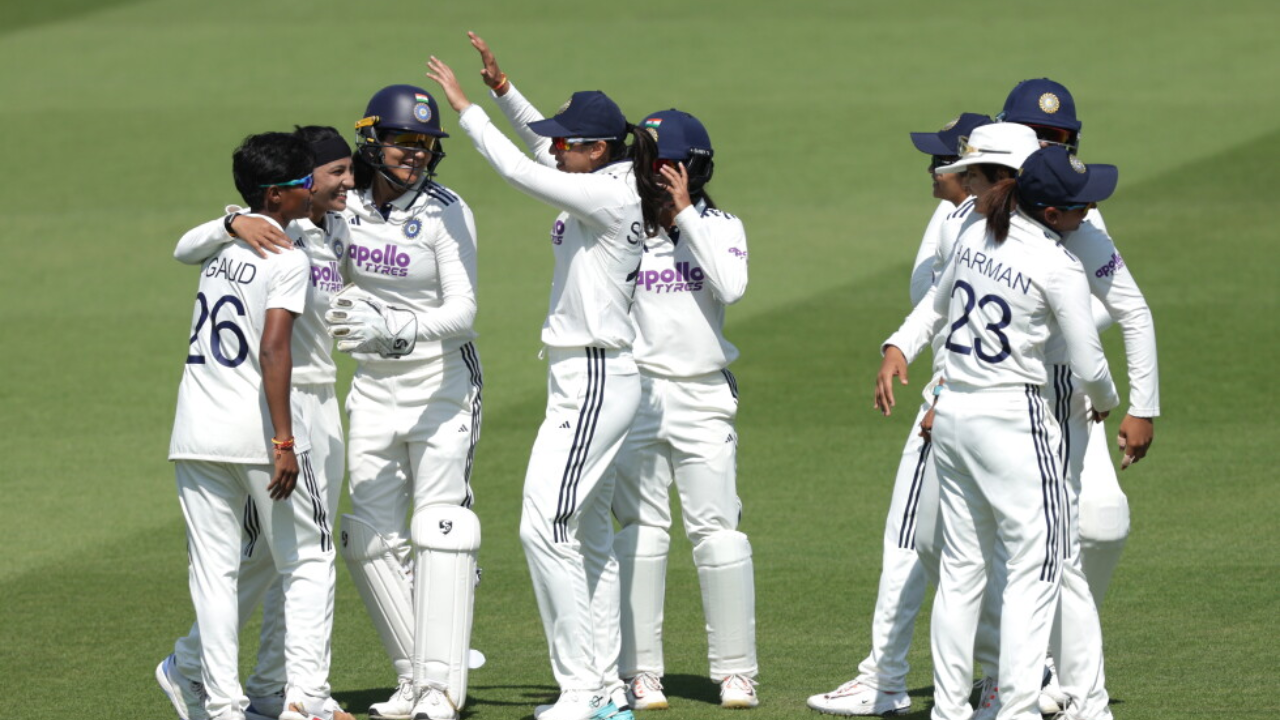
The victory at Lord’s—often revered as the "Home of Cricket"—concluded during the morning session on day four. Chasing a daunting target of 457 runs set by India, the England women's national cricket team was bundled out for 186 runs in 62.5 overs.
This victory was built upon a robust first-innings total of 285, anchored by vice-captain Smriti Mandhana (83), skipper Harmanpreet Kaur (58), and Deepti Sharma (57). In response, England was dismissed for a meager 170. This gave India a substantial 115-run first-innings lead, courtesy of a sensational spell from debutant pacer Kranti Gaud. India subsequently declared their second innings at 341 for 7 at the stroke of tea on Day 3, setting up a highly dominant victory margin.
The match holds unparalleled historical weight: it took Lord's 142 years to host its first-ever women's Test match. The venue, owned by the Marylebone Cricket Club (MCC)—which infamously prohibited women from joining its club until 1999—witnessed a major shift in the sport's traditional hierarchies as the Indian side thoroughly outplayed the hosts on their home turf.
Key Facts and Exam-Relevant Data
For competitive exams and general knowledge (GK) updates, the following specific details from the historic Lord's Test match are highly significant:
Historic Margin: India's 270-run victory is their second-highest win by margin of runs in women's Test history, and the fourth largest overall. The record remains India's 347-run defeat of England in Navi Mumbai in 2023.
Undefeated Streak: With this victory, India has extended its undefeated streak in Test matches on English soil to 40 years. Since their first tour in 1986, India has played 10 Tests in England, winning three and drawing seven.
The Head-to-Head Record: Overall, India and England have faced each other 16 times in women's Tests, with India leading the head-to-head with four wins, England with one win, and 11 matches ending in draws.
Lord's Test Honours Board Entries: Three cricketers earned places on the legendary Lord's Honours Board during this match: Kranti Gaud (5/37 in the first innings), Yastika Bhatia (113 in the second innings), and England's Sophie Ecclestone (5/118 in the second innings).
Retirements of Legends: The match marked the final international appearances for two stalwarts of English cricket—former captain Heather Knight and veteran opener Tammy Beaumont. Both retired from all formats after the match, receiving a guard of honor from the Indian team.
VIP Presence: The final day's play commenced in the presence of batting legend Sachin Tendulkar, who addressed the Indian squad, alongside International Cricket Council (ICC) Chairman Jay Shah, BCCI Vice-President Rajeev Shukla, and Secretary Devajit Saikia.
Individual Milestones: Profiles in Resilience and Social Mobility
The individual triumphs of Yastika Bhatia and Kranti Gaud highlight the direct impact of robust state-level sports infrastructure, injury rehabilitation systems, and grassroots scouting.
Yastika Bhatia: Overcoming Adversity through Sports Science
Left-handed wicketkeeper-batter Yastika Bhatia etched her name into history as the first woman ever to score a Test century at Lord’s. She scored a magnificent 113 runs off 158 deliveries, including 14 boundaries, navigating the tricky slope of the ground with exceptional footwork and mental composure.
Bhatia's achievement is also a story of physical resilience. Over the preceding three years, she suffered consecutive ankle, calf, wrist, and knee injuries, culminating in a serious knee injury that ruled her out of the 2025 ODI World Cup and the 2026 Women's Premier League (WPL). Her successful comeback was supported by modern sports science, specialized physiotherapists, and elite conditioning programs, demonstrating the importance of institutional healthcare and rehabilitation pipelines in athletic careers. With this century, Bhatia became the 11th Indian batter overall to score a Test century at Lord's, joining a list of legends that includes Sourav Ganguly, Rahul Dravid, and Dilip Vengsarkar.
Kranti Gaud: Redefining the Demographics of Indian Pace Bowling
The primary architect of India's bowling dominance was 22-year-old medium-pacer Kranti Gaud, who claimed 5/37 in the first innings and 2/54 in the second to finish with match figures of 7/91 and the Player of the Match award.
Born on August 11, 2003, in Ghuwara—a small town in the Chhatarpur district of Madhya Pradesh—Gaud’s rise reflects the changing socio-economic demographics of Indian sports. The daughter of a former police constable raising six children, she began her journey playing tennis-ball cricket in police quarters before being spotted by coach Rajiv Bilthare.
Gaud’s technical mastery at Lord's was characterized by a disciplined wobble-seam delivery that exploited the green-tinged surface and English seam-friendly conditions. At 22 years and 333 days, she became the youngest Indian female fast bowler to register a five-wicket haul in Test cricket, breaking a two-decade-old record set by Jhulan Goswami in 2005. Gaud is also the 16th Indian bowler to enter the Lord's Honours Board, joining elite pacers like Jasprit Bumrah, Kapil Dev, and Bhuvneshwar Kumar. Her extraordinary performance led Madhya Pradesh Chief Minister Mohan Yadav to announce a state reward of ₹1 crore.
Statistical Performance Matrix of the Match
The structural superiority of the Indian side is evident in the comprehensive match scorecard:
| Innings | Team | Major Batting Contributors | Major Bowling Contributors |
|---|---|---|---|
| 1st Innings | India Women (285) | Smriti Mandhana: 83
Harmanpreet Kaur: 58
Deepti Sharma: 57 | Sophie Ecclestone: 3/68
Lauren Bell: 1/50 |
| 1st Innings | England Women (170) | Amy Jones: 52
Nat Sciver-Brunt: 44 | Kranti Gaud: 5/37 [cite: 1]
Sayali Satghare: 2/40
Sneh Rana: 2/41 |
| 2nd Innings | India Women (341/7 decl.) | Yastika Bhatia: 113 [cite: 1]
Smriti Mandhana: 70
Richa Ghosh: 50* | Sophie Ecclestone: 5/118
Lauren Bell: 2/27 |
| 2nd Innings | England Women (186) | Amy Jones: 54
Sophie Ecclestone: 50 | Sneh Rana: 4/42
Sayali Satghare: 2/24
Deepti Sharma: 2/36 |
Structural Governance: The Catalyst of the WPL and Pay Equity
The transition of Indian women's cricket from an underfunded, semi-professional discipline to a global commercial force is the direct result of deliberate administrative reforms and structural changes within sports governance.
The WCAI-to-BCCI Integration and Pay Parity
Historically, the Women's Cricket Association of India (WCAI), established in Lucknow in 1973, managed the women's game under severe financial constraints. The watershed moment occurred in 2006 when the WCAI merged with the Board of Control for Cricket in India (BCCI). This administrative integration placed women's cricket within India's strongest commercial engine, providing immediate access to elite training facilities, travel allowances, and medical care.
In October 2022, the BCCI enacted a milestone pay equity policy, making it the first major sports board in India to mandate equal match fees for centrally contracted men and women cricketers. This policy guaranteed ₹15 lakh per Test match, ₹6 lakh per ODI, and ₹3 lakh per T20I, establishing a financial baseline that treats athletic labor with uniform dignity.
The Women's Premier League (WPL) as a Domestic Engine
Launched in 2023, the Women's Premier League (WPL) has redefined the financial and technical landscape of domestic women's sports. By injecting substantial corporate sponsorship, high-quality broadcasting rights, and global talent pools, the league has bridged the gap between domestic and international standards.
For example, young talents like Kranti Goud—purchased by the UP Warriorz for ₹10 lakh in the December 2024 auction—were directly exposed to world-class coaching, international pressure, and high-performance setups early in their careers. This exposure helped Gaud take the prized wicket of Meg Lanning as her maiden WPL dismissal and eventually excel at Lord's.
Policy Ecosystem: Government Schemes and Inclusive Sports Frameworks
State-backed initiatives play a crucial role in expanding the talent pipeline, ensuring that young girls from remote areas have access to the resources required to pursue sports professionally.
The Khelo India Mission (Budget 2026-27)
The Union Budget 2026-27 allocated a record budget of ₹4,479.88 crore to the Ministry of Youth Affairs and Sports to fund the comprehensive ten-year Khelo India Mission. This initiative focuses on talent identification, modernizing sports infrastructure, and establishing Centers of Sporting Excellence.
Crucially, the budget earmarks a specialized ₹500 crore fund to promote domestic sports equipment manufacturing under the "Make in India" banner, directly supporting traditional industrial clusters like Meerut (Uttar Pradesh) and Jalandhar (Punjab). This reduces dependency on expensive imports, making high-quality gear accessible at the grassroots level.
The ASMITA Initiative
Launched in 2021, the ASMITA (Achieving Sports Milestone by Inspiring Women Through Action) programme operates as a targeted gender-transformative framework under the Khelo India umbrella. Supported by the Sports Authority of India (SAI), ASMITA organizes athletic leagues across 250 locations nationwide, with a strong focus on remote and underrepresented districts. The scheme addresses the social barriers that contribute to high female dropout rates in sports—which UNESCO’s Sport and Gender Equality Game Plan estimates to be 49% during adolescence—by creating safe, structured environments and local female role models.
Why this matters for your exam preparation
For candidates preparing for the civil services, this development is not merely a sports update but a rich source of conceptual points across multiple papers of the UPSC Mains examination. Aspirants can explore similar analyses of government schemes and national infrastructure developments on the Atharva Examwise platform.
General Studies Paper I (Indian Society & Social Issues)
Social Empowerment and Role of Women: The triumph of athletes like Kranti Gaud and Yastika Bhatia provides strong case studies on how sports can break traditional gender stereotypes and challenge patriarchal mindsets in conservative rural setups.
Rural-Urban Demographics: Highlighting how administrative support and grassroots leagues are shifting the centers of athletic talent from urban metropolises to semi-urban and rural areas (e.g., Ghuwara in Madhya Pradesh).
General Studies Paper II (Governance, Social Justice & Public Policy)
Government Policies and Interventions: The impact of state-led schemes like Khelo India, ASMITA, and the Target Olympic Podium Scheme (TOPS) on human capital development.
Sports Diplomacy and Bilateral Roadmaps: Utilizing initiatives like the India-Australia Sports Collaboration Roadmap to analyze how sports are increasingly integrated into international relations, mutual capacity building, and soft power projections.
General Studies Paper III (Economic Development & Infrastructure)
The Sports Economy: Analyzing the role of domestic manufacturing clusters (such as Jalandhar and Meerut), public-private partnerships (PPPs) in stadium construction, and the financial viability of franchise models like the WPL in creating employment and boosting regional economies.
General Studies Paper IV (Ethics & Integrity)
Gender Equity vs. Equality: Exploring the ethical dimensions of equal pay policies and inclusive sports governance. Candidates can utilize UNESCO's observations on the global gender pay gap, leadership deficits (where only 30% of major federations are led by women), and safety concerns as ethical arguments for implementing gender-responsive budgeting.
Practice Question for Mains Evaluation
"The success of contemporary Indian women athletes on the international stage is not merely an outcome of individual grit, but a reflection of systemic shifts in sports governance, commercial structures, and state-backed grassroot schemes." Critically analyze this statement with suitable examples.