UPSC Current Affairs May 29, 2026: The Invaluable Heritage of Carnatic Music 'Kambhoji Ata Tala Varnam' and Important Facts | Daily GK Update
Introduction: Kambhoji Ata Tala Varnam and Indian Classical Music
The South Indian tradition of Indian classical music, known as Carnatic Music, is renowned for its mathematical precision, complex raga structures, and rich historical evolution. Within this grand heritage of Carnatic music, the 'Varnam' is considered an extremely important and foundational musical composition. A Varnam is not merely a simple song or artwork; rather, it is a complex, composite practice involving raga characteristics, gamaka (oscillation) control, rhythmic cycles (tala), and vocal styles. Learning a Varnam is a mandatory and essential stepping stone for students of Carnatic music to transition from the initial stages of musical education to advanced levels.
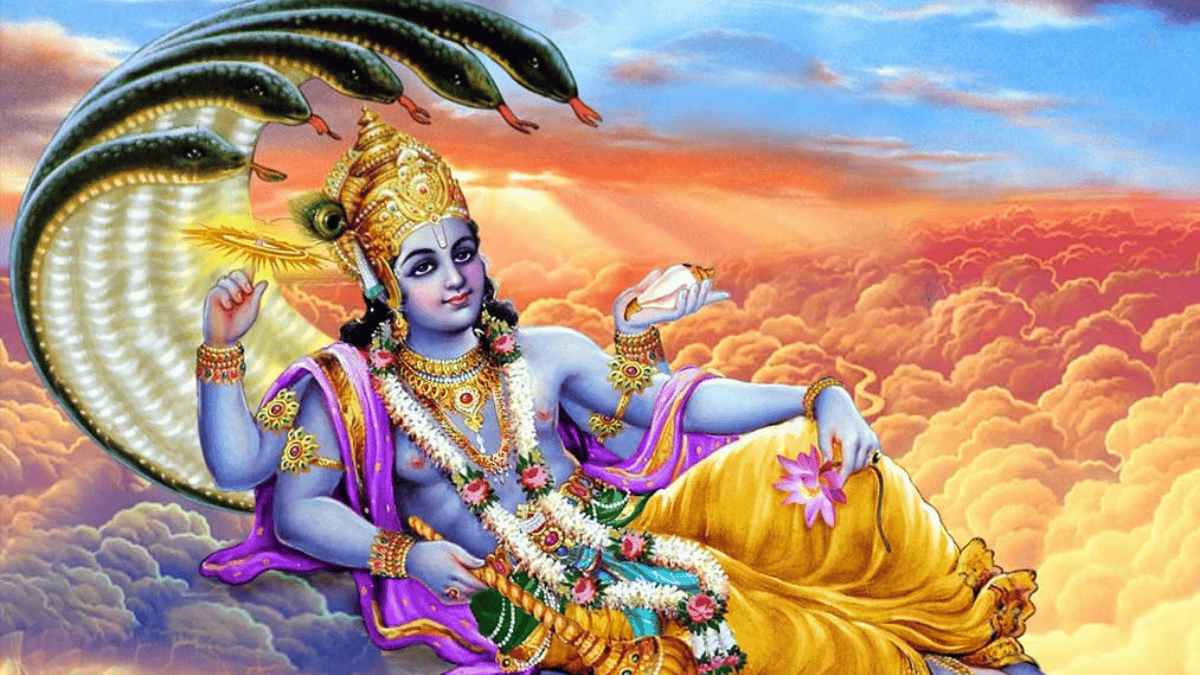
Among this series of Varnams, the 'Kambhoji Ata Tala Varnam' holds a distinctive position due to its grandeur, technical complexity, and classical beauty. This composition represents the invaluable cultural heritage of South India, and its performance is held in high esteem in temples, classical music concerts, and classical dance forms like Bharatanatyam. Historically, Varnams composed in Raga Kambhoji have been utilized to express devotion (Bhakti Rasa) in praise of Lord Padmanabha (Lord Vishnu).
Classification of Varnam: Tana Varnam vs. Pada Varnam
Within Carnatic music, Varnams are primarily divided into two categories, which define their purpose of performance and their internal structure:
Tana Varnam: This is primarily adapted for music concerts (Sabhas) and vocal practice. Special attention is given to voice training (Svara Sadhana), clarity of the raga, and tempo control. In a Tana Varnam, lyrics (Sahitya or song words) are available only in the Pallavi, Anupallavi, and Charanam sections, while the remaining sections are purely based on the utterance of notes (Svaras). The Kambhoji Ata Tala Varnam is fundamentally a Tana Varnam.
Pada Varnam: This style of composition is primarily crafted for the performance of Bharatanatyam and other South Indian classical dances. In a Pada Varnam, 'Bhava' (expression) and 'Abhinaya' (acting/gestures) take precedence alongside the music. Its tempo is slightly slower compared to a Tana Varnam to allow the dancer to express emotions deeply. It features coherent lyrics (Sahitya) aligned even with the Muktayi and Chitta Svaras, enabling the dancer to exhibit dance mudras (poses) for each note combination.
The profound influence of various streams of classical music is also deeply visible in dance and theatre. For instance, to understand the musical systems of Kathakali, the famous classical theatre style of Kerala, one can study a Kathakali Music Analysis, which is primarily based on Carnatic ragas. Similarly, to learn about the Veeragase dance performed during traditional festivals in Karnataka, reference can be made to a Veeragase Folk Dance Guide. More information regarding the tribal music culture of Northeast India is available under Bagurumba Dance and Bodo Musical Instruments.
Raga Kambhoji and Ata Tala: Technical Structure and Grammar
To understand the classical significance of the Kambhoji Ata Tala Varnam, an analysis of the grammatical and mathematical framework of its two pillars—Raga Kambhoji and Ata Tala—is essential.
The Classical Grammar of Raga Kambhoji
Raga Kambhoji is considered an ancient, majestic, and royal raga in Carnatic music. This raga presents a beautiful blend of Veera Rasa (heroism), Bhakti (devotion), Madhurya (sweetness), and gravity, creating a serene and spiritual atmosphere during stage performances.
| Grammatical Element | Technical Details |
|---|---|
| Parent Scale (Janaka Melakarta Raga) | Harikambhoji (Melakarta No. 28) |
| Arohana (Ascending Scale) | $S R_2 G_3 M_1 P D_2 \dot{S}$ (Shadava structure due to the omission of the 'Nishada' note) |
| Avarohana (Descending Scale) | $\dot{S} N_2 D_2 P M_1 G_3 R_2 S$ (Sampoorna structure as it includes all seven notes) |
| Classification | Bhashanga Raga – due to the occasional, distinct usage of 'Kakali Nishada' ($N_3$) in the descent |
| Hindustani Music Equivalent | Khamaj Thaat |
| Western Music Equivalent | Mixolydian Mode |
| Ancient Tamil Music Equivalent | Sempaalai Pann |
The Mathematical Structure of Ata Tala
In Carnatic music systems, Varnams are generally bound to two main talas: 'Adi Tala' (8 beats) and 'Ata Tala' (14 beats). Ata Tala is considered technically highly complex and advanced due to its 14-beat cycle. The structure of Ata Tala is primarily utilized in the form of Khanda Jati Ata Tala, in which the division of beats is as follows:
$$\text{Khanda Jati Ata Tala} = 5 + 5 + 2 + 2 = 14 \text{ mātrās (beats)}$$
This complex cycle severely tests the rendering and rhythm control of both vocalists and instrumentalists, which is why practicing the Ata Tala Varnam makes students technically proficient.
'Inta Chalamu' and the Composer Controversy: Veena Kuppayyar vs. Pallavi Gopala Iyer
For serious candidates preparing for competitive exams, accuracy in facts under the Art and Culture section is extremely critical. Under the Kambhoji Ata Tala Varnam, a state of confusion often arises in general knowledge books and local sources regarding the composer of the famous Varnam 'Inta Chalamu'. This historical and technical confusion is resolved in detail below:
1. 'Inta Chalamu' Varnam in Raga Kambhoji and Ata Tala:
Actual Composer: The actual composer of this specific and highly ancient Varnam is the great composer of the Pre-Trinity Period, Pallavi Gopala Iyer.
Characteristics: This composition showcases the traditional and non-linear phrases (vakra sancharas, such as $S R M G P D S$) of Raga Kambhoji. It praises the then ruler of Mysore, Maharaja Chamaraja Wodeyar III, or Lord Krishna, using words like "Syamarajendra vara tanaya".
2. 'Inta Chalamu' Varnam in Raga Begada and Adi Tala:
Actual Composer: The composer of this highly popular Varnam is the great musician and veena player, Veena Kuppayyar.
Characteristics: This piece is based on Raga Begada and Adi Tala (an 8-beat cycle). It praises Lord Krishna (Sri Venugopala Swami).
Thus, although the initial words of both Varnams—'Inta Chalamu' (meaning 'Why so much anger or stubbornness?' in the Telugu language)—are identical, these two compositions are entirely distinct from the perspective of raga, tala, and composer. In addition, another highly famous Varnam composed in Raga Kambhoji and Ata Tala is 'Sarasijanabha', which was composed by Maharaja Swathi Tirunal of Travancore in praise of Lord Padmanabha.
Key Exam-Relevant Facts
From the perspective of the UPSC and other competitive examinations, important factual points related to the musical arts are as follows:
Purvanga and Uttaranga Structure: In Carnatic music, a Varnam is divided into two parts—the first part is called 'Purvanga' (comprising Pallavi, Anupallavi, and Muktayi Svara) and the second part is called 'Uttaranga' (comprising Charanam and Chitta Svaras).
Omission of Anubandham: In ancient Varnams, there used to be a concluding section called 'Anubandham' (epilogue), which has almost disappeared from modern performances. The Varnams of Pallavi Gopala Iyer are considered some of the earliest examples of this modern format (without Anubandham).
Veena Kuppayyar (1798–1860): He was one of the prominent disciples of Saint Tyagaraja, the titan of Carnatic music. He composed in the Sanskrit and Telugu languages and used the mudra (signature string) 'Gopaladasa' in his works.
Pallavi Gopala Iyer: He was a famous Vaggeyakara (lyricist and composer) of the Tanjore court (during the reigns of King Amarsimha and King Serfoji). He played a key role in gaining classical recognition for Raga Todi and Raga Kalyani.
Swathi Tirunal (1813–1846): The Maharaja of Travancore and a multilingual composer who utilized the mudra 'Padmanabha' or 'Sarasijanabha' in his compositions.
Practice of Rhythmic Speeds (Laya Gatis): A Varnam is generally sung in different speeds (Prathama Kala/first speed, Dvitiya Kala/second speed, or Druta Gati/fast speed), which helps the vocalist establish control over rhythm and note purity.
Why this matters for your exam preparation
The study of 'Kambhoji Ata Tala Varnam' and its associated historical links is relevant from several perspectives under the UPSC Civil Services Examination (CSE) and other state-level administrative service exams:
Preliminary Examination (UPSC Prelims): Fine technical questions related to the musical traditions of ancient and medieval India are asked in the 'Indian Art and Culture' section of General Studies Paper-I. In previous years, multiple-choice questions (MCQs) have been asked on the classification of ragas, their equivalents (such as the similarity between Raga Bilawal and Dheerashankarabharanam), and the contributions of crucial musicians. The technical traits of Raga Kambhoji (being a Bhashanga raga, possessing a Shadava-Sampoorna structure) and the mathematical division of talas can directly become a part of the exam.
Main Examination (UPSC Mains GS Paper I): The main syllabus of Art and Culture covers "salient aspects of Art Forms, Literature, and Architecture from ancient to modern times." This case study can be used as a valuable example in writing long-answer questions concerning the role of Carnatic music in the cultural landscape of South India, Nayaka-Nayika Bhava, the contribution of musicians (such as Saint Tyagaraja and his disciples) in spreading the Bhakti movement, and the historical evaluation of the patronage extended to art by royal courts (such as Tanjore and Travancore).
Factual Accuracy and Avoiding Negative Marking: In competitive exams, question traps are often woven by taking advantage of discrepancies in the names of composers for multi-compositions with similar names like 'Inta Chalamu'. Through this in-depth analysis, candidates can clearly understand the difference between Pallavi Gopala Iyer and Veena Kuppayyar, thereby avoiding critical errors and negative marking in the examinations.