
UPSC Current Affairs May 27, 2026: Daily GK Update on the India-US Critical Minerals Agreement
The Bilateral Strategic Breakthrough: Securing Technology Supply Chains
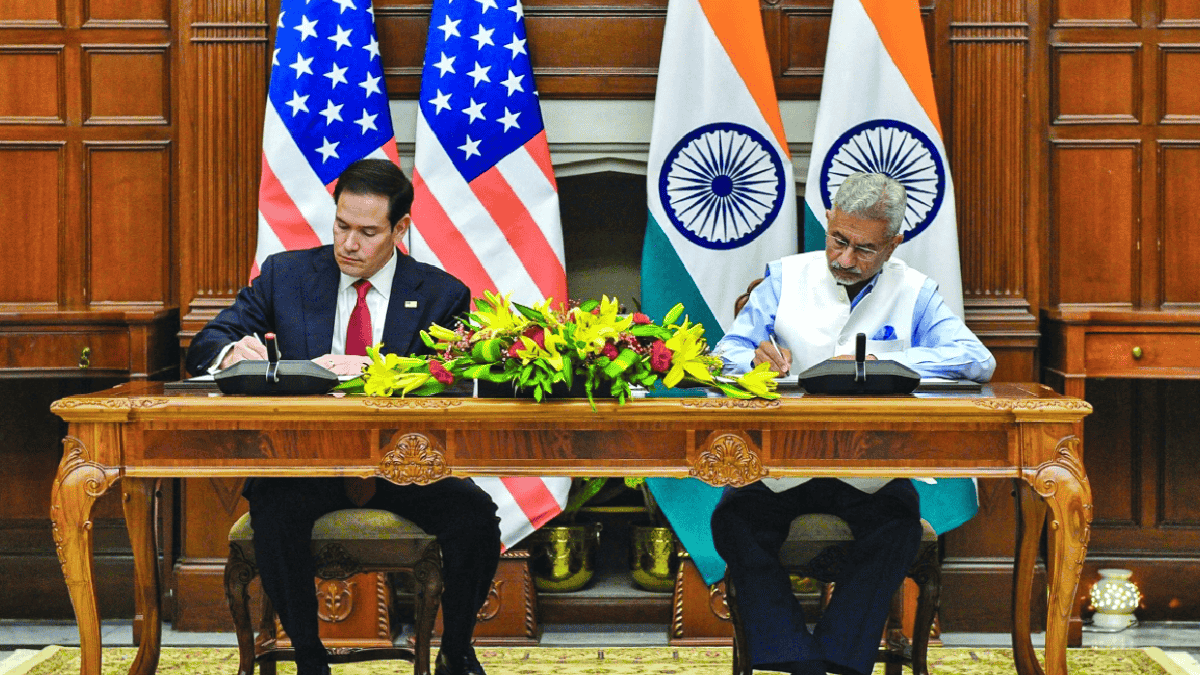
On May 26, 2026, India and the United States signed a landmark bilateral framework agreement aimed at securing the supply, mining, and processing of critical minerals and rare earth elements. Officially titled the Framework on "Securing of Supply in the Mining and Processing of Critical Minerals and Rare Earths", the pact was firmed up in New Delhi by India's External Affairs Minister Dr. S. Jaishankar and US Secretary of State Marco Rubio. Signed on the concluding day of Rubio’s four-day visit to India and aligned with the 11th Quad Foreign Ministers' Meeting, this agreement marks a major milestone in advancing the strategic partnership between the two nations. For serious aspirants seeking highly optimized preparation, this development forms a core part of the(https://www.atharvaexamwise.com) curriculum, intersecting international relations, resource geography, and national security.
This strategic agreement builds on the foundational commitments made during Prime Minister Narendra Modi's high-level meetings with President Donald Trump in Washington, D.C., in February 2025, where both nations identified secure critical mineral supply routes as a shared strategic priority. In a highly contested global landscape, the pact represents a move away from traditional free-market dependencies toward "trusted networks" of resource geostrategy, aimed at insulating clean energy, advanced electronics, and defense manufacturing from geopolitical vulnerabilities.
Geopolitical Imperatives: Countering Midstream Monopolies
The timing of this agreement is highly critical. Over the past decade, critical minerals have transitioned from simple economic commodities to primary instruments of geopolitical statecraft. High-technology and clean energy sectors in both India and the US faced severe disruptions following export curbs imposed by China. In April 2025, China restricted exports of heavy and medium Rare Earth Elements (REEs) and permanent magnets. This caused significant production bottlenecks for Indian automakers, who relied on China for 81.3% of their permanent magnet imports.
China’s dominance is not merely in raw mineral extraction (upstream) but is heavily concentrated in refining and processing (midstream). This concentration functions as a major geopolitical chokepoint. While raw ores can be mined globally, India completely lacks commercial-scale processing plants to transform raw ores into high-purity, battery-grade chemicals like lithium carbonate ($Li_2CO_3$), spherical graphite, or cobalt sulphate ($CoSO_4$). This technological gap leaves Indian industries highly vulnerable to single-source disruptions.
To counter these midstream vulnerabilities and attract international capital, the Government of India in March 2026 modified its Foreign Direct Investment (FDI) policy under Press Note 3 (PN3). This change fast-tracked investment proposals from Land Bordering Countries (LBCs) for "specified sectors"—such as rare earth magnets, polysilicon, and electronic components—guaranteeing a regulatory decision within 60 days. The new bilateral agreement with the US complements these regulatory modifications by opening direct channels for advanced technology transfer and public-private funding.
The Core Elements of the Bilateral Framework
The India-US framework is designed to establish secure and stable supplies by targeting every segment of the supply chain. The key mechanisms firmed up under this agreement include:
Comprehensive Value Chain Cooperation: Deepening bilateral engagement across mining, advanced extraction, processing, recycling, and associated investments.
Protection Against Market Coercion: Integrating both countries into international efforts to insulate sensitive supply chains from "coercive market practices" and reduce collective vulnerability to single-source monopolies.
US Financial Mobilization: Leveraging the US government’s commitment to support supply chain security projects with more than $30 billion through investments, loans, letters of interest, and export-import financing in partnership with the private sector.
Recycling and Scrap Recovery: Collaborating on the recovery and effective management of critical minerals and rare earths scrap to reduce raw material extraction demands and build a circular economy.
Regulatory Alignment: Harmonizing domestic laws, investment screening, and environmental standards to facilitate smooth cross-border joint ventures.
Midstream Processing Dominance vs. India's Import Dependency
The table below illustrates China's global processing share of crucial energy transition materials compared to India's domestic import vulnerabilities:
| Critical Mineral / Element | China's Global Processing Share (%) | India's Import Dependency (%) | Primary Strategic Applications |
|---|---|---|---|
| Graphite | 100% | 60% | Anodes in Lithium-ion batteries |
| Manganese | 90% | 50% | Steel alloy production, grid energy storage |
| Rare Earth Elements (REEs) | 90% (91% for permanent magnets ) | High (81.3% for magnets ) | Wind turbine generators, EV motors ($Nd_2Fe_{14}B$) |
| Cobalt | 75% | 100% | Aerospace superalloys, battery cathodes |
| Silicon | 70% | 100% (for high-purity silicon) | Semiconductors, Solar PV cells ($SiO_2$) |
| Copper | 60% | Domestic Ore Extraction Only | Power transmission, electric vehicle wiring |
| Lithium | 36% (Smelting) / 35% (Refining) | 100% | Lithium carbonate ($Li_2CO_3$) for EV batteries |
| Nickel | Over 50% | 100% | Battery chemistry ($NiSO_4$), stainless steel |
Integrating Global Alliances: FORGE, Pax Silica, and Quad Initiatives
A key focus for competitive exams is recognizing that this bilateral framework does not operate in isolation. It represents a highly coordinated, multi-layered approach to building alternative supply chains. This is driven by several overlapping international frameworks:
┌──────────────────────────────────────────┐ │ India-US Bilateral │ │ Critical Minerals Framework │ └────────────────────┬─────────────────────┘ │ ┌─────────────────────────────────┼─────────────────────────────────┐ ▼ ▼ ▼ ┌─────────────────────────┐ ┌─────────────────────────┐ ┌─────────────────────────┐ │ FORGE │ │ Pax Silica │ │ Quad Minerals │ │ Preferential Trading │ │ Silicon & AI Tech Stack│ │ E-Waste Recycling & │ │ Zone & Price Floors │ │ "Friendshoring" Hubs │ │ Financing Platform │ └─────────────────────────┘ └─────────────────────────┘ └─────────────────────────┘
1. Forum on Resource Geostrategic Engagement (FORGE)
Launched on February 4, 2026, during the Critical Minerals Ministerial in Washington, D.C., FORGE replaced the older Minerals Security Partnership (MSP). Chaired by the Republic of Korea until June 2026, FORGE acts as a preferential trading zone for its 54 participating countries. By setting border-adjusted reference prices and price floors, FORGE protects domestic producers in allied countries from predatory Chinese "price dumping," which historically made non-Chinese mining and processing projects financially unviable.
2. The Pax Silica Initiative
India officially became a signatory to the US-led Pax Silica initiative on February 20, 2026. Pax Silica is a strategic security framework focused on securing the entire technology stack required for Artificial Intelligence (AI) and semiconductor fabrication—spanning from silicon ($SiO_2$) refining to logistics. Under Pax Silica, signatories benefit from a $250 million investment fund and a streamlined "concierge" service for acquiring advanced American technology and chip-packaging systems.
A key global illustration of this is the 9,450-hectare AI-powered manufacturing hub being developed under the Luzon Economic Corridor in New Clark City, Philippines, designed as a special economic zone to bypass Chinese supply chains. This is a prime example of "friendshoring," where strategic tech ecosystems are intentionally restricted to trusted partners.
3. The Quad Critical Minerals Initiative
Concurrently with the bilateral pact, India, Japan, Australia, and the US firmed up a separate Quad-level critical minerals framework. This coalition aims to mobilize up to $20 billion in public and private financing for projects operated by companies headquartered in Quad partner countries, specifically prioritizing e-waste recycling and scrap recovery.
A detailed official release can be read directly on the Ministry of External Affairs press release page.
India's Domestic Policy: The National Critical Mineral Mission (NCMM)
While international alliances provide access to capital and advanced refining technology, India has significantly revamped its domestic mineral policy. In January 2025, the Union Cabinet approved the National Critical Mineral Mission (NCMM) to build self-reliance and reduce import dependencies. The NCMM is a 7-year strategic blueprint spanning from FY 2024–25 to FY 2030–31, backed by ₹16,300 crore in government spending and ₹18,000 crore in projected investments from Public Sector Undertakings (PSUs).
To ensure national mineral security, Union Mines Minister G. Kishan Reddy has directed organizations like the Geological Survey of India (GSI) and the Indian Bureau of Mines (IBM) to operate in "mission-mode" to meet the following targets :
1,200 Domestic Exploration Projects: GSI is executing targeted exploration programs, particularly for lithium, cobalt, nickel, and REEs, including offshore polymetallic nodule exploration.
50 Overseas Mine Acquisitions: Tasking PSUs like Khanij Bidesh India Limited (KABIL) to acquire strategic mineral assets in resource-rich regions like Latin America and Australia.
₹1,500 Crore Recycling Incentive Scheme: Rolled out on October 2, 2025, to incentivize end-of-life vehicle recycling, battery scrap retrieval, and e-waste processing. The target is to build an annual recycling capacity of 270 kilotonnes (kt) to recover 40 kt of critical minerals.
1,000 IP Patents: Fostering indigenous technologies by targeting the filing and approval of 1,000 patents in advanced mineral beneficiation, smelting, and recovery by 2031.
Centers of Excellence (CoEs): Setting up 7 premier CoEs (including IIT Bombay) to lead advanced research in metallurgical processes, alongside ₹210 crore in funding under the ANRF-MAHA CRM program.
Regulatory Simplifications: Introducing a dedicated clearance window on the PARIVESH portal and amending the Van (Sanrakshan Evam Samvardhan) Rules, 2023, to fast-track critical mineral projects on degraded forest lands.
Aspirants can study the complete domestic structure in the detailed analysis of National Critical Mineral Mission (NCMM). Additional details on the regulatory frameworks guiding domestic auctions are available at Ministry of Mines.
Why This Matters for Your Exam Preparation
For serious UPSC and competitive exam aspirants, this agreement offers significant insights into the changing dynamics of global geopolitics and economic security. Rather than treating critical minerals as simple industrial inputs, the civil services syllabus requires candidates to analyze them as instruments of national power and strategic sovereignty.
Relevance to GS Paper II (International Relations)
Shift to Geoeconomics: Illustrates the evolution of the India-US strategic partnership from standard defense procurements to deep technological and resource integration.
Minilateralism: Highlights how plurilateral frameworks like the Quad, Pax Silica, and FORGE are bypassing traditional multilateral institutions to establish fast-tracked, trusted supply networks.
Foreign Policy Autonomy: Demonstrates India's issue-based alignment strategy, allowing it to partner with the US-led Pax Silica while simultaneously pursuing independent mineral negotiations with other resource-rich partners.
Relevance to GS Paper III (Economic Development & Infrastructure)
Midstream Value Addition: Underscores the economic necessity of transitioning from raw mineral extraction to high-value chemical processing and refining to overcome the global processing chokepoints.
Industrial Security: Analyzes the risk mitigation strategies needed to protect India's critical sectors (automotive, aerospace, and defense manufacturing) from single-source monopolies and coercive market practices.
Relevance to GS Paper III (Science, Technology & Environment)
Decarbonization Pathways: Connects directly with India's climate commitments, including achieving 50% non-fossil fuel power capacity by 2030 and net-zero emissions by 2070, which depend heavily on securing stable mineral supplies.
Circular Economy Models: Highlights the regulatory and fiscal mechanisms of the National Critical Mineral Mission’s recycling incentives, emphasizing urban mining and e-waste recovery as viable alternatives to raw extraction.
Candidates should focus on integrating these multi-dimensional aspects—geopolitical, economic, and environmental—into their daily GK update and analytical answers for the competitive exam news today sections.