
UPSC Current Affairs 14 May 2026: Barkha Subba of Darjeeling Wins 'Green Oscar' (Whitley Award) – Special Report on Himalayan Salamander Conservation
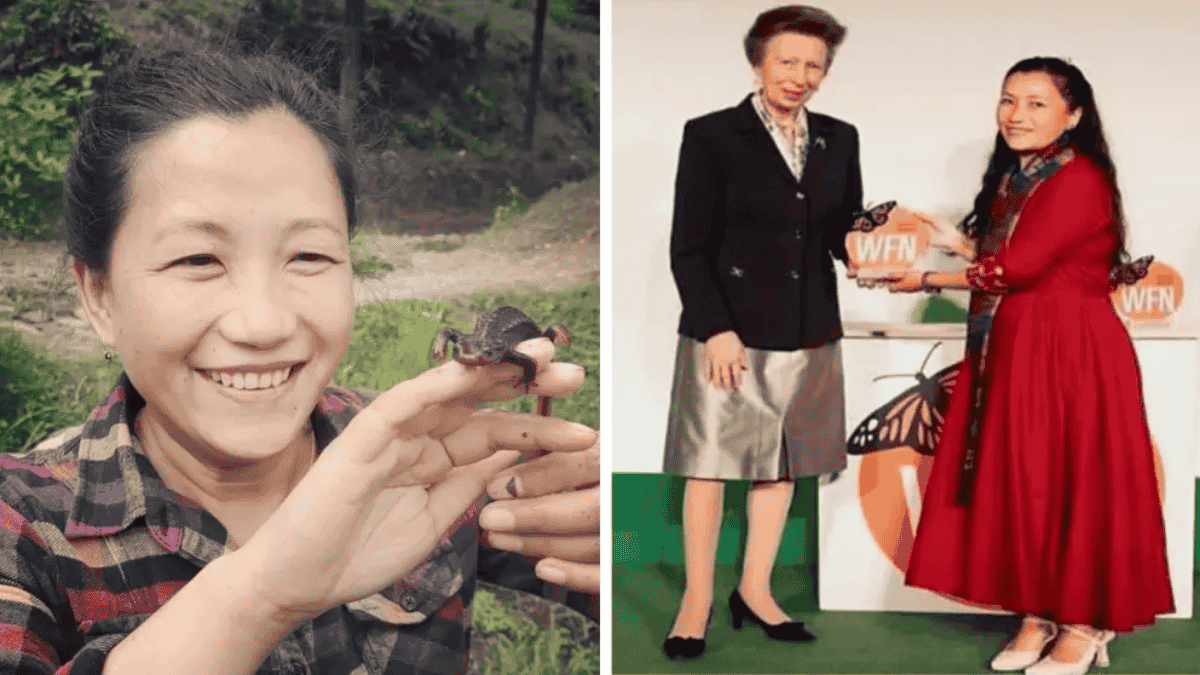
April 29, 2026, marked a historic achievement for India in the field of environmental conservation. During a grand ceremony held at the Royal Geographical Society in London, Darjeeling-based environmental researcher Dr. Barkha Subba was honored with the prestigious 'Whitley Award'. Globally recognized as the 'Green Oscar', this award is presented to experts performing outstanding work in wildlife conservation at the grassroots level. Alongside Barkha Subba, Pervin Shaikh from Mumbai also received the honor this year for her work in conserving the Indian Skimmer bird, highlighting the growing influence of Indian women scientists on the global stage.
The award was presented to Barkha Subba for her efforts to save the extremely rare and mysterious 'Himalayan Salamander' (Tylototriton himalayanus) and its shrinking wetland habitats in the Eastern Himalayas. Along with this honor, she received a prize of £50,000 (approximately ₹52 lakh), which she intends to use in the coming years to expand the salamander conservation network across India, Nepal, and Bhutan.
Whitley Award: The 'Green Oscar' of the Environment
The Whitley Awards were established in 1994 by Edward Whitley through the 'Whitley Fund for Nature' (WFN). The award recognizes conservationists in the 'Global South' (developing nations) who protect biodiversity through a coordination of scientific evidence and community participation. For the 2026 awards, over 270 applications were received worldwide, from which 12 candidates were shortlisted and ultimately 6 winners were announced.
Whitley Award 2026: Key Details
| Description | Details |
|---|---|
| Awarding Organization | Whitley Fund for Nature (WFN), United Kingdom |
| Establishment Year | 1994 |
| Prize Money | £50,000 (To each winner) |
| Patron | HRH The Princess Royal (Princess Anne) |
| Indian Winners 2026 | Barkha Subba and Pervin Shaikh |
| Whitley Gold Award 2026 | Farwiza Farhan (Indonesia) |
The Whitley Gold Award is given to past winners who have significantly scaled up their work. This year, the honor went to Indonesia’s Farwiza Farhan for protecting the 'Leuser Ecosystem'. From the perspective of UPSC and other competitive exams, it is essential to know that the Whitley Fund provides not just financial aid, but also media training and global networking opportunities to amplify the winners' voices internationally.
Himalayan Salamander: 'Survivor of a Lost World'
The title of Barkha Subba’s project, "Survivor of a Lost World: Saving the Himalayan Salamander and its Wetlands," reflects the evolutionary importance of this creature. The Himalayan Salamander is an amphibian that can be scientifically described as a 'Living Fossil', as it has existed on Earth in its original form for millions of years.
Biological Classification and Physical Characteristics
The Himalayan Salamander (Tylototriton himalayanus) is locally known in Nepali as 'Pani Kukur' (Water Dog). Until 2015, it was believed that only one species, Tylototriton verrucosus, existed in India. However, detailed molecular and morphological analysis proved that the species in the Eastern Himalayas is distinct, leading to its naming as Tylototriton himalayanus.
| Parameter | Himalayan Salamander (T. himalayanus) |
|---|---|
| Length | 13 cm to 19 cm |
| Lifespan | Approximately 11 years |
| Habitat | Wetlands at altitudes of 1000 to 3000 meters |
| Color | Dark brown or black with orange-brown warts |
| Special Trait | Ability to regenerate entire limbs |
A distinctive physical feature of the salamander is the wart-like protrusions found on both sides of its body, which may act as a defense mechanism. They have a blunt, oval head and a laterally compressed tail that aids in swimming.
The Importance of Breeding and Philopatry
The greatest threat to the survival of the Himalayan Salamander is its 'Philopatry' instinct. This is the process where an organism always returns to the specific pond or water body where it was born to breed and lay eggs. If that specific pond dries up or is destroyed due to development, pollution, or climate change, an entire generation of salamanders can perish because they do not adapt easily to new locations.
Breeding primarily occurs during the monsoon when these creatures emerge from the forest floor to migrate toward seasonal ponds. They lay eggs on submerged vegetation and are extremely sensitive regarding the safety of these sites.
Conservation Challenges: Wetland Destruction and Fungal Disease
The hills of Darjeeling are world-famous for tea cultivation and tourism, but these very activities have become a crisis for the salamander's habitat.
Anthropogenic Pressure and Habitat Fragmentation: Wetlands in the Darjeeling Himalayan region are disappearing rapidly. Urbanization is leading to ponds being filled to create "concrete jungles." Unregulated tourism and a lack of waste management have polluted mountain reservoirs. Furthermore, the diversification of tea gardens and the exploitation of water sources are destroying breeding grounds. Currently, only about 30 breeding sites remain in the Darjeeling region, most of which are located on private land or within tea estates outside protected areas.
The Threat of Chytrid Fungus: Globally, the most lethal threat to amphibians is a disease called 'Chytridiomycosis', spread by the fungi Batrachochytrium dendrobatidis (Bd) and Batrachochytrium salamandrivorans (Bsal). This fungus affects the skin of amphibians, obstructing their respiratory process and leading to death. Barkha Subba’s project focuses specifically on the monitoring and screening of these deadly diseases to prevent a potential pandemic in the Himalayan region.
Barkha Subba’s Conservation Model: Community Leadership
Barkha Subba herself hails from an indigenous community in Darjeeling and believes that local people have been the protectors of these creatures long before scientists arrived.
Indigenous Knowledge and Cultural Connection
In many villages of Darjeeling, ponds and water bodies are linked to local deities and rituals, resulting in their preservation as sacred sites. Salamanders are often regarded as the guardians of these sacred water bodies. Barkha’s plan involves engaging over 200 local individuals, including tea garden workers, youth, and leaders, to be trained in conservation techniques and eco-tourism.
Seven Key Targeted Sites for Conservation:
| Site Name | Type of Ownership/Management |
|---|---|
| Margaret's Hope | Within a Tea Estate |
| Nakhapani | Within a Tea Estate |
| Namthing Biodiversity Heritage Site | Government Land |
| Majhidhura | Joint management by Forest Dept. and Communities |
| Mirik | Privately owned wetland |
| Pokhriabong (Two sites) | Shared between Forest Dept. and Local Communities |
Conserving these sites is not only essential for the salamander but also serves the purpose of catchment area protection, providing clean water to the communities living downstream.
The Vision of Transboundary Cooperation
The habitat of the salamander is not restricted by political borders. The species is also found in the Ilam district of Nepal and western Bhutan. Barkha Subba aims to create a 'Transboundary Framework' where all three countries collaborate to protect the species and their shared wetlands. This initiative could prove revolutionary for maintaining the ecological integrity of the Eastern Himalayan region.
Legal Protection Status in India
For UPSC aspirants, this section is critical as questions regarding the sections and schedules of the Wildlife Act are frequent.
Wildlife (Protection) Act, 1972 (WPA): The Himalayan Salamander is granted legal protection under Schedule I in India. Following the Wildlife (Protection) Amendment Act, 2022, which rationalized the schedules, this creature remains in the highest protection category.
Significance of Schedule I: Species in this category are subject to an absolute ban on hunting, trade, or illegal possession. Violations carry the harshest penalties (fines up to ₹1,00,000 and lengthy prison sentences).
Species Name: Post-amendment, it is explicitly listed as Tylototriton himalayanus.
International Conservation Status:
IUCN Red List: Classified as 'Vulnerable'. The Red List is a critical indicator of the health of the world’s biodiversity.
CITES: Listed in Appendix II, which regulates international trade to ensure it does not threaten the survival of the wildlife.
Role of Zoos in Conservation: 'Ex-situ' Conservation
The Padmaja Naidu Himalayan Zoological Park (PNHZP) in Darjeeling has been the hub for the Conservation Breeding program of the salamander. Launched in 2000, this program brings salamanders from their natural habitats (such as Sukiapokhri) to be reared and bred in the controlled environment of the zoo. Currently, the population in the zoo is growing, serving as a vital genetic pool for future reintroduction into the wild.
Barkha Subba and Pervin Shaikh: A New Example of Female Leadership
Alongside Barkha Subba, another Indian conservationist, Pervin Shaikh, was honored with the Whitley Award 2026. Pervin Shaikh works to save the endangered 'Indian Skimmer' bird in the Chambal River region. The success of both these women scientists demonstrates that conservation in India is no longer limited to government departments but has become a new dimension of research and community engagement.
In her award speech, Barkha Subba stated, "Meeting a salamander feels like meeting a messenger from deep evolutionary time – a reminder of how long nature has endured and how quickly we could lose it."
Why This Matters for Your Exam Preparation
This news is mandatory for UPSC and other competitive exams for the following reasons:
Environment & Ecology (GS Paper III):
Ecological significance of 'Indicator Species' like the Himalayan Salamander.
Scientific understanding of the global Amphibian Crisis and Chytrid Fungus.
Grassroots Community-led Conservation versus government management.
Polity & Governance (GS Paper II):
Analysis of the Wildlife (Protection) Act, 1972 and the major amendments of 2022.
Implementation of Wetland (Conservation and Management) Rules and the Ramsar Convention in India.
International Relations (GS Paper II):
Transboundary Cooperation for biodiversity between India, Nepal, and Bhutan.
The role of global institutions like the Whitley Fund for Nature (WFN) and IUCN.
Prelims (Mapping & Facts):
Map-based questions on Namthing, Mirik, and the Darjeeling hills.
Factual questions on the salamander’s unique physical traits and breeding habits (e.g., Philopatry).
At Atharva Examwise (www.atharvaexamwise.com), we continuously bring you such significant and deeply researched daily GK updates that not only increase your knowledge but also help you write analytical answers in examinations.