
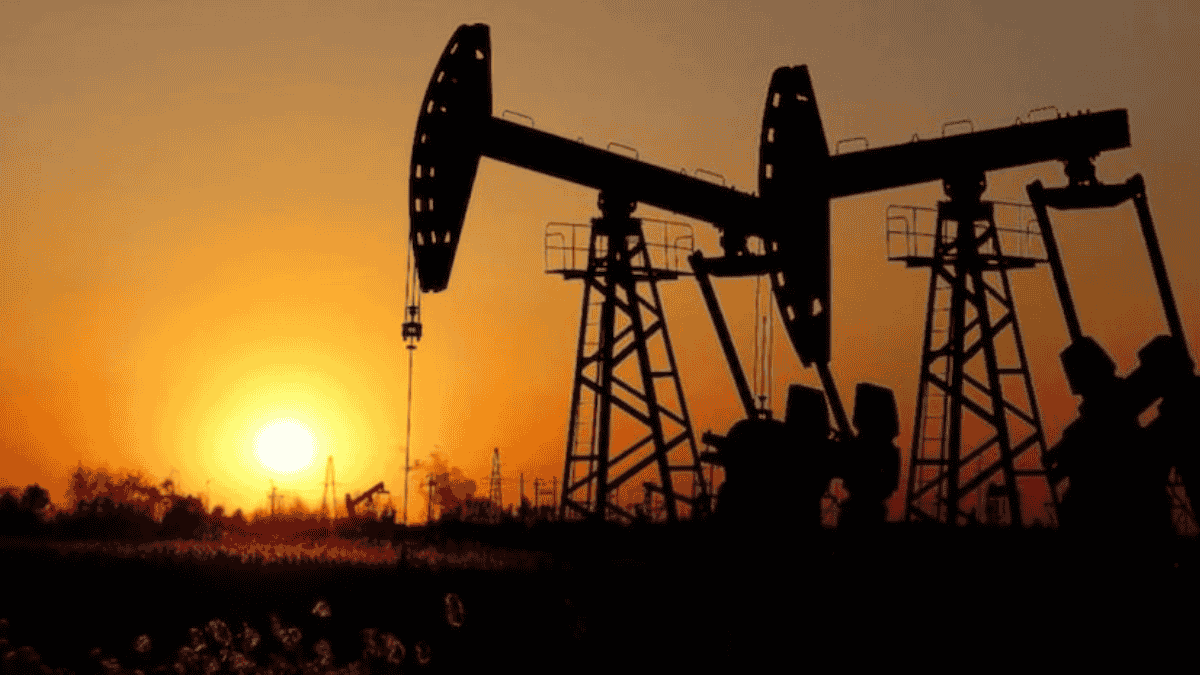
UPSC Current Affairs May 7, 2026: Windfall Tax, West Asia Crisis, and Impact on the Indian Economy - Atharva Examwise Daily GK Update
In today's global economic landscape, geopolitical instability and fluctuations in energy markets have forced governments to reconsider their fiscal policies. Specifically, the West Asia Crisis of 2026 has caused an unprecedented surge in crude oil prices, leading to massive profit increases for global energy companies. Against this backdrop, the issue of 'Windfall Tax' has once again moved to the center of international discussion. For serious candidates preparing for UPSC and other State Public Service Commission exams, understanding this concept, its historical context, current implementation, and economic implications is essential. This report provides a detailed analysis of the latest data, Government of India decisions, and global trends as of May 7, 2026.
The Concept of Windfall Tax: Etymology and Economic Logic
The literal meaning of 'Windfall' refers to a gain that occurs suddenly without any prior planning or effort. Historically, its roots are tied to orchards where a strong gust of wind would cause fruits to fall to the ground on their own. Individuals gathering these fruits received a "sudden gain" without any labor or investment. In modern economics, a Windfall Tax is a high tax levied on companies or industries that earn higher-than-normal profits due to external circumstances, such as war, global supply chain disruptions, or natural disasters.
From an economic perspective, it is considered a tax on 'Supernormal Profit' or 'Economic Rent'. This profit is not the result of the company's own business efficiency, innovation, or strategic investment, but rather stems from abnormal market conditions. Governments argue that since this additional profit is gained at the expense of society (through higher prices), a portion of it should be reclaimed by the state for public welfare, reducing the fiscal deficit, and balancing inflationary pressures.
Historical Evolution of Windfall Tax
The use of Windfall Tax is not a new phenomenon; its history is filled with government efforts to raise revenue during times of crisis.
World War I and the American Experience: Before the United States entered WWI, the annual profits of companies like US Steel and DuPont increased by more than 1,000% in 1917. To curb these abnormal gains and meet war expenses, the 'War Efforts Profit Tax' was implemented. Levied in October 1917, this tax raised nearly $7 billion, which was the largest source of wartime taxation at the time, covering about 40% of America's war expenditures. However, it was abolished in 1921 as large corporations began exploiting legal loopholes and the burden on smaller companies increased.
The 1980s and the Jimmy Carter Administration: Following the oil shocks of the late 1970s, President Jimmy Carter’s administration revived the 'Crude Oil Windfall Profit Tax' (WPT) in 1980. Although intended to generate massive revenue, according to a 2006 Congressional Research Service (CRS) report, it generated only $80 billion in gross revenue between 1980 and 1988, compared to an estimated $393 billion. This serves as evidence that actual revenue collection from windfall taxes often falls short of estimates.
COVID-19 and the Russia-Ukraine War (2022): In recent years, the sudden surge in demand post-COVID-19 and the Russia-Ukraine war in 2022 led to a massive spike in energy prices. Consequently, profits of global giants like Shell, Chevron, BP, and Total Energies doubled to $219 billion in 2022. The International Energy Agency (IEA) estimated that the oil industry's profits in 2022 would be double those of 2021. This situation prompted Britain, India, and several European countries to impose windfall taxes.
The 2026 West Asia Crisis and Impact on Global Energy Markets
The year 2026 has presented the greatest challenge to global energy security to date. On February 28, 2026, attacks carried out by the United States and Israel against Iran under 'Operation Epic Fury', and the assassination of Iranian Supreme Leader Ali Khamenei, plunged the entire West Asia region into the fires of war.
Blockade of the Strait of Hormuz
The most devastating response to this conflict has been the total blockade of the Strait of Hormuz by Iran's Revolutionary Guard Corps (IRGC). The Strait of Hormuz is the world's most vital energy chokepoint, through which approximately 25% of global maritime oil trade and 20% of Liquefied Natural Gas (LNG) pass.
After Iran officially declared the waterway "closed" on March 4, 2026, tanker traffic dropped by more than 70% and eventually reached near zero. The International Energy Agency (IEA) has termed this the "largest supply disruption" in the history of the global oil market.
| Date (2026) | Event | Market Response |
|---|---|---|
| February 28 | Launch of Operation Epic Fury | Global concern over supply security |
| March 4 | Total closure of the Strait of Hormuz | Oil exports halted; QatarEnergy declares Force Majeure |
| March 8 | Brent Crude crosses $100 per barrel | Reached this level for the first time in four years |
| March 27 | Expansion of the blockade by IRGC | Shipping insurance rates increase 4 to 6 times |
| Mid-March | Sharp decline in global oil inventories | Record increase in refinery margins (Cracks) |
Price Surge and Economic Impact
Due to this crisis, March 2026 saw the largest monthly increase in oil prices in history, with Brent Crude prices peaking at $126 per barrel. The most severe impact has been on the Asia-Pacific region, which relies on this route for 75% of its oil and 59% of its LNG exports. Countries like India, China, Japan, and South Korea are on the front lines of this crisis.
India's Response: Revival of Special Additional Excise Duty (SAED)
As a result of this extreme rise in global prices and the West Asia crisis, the Indian government decided on March 27, 2026, to reintroduce the Windfall Tax or Special Additional Excise Duty (SAED) on the export of petroleum products and domestic crude oil production. Previously, it had been removed in December 2024 when prices fell below $75 per barrel.
Functioning of SAED and Fortnightly Review
India’s windfall tax mechanism is dynamic. The government reviews tax rates every 14 days based on the average international crude oil prices and refinery margins. This review is notified by the Ministry of Finance through the Gazette and becomes effective immediately to prevent hoarding by companies.
New Rates effective from May 1, 2026:
Following the recent review (April 30, 2026), the government revised the rates in view of a slight softening in energy prices and the need to ensure domestic availability.
| Product | Revised Rate (from May 1, 2026) | Previous Rate (from April 11, 2026) |
|---|---|---|
| Diesel Export (SAED) | ₹23 per liter | ₹55.5 per liter |
| ATF (Aviation Fuel) Export | ₹33 per liter | ₹42 per liter |
| Petrol Export | Zero (0) | Zero (0) |
| Road & Infrastructure Cess (RIC) | Zero on Diesel | Applicable |
Objectives of Windfall Tax in India
Fiscal Stability: Due to the rise in global prices, the government has cut regular Excise Duty to provide relief to consumers, resulting in a revenue loss of approximately ₹7,000 crore per fortnight. Windfall Tax helps offset this deficit (estimated at ₹1,500 crore per fortnight).
Ensuring Domestic Availability: When international prices are high, private refiners like Reliance Industries (RIL) and Nayara Energy prioritize exports over the domestic market. By imposing high taxes on exports, the government encourages them to first meet the needs of the Indian market.
Inflation Control: Rising fuel prices increase transportation costs, leading to a rise in food and other commodity prices (Headline Inflation). Revenue from the Windfall Tax is used for fuel subsidies and price stabilization.
Global Case Study: United Kingdom’s Energy Profits Levy (EPL)
Like India, Britain has made extensive use of windfall taxes to deal with the energy crisis. Launched in May 2022 as the 'Energy Profits Levy' (EPL), the tax was initially 25%, later increased to 35%, and then to 38% in November 2024.
The UK government aims to use this revenue to provide relief to consumers struggling with rising electricity and gas bills. In the November 2024 budget, the duration of this levy was extended to March 2030, reflecting its long-term nature. However, companies operating in the North Sea are strongly opposing it, claiming that an effective tax rate of 78% (EPL + Corporation Tax) is deterring new investment.
| Financial Year | UK Oil & Gas Revenue (inc. EPL) | Comments |
|---|---|---|
| 2022-23 | £9.9 Billion | Peak due to high prices and start of EPL |
| 2023-24 | £3.6 Billion | Decrease due to fall in prices |
| 2024-25 | £2.9 Billion | Estimated |
| 2025-26 | £2.7 Billion | OBR Forecast |
Other Key Reforms in India’s Energy Sector: Electricity (Amendment) Rules 2026
Alongside the Windfall Tax, the Indian government has also accelerated structural reforms in the energy sector. On March 13, 2026, the Ministry of Power notified the 'Electricity (Amendment) Rules 2026', which bring major changes to the framework of 'Captive Power Projects'.
Main Provisions and the Goal of 'Viksit Bharat @ 2047'
These new rules became effective on April 1, 2026, and aim to simplify electricity generation for industrial consumers. This reform aligns with the vision of 'Viksit Bharat @ 2047', which aims to increase per capita electricity consumption to 2,000 kWh by 2030 and 4,000 kWh by 2047.
Clear Definition of Ownership: 'Ownership' will now include subsidiaries and holding companies, making it easier for corporate groups to attain captive status.
End of the Proportionality Principle: For 'Association of Persons' (AoP), consumption will no longer need to be strictly aligned with ownership for each individual member. Conditions of 51% consumption and 26% ownership can now be met collectively.
Energy Storage Systems (ESS): The new rules explicitly recognize that electricity used through storage systems (like batteries) will also be considered captive consumption.
Verification Mechanism: Verification of inter-state captive consumption will now be done through a centralized process by the National Load Despatch Centre (NLDC), reducing disputes.
Arguments For and Against Windfall Tax
This topic is extremely important for Mains answer writing.
Arguments In Favor (Pros):
Revenue Generation: During times of crisis, the government gets additional funds for public services and welfare schemes.
Social Justice: Ensures that companies making excessive profits from global turmoil contribute a fair share to society.
Market Stability: Curbs excessive speculation and profiteering, leading to stability in domestic prices.
Fiscal Buffer: Provides a non-tax revenue source without raising direct taxes.
Arguments Against (Cons):
Investment Deterrent: Due to an uncertain tax regime, companies are reluctant to make long-term investments in oil and gas exploration.
Capital Flight: Companies may move to countries where the tax regime is more favorable and stable.
Administrative Complexity: It is difficult to define exactly what 'windfall' profit is and what the limit of normal profit should be.
Regressive Effect: Critics believe it merely punishes success and goes against free-market principles.
Conclusion and Way Forward
The situation as of May 7, 2026, indicates that Windfall Tax is no longer just a temporary measure but has emerged as a "Fiscal Stabilizer". Due to ongoing tensions in West Asia and the uncertainty of the Strait of Hormuz, volatility in oil prices is likely to persist. Although US President Donald Trump has signaled opening the waterway through 'Project Freedom' and spoke of progress in peace talks, the global economy will remain under pressure until actual supply is restored.
The challenge for India is to maintain a fine balance between providing relief to domestic consumers and attracting foreign investment in the oil sector. In the future, the government may need to develop a more transparent and predictable tax formula that activates automatically when oil prices exceed a certain threshold (e.g., $75–$80 per barrel) to reduce market uncertainty.
Why this matters for your exam preparation
From the perspective of UPSC and other competitive exams, the importance of the Windfall Tax and the West Asia crisis is as follows:
GS Paper 3 (Indian Economy): A major issue under themes related to Mobilization of Resources, Inclusive Growth, and Government Budgeting. It is mandatory to understand the impact of Windfall Tax on the Fiscal Deficit and Current Account Deficit (CAD).
GS Paper 2 (International Relations): Conflict in West Asia, India's energy diplomacy, and the security of global trade routes (like the Strait of Hormuz) are vital to India's strategic interests.
GS Paper 3 (Energy and Infrastructure): India's energy security policy, dependence on oil imports (85%), and new amendments in the power sector (Electricity Amendment Rules 2026) are critical parts of the infrastructure sector.
Preliminary Examination (Prelims): Direct questions can be asked on current SAED rates, the type of tax (Excise Duty), the geographical location of the Strait of Hormuz, and data from major global energy institutions (IEA, OBR).
Essay and Mains: When writing on topics like "Economic Growth vs. Social Justice" or "India's Economic Resilience in Global Crises," the example of Windfall Tax provides a strong argument.
Therefore, candidates are advised to keep a constant watch on changes in these taxes through the Fortnightly Review and political developments in West Asia. (Stay tuned for regular updates on Atharva Examwise).