
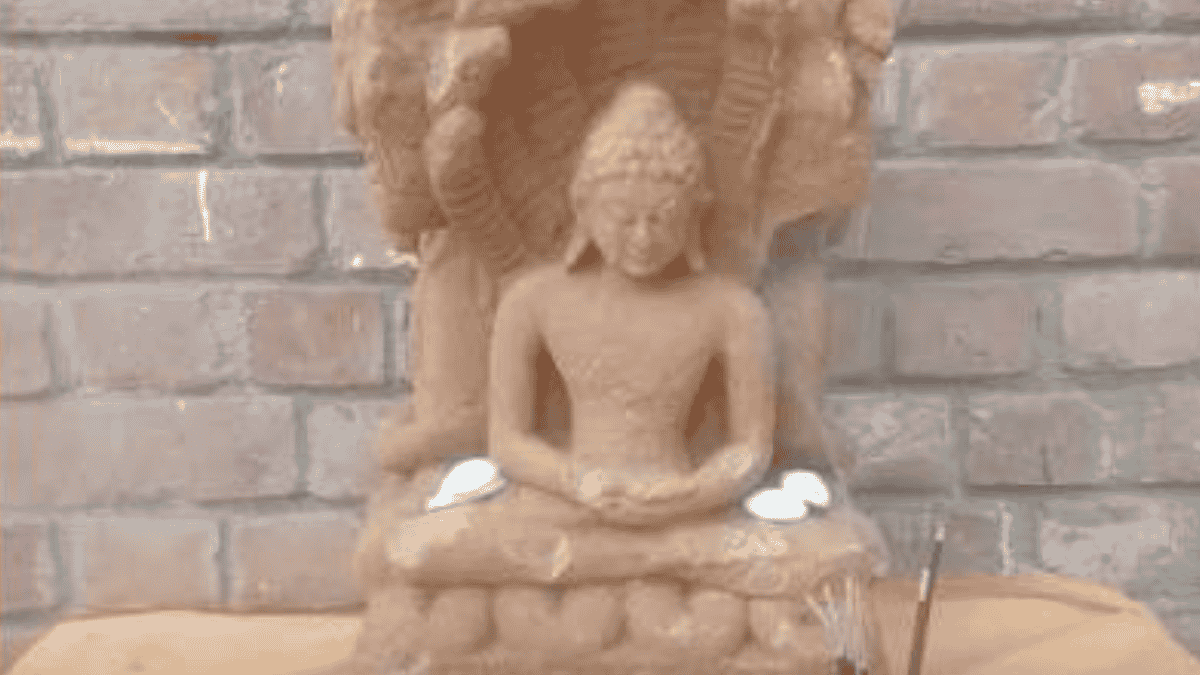
UPSC Current Affairs 5 May 2026: 'Nephrite Jade' Buddha Statue, Buddhist Architecture, and a Comprehensive Analysis of Global Mineral Distribution
Earth, rich in natural resources, occasionally yields extraordinary treasures that are known not just for their physical beauty, but for their transformation into global symbols of art, culture, and spirituality. One such exceptional event occurred in 2000 in Northwest British Columbia, Canada, when a massive and extremely high-quality 'Nephrite Jade' boulder was discovered. Weighing approximately 18 tons, this rare rock was named 'Polar Pride' and was considered the "discovery of the millennium." Today, this stone is spreading the message of peace across the globe as the 'Jade Buddha for Universal Peace.' From the perspective of the Union Public Service Commission (UPSC) and other state-level competitive examinations, this topic is highly significant for General Studies (GS) Paper I under 'Art and Culture' and 'World Geography,' as well as for the cultural aspects of International Relations.
Geological Introduction and Global Distribution of Nephrite Jade
Jade is not just a single stone; it is a general name for two distinct minerals: Nephrite and Jadeite. In 1863, French mineralogist Alexis Damour first proved that what the world considered 'Jade' was actually two different mineral structures. Nephrite Jade is famous for its toughness, smooth texture, and attractive green color, and has been used since ancient times for jewelry, sculpture, and religious artifacts.
Nephrite vs. Jadeite: A Comparative Study
Questions based on the physical properties of minerals are frequently asked in competitive exams. The table below clarifies the key differences between Nephrite and Jadeite:
| Feature | Nephrite | Jadeite |
|---|---|---|
| Mineral Group | Amphibole | Pyroxene |
| Chemical Composition | Silicate of Calcium and Magnesium | Silicate of Sodium and Aluminum |
| Hardness (Mohs Scale) | 6.0 to 6.5 | 6.5 to 7.0 |
| Durability/Toughness | Extreme (due to fibrous structure) | High (but less than Nephrite) |
| Specific Gravity | 2.90 to 3.02 | 3.3 to 3.5 |
| Luster | Greasy or Waxy | Vitreous (Glass-like) |
| Transparency | Translucent to Opaque | Transparent to Opaque |
Geological Formation Process of Jade
Both Nephrite and Jadeite are found in metamorphic rocks, usually formed in current or ancient subduction zones. Jadeite forms in high-pressure but relatively low-temperature environments, making it rarer than Nephrite. Nephrite forms when ultramafic rocks (like serpentinite) undergo chemical exchange with silica-rich rocks. The Nephrite deposits found in British Columbia, Canada, are considered the largest and best quality in the world.
Global Distribution and Major Mining Regions
Canada currently plays a vital role in the production and export of Nephrite Jade. Major mining areas in British Columbia include Cassiar, Omineca, and Dease Lake. Apart from Canada, significant reserves are found in:
China: The Hotan region of Xinjiang is world-famous for its "Mutton Fat Jade."
Australia: Cowell in South Australia has the world's largest known deposit of Nephrite Jade.
New Zealand: Here it is called 'Pounamu' or Greenstone and is an integral part of Maori culture.
Myanmar: The world's largest source of Jadeite (specifically Imperial Jade).
History and Construction of the 'Jade Buddha for Universal Peace'
The discovery of the 18-ton 'Polar Pride' boulder in British Columbia in 2000 stunned gemologists. The rock was of 'gem quality,' with a deep and attractive green color symbolizing its purity. A significant portion of this massive rock was purchased by an Australian Buddhist follower, Ian Green, on the advice of his spiritual master, Lama Zopa Rinpoche. Rinpoche’s vision was to transform this stone into a magnificent Buddha statue that would "illuminate the world and help prevent destructive events like war."
Artistic Creation and International Collaboration
The creation of this statue is an excellent example of the renaissance of Buddhist art in the modern era. Its construction involved collaboration from several countries:
Canada: Provided the rare 18-ton Nephrite stone.
Thailand: The stone was sent to Thailand, where skilled artisans worked on it for five years (from 2003 to 2008).
Nepal: The face of the statue was painted with pure, non-reflecting gold by a master painter from Nepal.
Australia: The design was prepared by Australian and Thai sculptors, based on the Buddha statue inside the Mahabodhi Temple in Bodh Gaya.
Once completed, the statue weighed approximately 4 tons and stood 2.5 to 2.7 meters tall. It sits on a solid Alabaster throne. On December 1, 2009, the statue was formally consecrated by His Holiness the Dalai Lama in Sydney, Australia.
Mahabodhi Temple, Bodh Gaya: Inspiration and Architecture
The form of the 'Jade Buddha for Universal Peace' is inspired by the Buddha statue located within the Mahabodhi Temple in Bodh Gaya, India. For UPSC, studying the architecture and history of the Mahabodhi Temple is mandatory as it is one of India's most significant cultural sites.
Historical Significance of Mahabodhi Temple
The Mahabodhi Temple is located where Siddhartha Gautama attained Enlightenment approximately 2,500 years ago. Emperor Ashoka first built a temple at this site in the 3rd century BCE. The current brick temple is believed to date back to the Gupta Period (5th–6th century CE) and is one of the oldest surviving brick temples in India.
| Important Date/Period | Event |
|---|---|
| 3rd Century BCE | Construction of the first temple and 'Vajrasana' by Emperor Ashoka. |
| 5th–6th Century CE | Reconstruction of the current brick temple during the Gupta Period. |
| 8th–12th Century CE | Expansion and decoration of the temple during the Pala Dynasty. |
| 19th Century CE | Restoration by Sir Alexander Cunningham and Burmese Buddhists. |
| 2002 | Declared a UNESCO World Heritage Site. |
Architectural Features
The architectural style of the Mahabodhi Temple is unique—neither purely Nagara nor purely Dravidian. Its central Shikhara (spire) is 55 meters high and pyramidal, adorned with various layers and carved figures. Four smaller identical spires stand at the corners of the temple, adding grandeur to the main structure. The temple complex houses the 'Vajrasana' (Diamond Throne) and the sacred 'Bodhi Tree', which are the greatest centers of faith in Buddhism.
Cultural Diplomacy and Global Journey
Following its consecration, the Jade Buddha embarked on a decade-long world tour from 2009 to 2018, aimed at spreading a message of peace and harmony.
Wide Reach: The statue traveled to over 120 cities in 20 countries, including Vietnam, the USA, India, Singapore, and Malaysia.
Devotees: It is estimated that over 12 million people viewed the statue during this journey.
Mandala Lights: During exhibitions in Vietnam and elsewhere, mysterious and colorful lights (Mandala Lights) were captured on camera around the statue, which followers regarded as a spiritual miracle.
This journey also became a symbol of India's 'Soft Power' and the global spread of Buddhist heritage, as the core inspiration of the statue was rooted in Indian history.
The Great Stupa of Universal Compassion: Permanent Residence
In May 2018, the Jade Buddha was permanently installed at 'The Great Stupa of Universal Compassion' located in Bendigo, Victoria, Australia.
Features of the Stupa
This stupa is considered the largest Buddhist monument in the Western world. Its architecture is based on the famous 'Gyantse Stupa' of Tibet.
Dimensions: It is 50 meters high and 50 meters wide at the base.
Purpose: It is not just a religious center, but a place where people of all faiths can come for peace and meditation.
Preservation: The stupa is designed to remain safe for the next 1,000 years.
Daily GK Update: Important Events of May 2026
Around 5 May 2026, several significant cultural festivals are being organized at The Great Stupa complex, which are relevant for current affairs:
ILLUMIN8: Festival of Peace and Light (2 May 2026): Commemorates the birth, enlightenment, and Mahaparinirvana of Buddha (Saga Dawa). It features light installations, vegetarian food fairs, and Buddhist rituals.
Lumbini International Festival (9 May 2026): Dedicated to the rich culture of Nepal and the heritage of Buddha’s birthplace. Major attractions include a Nepalese cultural expo and handicraft markets.
Vegecareian Festival: An annual event promoting the benefits of vegetarianism and compassion toward all living beings.
Other Notable Jade Buddha Statues
There are several other famous Buddha statues made of Jade around the world, which may appear in "Match the Following" questions in exams:
Shwedagon Pagoda (Myanmar): Home to several ancient and valuable Jade Buddhas.
Wat Phra Kaew (Thailand): Known as the 'Emerald Buddha,' it is actually made of Jade and is Thailand's most sacred symbol.
Jade Buddha Temple (Shanghai, China): Houses two white Jade Buddha statues brought from Myanmar.
Mining Techniques and Environmental Impact
For UPSC GS Paper III (Economy and Environment), understanding the challenges of Jade mining is essential. Due to the extreme toughness of Nephrite Jade, extracting it from mountains is a difficult task.
Modern Technology: While explosives were used previously, diamond-coated wire saws and hydraulic splitters are now used to protect the environment and the stone.
Harsh Conditions: Mining in British Columbia is limited to only 60–90 days during the summer because the region faces extreme cold and snowfall for the rest of the year.
Why This Matters for Your Exam Preparation
This article connects several vital dimensions for UPSC and other competitive exams:
Art and Culture (GS Paper I): Questions can be asked on Mahabodhi Temple architecture, the evolution of Buddha sculptures (referencing Gandhara and Mathura styles), and the global preservation of Buddhist heritage in modern times.
Geography (GS Paper I): Knowledge of mineral classification (silicates, amphibole, pyroxene), the geological origin of Nephrite and Jadeite, and their distribution in countries like Canada, Australia, and Myanmar is important for Prelims.
International Relations (GS Paper II): Cultural diplomacy, India's 'Soft Power,' and the role of Buddhism as a cultural bridge between Australia, Canada, and India can be useful in Mains answer writing.
General Knowledge (GK): UNESCO World Heritage sites, major international festivals (ILLUMIN8, Lumbini Festival), and scientific facts related to gemstones can be asked directly.
To make your preparation more effective, be sure to read our detailed articles on 'Ancient Indian History' and 'World Mineral Resources' available at Atharva Examwise (www.atharvaexamwise.com).