
Current Affairs April 2026: India’s Nuclear Renaissance and the Kalpakkam PFBR Criticality — A Comprehensive UPSC Daily GK Update
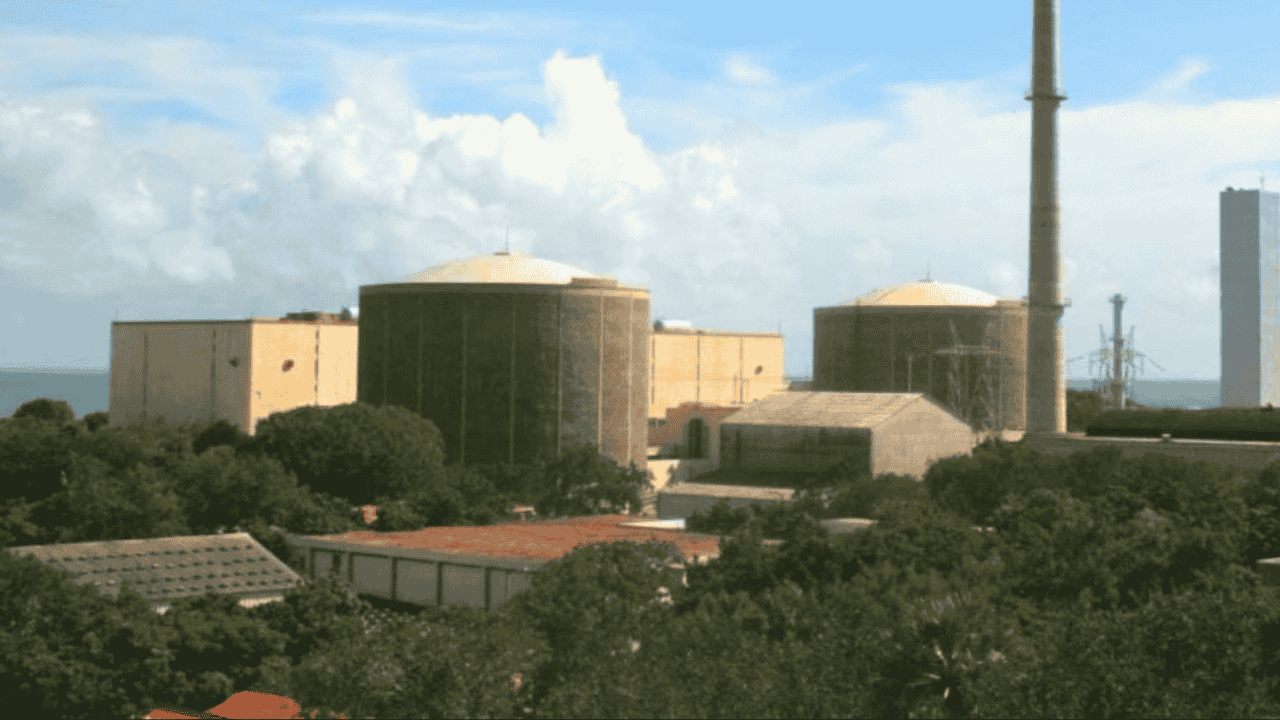
The landscape of the Indian energy sector witnessed a structural transformation on the evening of April 6, 2026, marking a watershed moment in the nation's quest for strategic autonomy and energy security. At precisely 08:25 PM, the Prototype Fast Breeder Reactor (PFBR) at Kalpakkam, Tamil Nadu, attained its first criticality—the initiation of a self-sustaining nuclear fission chain reaction. This development is not merely a scientific milestone; it is the functional activation of the second stage of India’s long-celebrated three-stage nuclear power programme. For aspirants tracking UPSC current affairs, this event represents a convergence of indigenization, legislative reform through the SHANTI Act 2025, and a decisive move toward the "Viksit Bharat 2047" vision.
The Physics and Significance of Criticality at Kalpakkam
In the rigorous world of nuclear engineering, criticality is the point at which a nuclear reactor becomes an independent engine of power. It occurs when the number of neutrons produced by fission exactly equals the number of neutrons lost through absorption or leakage, creating a steady-state environment where energy generation can be sustained indefinitely. The 500 MWe PFBR, designed by the Indira Gandhi Centre for Atomic Research (IGCAR) and constructed by Bharatiya Nabhikiya Vidyut Nigam Limited (BHAVINI), achieved this state following the successful completion of core loading in March 2024.
The PFBR is a "pool-type" reactor that utilizes liquid sodium as a coolant, a choice necessitated by the high-energy "fast" neutrons required for its unique fuel cycle. Unlike conventional reactors that slow neutrons down using a moderator, the PFBR maintains high neutron speeds to facilitate the transmutation of fertile material into fissile fuel. This process, known as "breeding," allows the reactor to produce more fissile material than it consumes, effectively creating its own fuel supply for future generations.
Technical Parameters of the Kalpakkam PFBR
The reactor's core is fueled by a Uranium-Plutonium Mixed Oxide (MOX) blend, derived from the reprocessed spent fuel of India’s existing first-stage reactors. Surrounding this core is a "blanket" of Uranium-238, which absorbs excess neutrons to become Plutonium-239.
| Feature | Specification and Significance |
|---|---|
| Installed Capacity | 500 MWe (can power approx. 4–5 lakh Indian homes) |
| Thermal Capacity | 1,253 MWt |
| Coolant Type | Liquid Sodium (approx. 1,750 tonnes) |
| Fuel Type | Mixed Oxide (MOX) of $Pu^{239}$ and $U^{238}$ |
| Reactor Type | Fast Neutron, Pool-type Breeder |
| Indigenous Content | Predominantly designed and built by 200+ Indian industries |
The use of liquid sodium provides higher thermal efficiency compared to water-cooled reactors but presents engineering challenges due to sodium's high reactivity with air and moisture. The mastery of this technology places India in an exclusive group of nations, alongside Russia and China, that operate commercial-scale fast breeder reactors.
Evolution of the Three-Stage Nuclear Power Programme
To understand the strategic imperative of Kalpakkam, one must reference the architectural framework established by Dr. Homi J. Bhabha in the 1950s. The programme was designed to circumvent India’s acute shortage of uranium while leveraging its massive deposits of thorium, primarily found in the monazite sands of coastal Kerala, Tamil Nadu, and Odisha.
Stage I: The Foundation of PHWRs
The first stage relies on Pressurised Heavy Water Reactors (PHWRs) fueled by natural uranium. These reactors generate electricity and produce Plutonium-239 as a byproduct. India has mastered this technology, currently operating a fleet of approximately 18 to 24 PHWRs with a combined capacity of 8,180 MW. The 700 MWe indigenous PHWR model is considered one of the most cost-efficient in the world, costing approximately $2 million per MW.
Stage II: The Multiplier (Kalpakkam PFBR)
The second stage, initialized by the PFBR, uses the plutonium from Stage I to breed more fuel. The reaction follows the transmutation pathway:
$$\text{n} + \text{U}^{238} \rightarrow \text{U}^{239} \xrightarrow{\beta^-} \text{Np}^{239} \xrightarrow{\beta^-} \text{Pu}^{239}$$
This stage is the essential bridge to the third stage, as it will eventually incorporate Thorium-232 into the blanket to produce Uranium-233.
Stage III: The Sustainable Goal
The final stage envisions the deployment of Advanced Heavy Water Reactors (AHWRs) fueled by Thorium-232 and Uranium-233. Thorium undergoes the following transmutation:
$$\text{n} + \text{Th}^{232} \rightarrow \text{Th}^{233} \xrightarrow{\beta^-} \text{Pa}^{233} \xrightarrow{\beta^-} \text{U}^{233}$$
Once established, this cycle can sustain India’s energy needs for hundreds of years, making the nation completely self-reliant in nuclear fuel.
Legislative Catalyst: The SHANTI Act 2025
While the technical achievement at Kalpakkam was decades in the making, its integration into the national grid was accelerated by the Sustainable Harnessing and Advancement of Nuclear Energy for Transforming India (SHANTI) Act, passed in December 2025. This legislation effectively ended the 63-year state monopoly over nuclear power generation established by the Atomic Energy Act of 1962.
Structural Reforms and Private Participation
The SHANTI Act permits private companies to build, own, and operate nuclear power plants for the first time in Indian history. While the state retains control over the "strategic" fuel cycle—including enrichment and spent fuel management—private entities can now enter joint ventures with up to 49% foreign direct investment (FDI).
| Area of Reform | Impact of the SHANTI Act 2025 |
|---|---|
| Private Investment | Opens generation to groups like Adani, Tata Power, and Naveen Jindal. |
| Supplier Liability | Removes Section 17(b) of the 2010 CLND Act, aligning India with global standards to attract US/European vendors. |
| Regulatory Status | Grants statutory authority to the Atomic Energy Regulatory Board (AERB), enhancing independence. |
| Liability Caps | Introduces five-tier graded caps rising to ₹3,000 crore, ensuring bankability for private projects. |
The Act is a prerequisite for achieving the DAE’s ambitious target of 100 GW of nuclear capacity by 2047, a goal that requires over $200 billion in capital. By liberalizing the sector, the government aims to treat nuclear energy as a stable baseload complement to intermittent renewables like solar and wind.
Small Modular Reactors (SMRs) and Future Innovation
A critical component of the "Nuclear Energy Mission for Viksit Bharat" is the focus on Small Modular Reactors (SMRs). Unlike the large 700 MWe or 1,000 MWe plants, SMRs provide a capacity of 30 MWe to 300 MWe and can be deployed in "Nuclear Parks" or repurposed thermal plant sites.
Indigenous SMR Development
The Bhabha Atomic Research Centre (BARC) is leading the development of three distinct SMR models aimed at industrial decarbonization and remote power supply.
| SMR Model | Capacity/Type | Intended Application |
|---|---|---|
| BSMR-200 | 220 MWe (PWR-based) | Captive power for steel, aluminum, and cement industries. |
| SMR-55 | 55 MWe (Highly modular) | Decentralized power for mining, island grids, and remote areas. |
| HTGCR | 5 MWth (Gas-cooled) | High-temperature heat for carbon-neutral hydrogen production. |
The 2025-26 Union Budget allocated ₹20,000 crore to this mission, with the first five indigenous SMRs expected to be operational by 2033. These reactors are envisioned as "Multi-Product Energy Hubs" that can provide electricity while simultaneously powering desalination plants and hydrogen electrolyzers.
Strategic Importance: Energy Security and Net-Zero 2070
India's energy transition is driven by the reality of burgeoning demand. Peak electricity demand is projected to hit 900 GW by 2032, and the nation’s economy is aimed at $35 trillion by 2047. While renewables have reached over 50% of installed capacity by late 2025, their generation contribution remains at approximately 22% due to intermittency. Nuclear power, with its high capacity factor and low land intensity, is the only scalable carbon-free alternative to coal.
The Role of Thorium and Energy Independence
The long-term transition to thorium-based power is vital for India’s strategic autonomy. Thorium is approximately three to four times more abundant in the earth's crust than uranium. By mastering the FBR technology at Kalpakkam, India moves closer to utilizing its 11.93 million tonnes of monazite-derived thorium.
Innovative approaches proposed by nuclear scientist Anil Kakodkar suggest that India does not necessarily need to wait for a massive FBR fleet. By using High-Assay Low-Enriched Uranium (HALEU) as a "driver fuel" in existing PHWRs, thorium could be irradiated to produce Uranium-233 at scale, potentially launching the third stage earlier than previously envisaged. This "Thorium-HALEU" fuel variant (branded as ANEEL) could redefine India’s energy economics by reducing uranium import dependence and maximizing energy extraction per ton of fuel.
Global Standing and International Cooperation
The criticality of the Kalpakkam PFBR reaffirms India’s position as a global nuclearinvestment powerhouse. While Western nations like France, the US, and Japan abandoned their fast breeder programmes due to safety concerns and high capital costs, India’s persistence has yielded a "sovereign energy asset".
| Global Status of FBR/SMR Technology (2026) | Description |
|---|---|
| Russia (Rosatom) | Market leader; only other country with a commercial operating FBR (BN-800). |
| China (CNNC) | Aggressive expansion with small-scale FBR programs and the Xiapu-1 reactor. |
| USA | Strong focus on SMR startups (TerraPower, NuScale) and HALEU supply chains. |
| India | Leader in PHWR indigenization; only country with a documented 3-stage thorium roadmap. |
The SHANTI Act has also mended a decade-long friction point with the United States regarding liability, potentially unlocking projects at Kovvada and Jaitapur. Bilateral ties are further strengthened through the India-Russia cooperation at Kudankulam, where Units 3 and 4 are expected to be completed by 2026–27.
Challenges on the Road to 100 GW
The transition to a 100 GW nuclear fleet is not without significant friction. The Kalpakkam PFBR itself was delayed by over 15 years and saw its costs double compared to initial estimates.
Financial Hurdles: Expanding capacity by an additional 90 GW will require an investment exceeding ₹18 lakh crore ($200 billion). Developing new financial models, such as the Regulated Asset Base (RAB), will be necessary to ensure private sector bankability.
Talent Deficit: Operating a 100 GW fleet will require 38,000 highly skilled nuclear professionals. Currently, India produces approximately 300 such professionals annually, necessitating a massive scale-up in specialized education.
Climate Risks: Erratic monsoons and rising summer temperatures in 2025 led to "thermal throttling," where plants had to reduce output because source water was too warm for effective cooling.
Regulatory Maturity: While the SHANTI Act provides a framework, implementing regulations for SMR licensing and "change-in-policy" risk protection for private players are still in the nascent stages.
Why this matters for your exam preparation
The Kalpakkam PFBR criticality and the SHANTI Act 2025 are pivotal for competitive exams due to their intersection with multiple GS syllabus areas. For UPSC aspirants, these developments should be analyzed through the following lenses:
Science and Technology (GS Paper III): Master the concepts of nuclear fission vs. fusion, fast vs. thermal reactors, the role of moderators (D₂O) and coolants (liquid sodium), and the chemical transmutation of $U^{238}$ and $Th^{232}$. Understand the "closed fuel cycle" and its waste management advantages (partitioning and incineration).
Infrastructure and Energy (GS Paper III): Understand the "baseload" argument for nuclear energy in the context of India's Net-Zero 2070 goal. Be familiar with capacity targets: 22.5 GW by 2032 and 100 GW by 2047.
Governance and Policy (GS Paper II): The SHANTI Act 2025 is a landmark example of "Indigenization of Technology" and the shift from state monopoly to a regulated market. Analyze the statutory status of the AERB and the removal of supplier liability as key governance reforms.
Geography (GS Paper I): Map the locations of nuclear power plants (Tarapur, Kakrapar, Kalpakkam, Kudankulam, Narora, Rawatbhata, Kaiga) and the monazite sand deposits in Kerala, Odisha, and Andhra Pradesh.
International Relations (GS Paper II): Understand the implications of the India-US civil nuclear deal (2008) and the ongoing strategic cooperation with Russia (Rosatom) and its role in India's energy transition.
Aspirants are advised to keep a close watch on the official DAE and BHAVINI reports as the PFBR moves from criticality toward full commercial grid synchronization in late 2026 or early 2027. This topic is a prime candidate for both Prelims "Facts for Prelims" (FFP) and detailed Mains analytical questions.
Atharva Examwise Expert Tip: For the Personality Test (Interview), be prepared to argue for the inclusion of private players in the nuclear sector. Highlight that while "safety is a prerequisite for entry," private capital is essential to meet the sheer scale of India's "Viksit Bharat" energy demands.
Visit www.atharvaexamwise.com for more in-depth UPSC current affairs, daily GK updates, and comprehensive study material for competitive exams.