
UPSC Current Affairs March 21, 2026: Exercise Sea Dragon, MILAN, and Daily GK Update for Competitive Exam News Today | Atharva Examwise
Title: UPSC Current Affairs March 21, 2026: Exercise Sea Dragon, MILAN, and Daily GK Update for Competitive Exam News Today | Atharva Examwise
Meta Description: Get the daily GK update for March 21, 2026. In-depth analysis of Exercise Sea Dragon 2026, MILAN, and UPSC current affairs on defense for competitive exam news today.
The global maritime landscape in the first quarter of 2026 has been characterized by an unprecedented level of naval activity, diplomatic signaling, and strategic recalibration. For aspirants preparing for the Union Public Service Commission (UPSC) and other high-level competitive examinations, these developments offer a critical lens through which to view India's evolving role as a central pillar of security in the Indo-Pacific region. Central to this narrative are two major maritime engagements: the high-intensity, United States-led Exercise Sea Dragon in Guam and the monumental, Indian-hosted Exercise MILAN in Visakhapatnam. These exercises are not merely tactical drills; they represent the operationalization of India’s expansive maritime doctrines and its transition from a regional observer to a primary security provider.
Exercise Sea Dragon 2026: Advanced Anti-Submarine Warfare in the Western Pacific
Exercise Sea Dragon 2026, currently underway at Andersen Air Force Base in Guam, stands as one of the most technologically demanding multinational anti-submarine warfare (ASW) activities in the Indo-Pacific. Hosted annually by the United States Navy since 2019, the exercise has become a cornerstone for fostering high-level integration between the aircrews and naval assets of friendly nations.
Strategic Significance of the Guam Venue
Guam, a United States territory in the Western Pacific, serves as a vital strategic node, often referred to as a "permanent aircraft carrier." The choice of Andersen Air Force Base and the surrounding deep-water environments of the Philippine Sea provides an ideal training ground for long-range maritime patrol aircraft (MPA). The expansive overwater training areas allow aircrews to refine their skills in complex, near-realistic scenarios that replicate the challenges of detecting modern, silent-running diesel-electric and nuclear-powered submarines. The exercise is conducted under the aegis of Commander, Task Force 72 (CTF 72), which oversees maritime patrol and reconnaissance operations within the U.S. 7th Fleet area of operations.
Participating Nations and Technical Platforms
The 2026 edition features a concentrated group of Indo-Pacific partners, each deploying their premier maritime surveillance assets. The exercise facilitates a unique environment where near-identical platforms, such as the Boeing P-8 Poseidon variants used by the US, India, and Australia, can standardize data links and tactical procedures.
| Participating Nation | Naval/Air Unit | Primary Platform | Technical Role |
|---|---|---|---|
| India | Indian Navy | P-8I "Neptune" | Long-range ASW & Reconnaissance |
| United States | US Navy (VP-4, VP-45) | P-8A Poseidon | Maritime Patrol and Command Center |
| Japan | Japan Maritime Self-Defense Force | Kawasaki P-1 | Advanced Sensor-driven Sub-hunting |
| Australia | Royal Australian Air Force | P-8A Poseidon | Integrated Theater Outreach |
| New Zealand | Royal New Zealand Air Force | P-8A Poseidon | Collaborative Undersea Warfare |
| South Korea | Republic of Korea Navy | P-3 Orion | Sustained Undersea Surveillance |
The inclusion of the Kawasaki P-1 from Japan provides a critical point of comparison for the P-8 platforms. While the P-8I and P-8A are derived from the Boeing 737 commercial airframe, the P-1 is a purpose-built military aircraft optimized for low-altitude, high-endurance ASW missions, allowing participating crews to observe different tactical philosophies in action.
The Evolution of Tactical Drills: The Quest for the Dragon Belt
Exercise Sea Dragon progresses from theoretical classroom sessions to high-intensity flight operations. During the initial phases, pilots and aircrews engage in tabletop planning and tactical war-gaming. This stage is critical for ensuring that sensor operators from different nations can communicate using standardized protocols, essentially speaking the same "tactical language" during time-sensitive missions.
The exercise culminates in the pursuit of the "Dragon Belt," an award presented to the nation achieving the highest cumulative score across various graded events. Assessments are based on:
Detection Speed: The time taken to identify a potential underwater contact.
Tracking Accuracy: The ability to maintain a continuous "track" on both simulated and live submarine targets.
Coordinated Mission Execution: The efficiency with which multiple aircraft from different nations share data to "bracket" a target.
Historically, the Japan Maritime Self-Defense Force (JMSDF) has demonstrated exceptional proficiency, winning the belt in 2022, 2023, and 2024. In 2025, the title was claimed by the Royal Australian Air Force’s No. 11 Squadron, who returned in 2026 to defend their status against an increasingly proficient Indian Navy contingent. The Indian Navy’s P-8I, equipped with indigenous sensors and advanced radar systems, represents a critical asset in India’s maritime strategy, providing the capability for sustained surveillance across the vast reaches of the Indian Ocean and beyond.
The Maritime Trifecta: MILAN 2026 and India’s Strategic Reach
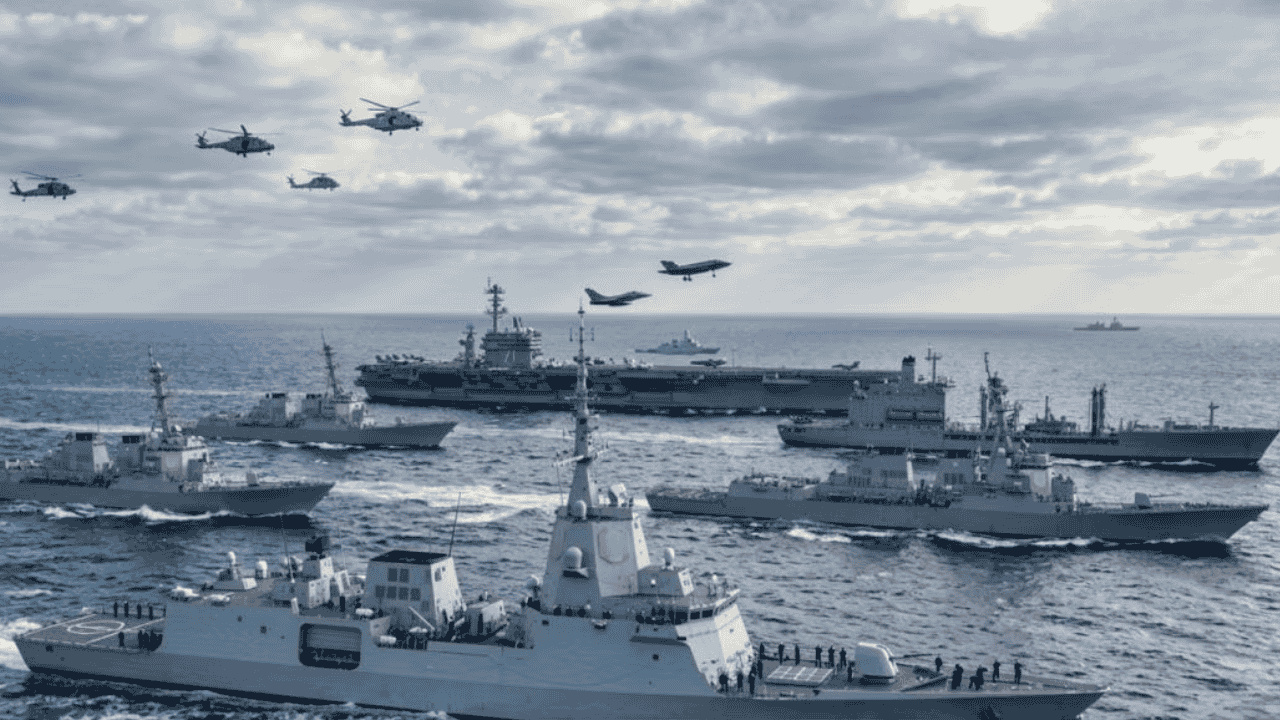
While Sea Dragon represents specialized technical collaboration, Exercise MILAN 2026, hosted by the Indian Navy in Visakhapatnam, stands as the flagship of India’s naval diplomacy. The 13th edition of MILAN, conducted from February 15 to 25, 2026, was part of a larger "Maritime Trifecta" that included the International Fleet Review (IFR) 2026 and the Indian Ocean Naval Symposium (IONS) Conclave of Chiefs.
MILAN 2026: Record-Breaking Participation
MILAN has evolved dramatically since its inception in 1995, when it began with only four nations in the Andaman and Nicobar Islands. The shift to Visakhapatnam in 2020 was a strategic decision to utilize the superior infrastructure and deeper sea space of the Eastern Naval Command. The 2026 edition saw participation from 74 nations, featuring over 60 warships and 29 aircraft, making it the largest multilateral naval exercise in the region’s history.
| Phase of MILAN 2026 | Key Activities | Strategic Outcome |
|---|---|---|
| Harbour Phase | Seminars, SMEE, MILAN Village | Trust building and cultural exchange |
| IFR 2026 | Presidential Fleet Review | Display of indigenous naval power |
| Sea Phase | ASW, Air Defense, Live Fire | Interoperability in high-end combat |
The presence of the United States, Russia, and Iran at the same exercise highlights India’s unique capability to engage with competing global powers simultaneously. This "Combat Diplomacy" reinforces India’s role as a trusted partner and a bridge between diverse geopolitical interests.
International Fleet Review (IFR) 2026
The IFR 2026, held on February 18, saw President Droupadi Murmu review a fleet of 71 ships. The centerpiece of this review was the indigenous aircraft carrier INS Vikrant, which served as a testament to India’s growing domestic shipbuilding capacity and the "Aatmanirbhar Bharat" (Self-Reliant India) initiative. The IFR serves as a platform for nations to demonstrate maritime solidarity under the theme "United Through Oceans".
Indian Ocean Naval Symposium (IONS) Conclave
During the IONS Conclave of Chiefs in Visakhapatnam, India assumed the chairmanship of the forum for the 2026–2028 period, taking over from Thailand. This leadership role allows the Indian Navy to shape the regional agenda on maritime security, information sharing, and Humanitarian Assistance and Disaster Relief (HADR). The inclusion of the Philippines as an observer and Oman's participation in the HADR working group further expanded the symposium's influence.
Strategic Doctrines: The Transition to MAHASAGAR
A significant theoretical development for UPSC current affairs is the evolution of India’s maritime doctrine from SAGAR (Security and Growth for All in the Region) to the new MAHASAGAR vision, unveiled in March 2025.
Defining MAHASAGAR
MAHASAGAR stands for Mutual and Holistic Advancement for Security and Growth Across Regions. This vision marks a shift from a primarily Indian Ocean-centric approach to a broader global maritime outreach, emphasizing India’s role as a leader of the Global South.
The doctrine is built on three central pillars:
Trade for Development: Securing sea lines of communication (SLOCs) to ensure stable energy and trade supply chains.
Capacity Building: Assisting littoral states in Africa and the Pacific with infrastructure, radar systems, and patrol vessels.
Mutual Security: Positioning India as a "first responder" for disaster relief and a "preferred security partner" for regional defense.
This doctrine is integrated into the Indian Maritime Doctrine 2025 and aligns with national long-term goals like "Viksit Bharat 2047". It moves beyond traditional naval patrols to a comprehensive "Ocean Governance" framework.
ASEAN-India Year of Maritime Cooperation 2026
To operationalize the MAHASAGAR vision, 2026 has been designated as the ASEAN-India Year of Maritime Cooperation. India and ASEAN have adopted a new Plan of Action (2026–2030) that institutionalizes collaboration in maritime security, the blue economy, and anti-piracy efforts. This initiative is particularly relevant given that over 55% of India’s trade passes through the South China Sea.
Comprehensive Catalog of Major Defense Exercises (2024–2026)
For competitive exams, it is essential to categorize exercises by their nature and the participating nations. The following table provides a comprehensive overview of recent and upcoming engagements.
| Exercise Name | Nature of Engagement | Partner Country/Nations | Key Objectives |
|---|---|---|---|
| Malabar | Multilateral (Quad) | India, US, Japan, Australia | Carrier operations, high-end ASW |
| Varuna | Bilateral (Naval) | India & France | Maritime peace and advanced security |
| Yudh Abhyas | Bilateral (Army) | India & USA | High-altitude and heliborne operations |
| Vajra Prahar | Bilateral (Special Forces) | India & USA | Counter-terrorism and precision strikes |
| Shakti | Bilateral (Army) | India & France | Counter-terrorism in urban environments |
| Mitra Shakti | Bilateral (Army/AF) | India & Sri Lanka | Peacekeeping and tactical coordination |
| Dharma Guardian | Bilateral (Army) | India & Japan | Disaster relief and jungle warfare |
| Lamitiye | Bilateral (Tri-Services) | India & Seychelles | Sub-conventional ops in semi-urban areas |
| Simbex | Bilateral (Naval) | India & Singapore | Air defense and fleet coordination |
| Dustlik | Bilateral (Army) | India & Uzbekistan | Joint tactical drills and counter-insurgency |
| Vayu Shakti | Domestic (Air Force) | Indian Air Force (IAF) | Precision strike and multi-domain ops |
Specialized and Emerging Exercises
In addition to traditional drills, India is engaging in new domains:
Exercise Cyber Suraksha: Focused on defending critical national infrastructure against digital threats.
Military Civil Fusion Exercise (Sanjha Shakti): A unique 2026 initiative in Pune involving the Indian Army and 16 civilian agencies like the Maharashtra Police to coordinate responses to hybrid threats.
Exercise Divya Drishti: A domestic army exercise in the Eastern Sector (Sikkim/Arunachal Pradesh) testing next-gen technology and battle drills.
Analyzing UPSC Trends: The 2024 Prelims Mitra Shakti Question
The inclusion of military exercises in the UPSC syllabus was validated by a specific question in the Prelims 2024 exam regarding Exercise Mitra Shakti 2023.
Breakdown of the Question
Candidates were asked to identify correct statements about the exercise. The core lessons from this question for future aspirants are:
Identify the Partner Correctly: Statement 1 incorrectly claimed the exercise was with Bangladesh. Aspirants must strictly associate Mitra Shakti with Sri Lanka.
Know the Location: The 9th edition commenced in Aundh, Pune. Specificity regarding the hosting venue is now a testing point.
Inter-disciplinary Participation: While primarily an army exercise, the 2023 edition included the Indian Air Force, reflecting the modern shift toward joint-service operations.
Operational Objectives: Rehearsing sub-conventional operations under UN mandates (Chapter VII) is a standard but important detail to remember.
Technological Advancements in Naval Warfare
The exercises conducted in 2026 highlight a significant technological leap for the Indian Navy. The deployment of the Boeing P-8I Neptune is central to this shift. The aircraft is equipped with an integrated sensor suite that includes the AN/APY-10 radar, which can detect small targets like periscopes even in high seas. Furthermore, the transition toward Net-Centric Warfare allows these aircraft to share target data in real-time with ships like the Visakhapatnam-class destroyers and the INS Vikrant, creating a formidable defensive umbrella.
The rise of "Grey Zone" threats—activities that fall between peace and open war, such as maritime militias or drone swarms—has also been addressed in the 2026 exercise cycles. The Indian Navy's 2025 doctrine explicitly includes Artificial Intelligence to enhance Maritime Domain Awareness, enabling faster identification of suspicious vessel movements.
The Geopolitics of Defense Engagement
Naval exercises are often used as tools of "Signal Diplomacy."
Balancing China: Engaging in Sea Dragon (with Quad partners) while hosting Russia and ASEAN nations at MILAN allows India to maintain its strategic autonomy while providing a counterweight to growing maritime assertiveness in the Indo-Pacific.
Focus on the Global South: Through the MAHASAGAR vision, India is branding itself as the voice of developing nations, providing them with security assistance that major powers might otherwise overlook.
First Responder Role: India's HADR operations, such as Operation Sadbhav in Myanmar and Operation Brahma in the same region, showcase the humanitarian face of its naval power, building immense soft power and goodwill.
Why this matters for your exam preparation
For serious aspirants of UPSC and competitive exams, defense exercises and maritime security are non-negotiable topics. Their relevance spans all three stages of the examination process:
For Prelims (General Studies Paper I):
Fact-Based Questions: UPSC frequently tests the specific names, participating countries, and the nature (Army, Navy, Air Force) of these exercises. For instance, knowing that Lamitiye is now a Tri-Service exercise or that Sea Dragon is an ASW-focused drill in Guam is essential.
Location Geography: Questions may link the exercise to the geography of the venue (e.g., the strategic importance of Guam in the Western Pacific or Visakhapatnam on the Eastern Seaboard).
For Mains (General Studies Paper II & III):
International Relations: These exercises are the physical manifestation of India's "Act East Policy" and the "MAHASAGAR" vision. You can use them as evidence to argue India's transition into a "Net Security Provider".
Internal Security: Joint drills are critical for understanding how India prepares for non-traditional threats like maritime terrorism, piracy, and electronic warfare.
Indigenous Technology: Highlighting the role of INS Vikrant or the P-8I in these exercises allows you to discuss the success of the "Make in India" initiative in the defense sector.
For the Personality Test (Interview):
Strategic Perspective: You may be asked about India's balancing act between the US and Russia. Exercises like MILAN 2026, which host both, provide a perfect example of India's strategic autonomy and "Combat Diplomacy".
By mastering these details, you not only prepare for potential questions but also develop a sophisticated understanding of India's national security architecture. Stay updated with Atharva Examwise for more insights into how these tactical drills shape India’s grand strategy for 2047.