
Gemini said UPSC Current Affairs 16 March 2026 – Blue Flag Tag, Marina Beach Project, and India's Coastlines | Atharva Examwise Current News
Blue Flag Tag: Latest News and Exam-Oriented Facts Regarding Marina Beach
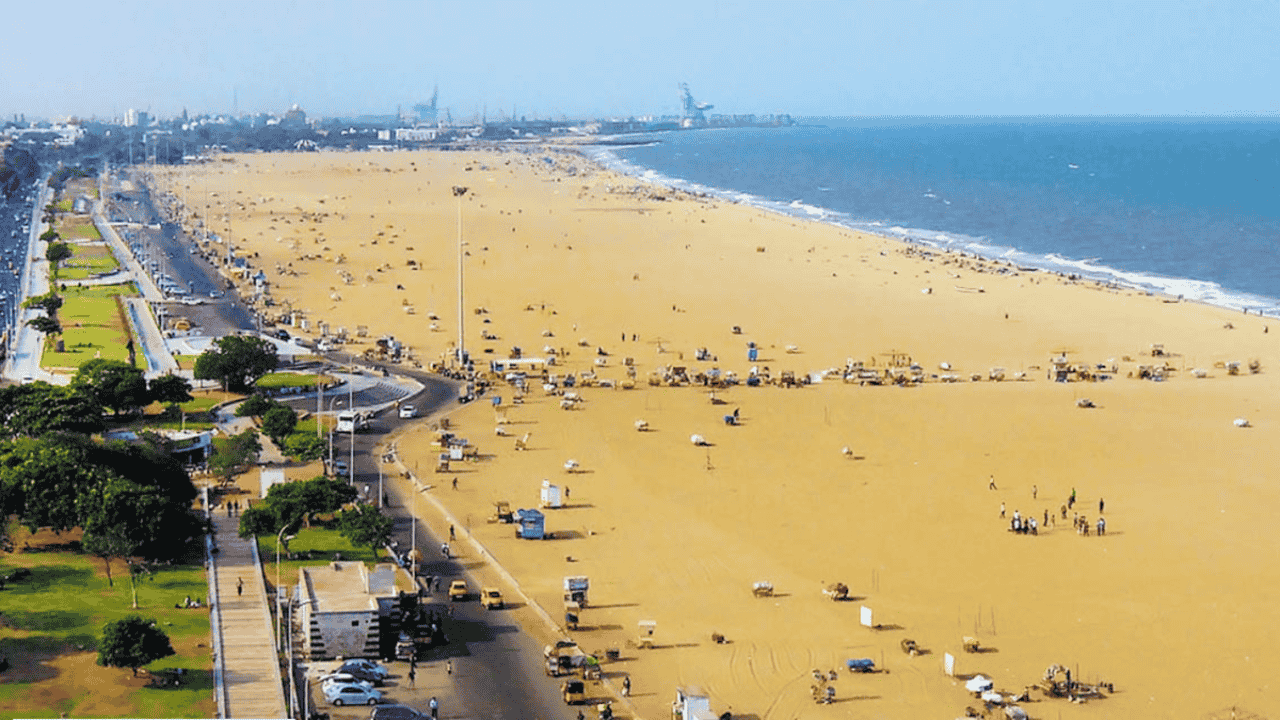
The famous Marina Beach in Chennai, the capital of Tamil Nadu, is currently in the news regarding the Blue Flag Tag (Blue Flag eco-label). The second phase of the Blue Flag project here is nearly complete, and the state government is moving forward to secure international certification. If all standards are met during inspection, Marina Beach is planned to become the second Blue Flag beach in Tamil Nadu after Kovalam Beach.
What is the Blue Flag Tag?
The Blue Flag is an international eco-label awarded to beaches, marinas, and sustainable boating tourism operators that meet stringent standards for environmental protection, cleanliness, safety, and management. This program is operated by the Denmark-based non-profit organization, Foundation for Environmental Education (FEE).
Common features of these beaches include:
Water Quality: Clean seawater and sand, with regular water quality monitoring.
Waste Management: Efficient waste disposal, clean toilets, and drinking water facilities.
Safety: Trained lifeguards and First-Aid centers.
Accessibility: Mandatory facilities like PwD-friendly (Persons with Disabilities) access, information boards, and surveillance systems.
History: Beginning in France in 1985
The Blue Flag program originated in France in 1985, where FEE began awarding the label to French municipalities based on criteria such as sewage treatment and bathing water quality. In 1987, it became a Europe-wide program, and with the later inclusion of countries like South Africa, it evolved into a global initiative.
Today, Blue Flag is one of the world's most recognized voluntary eco-labels, with approximately 4,000–5,000 sites (beaches, marinas, and boats) certified across more than 45–50 countries.
Who Awards the Blue Flag Tag?
The program is managed by the Foundation for Environmental Education (FEE), headquartered in Copenhagen, Denmark. The International Jury includes representatives from:
United Nations Environment Programme (UNEP)
United Nations World Tourism Organization (UNWTO)
International Union for Conservation of Nature (IUCN)
FEE representatives.
In India, the Centre for Environment Education (CEE) acts as the national partner of FEE, operating the program alongside Blue Flag India, the Ministry of Environment, Forest and Climate Change (MoEFCC), and various state/UT governments.
Process of Obtaining the Blue Flag Tag
There is a formal application process for any beach to receive this tag:
National Evaluation: The relevant national agency or coastal authority first checks the standards at the national level.
International Evaluation: The proposal is then sent to the FEE International Jury, which evaluates compliance with all criteria.
Annual Certification: If successful, the Blue Flag certification is awarded for one year. It is not a permanent status; the tag can be withdrawn if standards are violated.
33 Standards and Four Major Pillars
Beaches are assessed based on approximately 33 rigorous criteria, categorized into four main pillars:
| Pillar | Key Requirements |
|---|---|
| 1. Water Quality | Regular sampling/testing; pollution levels below limits; no untreated sewage flow. |
| 2. Environmental Management | Solid waste and plastic control; recycling; eco-friendly design in infrastructure. |
| 3. Education & Information | Info boards on coastal ecosystems/biodiversity; awareness programs for locals and tourists. |
| 4. Safety & Services | Adequate lifeguards and first-aid; clean toilets and changing rooms; PwD-friendly ramps. |
India and the Blue Flag Program
India formally joined the Blue Flag program in 2018 to align its coastal tourism and marine ecology with international standards. To achieve this, the MoEFCC launched the BEAMS (Beach Environment & Aesthetics Management Services) program, supported technically by institutions like SICOM and NCSCM.
2020 Milestone: For the first time, eight Indian beaches—including Shivrajpur (Gujarat), Golden Beach (Odisha), Ghoghla (Daman & Diu), and Radhanagar (Andaman & Nicobar)—received the international certification simultaneously.
Current Status (2024–25): India now has over 12 Blue Flag certified beaches. With the recent addition of five beaches in Maharashtra (Shrivardhan, Nagaon, Parnaka, Guhagar, Ladghar), the total count has reached approximately 17–18.
Marina Beach Blue Flag Project: What’s Happening in Chennai?
The Greater Chennai Corporation (GCC) has initiated a detailed four-phase project to bring Marina Beach, one of the world's longest urban beaches, up to Blue Flag standards.
Phase-1: Completed in 2025 near the Marina Swimming Pool; it is now a major attraction with clean facilities.
Phase-2: Being developed in front of Vivekananda House at a cost of approximately ₹7 crore. It features bamboo seating, umbrellas, children’s play areas, study zones, selfie points, separate toilets (Men/Women/Transgender/PwD), and bamboo dustbins.
The Vision: Per the plan submitted to the Madras High Court, approximately 121 acres are being developed across four phases to transform large sections of Marina Beach into organized, clean, and hawker-free zones.
Key Blue Flag Beaches in India (Important for Exams)
Golden Beach (Puri), Odisha: Often in news as it is considered the first Blue Flag certified beach in Asia.
Shivrajpur Beach, Gujarat: Part of the first batch of eight beaches; developed as a model for coastal tourism.
Kappad (Kerala), Rushikonda (Andhra Pradesh), Kasarkod & Padubidri (Karnataka), Ghoghla (Diu), Radhanagar (Andaman & Nicobar): The initial set of certified beaches.
Eden Beach (Puducherry), Minicoy Thundi & Kadmat (Lakshadweep): Famous for island tourism and pristine white sands.
Maharashtra's New Additions: Shrivardhan, Nagaon, Parnaka, Guhagar, and Ladghar.
BEAMS Programme: India’s Indigenous Eco-Label Initiative
BEAMS (Beach Environment & Aesthetics Management Services) is India's own eco-label initiative, developed by MoEFCC and SICOM under the ICZM (Integrated Coastal Zone Management) project.
Main Objectives of BEAMS:
Reducing pollution in coastal waters.
Sustainable development of beach facilities.
Protection of coastal ecosystems and natural resources.
Promoting high standards of cleanliness, hygiene, safety, and environmental education.
Benefits of the Blue Flag Tag: From Tourism to Blue Economy
International Branding: Recognizes a beach globally as "Clean, Safe, and Eco-friendly," attracting foreign and domestic tourists.
Employment & Local Economy: Boosts hospitality, transport, water sports, and food services, strengthening the local economy.
Environmental Conservation: Mandatory waste management and protection of coral reefs/coastal biodiversity ensure long-term ecological security.
Blue Economy & SDGs: Directly aligns with SDG-14 (Life Below Water) and SDG-11 (Sustainable Cities) and India's Blue Economy Policy.
Exam-Oriented Key Facts (One-Liner Revision)
Blue Flag: International eco-label; Operator – FEE, Denmark.
Origin: 1985 (France); 1987 (Europe-wide); followed by global expansion.
Nature: Voluntary eco-label, Annual certification, tag can be revoked.
Four Pillars: Water Quality, Environmental Management, Education, and Safety (33 standards).
India's Entry: Joined formally in 2018.
BEAMS: MoEFCC initiative for pollution abatement and beach aesthetics.
2020 Achievement: 8 Indian beaches certified at once.
Latest Count: ~17–18 beaches as of 2024–25.
Marina Beach: 4-phase development by GCC; Phase-2 nearly complete.
Why this matters for your exam preparation
UPSC Prelims (Environment, Current Affairs)
Direct factual MCQs on institutions like FEE, UNEP, and IUCN.
Conceptual questions on the BEAMS program and the Ministry of Environment.
Mapping-based questions: "Which of the following beaches is located in [State]?"
Mains GS-III (Environment, Conservation & Economy)
Use Blue Flag and Marina Beach as case studies for Coastal Zone Management and Sustainable Tourism.
Excellent content for answers on "Balancing Development and Ecology."
Essay & Interview
Strong contemporary content for essays on "India's Blue Economy" or "Tourism and Environment."
Value-addition points for candidates from coastal states or those with an interest in environmental conservation.