
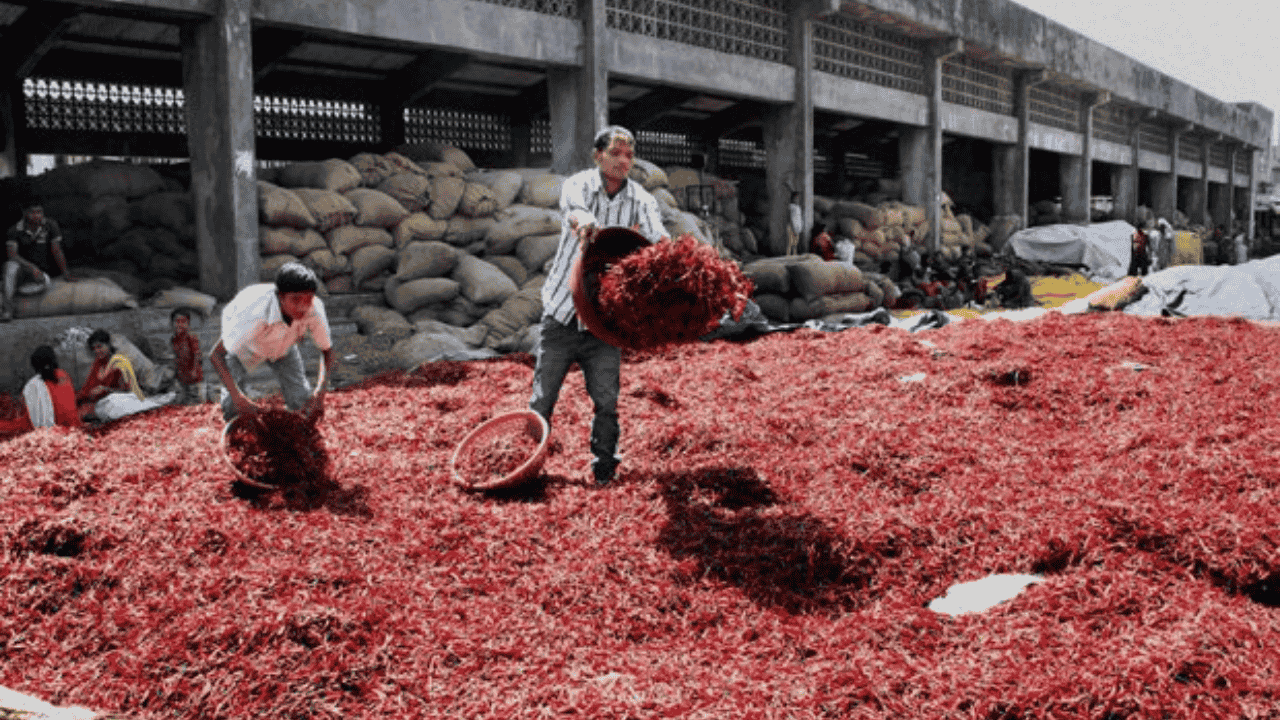
UPSC Current Affairs 13 March 2026: Guntur Chilli Yard – Asia's Largest Chilli Market | Daily GK Update
UPSC Current Affairs 13 March 2026: Guntur Chilli Yard – Asia's Largest Chilli Market
Introduction This Atharva Examwise current news analysis is based on an important agri-economy news item of the day – Asia's largest chilli market in Guntur, Andhra Pradesh, and the estimated decline in chilli production for 2025–26. All points, including India's chilli economy, GI tags, and rising demand from China, are directly relevant to UPSC and other competitive exams.
Guntur Chilli Yard: Asia's Largest Chilli Market The chilli market yard in Guntur (Andhra Pradesh) is considered Asia's largest dry red chilli market, and the prices determined here influence both domestic and international markets. According to official documents from the Andhra Pradesh government, this Agricultural Market Yard is located about 5 km from Guntur city and is spread over an area of approximately 50 acres.
Key Facts (Prelims Focus)
Location: Guntur district, Andhra Pradesh
Recognition: Asia’s largest dry red chilli market (Guntur Mirchi Yard)
Role: Influences not just India's, but also international chilli prices
e-NAM: Chilli auctions here are also conducted through the National Agriculture Market platform.
Chilli Production in India and Guntur's Role India is a leading producer of chillies globally, and Andhra Pradesh is the largest producing state. According to recent data, Andhra Pradesh alone contributes about 44–50% of the country's total chilli production, which is why it is also known as the “Chilli Capital of India”. Government reports mention that:
Guntur district alone contributes about 15% to the country's chilli area/production.
Andhra Pradesh accounts for about 40% of the total national chilli production.
Exam Angle: This data is highly important for static GK, as well as agriculture-economy linkage-based MCQs and UPSC Prelims.
Estimated Decline in Chilli Production in 2025–26 According to input reports, chilli production across the country, including Guntur, is estimated to decrease by about 15–20% in the year 2025–26. Total chilli production in the country is projected to drop from approximately 12.4–14.1 lakh tonnes in 2024–25 to around 10.32–11.40 lakh tonnes in 2025–26 (based on estimates from various agencies and market reports).
Major reasons for the decline in production:
Excessive rainfall and adverse weather conditions in many areas.
Farmers receiving low market prices for chillies in the previous season, leading to a reduction in the sown acreage.
Additional challenges like an increase in pest-diseases and input costs.
All these factors collectively tighten the supply side, which could lead to a spike in chilli prices in the future – a factor that can also be linked to retail inflation (food inflation) (GS-III, Economy).
GI Tags and Guntur's Famous Varieties Chilli varieties from the Guntur region – specifically Guntur Sannam (S4) – have been registered as Geographical Indications (GI), which provides them with legal and brand protection. The Guntur Sannam GI tag signifies that chillies sold in the market under this name genuinely originate from the specific geographical area in and around Guntur, thereby increasing consumer and export market trust.
Key characteristics of these GI-tagged chillies:
Strong pungency and bright red color.
High demand in the international market – especially for powder and processed products.
High ASTA colour value and pungency of around 35,000–40,000 Scoville Heat Units (for Guntur Sannam).
According to your input, Guntur's famous ‘Saksham’ and ‘Teja’ chillies gained even stronger global recognition after receiving GI tags around 2010. These can be quoted in exam answers as “GI-tagged Guntur chilli varieties”.
Internal Link Suggestion (GI Tag Notes): For a detailed GI tag list and map-based notes, see: GI Tag List for UPSC – Indian Agriculture & Handicrafts
China – ‘Teja’ Chilli and the Oleoresin Industry According to your input, the largest foreign buyer of Guntur's ‘Teja’ chilli is China. China imports this chilli not just for culinary purposes, but to extract an oil/extract called ‘Oleoresin’, which is used in:
Lipsticks and other cosmetic products.
Food colors and flavoring agents.
The processed food industry (sauces, snacks, red coloring).
Oleoresin extracted from red chillies provides both natural color and pungency, making it a better alternative to synthetic dyes for health-conscious consumers.
Prelims Pointers (One-Liners):
Oleoresin: An oil-soluble extract derived from plants/spices containing both oil and resin components.
Chilli Oleoresin: Used as a natural food color, for pungency, and as a pigment source in cosmetic products.
Key Facts: Quick Revision Sheet (MCQ Focus)
Guntur Chilli Yard – Asia's largest dry red chilli market; impacts chilli prices in India and worldwide.
State: Andhra Pradesh – India's largest chilli-producing state; accounts for about 44–50% of total national production.
District: Guntur – Contributes about 15% to the country's chilli area/production, recognized as the “Chilli Capital of India”.
GI Tag: Several varieties, including Guntur Sannam (S4), have GI registration; GI tags offer legal protection for quality, brand, and geographical identity.
2025–26: Estimated 15–20% production decline; total production estimated at ~10.32–11.40 lakh tonnes (as per input reports).
Reasons: Excessive rainfall, low MSP/market prices in the previous season, decline in the cost-benefit ratio.
China: Major importer of Guntur's ‘Teja’ chilli; extracts oleoresin to manufacture cosmetics and food colors.
Analysis Points for Mains (GS–III, Economy & Agriculture)
Agriculture and Global Value Chains: The Guntur Chilli Yard example demonstrates how a district-level agricultural product (chilli) can link up with global value chains (cosmetic & processed food industries).
GI Tags and Farmers' Income: GI-tagged chilli varieties can increase both brand value and price; however, if there is an oversupply in the market or international demand drops, farmers' incomes can still come under pressure despite the GI tag.
Climate Risk & Price Volatility: Climatic shocks like excessive rainfall reduce production; the supply-demand mismatch can increase prices for consumers and contribute to food inflation.
ANGRAU (Acharya N.G. Ranga Agricultural University) Chilli Outlook Reports, containing detailed trends on Andhra Pradesh's chilli production and prices.
Potential Exam Questions (Practice Orientation)
UPSC Prelims (MCQ) Style Potential Questions:
1. Which of the following statements is correct regarding the Guntur Chilli Yard? (a) It is only meant for trade within Andhra Pradesh. (b) It is Asia's largest dry red chilli market. (c) Only fresh green chillies are auctioned here. (d) It has not received any kind of GI tag. Correct Answer: (b)
2. Which statement is correct about the Guntur Sannam (S4) chilli? (a) It has received a GI tag only for Telangana. (b) It is primarily grown in North India. (c) It is a GI-tagged chilli variety grown in some districts of Andhra Pradesh, including Guntur. (d) It is used exclusively for medicinal purposes. Correct Answer: (c)
Why this matters for your exam preparation
Prelims (GS & State PSC): One-liner questions like “Largest producer/market of chilli in India”, “Asia’s largest chilli market”, “GI-tagged agricultural products”, and “Andhra Pradesh as chilli capital” emerge directly from this topic. The estimated decline in chilli production for 2025–26, its percentage, and major reasons can be asked as factual statements.
Mains (UPSC GS-III, GS-I Geography, Essay): You can link this example to broader themes like farmers' income, climate change, price volatility, GI tags, export-oriented agriculture, and global value chains in your answers. The Guntur Chilli Yard can serve as an excellent case study in essays on “Agri-product based regional development” or “Agricultural exports and the rural economy”.
Interview and Personality Test: If your optional subject or background is related to agriculture, economics, Andhra Pradesh, or food processing, the panel might ask you questions on GI tags, Guntur chilli, or exports to China, etc.
Other competitive exams (SSC, Bank, State PSC): “Largest in India/Asia/World”, “Important GI products”, and “Major producing states” are very common topics in Static GK – the information provided here will be useful for direct fact-based questions.
Therefore, do not treat this news item as just a general agricultural update. Add it thoroughly to your “Agriculture – Crops & GI Tags – Places in News” file in your Prelims notes, locate Andhra Pradesh and Guntur on the map, and repeatedly revise the data points provided above so that you can instantly recall them in the exam hall.