UPSC Current Affairs 11 March 2026: What is Prussian Blue and how does it work in a nuclear emergency?
What is Prussian Blue? – UPSC Current Affairs Daily Update
Introduction
Amidst global apprehensions regarding nuclear and radiological emergencies in recent years, a medicine named Prussian Blue has frequently been in the news. This topic has become highly relevant for UPSC Prelims (Science & Tech, Current Affairs) and Mains (GS‑3: Disaster Management, Science & Technology, Internal Security).
What is Prussian Blue?
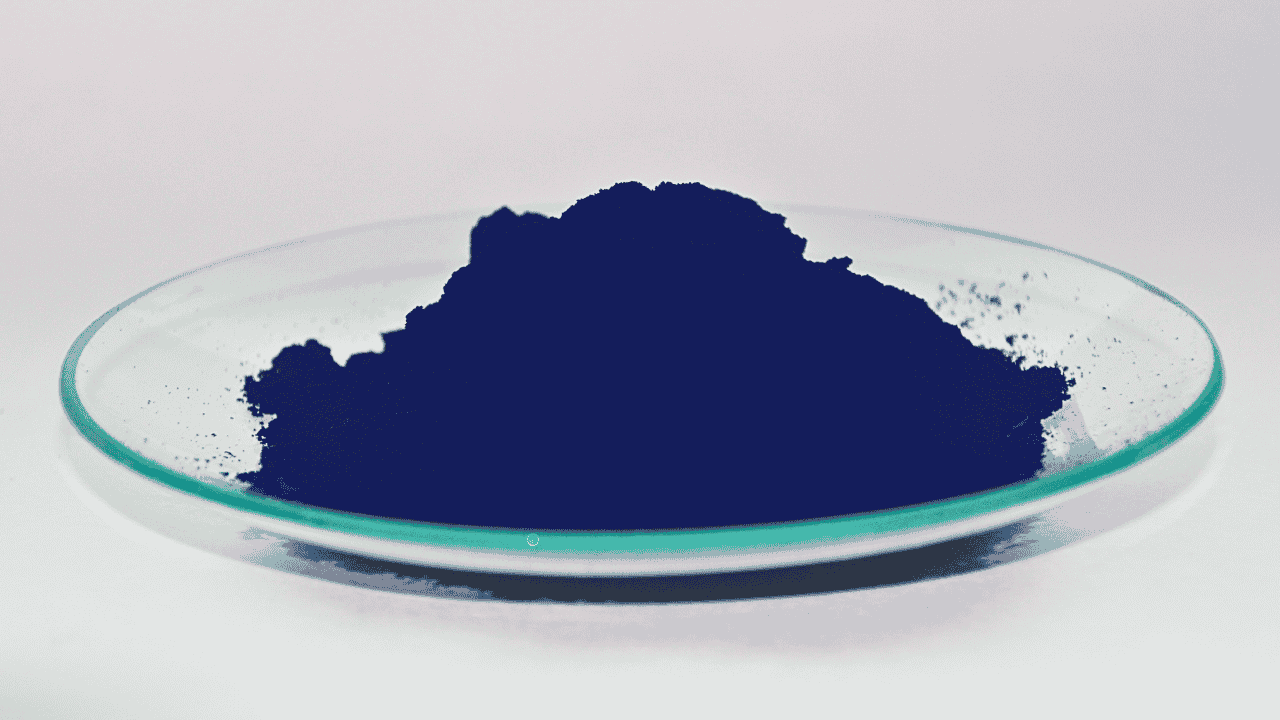
Prussian Blue is a medicine (decorporation agent) used to remove radioactive Cesium‑137 (Cs‑137) and Thallium from the body.
Chemically, it is usually in the form of ferric hexacyanoferrate, which stays in the intestines and binds to radioactive ions.
It is administered in capsule form and is available only via a doctor's prescription.
Key Exam Point: Prussian Blue is called a “decorporation agent” because it "decorporates" (removes) radionuclides that have entered the body.
How Does Prussian Blue Work in the Body?
The primary action of Prussian Blue takes place in the intestines (Gastrointestinal tract), not in the blood or tissues.
Mechanism of Action
After taking a Prussian Blue capsule, it remains in the intestines and is not absorbed into the bloodstream.
When radioactive Cs‑137 and Thallium circulating in the body return to the intestines (enterohepatic circulation), the medicine binds to them through ion‑exchange, adsorption, and trapping in its crystal lattice.
Subsequently, these bound radioactive particles are excreted from the body via stool, thereby reducing the overall radiation dose to the body.
Impact on Biological Half‑life According to the CDC and other sources:
Normally, the biological half-life of Cs-137 in the body is about 110 days, but after administering Prussian Blue, this reduces to approximately 30 days.
For Thallium, the biological half-life reduces from about 8 days to 3 days.
Thus, this medicine decreases the duration radioactive materials stay inside the body, thereby reducing the total radiation exposure.
Under What Conditions is Prussian Blue Given?
In situations of Internal Contamination – specifically upon exposure to Cesium-137 (Cs-137) and Thallium (radioactive/non-radioactive).
Exposure can occur via ingestion, inhalation, or through a wound.
Before usage, an exposure assessment and dose calculation are conducted by medical experts.
Important: Prussian Blue is given only under medical supervision; self-medication by the general public carries risks of side effects and misuse.
Prussian Blue in the WHO's Critical Medicines List
The World Health Organization (WHO) has included Prussian Blue in its list of “critical medicines” recommended for stockpiling for radiological and nuclear emergencies.
According to updated WHO guidelines, this medicine falls under the category of drugs that help prevent the absorption of radionuclides or expedite their removal from the body.
Therefore, Prussian Blue is kept as a mandatory medicine in the national stockpiles (national disaster preparedness) of many countries.
Usage in the USA, Europe, and Other Countries
The US FDA has approved Prussian Blue (Radiogardase®) for the treatment of radioactive or non-radioactive thallium and Cs-137 exposure.
The CDC lists it as a primary treatment option to be used in nuclear or radiological emergencies.
In most countries, it is a prescription-only drug and is maintained in national disaster management reserves.
Prussian Blue in India: DRDO Technology and Commercial Production
Development by DRDO–INMAS
In India, the Institute of Nuclear Medicine and Allied Sciences (INMAS), DRDO, Delhi has developed an insoluble formulation of Prussian Blue.
This development took place under the Technology Development Fund (TDF) scheme, which aims to create indigenous technology for defense applications.
DCGI Approval and Indian Companies
According to the Ministry of Defence, the Drugs Controller General of India (DCGI) has approved these INMAS-based formulations for commercial use.
Manufacturing and marketing licenses for these formulations have been granted to Scott-Edil Pharmacia (Himachal Pradesh) and Skanttr Lifescience LLP (Ahmedabad); they are being introduced to the market under the names Pru-Decorp™ and PruDecorp-MG respectively.
Additionally, India-based companies like Taj Pharma are also producing 0.5 g Prussian Blue insoluble capsules, which are useful for nuclear emergency preparedness and hospital stockpiles.
Thus, where earlier India relied on importing such medicines from the US/Europe, a significant step has now been taken towards self-reliance (Aatmanirbhar Bharat) through indigenous research and commercial production.
Recent International Context: India's Assistance to Indonesia
Following a Cesium-137 contamination incident in Indonesia in 2025, India quickly played the role of a regional first-responder by sending an emergency supply of Prussian Blue capsules.
The purpose of these capsules was to mitigate the impact of potential Cs-137 exposure among the Indonesian population.
This move demonstrates India's Humanitarian Assistance and Disaster Relief (HADR) capabilities and its readiness for nuclear/radiological disasters.
This incident also highlights India's emerging role as a “first responder” in the Asia-Pacific region, which is crucial from the perspective of UPSC Mains (International Relations and Disaster Management).
Points Related to Dose, Side Effects, and Safety (Exam-oriented Overview)
Note: This section provides theoretical information solely for exam purposes, not medical advice.
Prussian Blue is generally administered as a 500 mg capsule.
According to the CDC, it has been found safe for most adults, pregnant women, and children aged 2–12 years under expert supervision, whereas safety data for newborns is limited.
Common side effects include constipation, mild abdominal pain/upset, and blue stool.
Self-administration of artist-grade "Prussian Blue" pigment is extremely dangerous; only medical-grade capsules should be taken on a doctor's advice.
Key Facts for Prelims (One-Liner Friendly Points)
Prussian Blue is a decorporation agent used for internal contamination of radioactive Cs-137 and Thallium.
This medicine stays in the intestines, binds to radioactive ions via ion-exchange and adsorption, and excretes them through stool.
The WHO has included it in its list of critical medicines to be stockpiled for radiological and nuclear emergencies.
In India, it was developed based on INMAS–DRDO technology, and the DCGI has approved it for commercial use.
India helped tackle the Cs-137 contamination crisis by sending Prussian Blue capsules to Indonesia in 2025.
Angles for Mains Answer Writing
When writing about "Nuclear Security, Disaster Management, CBRN (Chemical, Biological, Radiological, Nuclear) threats" in GS-3 or an Essay, you can connect Prussian Blue to the following points:
Preparedness & Mitigation: The advance availability of medical countermeasures (like Prussian Blue, stable iodine, etc.) in a radiological emergency is a core part of preparedness.
Aatmanirbhar Bharat & Strategic Autonomy: The DRDO-based indigenous formulation and DCGI approval showcase India's indigenous defense-bio-medical capacity.
Health Security & Diplomacy: The assistance provided to Indonesia is a prime example of India's Health Diplomacy and regional leadership.
Why This Matters for Your Exam Preparation
Prelims Perspective: This topic is directly linked to Science & Tech + Current Affairs; factual questions such as – "For which radionuclide is Prussian Blue used?", "Which WHO list is it included in?", "What type of medicine is it considered (decorporation agent/chelator)?" can be asked.
Mains Perspective: In answers related to Disaster Management, Nuclear Security, Aatmanirbhar Bharat in Defence R&D, and Health Security in GS-3, you can quote Prussian Blue as a case study/example – especially in the context of DRDO-based indigenous development and the aid given to Indonesia.
Essay & Ethics: In essays on topics like "Technological Responses to New-Age Security Threats" or "Science, State, and Human Security", this example makes your arguments contemporary and data-backed.
Interview (Personality Test): If asked about CBRN, nuclear safety, or India's role as a regional first responder, mentioning Prussian Blue, DRDO-INMAS's contribution, and the Indonesia case will project you as an updated, analytical, and issue-aware candidate.
In conclusion, Prussian Blue is not just a medicine, but a high-value UPSC current affairs topic connecting Science & Tech, Disaster Management, Health Security, Foreign Policy, and Aatmanirbhar Bharat, which you must definitely include in your Notes and Revision List.