
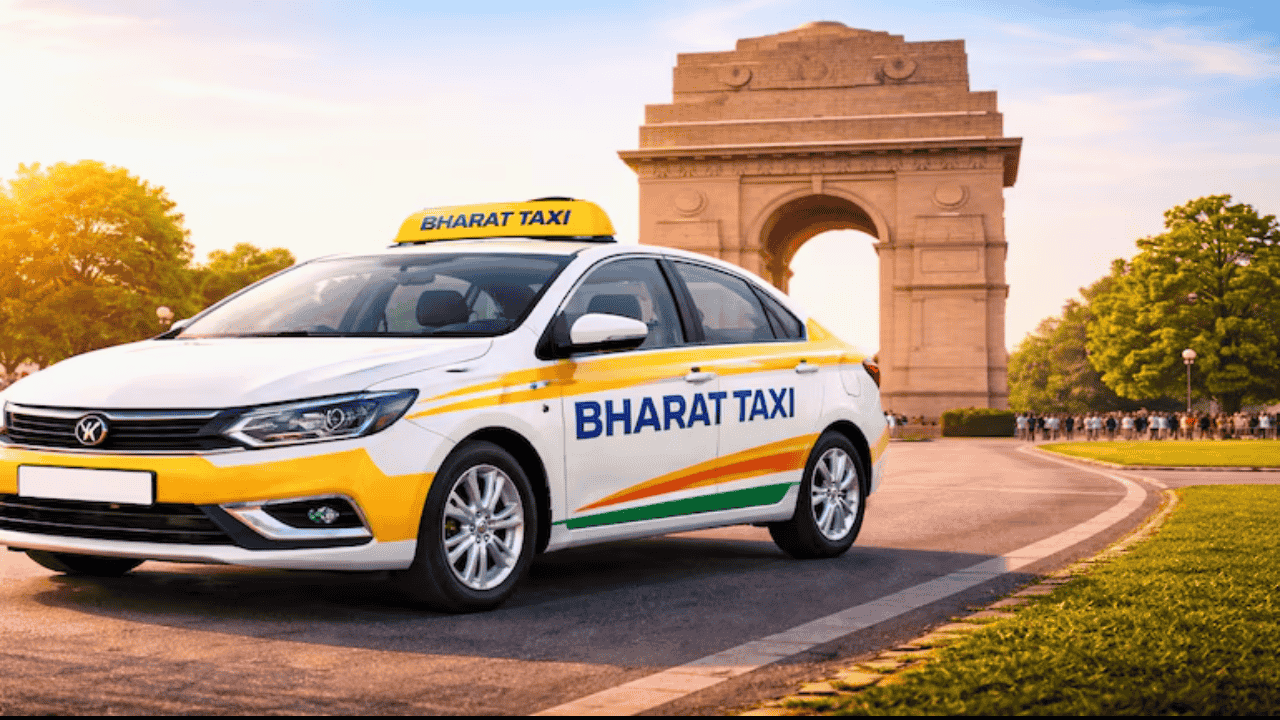
UPSC Current Affairs 6 February 2026: Bharat Taxi Launched – Challenge to Ola-Uber, Drivers Will Be Owners
Bharat Taxi Launched: India’s First Cooperative Taxi Service, a Direct Challenge to Ola-Uber
The Central Government launched India’s first cooperative-based taxi service, “Bharat Taxi,” on 5 February 2026 at Vigyan Bhavan, New Delhi. The programme was inaugurated by the Union Home and Cooperation Minister, Amit Shah.
This platform presents a driver-centric, zero-commission, and no surge pricing alternative to the traditional private aggregator model (such as Ola-Uber).
What is Bharat Taxi? – Key Points at a Glance
Definition and Nature
Bharat Taxi is an app-based taxi platform built on a cooperative model.
It has been launched as an initiative of the Ministry of Cooperation, aligned with the Prime Minister’s vision of “Sahkar se Samriddhi” (Prosperity through Cooperation).
Every driver is called a “Sarathi” and is also an owner-member of the cooperative.
Progress So Far (as per inputs)
Around 2.5 lakh drivers (Sarathis) have already joined the platform.
Nearly 8.5 lakh users have been registered.
Services include two-wheelers, three-wheelers, and four-wheelers.
A special initiative “Sarathi Didi” to promote women drivers and women riders.
Key Features of Bharat Taxi: Exam-Focused Points
1. Driver-Centric Cooperative Model
Drivers are not just service providers but also shareholders/members of the cooperative.
Profits do not go to a corporate entity or external shareholders; instead, they are returned to the driver community.
This model is said to be inspired by successful cooperative models like Amul, where producers themselves are the owners.
Why is this important?
An effort to enhance income security, social security, and bargaining power of drivers in the gig economy.
An Indian example of “Platform Cooperativism” in the platform economy.
2. Zero Commission and No Surge Pricing
Existing aggregator companies (like Ola-Uber) often charge 20–30% commission, reducing drivers’ net income.
Bharat Taxi aims for zero commission, meaning a larger share of the fare goes directly to the driver.
No surge pricing – fares remain more stable and transparent even during peak hours.
This initiative is important from the perspective of consumer protection, fair pricing, and inclusive growth.
3. Social Security and Welfare Provisions
According to PIB, for Sarathis on the Bharat Taxi platform:
Personal Accident Insurance – up to ₹5 lakh.
Family Health Insurance – up to ₹5 lakh.
Provisions for retirement savings, helplines, support centres, and a grievance redressal mechanism.
Together, these measures aim to treat drivers not merely as “gig workers” but provide them social security comparable to the organised sector.
Ola-Uber vs Bharat Taxi: Comparative Analysis (Prelims + Mains Angle)
1. Difference in Models
| Point | Ola/Uber-like Aggregators | Bharat Taxi (Cooperative Model) |
|---|---|---|
| Ownership | Private company, investor-centric | Cooperative society; drivers are members/owners |
| Commission | Usually 20–30% | Emphasis on zero-commission model |
| Profit | Goes to shareholders/investors | Distributed among the driver community |
| Pricing | Surge pricing prevalent | No surge pricing, stable fares |
| Social Security | Limited/contractual | Structured insurance and social security schemes |
This table can be useful for trend-based objective questions in Prelims and comparative analysis in Mains.
Benefits for Passengers (Customers)
No surge pricing – relatively stable fares even during peak time, rain, or festivals.
Transparent pricing – emphasis on relief from hidden charges, extra tolls/parking fees.
Multi-modal integration – travel planning, booking, and tracking with metro/public transport (towards integration with Digital Public Infrastructure).
Safety features:
Driver and vehicle verification
Real-time GPS tracking
SOS button and helpline
“Sarathi Didi” initiative – a safer and more reliable option for women drivers and riders.
Alignment with the Government’s ‘Sahkar se Samriddhi’ Vision
Bharat Taxi is part of the broader agenda of the Ministry of Cooperation, which aims to extend the cooperative model beyond agriculture, dairy, exports, seeds, and organic produce into the service sector and digital platforms.
Bharat Taxi is registered under the Multi-State Cooperative Societies Act, 2002, giving it a multi-state (inter-state) character.
This model can be seen as a convergence of Inclusive Growth + Cooperative Federalism + Digital India:
Inclusive Growth: Driver income, social security, participation in decision-making.
Cooperative Federalism: Participation of national-level cooperatives and states.
Digital India: App-based platform, potential integration with DigiLocker, UMANG, API Setu, etc.
Platform Cooperativism: A New Trend from a UPSC Perspective
Globally, there is an ongoing debate on Platform Cooperativism – running digital platforms (cab services, food delivery, e-commerce) with cooperative ownership and democratic governance.
Bharat Taxi can become a case study for GS-2 (Governance), GS-3 (Inclusive Growth, Employment, Digital Economy), and the Essay paper.
It also links to issues of workers’ rights, social security, and regulation in the gig economy, which have been repeatedly asked in UPSC Mains in recent years.
Potential Challenges and Policy-Related Questions
For UPSC Mains, a critical analysis can be prepared on the following points:
1. Scale and Competition
Building a large driver and user base against established players like Ola-Uber will be challenging.
Continuous investment needed in technology, app performance, and customer experience.
2. Cooperative Governance
How to ensure democratic yet efficient decision-making with lakhs of driver-members?
Challenges of effective communication and accountability between the board, management, and grassroots drivers.
3. Financial Sustainability
In a zero-commission model, how will platform costs (servers, app development, support centres, marketing) be managed?
Will initial capital and subsidies from the government/cooperative institutions be available in the long run?
4. Regulation and Inter-State Coordination
Implementing a pan-India model while accounting for different state motor vehicle regulations, taxi permits, and local taxes.
Aligning the cooperative model with Motor Vehicle Aggregator Guidelines.
These points can be used as impact analysis in answers for GS-2 (Governance, Policy Implementation) and GS-3 (Economy, Infrastructure).
Why This Matters for Your Exam Preparation
1. For GS-2 (Governance, Government Policies)
Linked to the role of the Ministry of Cooperation, “Sahkar se Samriddhi,” Inclusive Governance, and Citizen-centric Policy.
Can be written as an example of “State vs Market vs Cooperative Model”, especially in public service delivery, employment generation, and urban transport.
2. For GS-3 (Economy, Employment, Inclusive Growth)
Bharat Taxi connects to Gig Economy, Platform Economy, Urban Mobility, Employment Generation, and Social Security for Informal Workers.
If a Mains question appears on “Workers’ rights and social security in the platform economy”, Bharat Taxi can be cited as a contemporary Indian case study.
3. Potential Facts for Prelims
Bharat Taxi is associated with which ministry? – Ministry of Cooperation
Under which Act is it registered? – Multi-State Cooperative Societies Act, 2002
Basic model? – Zero-commission, driver-owned cooperative ride-hailing platform
What are drivers called? – Sarathi
Name of the women-centric initiative? – “Sarathi Didi” (as per inputs)
4. For Essay and Ethics Paper
Useful for themes such as “Cooperative Federalism and Inclusive Growth,” “Technology, Equity and Social Justice,” or “Future of Work and Dignity of Labour.”
In Ethics, it exemplifies collective decision-making, shared ownership, profit-sharing, and dignity of labour.
5. For the Interview (Personality Test)
If your optional subject is Economics, Sociology, or Public Administration, or if you are from an urban area, the board may ask about app-based taxi services, gig workers’ issues, and the government’s role.
Using Bharat Taxi, you can answer in a three-layered structure: problem + initiative + possible improvements, which leaves a positive impression on the interview board.
In short, Bharat Taxi is not just a new taxi service, but an important experiment connecting India’s cooperative movement, the gig economy, and digital governance. Highlight it prominently in your current affairs notes and prepare it as a solid example for GS-2, GS-3, the Essay paper, and the Interview.