
UPSC Current Affairs October 1, 2026: India-UAE Undersea Energy Pipeline (MEIDP) to Bypass Strait of Hormuz | Atharva Examwise Daily GK Update
Strategic Realignment: Transitioning Arabian Sea Hydrocarbon Corridors to National Priority
Escalating naval instability across the Persian Gulf and chronic vulnerabilities surrounding the Strait of Hormuz have prompted the Government of India to fast-track deep-sea alternative energy infrastructure. Under a revised strategic blueprint, India is pursuing a direct underwater hydrocarbon corridor connecting the Arabian Peninsula with the western Indian coastline. Union Minister of Commerce and Industry Piyush Goyal confirmed the elevation of the undersea project to the highest level of government priority following high-level bilateral discussions with the United Arab Emirates Minister of State for Foreign Trade, Dr. Thani bin Ahmed Al Zeyoudi. The engagement took place against the backdrop of the 14th meeting of the India-UAE High-Level Joint Task Force on Investments, signaling a significant policy shift from earlier official stances that categorized the undersea link merely as a private entrepreneurial exploration.
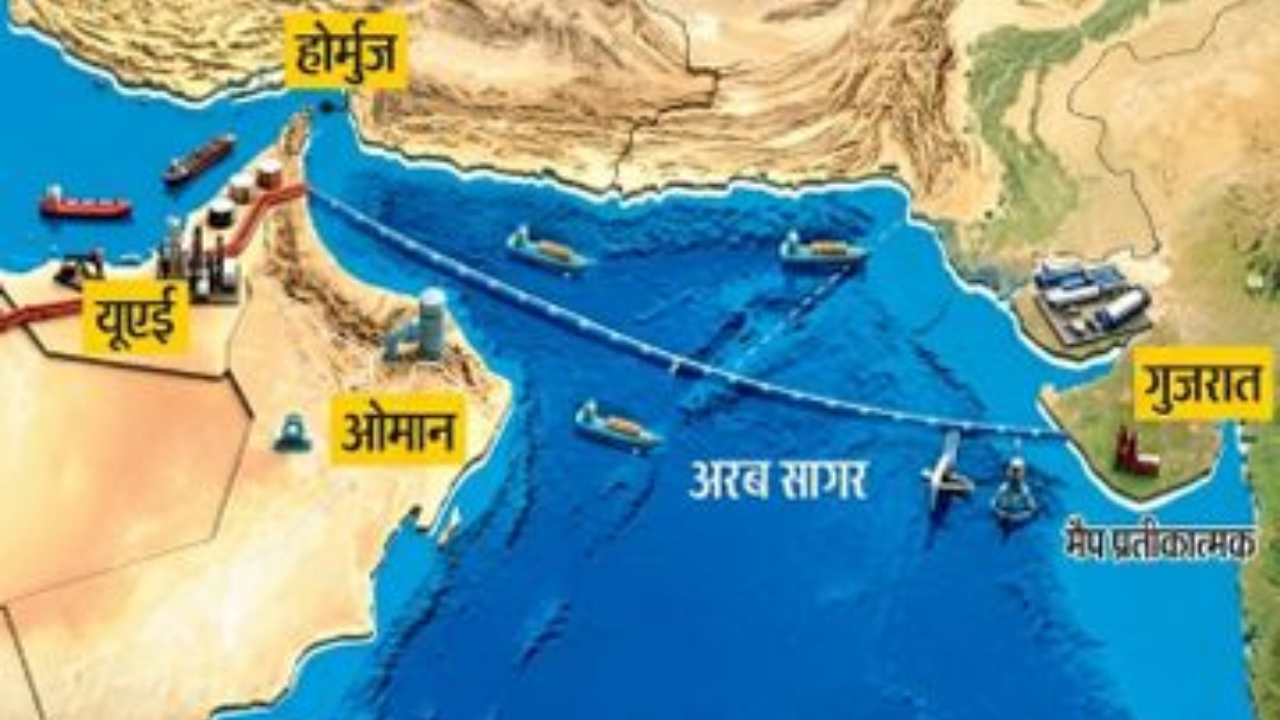
Designated as the Middle East to India Deep-Water Pipeline (MEIDP), the proposed corridor originates along the coasts of Oman and the United Arab Emirates, crosses the abyssal plains of the Arabian Sea, and makes landfall along the industrial shorelines of Gujarat and Maharashtra. While initially conceived exclusively as a natural gas transport trunkline, the Ministry of Petroleum and Natural Gas has expanded the mandate. Public sector undertakings—including GAIL (India) Limited, Indian Oil Corporation Limited (IOCL), and Engineers India Limited (EIL)—have been tasked with conducting comprehensive technical and financial feasibility studies to evaluate laying parallel conduits capable of pumping crude oil directly from Gulf fields. Aspirants analyzing geopolitical realignments can contextualize this initiative with foundational modules available in the Atharva Examwise Energy Security Archive alongside policy white papers from the Ministry of Petroleum and Natural Gas.
Technical Specifications and Baseline Data of the MEIDP Project
The technical framework of the MEIDP project, conceptualized and spearheaded by the New Delhi-based private consortium South Asia Gas Enterprise (SAGE), establishes unprecedented civil and metallurgical benchmarks in deep-water pipeline engineering. Traversing depths never before attempted for long-distance commercial hydrocarbon distribution, the engineering designs integrate high-tensile carbon steel trunklines engineered to withstand massive hydrostatic pressure fields along the oceanic floor of the Arabian Sea.
To confirm bathymetric feasibility and test subsea robotic welding protocols, SAGE deployed a 3-kilometer deep-water prototype pipeline at a cost of approximately ₹25 crore. The successful laying of this test segment validates the basic design principles, with the comprehensive commercial rollout estimated to span five to seven years once sovereign bilateral approvals, environmental clearings, and financial closures are concluded.
| Project Dimension | Technical and Economic Parameter |
|---|---|
| Official Designation | Middle East to India Deep-Water Pipeline (MEIDP) |
| Principal Promoting Entity | South Asia Gas Enterprise Pvt. Ltd. (SAGE) with Public Sector Undertakings (GAIL, IOCL, EIL) |
| Terminal Origins | Port and compression facilities in the UAE and Oman |
| Landfall Terminals | Receiving and regasification terminals in Gujarat and Maharashtra |
| Estimated Capital Expenditure | Approximately ₹40,000 crore (USD 4.7–4.8 billion) |
| Total Linear Extent | 1,200 km to 2,000 km (deep-sea trunkline spans ~1,300 km) |
| Maximum Ocean Floor Depth | 3,450 meters below sea level (unprecedented global depth benchmark) |
| Internal Design Pressure | 400 barg |
| Trunkline Dimensions | Diameter: 24 to 27 inches; Wall thickness: up to 40.5 mm |
| Metallurgical Standard | DSAW linepipe in DNV 485 carbon steel (API X70 equivalent compliant with DNV-OS-F101) |
| Daily Design Throughput | 31 million metric standard cubic meters per day (MMSCMD) of natural gas / 1.1 BSCFD |
| Crude Oil Scope | Ministry-directed feasibility analysis actively studying underwater crude transport |
| Estimated Implementation Window | 5 to 7 years from statutory and bilateral approval |
The extreme bathymetry of the Arabian Sea introduces complex engineering challenges. At the maximum anticipated depth of 3,450 meters, the ambient hydrostatic pressure reaches approximately 350 bar. Heavy-wall linepipes coated externally with multi-layer polypropylene and concrete, coupled with internal epoxy resin flow liners, are specified to prevent structural implosion and minimize internal hydraulic friction. Regular inspection and repair will rely entirely on advanced autonomous underwater vehicles (AUVs) and remotely operated vehicles (ROVs), given that the operational depth exceeds saturation diving thresholds.
Geopolitical Rationale: Bypassing the Strategic Chokepoint of Hormuz
The geographic concentration of India's primary energy import routes creates significant exposure to supply disruptions. Currently, the nation imports roughly 88% of its total domestic crude requirements, while over 50% of its Liquefied Petroleum Gas (LPG) and Liquefied Natural Gas (LNG) deliveries originate from Gulf suppliers such as Qatar and the United Arab Emirates.
Virtually all of these maritime fuel transfers rely on tanker shipping transiting the narrow Strait of Hormuz, a maritime corridor between Oman and Iran through which roughly one-fifth of global petroleum supplies flow. Instability across the Persian Gulf directly strains India's economic resilience in several key ways:
Elevated Freight and Insurance Expenses: Regional security disruptions cause marine insurance syndicates to sharply increase war-risk premiums for vessels operating in the Persian Gulf, directly inflating landed import costs for Indian refiners.
Vulnerability of Tanker Fleets: Commercial tankers remain vulnerable to maritime interdiction, aerial drone harassment, and regional naval skirmishes, creating acute logistical risks for baseload domestic refining operations.
Exposure to Spot-Market Price Shocks: Supply disruptions triggered by physical chokepoints immediately drive up global crude benchmarks and spot LNG prices, worsening India's import bill, foreign exchange reserves, and domestic consumer inflation.
The subsea pipeline infrastructure of MEIDP circumvents the Persian Gulf chokepoint by establishing export collection terminals on the outer coasts of Oman and the UAE, opening directly into the Arabian Sea. This routing enables continuous fuel extraction from major regional gas and crude reserves—including direct connections to fields in Oman, the UAE, Saudi Arabia, and Qatar—while bypassing the vulnerable chokepoint entirely. Detailed analysis of regional security dynamics is available in the Atharva Examwise International Relations Section and through policy updates from the Ministry of External Affairs.
Comparative Assessment: Subsea Energy Corridors Versus Overland Transcontinental Pipelines
India has evaluated overland pipeline alternatives for decades, participating in multilateral discussions around projects such as the Turkmenistan-Afghanistan-Pakistan-India (TAPI) pipeline and the Iran-Pakistan-India (IPI) pipeline. However, persistent cross-border political frictions and security concerns across intermediate territories have stalled these overland initiatives.
| Strategic Vector | Overland Transcontinental Route (TAPI / IPI) | Subsea Transnational Route (MEIDP) |
|---|---|---|
| Transit Fee Exposure | Demands continuous financial transit fees payable to intermediary territories. | Zero transit fees; crosses open international waters directly between Exclusive Economic Zones. |
| Geopolitical Sabotage Risk | Vulnerable to cross-border hostility, political extortion, and regional militancy. | Insulated from regional overland unrest; secured on deep ocean beds beyond non-state reach. |
| Sovereign Intermediary Control | Requires multi-state alignment, exposing fuel transit to bilateral disputes with transit nations. | Strictly bilateral framework connecting GCC energy hubs directly to Indian landing ports. |
| Operating Environment | Complex terrestrial geography, spanning high-altitude plateaus and hostile terrain. | Ultra-deep marine environment; requires high-integrity metallurgy at depths to 3,450 meters. |
| Supply Continuity | Exposed to unilateral shutdown or geopolitical leverage by intermediary nations. | Uninterrupted, long-term base supply feeding directly into primary consumption centers. |
Deep-water maritime pipelines require substantial upfront engineering investments, but they avoid the recurring political risks and sovereign transit disputes that have hindered overland continental corridors. By avoiding third-party land routes, the MEIDP secures direct fuel delivery for India's western industrial hubs.
Strategic and Macroeconomic Implications for India’s Energy Security
The rapid development of the MEIDP project matches India's long-term macro-energy targets and growing bilateral economic ties with the Gulf Cooperation Council (GCC):
Expanding Natural Gas in the Primary Energy Basket
India continues to pursue an official policy target of raising the proportion of natural gas within its national primary energy mix from approximately 6% to 15% by 2030. Total domestic consumption stands between 190 and 195 MMSCMD, with official projections indicating daily demand will reach 290 to 300 MMSCMD by the end of the decade. Given that domestic exploration cannot fully offset this demand trajectory, long-term dedicated pipelines are essential to power City Gas Distribution (CGD) networks, industrial manufacturing, and fertilizer plants. The sustained capacity of 31 MMSCMD offered by the MEIDP provides an uninterrupted baseload equivalent to more than 10% of India's anticipated 2030 gas consumption.
Deepening the India-UAE Strategic Partnership
Bilateral economic relations between New Delhi and Abu Dhabi have expanded significantly under the Comprehensive Economic Partnership Agreement (CEPA). The two nations have set a target to double bilateral non-oil trade to $200 billion by 2032. UAE sovereign wealth funds and corporate institutions have signaled intent to deploy an additional $25 billion into key Indian infrastructure sectors, focusing on port operations, maritime assets, and strategic petroleum reserves (SPR). Constructing dedicated subsea hydrocarbon lines complements this capital deployment, transitioning bilateral commerce from conventional cargo purchasing into integrated, long-term infrastructure cooperation.
For regular updates on evolving trade pacts and international corridors, aspirants can consult the Atharva Examwise Daily GK Updates.
Engineering Hurdles: Ultra-Deepwater Pipelaying and Subsea Maintenance
While the project offers clear strategic benefits, its technical execution requires overcoming several complex engineering and financial demands:
Subsea Geotechnical Dynamics: Deploying heavy 24- to 27-inch linepipe across deep oceanic trenches, uneven volcanic ridges, and unstable sediment slopes in the Arabian Sea requires specialized dynamic-positioning lay-barges.
Extreme Marine Environments: Deep-sea operations at 3,450 meters require specialized metallurgy to prevent external collapse, corrosion, and longitudinal fracture over a 40-year operational lifecycle.
Underwater Inspection and Maintenance: At depths well beyond human diving limits, operational maintenance requires specialized fleets of high-powered autonomous subsea robotic tools capable of hot-tapping, hyperbaric welding, and real-time defect scanning.
Capital Allocation and Off-Take Commitments: Securing roughly ₹40,000 crore in project finance requires long-term take-or-pay gas and crude off-take commitments from domestic public sector undertakings and clear sovereign guarantees between New Delhi, Abu Dhabi, and Muscat.
Maritime Infrastructure Protection: Safeguarding subsea pipelines from maritime threats, subsea tampering, and surface commercial incidents requires close coordination across regional naval commands, acoustic seabed arrays, and continuous maritime domain awareness operations.
Why this matters for your exam preparation
For candidates preparing for the Union Public Service Commission (UPSC) Civil Services Examination and related State PSC examinations, this development provides critical material across General Studies papers:
Key Facts and Prelims Takeaways
Project Title: Middle East to India Deep-Water Pipeline (MEIDP), spearheaded by South Asia Gas Enterprise (SAGE) in coordination with Indian oil and gas PSUs (GAIL, IOCL, EIL).
Capital Outlay & Timeline: Estimated at ₹40,000 crore (USD 4.7–4.8 billion), requiring a 5-to-7-year construction timeframe.
Linear Route & Bathymetry: Originates in Oman and the UAE, travels 1,200 to 2,000 km across the Arabian Sea, and reaches landfall in Gujarat and Maharashtra at depths down to 3,450 meters.
Operational Throughput: 31 MMSCMD (1.1 BSCFD) natural gas capacity, alongside ongoing technical studies for dual-purpose crude oil transportation.
Import Exposure: India imports ~88% of its crude oil, with more than 50% of its LNG and LPG historically navigating the Strait of Hormuz chokepoint.
Prototype Validation: SAGE completed a 3-kilometer subsea testing pipeline segment at an initial cost of ₹25 crore.
Relevance for UPSC Mains Examination
General Studies Paper II (International Relations & Energy Diplomacy):
Bilateral Engagements: Examines India-UAE comprehensive economic diplomacy, GCC integration, and the evolution of the "Look West" policy.
Geostrategic Resilience: Analyzes strategies to mitigate reliance on maritime chokepoints (such as the Strait of Hormuz) and compares subsea routes with terrestrial corridors like TAPI and IPI.
Multilateral Frameworks: Connects cross-border connectivity networks with broader initiatives, including the India-Middle East-Europe Economic Corridor (IMEC).
General Studies Paper III (Infrastructure, Economic Development & Energy Security):
Transition to Natural Gas: Supports national policy targets to raise natural gas from ~6% to 15% of the total primary energy basket by 2030.
Macroeconomic Insulation: Mitigates the impact of sudden international oil price spikes, high freight rates, and war-risk premiums on India's current account deficit (CAD).
Deep-Sea Infrastructure: Highlights technical and financial challenges in capital allocation, subsea engineering, and safeguarding critical underwater infrastructure.
Practice Questions for Aspirants
UPSC Prelims Practice Question: With reference to the Middle East to India Deep-Water Pipeline (MEIDP) project, consider the following statements:
It is designed to establish direct hydrocarbon connectivity from the Arabian Peninsula to western India across the Arabian Sea.
The subsea pipeline requires transit fees payable to third-party littoral nations.
The planned pipeline traverses seabed depths exceeding 3,000 meters below sea level.
Which of the statements given above are correct?
(a) 1 and 2 only
(b) 2 and 3 only
(c) 1 and 3 only
(d) 1, 2, and 3
Answer: (c)
[cite: 1, 3, 6, 9]
UPSC Mains Practice Question:"Subsea infrastructure corridors present a viable means to bypass vulnerable maritime chokepoints, though they introduce distinct engineering, financial, and strategic considerations." Critically analyze this statement with reference to the Middle East to India Deep-Water Pipeline (MEIDP) and its potential role in strengthening India's energy security. (Answer in 250 words / 15 Marks).
Candidates are advised to integrate these analytical frameworks into their ongoing Mains answer writing practice by reviewing structured guides on the Atharva Examwise GS Notes Portal.