
UPSC Current Affairs: Indian Army Deploys AASHVAST Labs for Military Drone Firmware Security | Daily GK Update
Strategic Imperative: The Induction of AASHVAST Labs
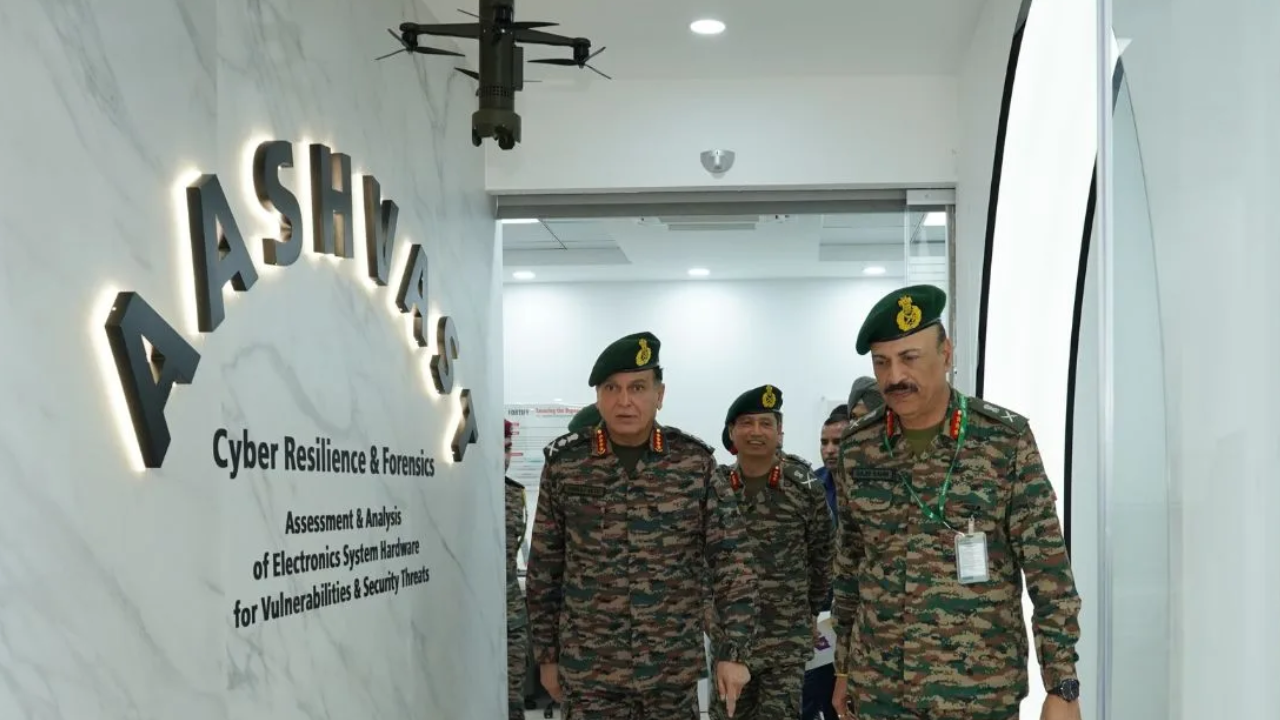
Modern military doctrine increasingly views unmanned aerial systems and automated surveillance arrays not merely as tactical force multipliers, but as the foundational components of theater reconnaissance and precision engagement. However, the digitization of combat assets exposes armed forces to severe non-kinetic threats, particularly electronic compromise and software subversion. To protect airborne and ground-based electronic assets from hostile interference, the Indian Army has begun establishing six dedicated testing and validation facilities across the country under the AASHVAST initiative.
The acronym AASHVAST stands for Assessment and Analysis of Electronic Systems Hardware for Vulnerabilities and Security Threats. Engineered as a comprehensive Firmware Analysis and Validation Suite, the system was developed by QuickPay Pvt Ltd for the Indian Army’s Directorate General of Electronics and Mechanical Engineering (DG EME). While the inaugural laboratory has been established in New Delhi, plans are underway to commission five additional facilities in strategically vital military operational sectors.
The mandate of these testing centers extends beyond external, visual, or electrical quality assessments. Instead, they perform mandatory, non-destructive, firmware-level diagnostics on all military drones inducted into service. This testing protocol will eventually encompass all Closed-Circuit Television (CCTV) systems procured by the armed forces. By institutionalizing this capability, the military seeks to eliminate hidden code, logic backdoors, and undocumented components that could lead to system capture, sensor blackout, or mission failure in contested airspace.
Aspirants tracking high-yield defence technology developments can follow related updates on Atharva Examwise Current News to align their preparation with evolving UPSC General Studies Paper III themes.
Key Facts and Institutional Highlights
Official Nomenclature: Assessment and Analysis of Electronic Systems Hardware for Vulnerabilities and Security Threats (AASHVAST).
Lead Nodal Directorate: Directorate General of Electronics and Mechanical Engineering (DG EME), Indian Army.
Development Partner: QuickPay Pvt Ltd.
Network Scope: Six testing centers nationally, with the first center operational at Delhi Cantonment.
Hardware Under Scrutiny: Military Unmanned Aerial Vehicles (UAVs), tactical payloads, and future-procured CCTV surveillance systems.
Policy Integration: Directly aligned with national self-reliance goals under Atmanirbhar Bharat and the Army Design Bureau's (ADB) component-clearing framework.
Technical Anatomy of Firmware Vulnerabilities in Defence Systems
To understand why traditional procurement protocols failed to identify cyber-physical backdoors, the structural distinction between application software, physical silicon, and embedded firmware must be clearly defined.
Firmware is a specialized category of software programmed permanently or semi-permanently into the non-volatile memory of a hardware component—such as microcontrollers, read-only memory (ROM), or flash memory. Operating directly beneath high-level operating systems, firmware provides the foundational operational instructions that direct hardware execution, interpret sensor inputs, control motor throttles, and manage data links.
Because firmware operates beneath host-based operating systems, malicious code placed at this level cannot be detected by standard endpoint detection software or anti-virus suites. Firmware-level vulnerabilities are introduced through two main pathways: deliberate insertion during manufacturing and silicon fabrication, or unauthorized modification during software maintenance cycles. An adversary with access to the firmware can override ground commands, alter navigation coordinates, or shut down propulsion systems while presenting normal telemetry to ground operators.
The AASHVAST testing suite operates as an air-gapped, read-only analytical framework. This architecture allows military engineers to extract, decompile, and inspect binary code from flight controllers and optical payloads without altering system files or degrading the flight-readiness of the platform.
| Vulnerability Domain | Technical Mechanism | Tactical Battlefield Implication |
|---|---|---|
| Geospatial Logic Traps | Pre-programmed latitude and longitude boundary limits hidden in flight controller microcode. | Sudden loss of thrust or uncommanded descent when traversing specific sensitive border coordinates. |
| Dormant Code Blocks | Unused, uncompiled machine code sequences embedded in navigation modules. | Adversaries can transmit specific radio-frequency trigger codes to shut down systems mid-mission. |
| Temporal Logic Bombs | Conditional instructions programmed to trigger when internal clock thresholds are reached. | Equipment passes factory acceptance tests without issue, but fails during high-tempo operations. |
| Embedded Administrative Credentials | Hardcoded encryption keys, root passwords, and debug backdoors inside peripheral firmware. | Unauthorized external control, command injection, and interception of encrypted tactical communications. |
| Covert Remote Access Tools (RATs) | Unauthorized communication protocols hidden within transceiver control code. | Silent exfiltration of real-time reconnaissance video to adversary servers. |
| EW and Spoofing Vulnerabilities | Flawed logic governing Global Navigation Satellite System (GNSS) input interpretation. | System fails to handle electronic countermeasures, drifting into hostile territory under GPS spoofing. |
Supply Chain Integrity and the Decoupling of Foreign Components
A critical operational challenge facing India's defence sector is the presence of foreign electronic components—specifically of Chinese origin—in domestic military hardware. Unmanned aerial systems and digital surveillance cameras remain heavily dependent on global commercial off-the-shelf (COTS) electronics, where Chinese manufacturing maintains a dominant share in sub-components such as flight computers, motor drivers, optical gimbals, and battery management systems.
Historically, procurement verification relied almost entirely on vendor-supplied paperwork, commercial invoices, and shipping documentation. This reliance created significant security vulnerabilities:
[ Tier-3 Foreign Foundry / Sub-Tier Component ] │ (Physical Component Extraction) ▼ [ Assembly & Re-badging in Intermediate Third-Party State ] │ (Commercial Paperwork Laundering) ▼ [ Domestic System Integrator / Local Vendor Invoice ] │ (Misleading Country-of-Origin Claim) ▼ [ Conventional Military Acceptance (Documentation Review Only) ] │ (CRITICAL SECURITY GAP: Silicon Unverified) ▼ [ AASHVAST Interception: Silicon Binary Extraction & Air-Gapped Code Audit ]
Foreign components can easily be imported into third-party countries, relabeled, and re-invoiced to obscure their true manufacturing origin. A commercial invoice confirms only where a transaction took place, not what is etched into the silicon or embedded in the flash memory. As a result, sub-components with pre-installed foreign proprietary protocols have entered domestic assembly lines undetected.
To address these vulnerabilities, the Indian government barred domestic defence drone contractors from utilizing Chinese sub-assemblies. Building on this policy, the Army Design Bureau presented a comprehensive framework to the Ministry of Defence in 2025 to systematically remove Chinese-origin sub-assemblies from the armed forces' drone inventory.
The AASHVAST facilities provide the technical verification needed to enforce these policies. By reverse-engineering firmware binaries and auditing active electronics directly, military engineers can detect foreign-origin microcode, proprietary protocols, and hidden network ports regardless of what is stated on the shipping invoice. Detailed analyses of indigenisation policies are available in the Defence and Internal Security Analysis section.
Contemporary Threat Matrix: India's Contested Cyberspace
The operationalization of the AASHVAST facilities comes amid a sharp increase in asymmetric cyber operations targeting India's military, diplomatic, and critical infrastructure assets. State-sponsored cyber campaigns are increasingly integrated with conventional military posturing, using digital intrusion as a primary instrument of coercion.
Quantitative assessments confirm that India faces an exceptionally high frequency of hostile network targeting:
Global Target Standing: Independent assessments by cyber threat intelligence firm CloudSEK ranked India as the second most cyber-attacked nation globally in 2024, and sixth in its 2025 global threat index.
Threat Frequency: The India Cyber Threat Report 2025, published jointly by the Data Security Council of India (DSCI) and Seqrite, recorded more than 369.01 million malware detections across 8.44 million monitored endpoints throughout 2024.
Operational Incursion Tempo: This volume of telemetry represents an average of 702 potential security intrusions every minute directed against Indian enterprise, government, and defence networks.
Case Studies in Critical Infrastructure and Hybrid Warfare
| Incident / Campaign | Threat Vector & Methodology | Operational & Strategic Impact |
|---|---|---|
| Mumbai Power Grid Attack (2020) | Malware intrusion into Supervisory Control and Data Acquisition (SCADA) systems managing load dispatch. | Caused widespread urban blackouts during high-altitude border tensions, demonstrating how civilian critical infrastructure can be targeted during conventional standoffs. |
| Operation Sindoor Cyber Campaign | Spear-phishing using malicious macro files (.ppam, .xlam, .msi), followed by deployment of the Ares and Crimson Remote Access Trojans. | Targeted the Ministry of Defence, tri-service operational networks, DRDO labs, and National Informatics Centre servers. |
| Targeting of BOSS Linux | Tailored exploit scripts designed to identify and infiltrate customized Linux builds. | Targeted the Bharat Operating System Solutions (BOSS) platform—developed by C-DAC to secure sensitive government communications. |
| Coordinated Hacktivist Offensives | Hybrid campaigns using distributed denial-of-service (DDoS) attacks and website defacements alongside Advanced Persistent Threat (APT) operations. | Coordinated disruption of state government administrative websites and public utilities designed to undermine public confidence during active security operations. |
Institutional Cyberspace Governance and Defence Architecture
To secure its national digital borders and protect critical infrastructure, India has established a multi-tiered cybersecurity governance architecture. This institutional framework spans high-level policy guidance, civilian incident response, critical infrastructure protection, military command, and law enforcement.
Strategic Direction: National Cyber Security Coordinator (NCSC)
Housed within the National Security Council Secretariat (NSCS) and reporting directly to the Prime Minister’s Office (PMO) and the National Security Advisor (NSA), the NCSC serves as India's lead cybersecurity strategist. The office provides overarching strategic guidance, assesses nationwide cyber readiness, coordinates inter-agency threat sharing, and ensures national security priorities guide commercial, critical infrastructure, and military cyber policies.
Civilian Protection and Incident Response: CERT-In
The Indian Computer Emergency Response Team (CERT-In) was established under Section 70B of the Information Technology Act, 2000, and functions under the Ministry of Electronics and Information Technology (MeitY). CERT-In serves as the national nodal agency for monitoring incoming cyber threats, coordinating incident mitigation, analyzing forensic evidence, and issuing proactive security advisories across public and private networks. Regulated entities and service providers must report significant cyber incidents to CERT-In within specified statutory timeframes to support nationwide situational awareness.
Critical Infrastructure Defense: NCIIPC
Operating under the National Technical Research Organisation (NTRO), the National Critical Information Infrastructure Protection Centre (NCIIPC) was designated under Section 70A of the Information Technology Act. The agency is tasked with protecting India's Critical Information Infrastructure (CII)—defined as digital assets whose disablement would severely damage national security, the economy, or public health. The NCIIPC works across key sectors including power grids, telecommunications, financial networks, transportation, atomic energy, and defence industrial networks through the official NCIIPC oversight framework.
Military Tri-Service Integration: Defence Cyber Agency (DyCA)
The Defence Cyber Agency operates under Headquarters Integrated Defence Staff (HQ IDS) as a dedicated, tri-service command integrating personnel from the Indian Army, Indian Navy, and Indian Air Force. The DyCA is responsible for formulating joint defensive doctrine, securing military communication networks, and defending joint operational theaters from foreign cyber incursions. The agency also develops sovereign cyber capabilities to deter adversaries in the fifth dimension of modern warfare.
Counter-Cybercrime Operations: Indian Cyber Crime Coordination Centre (I4C)
Established by the Ministry of Home Affairs (MHA), the I4C provides an institutional platform for law enforcement agencies handling cybercrime, financial fraud, and online exploitation. The centre manages the National Cyber Crime Reporting Portal and coordinates state and central intelligence units to dismantle organized domestic and transnational cybercrime operations.
Institutional Governance Hierarchy ─────────────────────────────────── Prime Minister's Office (PMO) │ National Security Advisor (NSA) │ National Cyber Security Coordinator (NCSC) │ ┌────────────────────────────┼────────────────────────────┐ │ │ │ Civilian Tech Critical Infrastructure Military │ │ │ CERT-In NCIIPC DyCA (IT Act, Section 70B) (IT Act, Section 70A) (HQ IDS Tri-Service)
Why this matters for your exam preparation
For candidates preparing for the civil services examination, the deployment of AASHVAST labs provides an important practical case study that bridges Science and Technology, Internal Security, and Defence Indigenisation under General Studies Paper III.
Prelims Orientation and Factual Anchors
Institutional Mandates: Key statutory distinctions, including CERT-In under Section 70B of the IT Act, NCIIPC under Section 70A under the NTRO, and the advisory role of the NCSC under the Prime Minister's Office.
Technology Fundamentals: The structural definitions of firmware, hardware Trojans, logic bombs, and air-gapped forensic testing environments.
Domestic Technological Assets: The development of sovereign platforms like the Bharat Operating System Solutions (BOSS Linux) by C-DAC, and its role as a hardened operating system for public and military administration.
Threat Classifications: The characteristics of Advanced Persistent Threat (APT) groups, including state-backed actors such as APT36 (Transparent Tribe), and their use of modular remote access tools.
Mains Analytical Framework (General Studies Paper III)
The Vulnerability of Hardware Supply Chains: Evaluates how relying on foreign commercial-off-the-shelf (COTS) sub-components creates systemic vulnerabilities in military platforms, demonstrating why paper certifications must be supported by deep silicon and firmware audits.
The Concept of Asymmetric Hybrid Warfare: Analyzes how adversaries integrate conventional posturing with cyber operations against civilian infrastructure (such as power grids) and defence systems during military standoffs.
Evolving Beyond Assembly-Level Indigenisation: Discusses how initiatives like AASHVAST shift Atmanirbhar Bharat from superficial final-stage assembly toward sovereign control over the entire electronic and firmware architecture of defence assets.
Candidates can practice framing answers around this analytical structure using the model question below, and submit their responses for structured evaluation via the Atharva Examwise Mentorship Module.
Mains Practice Question
"Modern military autonomy cannot rely merely on the physical assembly of defence platforms; it requires sovereign control over the underlying code and silicon architecture. In light of emerging cyber-physical threats, analyze the operational vulnerabilities of foreign-sourced firmware in military assets. Critically examine the institutional and technological measures required to build genuine cyber resilience across India's defence ecosystem." (GS Paper III, 250 Words, 15 Marks)