
UPSC Current Affairs: India Exports Hilsa Fish to Bangladesh – Atharva Examwise Daily GK Update
Cross-Border Role Reversal: Indian Hilsa Exports to Bangladesh
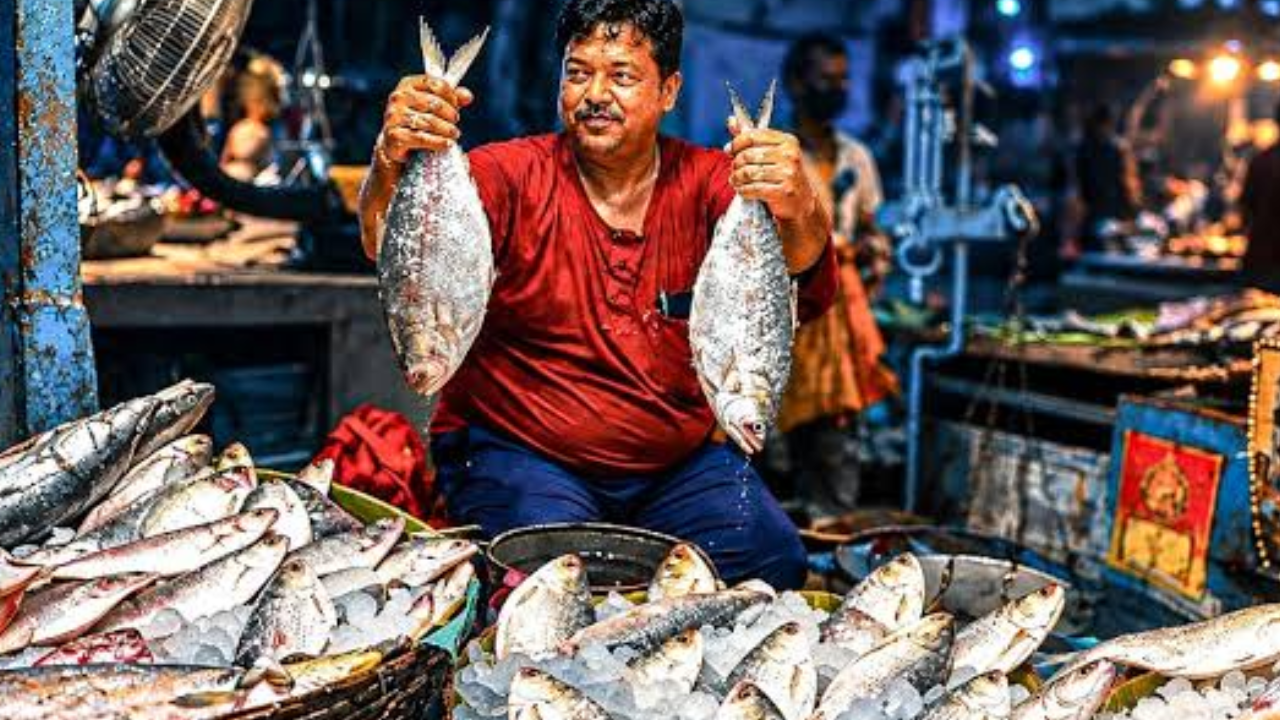
In an unprecedented shift within South Asian agricultural commerce, India has emerged as an exporter of the iconic Hilsa fish (Tenualosa ilisha) to Bangladesh. For decades, the cross-border trade of this prized migratory clupeid flowed exclusively from east to west. Bangladesh—which historically accounts for the dominant share of global Hilsa catches—supplied Indian markets through managed, seasonal trade windows known informally as "Ilish diplomacy" ahead of the Durga Puja festival.
Recent customs clearance logs reveal that approximately 500 metric tonnes (MT) of Hilsa were transported across the Petrapole Integrated Check Post (ICP) in West Bengal into Bangladesh over a two-month period. Cross-border logistics networks project an additional dispatch of 150 to 200 MT. This development marks an inflection point in regional fisheries trade, driven by changing domestic landing volumes, cross-basin environmental factors, and distinct post-harvest processing demands across national borders. Aspirants tracking trade patterns can access related analyses via the Atharva Examwise Indian Economy and Trade Module.
| Trade and Logistics Dimension | Historical Baseline: Bangladesh to India | Emerging Paradigm: India to Bangladesh |
|---|---|---|
| Primary Direction of Flow | East to West (Padma–Meghna basin to Kolkata wholesale markets) | West to East (Gujarat marine landings to Dhaka, Sylhet, and Chattogram) |
| Border Clearance Gateway | Petrapole–Benapole Land Customs Station | Petrapole–Benapole Land Customs Station |
| Bilateral Regulatory Regime | Blanket export restrictions since 2012, punctuated by limited festive quotas | Open commercial consignment clearance backed by mandatory Animal Quarantine NOCs |
| Comparative Volume Data | Sept 2024: 2,420 MT permitted, 577 MT imported; Sept 2025: 1,200 MT permitted, 150 MT imported | 500 MT exported over two months; 150–200 MT additional pipeline expected |
| Underlying Production Factor | Surplus catches in the lower Meghna–Padma delta meeting West Bengal festival demand | Severe domestic shortages in Bangladesh offset by bumper estuarine yields in Gujarat |
Supply Chain Mechanics: From Bharuch to the Petrapole Border
The logistical structure underpinning this trade flow bridges western maritime landing centers with the eastern land border. While trade clearances and financial settlements are handled primarily by wholesale merchant cartels based at the Howrah wholesale fish market in West Bengal, the physical catch originates thousands of kilometers away in the estuarine and coastal networks of Gujarat, particularly around Bharuch in the Narmada River basin.
The consignments moving through the Petrapole Land Customs Station consist of specimens weighing between 700 grams and 1.5 kilograms, fetching unit prices between ₹500 and ₹1,000 per kilogram depending on grading and cold-chain stability. Export operations require strict regulatory clearance, requiring consignments to clear food-grade sanitary evaluations and secure formal Non-Objection Certificates (NOC) from Indian animal quarantine stations prior to customs exit.
The Roe Economy: Consumer Divergence and Industrial Re-Export
The economic rationale underlying this trade channel stems from differentiated consumer preferences in the two countries. In West Bengal, domestic consumers show a strong preference for lean, pre-spawning Hilsa, where intramuscular lipids produce the delicate texture and flavor prized in regional cuisine. Consequently, the Gujarat catch—which often features mature, egg-carrying fish—experiences subdued retail demand in Kolkata.
Conversely, commercial processing operations in Bangladesh actively target roe-heavy catches. Industrial processing units concentrated in Chattogram, Sylhet, and Cox's Bazar harvest the mature roe from Indian consignments. The extracted roe is salted, cured, packaged, and re-exported to high-value international markets across Europe and North America to serve South Asian diaspora communities. The remaining carcass is salted, dehydrated, and distributed domestically as preserved fish. This specialized processing network transforms Indian raw landings into high-value marine products for global retail.
Ecological and Biological Profile of Tenualosa ilisha
The Hilsa (Tenualosa ilisha) is a member of the Clupeidae family and represents an ecologically critical and commercially valuable species across the Bay of Bengal, the Arabian Sea, and their connected river networks. Deeply integrated into regional culture, the species serves as the designated State Fish of West Bengal and the National Fish of Bangladesh. Cultural markers such as the annual Ilish Utsab in West Bengal and the ritual gifting of paired specimens (Joda Ilish) to celebrate marriage emphasize its unique status in regional heritage. For related ecological overviews, candidates can consult the Atharva Examwise Ecology and Biodiversity Pointers.
| Biological / Ecological Parameter | Scientific Detail and Environmental Characterization |
|---|---|
| Taxonomic Family & Species | Actinopterygii; Family: Clupeidae; Species: Tenualosa ilisha and Tenualosa toli [cite: 5] |
| Migratory Classification | Anadromous (marine adults migrate upstream into freshwater fluvial environments to spawn) |
| Key Fluvial Systems | Hooghly-Bhagirathi, Padma, Meghna, Brahmaputra, Narmada, Tapti, and Godavari |
| Breeding Migration Cycles | Bimodal periodicity: spring migration (mid-February to April) and post-monsoon peak (September to October) |
| Osmoregulatory Adaptation | Broad euryhaline tolerance enabling systemic transitions from high-salinity oceanic zones to freshwater rivers |
| Ecological Vulnerabilities | Barrage-induced habitat fragmentation, overfishing of juveniles (jatka), silt accumulation, changing salinities |
Anadromous Migratory Cycles and Fluvial Dynamics
Tenualosa ilisha exhibits an anadromous life cycle, requiring alternating aquatic environments to complete its developmental phases. Adult populations forage and mature in open marine and coastal environments before migrating upstream into freshwater river systems to spawn.
Scientific tracking identifies two distinct spawning migrations each year:
The Spring Migration: Takes place between mid-February and April as river temperatures increase.
The Monsoon Peak Migration: Runs from September through October, when seasonal monsoon discharge lowers salinity levels in estuaries, stimulating mass upstream movement for spawning.
After spawning in freshwater reaches, surviving adults migrate back down to open marine environments. The newly hatched larvae drift downriver toward estuarine nurseries, where they consume plankton and adapt their osmoregulatory systems to higher salinity before entering marine waters.
Contrasting River Basin Health: Narmada vs. Ganga-Brahmaputra Delta
The recent rise of Gujarat's Bharuch region as a major source for Hilsa—contrasting with stagnant yields across eastern deltaic channels—reflects differing environmental pressures across river basins. Assessments from the ICAR-Central Inland Fisheries Research Institute (CIFRI) indicate that changing trade routes serve as an indicator of broader environmental changes in river basins.
In the eastern delta networks, including the Hooghly-Bhagirathi and Meghna systems, upstream migration faces persistent challenges:
Hydrological Obstructions: Cross-river barriers, dams, and embankments block historical upstream spawning paths, confining breeding activity to smaller estuarine sections downstream.
Estuarine Siltation and Runoff: Increased sedimentation reduces river channel depths, while domestic and industrial effluents lower dissolved oxygen levels across nursery grounds.
Juvenile Depletion: Heavy fishing pressure on juvenile Hilsa (locally called jatka) using non-selective monofilament gillnets reduces the number of young fish reaching adult breeding stages.
Conversely, the estuarine stretches of the Narmada River basin in Bharuch have retained hydrological pulses that support seasonal upstream migration. This environmental stability has sustained productive marine landings, enabling western Indian fisheries to supply international markets.
Policy Framework: PMMSY and the Indian Aquaculture Sector
India's marine export capabilities are supported by institutional programs such as the Pradhan Mantri Matsya Sampada Yojana (PMMSY). Launched on September 10, 2020, under the Department of Fisheries, Ministry of Fisheries, Animal Husbandry and Dairying, PMMSY recently completed six years of implementation. The program serves as the primary policy vehicle for India's "Blue Revolution," designed to build a sustainable, economically viable, and modern fisheries sector. For detailed policy overviews, students can review the Atharva Examwise Mains GS-III Strategy Guide.
Structural Interventions under PMMSY
PMMSY addresses structural challenges across the fisheries value chain, focusing on three operational areas:
Port and Harbour Modernization: Financing deep-water fishing harbours, modernizing fish landing centers, and establishing safe berthing facilities to optimize fleet operations and minimize dockside spoilage.
Cold-Chain Logistics: Developing refrigerated transport vehicles, automated ice plants, and modern storage facilities to support long-distance transport corridors, such as the Gujarat-to-Bengal route.
Traceability and Quality Control: Establishing sanitary testing labs, digital consignment monitoring, and export compliance systems to meet international standards for food safety and animal quarantine.
Formalization via the PM-MKSSY Sub-Scheme
To support small-scale fisheries enterprises, the central government introduced the Pradhan Mantri Matsya Kisan Samridhi Sah-Yojana (PM-MKSSY) as a targeted central sector sub-scheme under PMMSY. PM-MKSSY focuses on:
Creating a national digital registry to bring unorganized fishers, fish vendors, and micro-enterprises into the formal economy.
Expanding working capital and institutional microfinance access for fisheries cooperatives and self-help groups.
Financing urban and peri-urban retail infrastructure, including hygienic fish retail kiosks, modern wet markets, and ornamental fish rearing units to diversify rural livelihoods.
Global Standards and Aquaculture Governance
As defined by the Food and Agriculture Organization (FAO) of the United Nations, aquaculture refers to the controlled cultivation of aquatic organisms, including finfish, molluscs, crustaceans, and aquatic plants. FAO guidelines require deliberate intervention in the rearing process—such as periodic stocking, controlled nutrition, and protection from predators and disease—to improve production yields.
Within the PMMSY framework, sustainable aquaculture practices are applied across both inland freshwater and coastal mariculture projects. These controlled systems help meet rising national and international seafood demand, easing fishing pressure on vulnerable wild stocks like the migratory Hilsa.
Why This Matters for Your Exam Preparation
The emergence of India as a Hilsa exporter to Bangladesh offers competitive exam aspirants an integrated case study that spans ecology, regional diplomacy, and agricultural supply chain policy.
High-Yield Prelims Facts
Anadromous Migratory Behaviour: Tenualosa ilisha is an anadromous species, meaning it migrates from marine and coastal environments upstream into freshwater rivers to spawn, whereas catadromous species migrate from freshwater rivers down to the sea to reproduce.
Taxonomic Identifiers: The Bay of Bengal and connected estuaries host two related Hilsa species: Tenualosa ilisha and Tenualosa toli.
Bimodal Spawning Windows: Upstream spawning runs occur twice per year: first during the spring window (mid-February to April) and later during the post-monsoon peak (September to October).
Border Trade Port: Consignments clear through Petrapole in West Bengal (paired with Benapole in Bangladesh), which operates as the largest land port facility in South Asia.
Institutional Governance: PMMSY is managed directly by the Department of Fisheries within the Ministry of Fisheries, Animal Husbandry and Dairying. PM-MKSSY operates as a central sector sub-scheme focused on formalizing small-scale fisheries businesses.
Mains Analytical Frameworks: GS Paper-II and GS Paper-III
GS Paper-II: Bilateral Relations and Transboundary Trade Dynamics: The Hilsa trade highlights how transboundary ecological resources and shared cultural symbols influence bilateral diplomacy. Candidates can examine how shifts from informal, festive quotas toward institutionalized, private-sector trade flows create more stable commercial ties between India and Bangladesh.
GS Paper-III: Agricultural Value Chains and Post-Harvest Logistics: The Gujarat-to-Petrapole trade link demonstrates the value of modern inter-state cold chains and port infrastructure supported by PMMSY. Candidates can evaluate the value chain gap where India exports raw, roe-rich fish to Bangladesh for processing, highlighting opportunities to develop domestic processing facilities and export directly to diaspora markets.
GS Paper-III: Conservation, Fluvial Hydrology, and Riverine Ecology: The contrasting trends between depleted eastern delta fisheries and productive landings along the Narmada River offer practical material for essays on river management. Answers can emphasize the need for balanced barrage design, fish-passage infrastructure, unified river basin governance, and strict protection for juvenile fish to maintain sustainable marine resources.