
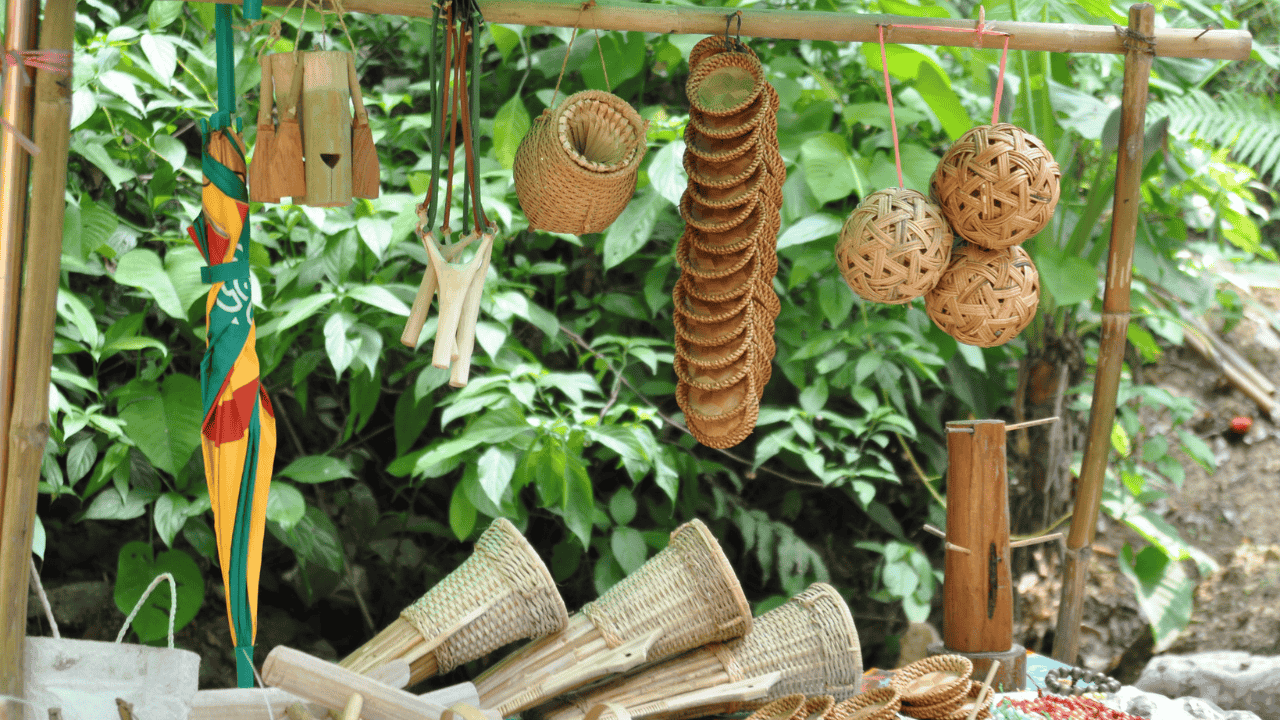
UPSC Current Affairs: Bamboo Culture and Tribal Livelihoods in Arunachal Pradesh – Atharva Examwise Current News and Daily GK Update
Ecological and Cultural Symbiosis in the Eastern Himalayas
Arunachal Pradesh, traditionally designated as the "Land of Dawn-lit Mountains," represents an exceptional intersection of Eastern Himalayan biogeography and living ethnographic heritage. Within this rugged, montane environment, twenty-six major tribal communities and over one hundred sub-tribes have developed complex, nature-centric systems of material survival. Central to this cultural landscape is bamboo, an abundant natural resource that serves simultaneously as an ecological anchor, an architectural medium, and an economic lifeline.
Rather than treating bamboo merely as wild botanical flora, the indigenous communities of the region have institutionalized its cultivation, harvesting, and fabrication into every tier of domestic and communal life. The craft of transforming raw culms into functional implements without industrial machinery is not an isolated artisanal trade; it is an ancestral socio-ecological practice that bridges forest preservation, clan structure, and material culture. For civil services aspirants tracking regional governance and cultural landscapes through the Atharva Examwise Daily Current Affairs Portal, examining this tribal bio-economy reveals critical lessons in vernacular design and community-based natural resource management.
Ethno-Botanical Heritage Across Major Tribal Communities
The diverse ecological zones across Arunachal Pradesh—ranging from tropical river valleys to alpine highlands—have fostered specialized bamboo traditions among distinct tribal formations. Communities such as the Adi, Apatani, Nyishi, Galo, Mishmi, and Wancho demonstrate how material cultures evolve in response to local microclimatic conditions and forest typologies.
The Adi people, concentrated along the fertile terraces and gorges of the Siang River basin, possess an extensive material vocabulary rooted in bamboo and wild cane. Celebrated during seasonal observances such as the Solung harvest festival and the Aran hunting cycle, Adi material craftsmanship produces household granaries, winnowing mats, fermentation vessels for traditional beverages, and heavy-duty carrying baskets capable of withstanding rough mountain paths. The Adi also weave dense, shock-resistant cane helmets, historically worn as defensive headgear and today retained as cultural emblems during formal gatherings.
In the Ziro Valley of Lower Subansiri district, the Apatani community has gained worldwide academic attention for their sophisticated, closed-loop wet-rice farming integrated with pisciculture. To sustain this agrarian model without depleting wild evergreen forests, the Apatani maintain privately owned bamboo groves (Phyllostachys bambusoides) adjacent to their settlements. These dedicated plots supply continuous timber for field bund fencing, gravity-fed irrigation conduits, domestic utensils, and seasonal drying platforms. Bamboo work is interwoven with their social institutions, featuring prominently during the Dree agricultural fertility celebrations and the Myoko friendship rituals.
The Nyishi, representing the largest demographic group within the state across districts such as Papum Pare, East Kameng, and Kurung Kumey, exhibit exceptional skill in decorative and protective bamboo fabrication. Their traditional woven headgear, the Bopia, features finely coiled cane and woven bamboo fibers, designed to support cultural adornments while offering physical protection in dense sub-tropical jungles. The Nyishi also rely heavily on bamboo woven lattice partitions to structure their extended communal dwellings, which are consecrated through collective ceremonies such as Nyokum Yullo.
In West Siang and Lepa Rada districts, the Galo community utilizes bamboo to navigate and harvest riverine ecosystems. Using non-mechanized knives and shaping irons, Galo craftsmen design specialized submerged conical fish traps that harness river flow velocities to trap aquatic fauna without disrupting local breeding cycles. The community pairs these functional implements with delicate basketry and domestic matting displayed during their springtime Mopin celebrations.
The Mishmi complex—comprising the Idu, Digaru (Taraon), and Miju (Kaman) groups of the Dibang Valley, Lohit, and Anjaw regions—utilizes bamboo to adapt to steep terrain subject to high rainfall and recurring landslides. The Idu Mishmi construct elongated, rectangular stilt dwellings using interlocking bamboo frames that minimize foundational excavation on unstable mountain slopes. Inside these dwellings, suspended bamboo racks placed above hearths allow food items, meat, and seeds to be preserved through steady smoke dehydration. These material traditions intersect with profound animistic beliefs and ancestral ceremonies such as the Reh and Tamladu festivals.
Further southeast, in the Longding district bordering the Patkai hills, the Wancho community blends bamboo weaving with wood carving and beadwork. The Wancho apply bamboo basketry to grain logistics, ceremonial food transfers, and the architectural construction of communal halls (Morungs) that serve as traditional centers for village administration and oral instruction.
A spirants examining tribal societies can access comprehensive analytical profiles in the Atharva Examwise Scheduled Tribes and Demographics Study Module.
Comparative Tribal Ethno-Botany in Arunachal Pradesh
| Community | Primary Geographical Foothold | Principal Agrarian / Ritual Festivals | Specialized Functional Bamboo Implementations |
|---|---|---|---|
| Adi | Siang, East Siang, and Upper Siang Basins | Solung (Harvest), Aran (Hunting) | Long-span suspension bridges, defensive cane headgear, storage silos, field transport baskets |
| Apatani | Ziro Valley (Lower Subansiri) | Dree (Crop Protection), Myoko (Alliance) | Managed bamboo grove agroforestry, aquacultural bunding, household culinary utensils |
| Nyishi | Papum Pare, East Kameng, Kurung Kumey | Nyokum Yullo (Agricultural Prosperity) | Bopia cane headwear, high-tensile wall matting, domestic grain containers |
| Galo | West Siang, Lepa Rada, Lower Siang | Mopin (Harvest & Welfare) | Hydrodynamic river fish traps, woven grain storage, festive ceremonial accessories |
| Mishmi | Dibang Valley, Lohit, Anjaw | Reh, Tamladu (Spiritual & Earth Veneration) | Sloped stilt frameworks, hearth-suspended smoke drying racks, steep-terrain haulage baskets |
| Wancho | Longding District (Patkai Range) | Oriah (Agricultural Harvest) | Granary infrastructure, multi-tiered seed storage units, Morung dormitory walling |
Vernacular Architecture and Indigenous Structural Engineering
Beyond portable consumer goods and domestic utensils, bamboo provides the foundational structural engineering for indigenous communities in the Eastern Himalayas. The geographical conditions of Arunachal Pradesh—defined by high seismic activity (Seismic Zone V), steep topography, torrential monsoons, and rapid soil erosion—render modern rigid materials, such as brick and unreinforced concrete, vulnerable to shearing and foundation failure. Traditional builders resolved these engineering challenges through vernacular systems centered on high-tensile, flexible vegetative materials.
Cane and Bamboo Suspension Bridges
Among the most technically sophisticated applications of traditional engineering are the long-span cane and bamboo suspension bridges erected across major Himalayan rivers, such as the Siang and Siyom. Constructed primarily by the Adi and Galo communities, these bridges span 70 to 150 meters over turbulent gorges without the support of intermediate masonry pillars or industrial steel cables.
Artisans select mature, seasoned bamboo poles and split-cane strips (Calamus species) to construct an integrated tension system. Thick cane strands are anchored to massive bedrock formations or large riparian trees on opposite riverbanks. Suspended loops of split bamboo are interwoven to establish an elliptical web that forms a covered pedestrian tube. This structural configuration offers high tensile elasticity, allowing the entire suspension to flex dynamically and dissipate wind turbulence and shifting live foot-traffic loads without experiencing catastrophic brittle failure.
The maintenance of these bridges functions as a mechanism of social cohesion. Because organic fibers gradually degrade under humid subtropical conditions, bridge-building clans convene annually or biennially to re-tension cables, replace worn floorboards, and inspect anchor lashings. This cooperative engineering effort maintains rural connectivity while safeguarding living cultural practices, as documented in regional anthropological surveys by the Indira Gandhi National Centre for the Arts (IGNCA).
Climate-Resilient Stilt Housing (Chang Ghar Typology)
The vernacular dwelling system prevalent across the Adi, Nyishi, and Mishmi landscapes is the raised-platform stilt home, known regionally as Chang Ghar. These buildings utilize thick bamboo culms as vertical piles, supporting floor frameworks made of flattened, split bamboo boards lashed with untreated cane cordage.
From an engineering perspective, this architecture resolves multiple environmental hazards:
Elevated platforms isolate the domestic living area from saturated forest soils, seasonal flash flooding, and continuous surface runoff generated during extended monsoon cycles.
The open lattice structure of split-bamboo walls promotes passive, cross-ventilation, lowering internal humidity and preventing indoor mold growth without active mechanical cooling.
The structure's lightweight frame significantly reduces building inertia during seismic events, substantially lowering the risk of collapse injuries compared to heavy masonry walls.
Elevation above ground level limits access by terrestrial pests, leeches, and venomous snakes common to sub-tropical forest understories.
Agro-Economic Transitions and the Rural Bio-Economy
The tribal bamboo sector of Arunachal Pradesh is moving from traditional subsistence usage toward commercial integration within India's rural bio-economy. As national and international markets seek non-plastic alternatives to manage carbon emissions, the state's artisanal bamboo economy offers opportunities for sustainable rural enterprise.
Urban markets are creating rising demand for sustainably sourced consumer products, including decorative homewares, bamboo lighting, woven architectural screens, and eco-friendly kitchenware. These products combine traditional tribal weaving techniques with contemporary industrial design standards. In popular ecotourism centers like the Ziro Valley and Aalo, craft cooperatives sell utilitarian bamboo crafts directly to visitors, injecting capital into village micro-economies and providing young artisans with viable alternatives to urban migration.
On a broader industrial level, bamboo's rapid maturation cycle makes it a prime candidate for circular industrial manufacturing. High-density bamboo composites, cross-laminated structural paneling, corrugated roofing materials, and bamboo charcoal briquettes are emerging as commercially viable, renewable substitutes for timber and fossil-fuel-intensive masonry.
Prospective economic models surrounding non-timber forest produce are detailed in the Atharva Examwise GS-3 Bio-Economy and Industrial Growth Dossier.
Structural Evolution of the Tribal Bamboo Sector
| Operational Pillar | Traditional Subsistence Paradigm | Emerging Bio-Economic Integration |
|---|---|---|
| Material Harvesting | Wild extraction from natural forests based on immediate household needs. | Organized community-managed bamboo groves, agroforestry plantations, and standardized harvest cycles. |
| Processing Technology | Manual cleaving and strip-weaving using basic, handheld iron implements. | Semi-mechanized culm cross-cutting, mechanical splitting, anti-fungal borate treatment, and kiln drying. |
| Product Portfolio | Coarse field baskets, stilt platforms, river fish traps, and perishable boundary fencing. | High-value lifestyle furnishings, modular bamboo architectural panels, tableware, and interior decor. |
| Value Realization | Local barter, clan distribution, and small-scale sales at localized weekly village markets. | Cooperative marketing via TRIFED, e-commerce retail networks, export hubs, and institutional eco-tourism outlets. |
Forest Resource Baseline and ISFR Assessment
Arunachal Pradesh occupies a critical role in India's forest management strategy, holding a substantial share of the country's bamboo resources and aggregate forest carbon stock. Aspirants must ground their understanding of regional current affairs in verified institutional data, particularly the India State of Forest Report (ISFR) prepared biennially by the Forest Survey of India (FSI) under the Ministry of Environment, Forest and Climate Change.
India State of Forest Report Assessment: Arunachal Pradesh vs. National Baselines
| Environmental Metric | Arunachal Pradesh Baseline | National Standing & Benchmark Metrics |
|---|---|---|
| Forest Cover (Area) | 65,882 sq km | Ranks 2nd nationwide; surpassed only by Madhya Pradesh (77,073 sq km). |
| Forest & Tree Cover (Aggregate) | 67,083 sq km | National total is 8,27,357 sq km (25.17% of India's geographic surface). |
| Forest Cover (% of Geographic Area) | Exceeds 75% of state landmass | Among 8 States/UTs with >75% cover (alongside Mizoram, Lakshadweep, etc.). |
| Bamboo-Bearing Area | 18,424 sq km | Ranks 2nd nationwide; Madhya Pradesh ranks 1st with 20,421 sq km. |
| National Bamboo Resource Share | Accounts for ~12% of national total | Total national bamboo-bearing area stands at 154,670 sq km (up by 5,227 sq km). |
| Forest Carbon Stock | 1,021 Million Tonnes | Highest carbon stock among all Indian states; national carbon stock is 7,285.5 MT. |
Official documentation and state-level breakdowns can be accessed through the Press Information Bureau (PIB) Forest Report Repository.
Key Facts and Institutional Frameworks for Quick Revision
Indian Forest Act Amendment (2017): The central government amended Section 2(7) of the Indian Forest Act, 1927, removing bamboo grown in non-forest lands from the legal classification of a "tree." This change abolished felling and transit permit restrictions on private cultivation, incentivizing agroforestry nationwide.
Minor Forest Produce Classification: Under the Scheduled Tribes and Other Traditional Forest Dwellers (Recognition of Forest Rights) Act, 2006 (FRA), bamboo harvested within community forests is recognized as Minor Forest Produce (MFP), granting local Gram Sabhas statutory authority over its collection, processing, and sale.
National Bamboo Mission (NBM): Implemented under the Ministry of Agriculture and Farmers Welfare, the restructured mission focuses on building an integrated value chain, supporting micro-processing units, expanding certified planting material, and funding common facility centers across the Northeast.
Pradhan Mantri Van Dhan Yojana (PMVDY): Administered by the Tribal Cooperative Marketing Development Federation of India (TRIFED), PMVDY establishes Van Dhan Vikas Kendras to organize tribal bamboo artisans into Self-Help Groups, strengthening primary processing and market aggregation.
Demographic Context: Arunachal Pradesh is home to 26 major tribes and over 100 sub-tribes, with indigenous groups such as the Nyishi, Adi, Apatani, and Galo historically practicing nature-centered spiritual traditions like Donyi-Polo.
Why this matters for your exam preparation
Integrating the tribal bamboo economy of Arunachal Pradesh into competitive exam preparation provides aspirants with multidisciplinary analytical perspectives across the UPSC General Studies syllabus.
Prelims Analytical Takeaways
Aspirants must maintain clarity regarding regional geographic mapping, statutory definitions, and environmental data:
Ethnographic Geography: Be prepared to map major tribal communities (Adi, Galo, Apatani, Nyishi, Mishmi, Wancho) to their respective river valleys, traditional craft forms (such as cane suspension bridges and Bopia headgear), and agrarian festivals (Solung, Dree, Nyokum, Mopin, Reh).
Statutory Classifications: Note the distinction created by the 2017 Amendment to the Indian Forest Act: bamboo cultivated on private and community non-forest land is legally treated as a grass (exempt from transit permits), whereas bamboo standing within Recorded Forest Areas (RFAs) remains subject to statutory forest management rules.
FSI Environmental Indicators: Distinguish between national leadership metrics in the ISFR. While Madhya Pradesh ranks first in absolute forest area and total bamboo-bearing territory, Arunachal Pradesh ranks second in both categories while holding the largest forest carbon stock in India.
Mains Examination Dimensions
General Studies Paper 1: Indian Heritage, Culture & Society
Living Heritage: Traditional bamboo architecture and non-mechanized handicrafts provide clear examples of intangible cultural heritage, demonstrating how indigenous technical knowledge can thrive without relying on industrial machinery.
Indigenous Agro-Ecosystems: The Apatani wet-rice and pisciculture system offers a primary case study of traditional agro-ecological management that balances community food security with forest conservation.
General Studies Paper 2: Governance, Policy & Grassroots Decentralization
Minor Forest Produce Rights: Evaluate how the enforcement of the Forest Rights Act (2006) and the Panchayats (Extension to Scheduled Areas) Act (PESA) can support tribal autonomy through the sustainable monetization of non-timber forest produce.
Cooperative Development: Assess the effectiveness of institutional interventions like TRIFED, the National Bamboo Mission, and state artisan boards in reducing market intermediaries and shielding indigenous producers from exploitative supply chains.
General Studies Paper 3: Economic Growth, Environment & Disaster Mitigation
Transition to a Sustainable Bio-Economy: Bamboo utilization supports industrial decarbonization by supplying low-energy substitutes for plastics, steel, and timber, directly aligning with India’s updated Nationally Determined Contributions (NDCs).
Seismic and Flood Mitigation: Vernacular engineering—exemplified by flexible stilt homes and cane suspension bridges—illustrates practical structural adaptation for infrastructure projects located in fragile, high-risk environments like Seismic Zone V.
Practice Questions for Aspirants
Prelims Practice Question
With reference to the environmental and statutory status of bamboo in India, consider the following statements:
According to the India State of Forest Report, Arunachal Pradesh accounts for the largest bamboo-bearing area among all Indian states.
The 2017 amendment to the Indian Forest Act, 1927 omitted bamboo grown in non-forest areas from the statutory definition of a tree.
Under the Scheduled Tribes and Other Traditional Forest Dwellers (Recognition of Forest Rights) Act, 2006, bamboo is categorized as a Minor Forest Produce.
Which of the statements given above are correct?
(A) 1 and 2 only
(B) 2 and 3 only
(C) 1 and 3 only
(D) 1, 2, and 3
Correct Answer: (B) 2 and 3 only
Explanation: Statement 1 is incorrect because Madhya Pradesh has the largest bamboo-bearing area in the country (20,421 sq km), followed by Arunachal Pradesh (18,424 sq km). Statements 2 and 3 are correct based on the 2017 amendment to the Indian Forest Act and the provisions of the Forest Rights Act, 2006.
Mains Analytical Question (General Studies Paper 3)
"Vernacular architectural traditions and indigenous botanical technologies provide actionable blueprints for disaster-resilient infrastructure and sustainable rural livelihoods." Critically evaluate this statement, drawing insights from the bamboo material culture of the tribal communities of Northeast India. (15 Marks, 250 Words)
Continue tracking detailed curriculum breakdowns and verified competitive examination resources with Atharva Examwise. Consolidate your core syllabus revision by linking regional ethnographic patterns with statutory forest governance and sustainable economic development.