
UPSC Current Affairs: India Current Account Deficit Widens to $4.2 Billion in Q1 FY27 | Daily GK Update & Atharva Examwise Analysis
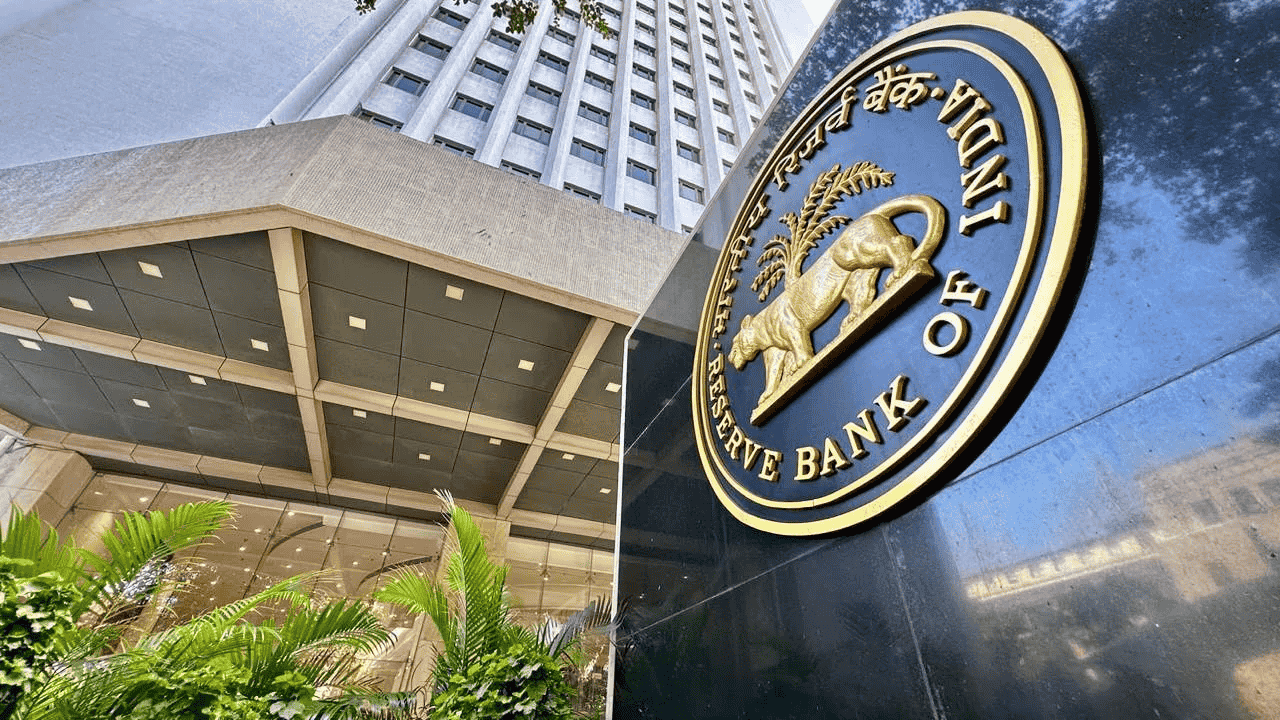
Preliminary data published by the Reserve Bank of India (RBI) indicates that India's Current Account Deficit (CAD) widened to $4.2 billion, or 0.5% of Gross Domestic Product (GDP), during the first quarter of fiscal year 2026-27 (Q1 FY27). This marks a nominal and proportional increase from the $3.4 billion deficit (0.4% of GDP) recorded in Q1 FY26. The widening shortfall was driven by an expanding merchandise trade deficit, which rose to $86.1 billion, reflecting persistent domestic demand for industrial inputs, crude oil, and intermediate capital goods.
However, robust growth across invisible earnings, particularly software services and outbound remittance flows, provided a counter-cyclical cushion that contained the headline deficit within prudential boundaries. On the financing side, elevated portfolio outflows alongside lower commercial borrowings and deposit accretions led to a net drawdown of official foreign exchange reserves on a Balance of Payments (BoP) basis.
For civil services aspirants consulting Atharva Examwise current news, this economic development links directly with the macroeconomics curriculum of UPSC General Studies Paper III and State PCS examinations.
Key Facts and Statistical Highlights: Q1 FY27 at a Glance
The following data points summarize the key factual developments released by the Reserve Bank of India:
Current Account Deficit (CAD): Rose to $4.2 billion (0.5% of GDP) in Q1 FY27 from $3.4 billion (0.4% of GDP) in Q1 FY26.
Merchandise Trade Gap: Expanded to $86.1 billion, compared to $68.9 billion in the corresponding quarter of the previous fiscal year.
Net Services Receipts: Increased to $51.6 billion from $47.9 billion a year earlier, supported by expansion in computer software, business consulting, and transportation services.
Secondary Income (Remittances): Surged to $42.9 billion from $33.2 billion in Q1 FY26, driven by personal transfers from the Indian diaspora.
Primary Income Outgo: Moderated to $10.5 billion from $13.3 billion in Q1 FY26 due to lower investment income outlays.
Foreign Direct Investment (FDI): Recorded net inflows of $6.1 billion, up from $5.2 billion in Q1 FY26.
Foreign Portfolio Investment (FPI): Reversed sharply to a net outflow of $9.6 billion from a net inflow of $1.6 billion in Q1 FY26.
Non-Resident Deposits & ECBs: Net inflows into non-resident deposits stood at $2.8 billion (down from $3.6 billion), while net External Commercial Borrowings moderated to $3.3 billion (down from $4.4 billion).
Foreign Exchange Reserves: Contracted by $8.1 billion on a BoP basis, reversing an accretion of $4.5 billion recorded in Q1 FY26.
Comparative Analysis: Q1 FY26 vs. Q1 FY27 Balance of Payments
The following table presents a structured cross-comparison of India's external accounts across the corresponding quarters, illustrating the compositional shifts between current obligations and capital-financing dynamics:
| External Sector Indicator | Q1 FY26 (Year-Ago Quarter) | Q1 FY27 (Reporting Quarter) | Absolute & Structural Variance |
|---|---|---|---|
| Current Account Balance | -$3.4 billion (-0.4% of GDP) | -$4.2 billion (-0.5% of GDP) | Deficit widened by $0.8 billion (10 bps of GDP) |
| Visible Trade Deficit (Merchandise) | -$68.9 billion | -$86.1 billion | Trade gap widened by $17.2 billion |
| Net Services Receipts (Invisibles) | +$47.9 billion | +$51.6 billion | Net surplus expanded by $3.7 billion |
| Secondary Income (Personal Transfers) | +$33.2 billion | +$42.9 billion | Remittances increased by $9.7 billion |
| Primary Income Balance (Net Outgo) | -$13.3 billion | -$10.5 billion | Net outflow contracted by $2.8 billion |
| Net Foreign Direct Investment (FDI) | +$5.2 billion | +$6.1 billion | Inflows expanded by $0.9 billion |
| Foreign Portfolio Investment (FPI) | +$1.6 billion | -$9.6 billion | Net negative reversal of -$11.2 billion |
| External Commercial Borrowings (ECBs) | +$4.4 billion | +$3.3 billion | Inflow moderated by $1.1 billion |
| Non-Resident Indian (NRI) Deposits | +$3.6 billion | +$2.8 billion | Inflow moderated by $0.8 billion |
| Foreign Exchange Reserves (BoP Basis) | +$4.5 billion (Accretion) | -$8.1 billion (Depletion) | Negative swing of -$12.6 billion |
Macroeconomic Conceptual Framework: What is the Current Account?
Understanding the mechanisms of the Balance of Payments requires establishing the structural division between current transactions and capital formations, a foundational subject covered across the Atharva Examwise NCERT Foundation modules.
The Structure of the Balance of Payments
The Balance of Payments is a comprehensive accounting record of all economic transactions conducted between the residents of an economy and the rest of the world over a specified time interval, typically compiled according to the International Monetary Fund's Balance of Payments Manual (BPM6). Every transaction is entered as either a credit (inflow of foreign exchange, recorded with a positive sign) or a debit (outflow of foreign exchange, recorded with a negative sign).
The external ledger is divided into two primary operative accounts: the Current Account and the Capital Account. A third category, the Financial Account, is often presented alongside or within the Capital Account to record functional investments such as FDI and portfolio flows.
Core Components of the Current Account
The Current Account documents real economic transactions that do not alter the external asset or liability status of a nation. In contrast to the Capital Account—which creates future debt or equity repayment obligations—the Current Account reflects real national income generation and expenditure across four components:
The Merchandise Account (Visible Trade): This component captures the physical cross-border exchange of tangible commodities. The difference between export revenues ($X_g$) and import expenditures ($M_g$) yields the visible trade balance. In developing economies such as India, this sub-account regularly registers a structural deficit due to the necessity of importing critical inputs like crude petroleum, electronic components, industrial machinery, and gold.
The Services Account (Invisible Trade): This encompasses cross-border receipts and payments for intangible commercial products. Major divisions include computer and software services, business and management consulting, financial intermediation, global transport, and tourism receipts. India maintains a structural surplus in this sub-account, which serves as an offset against its merchandise trade deficit.
The Primary Income Account (Factor Income): Primary income records the remuneration of factors of production across borders. It contains two primary revenue streams:
Compensation of employees: Net compensation earned by domestic workers employed temporarily abroad or foreign workers operating domestically.
Investment income: Cross-border flows of dividends, business profits from overseas subsidiaries, and interest obligations servicing external commercial debt and sovereign securities.
The Secondary Income Account (Unilateral Transfers): Secondary income includes one-way cross-border transfers where no economic good, service, or asset is rendered in direct return. Prominent examples include personal remittances transferred by overseas domestic workers, official foreign government grants, and international humanitarian relief.
The Mathematical Balance and Savings-Investment Identity
The Current Account Deficit manifests when aggregate debit outflows for goods, services, and factor payments exceed aggregate credit earnings:
$$\text{CAD} = (\text{Imports of Goods \& Services} - \text{Exports of Goods \& Services}) + \text{Net Outflow of Primary and Secondary Income}$$
From a macroeconomic perspective, the current account balance is linked to national income accounting. Aggregate domestic output ($Y$) is divided among consumption ($C$), investment ($I$), government spending ($G$), and net exports ($NX = X - M$):
$$Y = C + I + G + (X - M)$$
Gross National Savings ($S$) is defined as national income remaining after private consumption and public expenditure ($S = Y - C - G$). Substituting this into the national output identity demonstrates that the external current balance equals the difference between aggregate domestic savings and aggregate domestic capital investment:
$$\text{Current Account Balance} = S - I$$
Consequently, a Current Account Deficit indicates that an economy's total investment exceeds its domestic savings pool ($I > S$). Incorporating the fiscal balance of the sovereign, where total savings represents private savings ($S_p$) plus public savings ($T - G$), yields:
$$\text{CAD} = (I - S_p) + (G - T)$$
This relationship shows that a widening CAD reflects either a private savings-investment deficit, an expanding government fiscal deficit, or a combination of both—a dynamic known in economic policy as the "Twin Deficit" hypothesis.
Drivers of the Widening Deficit and Macroeconomic Stabilizers
The widening of India's current account deficit to $4.2 billion in Q1 FY27 was the net result of opposing forces within the external accounts.
+-----------------------------------------------------------------------------------+ | India's Q1 FY27 Current Account Deficit | | ($4.2 Billion) | +------------------------------------------+----------------------------------------+ | | DRIVERS OF WIDENING DEFICIT MACROECONOMIC CUSHIONS | | * Merchandise Trade Gap: $86.1B * Net Services Receipts: $51.6B (Widened from $68.9B in Q1 FY26) (Up from $47.9B; IT, business, transport) * Strong domestic industrial demand * Personal Remittances: $42.9B * Higher commodity and energy imports (Surged from $33.2B under Secondary Inc.) * Lower Primary Income Outgo: $10.5B (Down from $13.3B via lower debt payout)
Merchandise Trade Expansion
The primary catalyst for the widening external deficit was the expansion of the visible trade gap to $86.1 billion, an increase of $17.2 billion over Q1 FY26. This deterioration was driven by structural and cyclical factors:
Energy Inelasticity: India's sustained domestic growth requires high volumes of imported crude petroleum and natural gas. Because domestic substitution for hydrocarbons remains limited in the near term, elevated global benchmark crude prices and expanding industrial consumption expand the merchandise import bill.
Capital Goods Import Demand: Public capital expenditure and private industrial capacity expansion sustained demand for imported machine tools, electrical equipment, and intermediate components.
Global Demand Headwinds: India's merchandise exports faced sluggish demand across traditional advanced trading partners in Europe and North America, limiting nominal goods export growth.
Offsetting Invisible Cushions
Counterbalancing the merchandise deficit were three stabilizing forces within invisible trade and transfer accounts:
Resilience in High-Value Services: Net services receipts grew to $51.6 billion, up from $47.9 billion in Q1 FY26. This expansion was supported by enterprise software development, IT support, global capability centers (GCCs), and transportation logistics.
Expansion in Remittance Inflows: Personal transfer receipts under secondary income rose to $42.9 billion from $33.2 billion a year prior. Sustained demand for Indian professionals across advanced Western economies alongside Indian expatriate labor in the Gulf region drove this growth, reinforcing India's status as a top global recipient of cross-border transfers.
Reduction in Net Primary Outgo: The net factor deficit declined from $13.3 billion to $10.5 billion. According to the RBI, this was driven by reduced investment income outflows, such as dividend repatriations and debt-servicing outlays by foreign multinationals operating within the domestic economy.
Financial Account Dynamics, Capital Outflows, and Forex Reserves
The Balance of Payments requires that any shortfall on the current account be funded through capital inflows or a drawdown of foreign currency reserves. In Q1 FY27, shifting capital flows altered this financing dynamic.
+-----------------------------------------------------------------------------------+ | Q1 FY27 Capital & Financial Dynamics | +------------------------------------------+----------------------------------------+ | Stable Long-Term Inflows | Volatile Outflows & Drawdowns | +------------------------------------------+----------------------------------------+ | * Net FDI Inflows: $6.1 Billion | * Net FPI Outflows: -$9.6 Billion | | (Modest increase from $5.2B) | (Reversal from +$1.6B inflow) | | | * External Commercial Borrowings: $3.3B| | | (Moderated down from $4.4B) | | | * Non-Resident Deposits: $2.8B | | | (Moderated down from $3.6B) | +------------------------------------------+----------------------------------------+ | Net BoP Impact: Foreign Exchange Reserves Declined by $8.1 Billion | +-----------------------------------------------------------------------------------+
Divergence Between FDI and FPI Flows
Capital flows exhibited a sharp divergence between long-term investment and short-term market allocations:
Resilient Foreign Direct Investment (FDI): Net FDI inflows rose to $6.1 billion, compared with $5.2 billion in Q1 FY26. FDI reflects non-debt, durable equity commitments that build domestic manufacturing and infrastructure assets, indicating continued long-term investor confidence.
Sharply Reversed Foreign Portfolio Investment (FPI): Portfolio allocations experienced an outflow of $9.6 billion, reversing from an inflow of $1.6 billion in Q1 FY26. FPI flows represent volatile capital that reacts quickly to global interest rate differentials, shifting US Treasury yields, and relative equity valuations. This capital flight put pressure on domestic asset valuations and foreign exchange liquidity.
Moderation in Debt-Creating Channels
Other conventional capital inflows decelerated over the quarter:
External Commercial Borrowings (ECBs): Net ECB receipts moderated to $3.3 billion from $4.4 billion a year prior, as higher global interest rates increased the cost of overseas corporate financing relative to domestic credit markets.
Non-Resident Deposits: Net inflows into non-resident deposits slowed to $2.8 billion from $3.6 billion, reflecting reduced yield differentials between offshore and domestic fixed-income instruments.
Depletion of Official Reserves
Because net capital and financial inflows fell short of the widened current account deficit and FPI outflows, the overall Balance of Payments turned negative. India's foreign exchange reserves declined by $8.1 billion on a BoP basis during Q1 FY27, compared to an accretion of $4.5 billion in Q1 FY26. This reduction reflects central bank market operations to smooth currency volatility and provide liquidity to meet external obligations.
Further analysis of reserve adequacy metrics is available in the dedicated Economy Study Material on Atharva Examwise.
Why this matters for your exam preparation
For candidates preparing for the UPSC Civil Services Examination and State PSCs, balance of payments developments link dynamic current events to foundational macroeconomic theory.
The matrix below maps these concepts across competitive examination stages:
| Exam Stage | Syllabus Area | Core Concepts Tested |
|---|---|---|
| UPSC Prelims (Paper I) | Economic & Social Development | Components of BoP, current vs. capital account items, FDI vs. FPI stability, forex reserves composition, and currency depreciation mechanics. |
| UPSC Mains (GS Paper III) | Indian Economy & Resource Mobilization | Savings-investment dynamics, managing twin deficits, external debt sustainability, export diversification, and external vulnerability mitigation. |
| State PSCs & Other Exams | General Studies (Macroeconomics) | Trends in remittances, merchandise trade balance vs. services invisibles, and RBI policy interventions. |
Core Analytical Insights for Mains
CAD Sustainability Threshold: A CAD of 0.5% of GDP remains well within the sustainable threshold of 2.0% to 2.5% of GDP recommended by RBI high-level committees on balance of payments management. It reflects manageable external borrowing requirements, provided services and remittances continue to offset the merchandise gap.
Financing Quality and Volatility Risk: Economic vulnerability depends heavily on whether a current account deficit is financed by non-debt FDI or debt-creating, volatile portfolio flows. When portfolio outflows coincide with a widening trade gap, official reserves must absorb external pressure, raising questions about reserve adequacy and exchange-rate management.
The Savings-Investment Dynamic: Understanding CAD as the gap between domestic investment and domestic savings ($CAD = I - S$) helps contextualize economic policy. Efforts to reduce reliance on foreign savings require bolstering domestic household financial savings alongside prudent fiscal consolidation.
Practice Questions for UPSC Aspirants
Prelims Practice Question
Question: With reference to India's Balance of Payments (BoP), consider the following statements:
Inward personal remittances sent by Indians employed abroad are accounted for under the Capital Account as unilateral transfers.
A Current Account Deficit must be financed either through net capital inflows or through a drawdown of official foreign exchange reserves.
Foreign Direct Investment (FDI) inflows create debt obligations for the domestic economy.
An increase in net services exports helps reduce a country's Current Account Deficit.
Which of the statements given above are correct?
A. 1 and 3 only
B. 2 and 4 only
C. 2, 3, and 4 only
D. 1, 2, and 4 only
Correct Answer: B (Statements 2 and 4 only)
Explanation:
Statement 1 is incorrect: Personal remittances are unilateral transfers recorded under the Secondary Income Account of the Current Account, not the Capital Account.
Statement 2 is correct: Under BoP accounting identities, a deficit on current transactions must be offset by net financial/capital account inflows or by the central bank drawing down official foreign exchange reserves.
Statement 3 is incorrect: FDI represents equity capital and direct enterprise ownership; it constitutes non-debt financing.
Statement 4 is correct: Net invisibles earnings from services exports offset merchandise trade imbalances, moderating the headline Current Account Deficit.
Mains Practice Question
Question: "While a moderate Current Account Deficit is often considered natural for an emerging economy like India, its structural viability hinges on the composition of trade and the quality of external capital financing it." Critically examine this statement in light of recent Balance of Payments data. (GS Paper III, 250 Words, 15 Marks)
Indicative Answer Framework:
Introduction: Define the Current Account Deficit and reference recent RBI data indicating a deficit of $4.2 billion (0.5% of GDP) in Q1 FY27, noting the simultaneous widening of the merchandise trade gap and growth in services receipts.
Why Moderate CAD Can Be Constructive: Frame CAD through the savings-investment identity ($CAD = I - S$). For developing economies, importing foreign savings allows investment in productive infrastructure, intermediate inputs, and advanced capital equipment beyond the limits of domestic savings pools.
Trade Composition Realities: Discuss the structural factors driving India's merchandise trade deficit, including reliance on imported energy and raw materials. Contrast this with the role of services exports and remittances in moderating headline balances.
Financing Composition and Vulnerability: Differentiate between non-debt FDI and volatile FPI flows. Analyze the risks of using short-term capital to finance structural trade deficits, particularly when global interest rate shifts trigger capital outflows and reserve depletion.
Conclusion & Policy Path: Propose policy priorities such as export diversification, support for high-value domestic manufacturing under the Production Linked Incentive scheme, structural energy transitions, and proactive foreign exchange reserve management by the RBI to preserve macroeconomic stability.
Aspirants seeking structured course guidance, NCERT foundation programs, and conceptual pedagogy are invited to explore the offerings led by Dr. Ajay Bhamoliya at Atharva Examwise.