
UPSC Current Affairs: Strategic Analysis of India-US Javelin Missile Deal and Defence Modernisation
Context and Core Acquisition Architecture
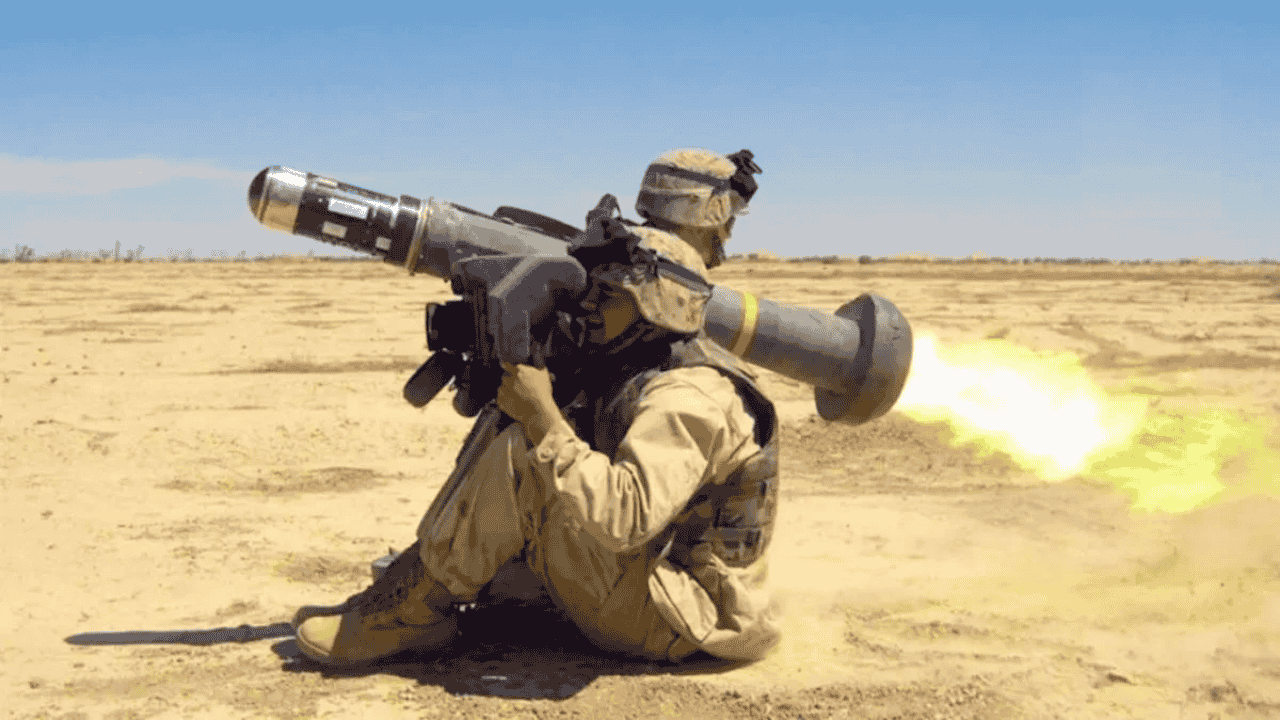
The Ministry of Defence has concluded a government-to-government agreement with the United States to acquire the battle-proven FGM-148 Javelin anti-tank guided missile (ATGM) system for the Indian Army. Formalized through the US Foreign Military Sales (FMS) framework, the Indian Army executed a Letter of Offer and Acceptance (LOA) for an estimated contract value of ₹292 crore ($45 million). The procurement package encompasses approximately 60 Javelin missile rounds alongside lightweight Command Launch Units (CLUs).
This capital acquisition is executed under the sixth tranche of the Emergency Procurement (EP-6) mechanism, an expedited route authorized to address critical operational vulnerabilities identified along the Line of Actual Control (LAC) and the Line of Control (LoC) following operational experiences in Operation Sindoor. Under statutory EP provisions, financial powers are delegated directly to the Service Headquarters up to a ceiling of ₹300 crore per equipment category, ensuring that procurement cycles bypass standard multi-year acquisition layers. Initial deliveries are scheduled to reach frontline formations by the end of fiscal year 2026–27, delivering an immediate upgrade to infantry anti-armor capabilities.
The deal follows public announcements by US Ambassador to India Sergio Gor, who noted that the induction of the battle-tested system marks a significant milestone in bilateral defense ties while laying the foundation for future co-production between the two countries. Alongside the Javelin missiles, the Indian Army is utilizing the same emergency procurement window to acquire additional Excalibur precision-guided artillery rounds for its M777 ultra-light howitzers. Aspirants can explore comprehensive defense policy analyses on the Atharva Examwise Current Affairs Portal.
Evolution of Indo-US Defence Dynamics and the 16-Year Trajectory
The conclusion of the Javelin contract resolves a sixteen-year procurement impasse that highlights the evolving nature of India-US defense-industrial cooperation.
The operational requirement for a modern man-portable anti-tank capability dates back to 2010, when internal army assessments indicated an inventory deficit exceeding 44,000 ATGMs. During negotiations initiated under then-Defence Minister A.K. Antony, India sought comprehensive Technology Transfer (ToT), focusing on the sensitive seeker algorithms of the missile. However, due to stringent US export control regulations under the International Traffic in Arms Regulations (ITAR), Washington declined the requested level of technology transfer, causing negotiations to stall between 2012 and 2014.
To address tactical readiness gaps, the Indian infantry continued relying on licensed, second-generation wire-guided systems, specifically the Franco-German MILAN-2T and the Russian 9M113 Konkurs. In 2019, the Ministry of Defence executed an emergency purchase of Israeli Spike-LR ATGMs to meet urgent operational requirements. Concurrently, the Defence Research and Development Organisation (DRDO) expedited the indigenous Man-Portable Anti-Tank Guided Missile (MPATGM) program.
The eventual shift in Washington’s stance—progressing from technology denial to active co-production discussions—reflects significant geopolitical developments:
Indo-Pacific Strategic Imperatives: The United States views a well-equipped Indian military as a vital counterbalance to regional assertiveness and an essential partner for deterrence across high-altitude land frontiers and maritime choke points.
Diversification from Russian Platforms: Washington seeks to encourage India's transition away from Russian military hardware by offering advanced Western systems through direct government-to-government arrangements.
Alignment with "Make in India": Recognizing New Delhi’s policy against purely import-driven acquisitions, US manufacturers (Lockheed Martin and RTX) have established direct joint initiatives with Indian public and private sector enterprises.
Technical Mechanics and Battlefield Capabilities of the FGM-148 Javelin
The FGM-148 Javelin, developed by the Javelin Joint Venture of Lockheed Martin and RTX (Raytheon), is a third-generation, man-portable, medium-range anti-tank weapon engineered to neutralize modern main battle tanks (MBTs) and heavily fortified field bunkers.
[Javelin Top-Attack Flight Trajectory] ▲ / \ (Climbs up to 150 m) / \ / ▼ (Strikes vulnerable upper turret) [Firing Position] ─── ─── ─── ───► [Target Armour]
Guidance Mechanics and Fire-and-Forget Architecture
Unlike second-generation wire-guided missiles that require continuous optical tracking by the gunner until detonation, the Javelin utilizes a passive Imaging Infrared (IIR) seeker. The seeker locks onto the target's thermal signature prior to launch and continuously adjusts the flight path autonomously. This fire-and-forget capability allows operating crews to reposition immediately after firing, significantly reducing vulnerability to enemy counter-battery fire and observation.
Top-Attack and Direct-Attack Profiles
The system features dual-attack profiles tailored to tactical operational needs:
Top-Attack Mode: The missile ascends along an elevated trajectory (climbing up to 150 meters) before diving vertically onto the target's turret roof. Because main battle tanks focus their thickest composite armor on the frontal glacis and hull sides, the top-attack trajectory exploits their thinner upper armor protection.
Direct-Attack Mode: The missile follows a flat, line-of-sight trajectory designed for engaging reinforced concrete bunkers, fortified observation posts, and light military vehicles.
Soft-Launch Engineering
The Javelin incorporates a specialized two-stage propulsion system designed for confined environments. An initial low-impulse ejector motor pushes the missile clear of the launch tube before the primary flight motor ignites at a safe stand-off distance. This soft-launch mechanism minimizes backblast overpressure, enabling soldiers to fire the weapon safely from within buildings, defensive bunkers, and enclosed defensive positions in rugged mountain terrain.
Technical Comparison: Javelin vs. Indigenous MPATGM vs. In-Service Systems
The Indian Army's anti-armor inventory is transitioning from second-generation wire-guided systems toward third- and fourth-generation fire-and-forget technologies. The table below outlines the core technical specifications across current and incoming systems.
| Specification Parameter | FGM-148 Javelin (USA) | DRDO MPATGM (India) | Spike-LR (Israel) | MILAN-2T (France / India) | 9M113 Konkurs (Russia / India) |
|---|---|---|---|---|---|
| System Generation | 3rd Generation | 3rd Generation | 4th Generation | 2nd Generation | 2nd Generation |
| Guidance System | Passive Imaging Infrared (IIR) / Fire-and-Forget | Passive IIR Homing Seeker / Fire-and-Forget | Dual-Mode IIR/CCD with Fiber-Optic Data Link | Semi-Automatic Command to Line of Sight (SACLOS) Wire | SACLOS Wire Guided |
| Operational Range | 65 m to 4,000 m (4.0 km) | 200 m to 2,500 m (2.5 km) | 200 m to 4,000 m (4.0 km) | 25 m to 2,000 m (2.0 km) | 75 m to 4,000 m (4.0 km) |
| Attack Trajectory | Top-Attack & Direct-Attack | Top-Attack & Direct-Attack | Top-Attack, Direct-Attack, & Low-Angle | Direct-Attack Only | Direct-Attack Only |
| Warhead Type | Tandem Shaped Charge HEAT | Tandem Shaped Charge HEAT | Tandem HEAT / Multi-Purpose | Tandem HEAT | Tandem HEAT |
| System Weight | ~22.3 kg (Missile + CLU) | ~28.75 kg (Missile: 14.5 kg, CLU: 14.25 kg) | ~26.0 kg (Complete system) | ~16.5 kg (Launcher + Tube) | ~26.5 kg (Tripod + Launcher) |
| Launch Signature | Soft-Launch (Indoor/Bunker capable) | Soft-Launch capable | Soft-Launch capable | High backblast signature | High backblast signature |
| Manufacturing Partners | Lockheed Martin & RTX | DRDO, Bharat Dynamics Ltd (BDL), BEL | Rafael Advanced Defense Systems | Bharat Dynamics Limited (under license) | Bharat Dynamics Limited (under license) |
Procedural Framework: Emergency Procurement and Industrial Pathways
The Javelin acquisition illustrates the operational utility of fast-track capital procurement channels in meeting immediate national defense readiness requirements.
The EP-6 Procurement Channel
The Emergency Procurement framework enables service chiefs to bypass lengthy procedural stages of the regular Defence Acquisition Procedure (DAP). Under the EP-6 window, fast-track authorizations ensure:
Financial authority delegated up to a limit of ₹300 crore per equipment category.
Contracted equipment deliveries scheduled within an accelerated 12- to 24-month timeframe.
Rapid integration of targeted combat capabilities to reinforce active tactical sectors in the wake of Operation Sindoor.
Co-Production Pathways with Indian DPSUs
While this initial ₹292-crore order provides off-the-shelf units to meet urgent operational requirements, the broader framework includes defense-industrial co-production. In early 2025, Bharat Dynamics Limited (BDL) signed an exploratory agreement with the Javelin Joint Venture to assess domestic manufacturing possibilities. If expanded, this partnership offers opportunities to:
Integrate domestic defense supply chains into sub-component manufacturing and structural assembly.
Establish domestic Maintenance, Repair, and Overhaul (MRO) hubs to support life-cycle sustainment.
Advance technology absorption across high-precision electro-optical systems and propulsion units.
Integrating Imports with the Indigenous MPATGM
The Javelin acquisition acts as an operational bridge rather than a replacement for domestic programs. DRDO’s indigenous MPATGM, tested against moving targets at the KK Ranges in Ahilya Nagar, incorporates indigenous IIR homing seekers, tandem warheads, and all-electric control actuation systems. Working alongside Development-cum-Production Partners (DcPP) Bharat Dynamics Limited and Bharat Electronics Limited, the MPATGM is configured to replace large inventories of aging MILAN and Konkurs systems as mass manufacturing scales up. Additional details are available on the DRDO Official Portal and the Atharva Examwise Security and Indigenisation Module.
Strategic Significance for Mountain Warfare and Indo-Pacific Balance
The deployment of the Javelin system introduces important tactical and strategic capabilities for the Indian Armed Forces:
Mountain Combat Readiness: In high-altitude environments such as Eastern Ladakh and Sikkim, armored vehicles and defensive bunkers operate from elevated terrain and narrow defiles. The man-portable profile (22.3 kg) combined with top-attack flight dynamics provides infantry units with an organic anti-armor strike capability.
Interoperability in Bilateral Exercises: Operating standard Western systems enhances operational coordination during joint military drills (such as Yudh Abhyas) conducted with Quad partner militaries.
Resilience Against Global Supply Chain Disruptions: Recent global conflicts have underscored the vulnerabilities of single-source supply dependencies, highlighting the importance of a diversified defense portfolio.
Why this matters for your exam preparation
This development intersects with several key modules of the UPSC Civil Services Examination (CSE) and State Public Service Commission syllabi across Preliminary and Mains examinations:
General Studies Paper II: International Relations and Bilateral Agreements
India-US Bilateral Defense Cooperation: Illustrates the transition of the India-US strategic partnership from a buyer-seller relationship toward joint co-production under the Major Defence Partner framework.
Geopolitical Balancing in the Indo-Pacific: Provides practical material for questions examining how shared regional security concerns influence high-technology defense trade and bilateral diplomacy.
General Studies Paper III: Internal Security, Defence Modernisation, and Indigenisation
Defence Indigenisation (Aatmanirbhar Bharat): Requires candidates to examine how urgent capital procurements (like the Javelin) are balanced with domestic R&D programs (such as DRDO's MPATGM).
Defence Acquisition Reforms: Offers a case study on fast-track financial mechanisms (Emergency Procurement powers, EP-6) compared to the standard procedures under Defence Acquisition Procedure (DAP) 2020.
Science and Technology in Defence: Covers technical principles of third-generation fire-and-forget systems, passive Imaging Infrared (IIR) homing seekers, and top-attack warhead mechanics relative to legacy SACLOS wire-guided missiles.
UPSC Civil Services Preliminary Examination: Focus Areas
Missile Guidance Classifications: Key distinctions between wire-guided, laser beam-riding, and passive infrared homing systems.
Procurement Frameworks: Understanding the operational scope of Foreign Military Sales (FMS), Direct Commercial Sales (DCS), and delegated Emergency Procurement limits.
Institutional Roles: Identifying the functions of DRDO, BDL, and BEL in indigenous defense design and production ecosystems.