
UPSC Current Affairs & Daily GK Update: Turkey's Lake Tuz Turns Pink
Daily GK Update: Turkey's Lake Tuz Turns Pink
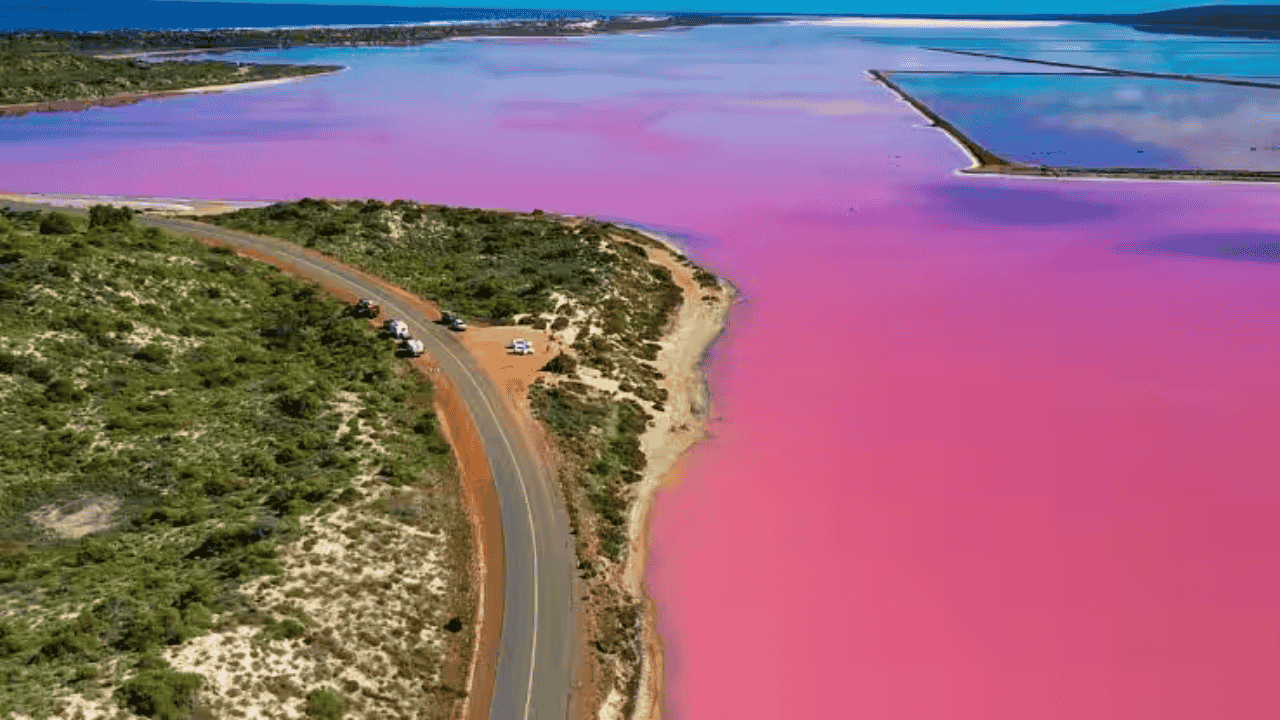
In recent environmental developments featured in competitive exam news today, Lake Tuz (Tuz Gölü), the second-largest lake in Turkey, has undergone a dramatic transformation, turning a vivid pink and red hue across its expansive basin. Located in the Central Anatolia region, this hypersaline lake experiences this visual phenomenon during the summer months due to a combination of rising atmospheric temperatures, increased evaporation, and elevated water salinity. These specific environmental conditions trigger an intense bloom of specialized microscopic organisms.
For candidates preparing for civil services and other competitive tests, this topic connects concepts across Physical Geography, Marine Ecology, Extremophile Biology, and Global Environmental Conservation. Comprehensive coverage of such topics is regularly analyzed in the Atharva Examwise Daily GK Updates.
Geographical Profile and Hydrological Dynamics of Lake Tuz
Lake Tuz is situated within an endorheic basin bounded by the Central Anatolian provinces of Aksaray, Konya, and Ankara. As an endorheic lake, it has no natural outlets to sea or ocean drainage systems, causing dissolved salts to accumulate continuously over geological timescales.
The lake sits at an elevation of 905 meters above sea level and covers a surface area ranging between 1,600 and 1,665 square kilometers. Despite its expansive geographic footprint, Lake Tuz is exceptionally shallow. During rainy winter and spring months, its depth reaches a maximum of only 1 to 2 meters, while its average year-round depth remains around 0.5 meters.
The lake's water exhibits a salinity concentration exceeding 30% weight/volume (w/v), making it approximately ten times more saline than typical ocean water. Primary surface inflows, including the Peçenek Çayı and Melendiz Çayı streams, are insufficient to balance intense summer evaporation. Consequently, vast stretches of the lake bed dry out completely during summer, leaving behind a hard, walkable salt crust measuring between 30 and 40 centimeters in thickness. This deposit serves as a key industrial resource, supplying roughly 60% to 70% of Turkey's total commercial salt demand. Further details on global drainage systems can be explored via the UNESCO World Heritage Centre Tentative List.
| Geographical & Hydrological Parameter | Attribute Details |
|---|---|
| Geographic Location | Central Anatolia Region (Aksaray, Konya, Ankara), Turkey |
| Basin Hydrology | Endorheic (Closed, hypersaline drainage basin) |
| Surface Elevation | 905 meters above mean sea level |
| Surface Area | ~1,600 – 1,665 km² |
| Average & Maximum Depth | Average depth: 0.5 m; Maximum seasonal depth: 1.5 – 2.0 m |
| Salinity Level | >30% w/v (~10 times higher than average seawater) |
| Primary Seasonal Streams | Peçenek Çayı, Melendiz Çayı |
| Commercial Salt Production | Accounts for 60% – 70% of Turkey's total salt output |
Biochemical Mechanism Behind the Pink Color Transformation
The color shift of Lake Tuz from clear or greenish tones to shade variations of rose and magenta is driven by two main groups of halophilic (salt-tolerant) microorganisms:
Dunaliella salina Microalgae: Dunaliella salina is a single-celled, halophilic green microalga belonging to the division Chlorophyta. Under typical conditions, the alga utilizes standard green chlorophyll pigments for photosynthesis. However, when summer heat increases water evaporation and salinity levels spike, the alga faces extreme osmotic pressure and intense solar radiation. To shield its cellular machinery from solar photodamage and oxidative stress, D. salina produces high concentrations of beta-carotene, a red-orange carotenoid pigment. This protective pigment accumulates in lipid globules within the chloroplasts, comprising up to 10% to 14% of the alga's dry weight.
Halophilic Archaea: Working alongside microalgae are salt-loving archaea, notably Halobacterium salinarum and Salinibacter ruber. These archaea express red-pigmented membrane proteins, such as bacterioruberin and bacteriorhodopsin, which assist in light-driven ATP synthesis and cellular protection.
As summer evaporation reduces total water volume, the concentration of both Dunaliella salina and haloarchaea increases rapidly per unit volume. The accumulated beta-carotene and bacterioruberin pigments absorb shorter blue and green light wavelengths while reflecting red, orange, and pink light back through the shallow water column, creating the pink appearance.
Comparative Analysis of Global Hypersaline Pink Lakes
The biological and hydrological conditions observed at Lake Tuz occur in a select group of hypersaline bodies of water worldwide. Studying these global comparisons enhances candidates' analytical preparation for physical geography topics in Atharva Examwise current news modules.
| Lake Name & Country | Biological Primary Producers | Salinity & Hydrological Setting | Environmental & Heritage Status |
|---|---|---|---|
Lake Tuz (Turkey) [cite: 1, 5] | Dunaliella salina, Halobacterium spp. | Hypersaline (>30%), shallow endorheic basin | UNESCO Tentative List, Special Environmental Protection Area |
Lake Hillier (Australia) [cite: 6] | Dunaliella salina, Salinibacter ruber [cite: 6, 11] | Permanently hypersaline coastal lagoon | Protected Nature Reserve; water retains pink color when containerized |
Hutt Lagoon (Australia) [cite: 6] | Dunaliella salina [cite: 6] | Hypersaline coastal marine lake | Commercial cultivation site for natural beta-carotene extraction |
Lonar Lake (India) [cite: 9, 12] | Haloarchaeal strains (Haloarchaea) | High alkalinity and hypersalinity in a basaltic impact crater | Designated Ramsar Site; experienced pink color change in 2020 |
Sambhar Lake (India) [cite: 12] | Dunaliella salina, Haloarchaea | Shallow endorheic salt basin in Rajasthan | Ramsar Wetland of International Importance; India's largest inland salt lake |
Ecological Significance and Avian Biodiversity
Despite its extreme salinity, Lake Tuz supports a specialized wetland ecosystem. Recognized internationally for its ecological value, the lake holds several environmental designations:
UNESCO World Heritage Tentative List: Recognized for its biodiversity, endemic plant life, and geomorphological structures.
Special Environmental Protection Area (SEPA): Designated by the Turkish Ministry of Environment to protect surrounding steppe ecosystems.
Class A Wetland Status: Ranked among internationally significant wetlands capable of supporting high bird populations.
Trophic Bioaccumulation and Flamingo Plumage
Lake Tuz serves as a principal breeding site for the Greater Flamingo (Phoenicopterus roseus) across the Mediterranean and Middle East. Flamingos filter-feed on microscopic organisms, including Dunaliella salina and brine shrimp (Artemia salina), using specialized lamellae in their bills. The beta-carotene pigments consumed through this diet are broken down in the liver and deposited into growing feathers and skin, giving adult flamingos their pink plumage.
The Avian Creche System
Ecosystem monitoring at Lake Tuz has revealed a communal childcare adaptation known as the "creche" system. Among approximately 11,000 avian species globally, only around 50 exhibit this group nesting behavior. A small group of adult flamingos remains behind on the central mudflats to guard and supervise thousands of newly hatched chicks. This collective supervision allows thousands of parent birds to fly daily to neighboring, lower-salinity wetlands—such as Tersakan, Bolluk, and Kulu lakes—to forage without leaving their offspring exposed. During favorable hydrological years with ample seasonal rainfall, chick survival rates surge, resulting in recorded hatches of up to 12,800 flamingo chicks.
Endemic Flora and Ecosystem Threats
The surrounding saline steppes support 71 endemic halophytic plant species adapted to high sodium soils. However, the basin faces environmental pressures from climate change, prolonged droughts, and agricultural water diversion. Severe dry periods, such as the total surface drying recorded in October 2021, highlight the ecosystem's vulnerability and demonstrate how water loss impacts regional bird migration routes. Additional research on biodiversity conservation is available in the Atharva Examwise Physical Geography Series.
Key Facts and Exam-Relevant Data
Geographical Coordinates & Location: Located in Central Anatolia, Turkey, spanning Aksaray, Konya, and Ankara provinces.
Hydrological Classification: Shallow endorheic hypersaline lake with an average year-round depth of 0.5 meters.
Salinity Level: Exceeds 30% w/v, operating at roughly ten times the concentration of average ocean water.
Primary Causal Microorganisms: Dunaliella salina (microalgae synthesizing beta-carotene) and Haloarchaea (archaea synthesizing bacterioruberin).
Commercial Salt Output: Yields a 30 to 40 cm walkable salt crust during summer, producing 60% to 70% of Turkey's salt.
Conservation Designations: UNESCO World Heritage Tentative List, Special Environmental Protection Area (SEPA), Class A Wetland.
Key Species: Major nesting site for the Greater Flamingo (Phoenicopterus roseus), which utilizes a rare communal "creche" childcare system.
Why this matters for your exam preparation
Understanding the geographical and biological developments at Lake Tuz is directly relevant for aspirants preparing for the UPSC Civil Services Examination (CSE), State Public Service Commission (PSC) tests, and other competitive examinations covering UPSC current affairs Atharva Examwise Current News Analysis.
Relevance to GS Paper I: Physical Geography
Endorheic Drainage Basins: Provides a practical example of closed-basin hydrology, evaporation cycles, and chemical sedimentation in arid inland environments.
Geomorphology of Salt Lakes: Illustrates the formation of playas, salt crusts, and seasonal mineral deposition in shallow lakes.
Relevance to GS Paper III: Environment, Ecology, and Biodiversity
Extremophile Biological Mechanisms: Demonstrates how extremophilic organisms (Dunaliella salina and haloarchaea) adapt to hyper-saline environments through protective carotenoid synthesis.
Wetland Ecology and Avian Adaptations: Examines international conservation frameworks (UNESCO Tentative List, SEPA) alongside behavioral adaptations such as the avian creche system and trophic bioaccumulation.
Climate Vulnerability: Serves as a case study on how agricultural water diversion and climatic warming alter wetland ecosystems and avian breeding patterns.
Relevance to Prelims and Daily General Knowledge Updates
Direct Conceptual MCQs: Prepares candidates for factual questions regarding the causes of lake color shifts (Dunaliella salina vs. Haloarchaea), comparative comparisons with Indian sites (Lonar Lake and Sambhar Lake), and geographic locations of major global wetlands.