
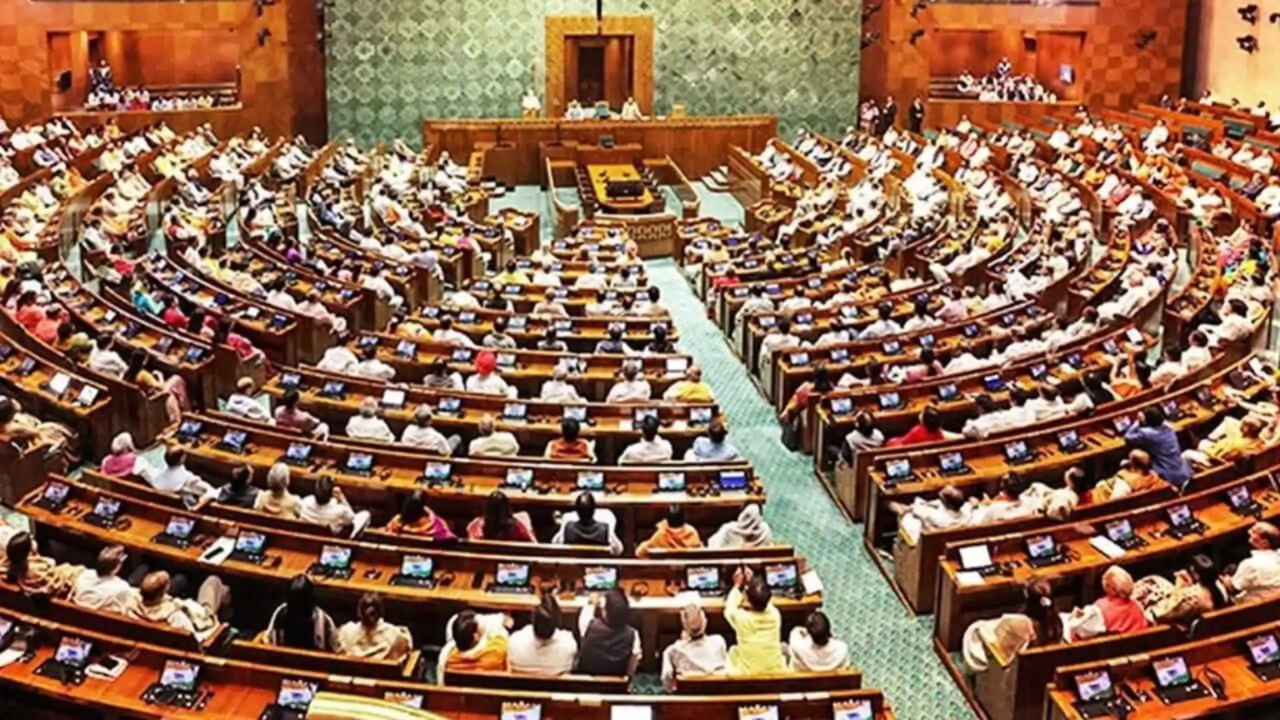
UPSC Current Affairs Daily GK Update: Parliamentary Terminology and Legislative Devices Explained
Executive Oversight and Legislative Mechanics in India
In a constitutional democracy structured upon the Westminster model, the legislative branch exercises continuous oversight over the executive organ. Article 75(3) of the Constitution of India mandates that the Council of Ministers is collectively responsible to the Lok Sabha, establishing a system where executive authority remains accountable to elected representatives. This accountability is enforced not merely through periodic general elections, but through the structured, daily procedural operations of Parliament.
The day-to-day proceedings of both the Lok Sabha (House of the People) and the Rajya Sabha (Council of States) rely on a combination of codified rules, formal motions, and unwritten parliamentary conventions. Understanding these legislative instruments is critical for analyzing how Parliament probes executive decisions, uncovers administrative irregularities, and guarantees policy transparency. Aspirants can track ongoing legislative updates and daily analyses through the Atharva Examwise Daily Current Affairs portal.
Mechanics of Daily Parliamentary Proceedings: Question Hour and Zero Hour
The opening hours of a parliamentary sitting represent the most direct operational interface between individual legislators and executive ministers. During this period, Members of Parliament (MPs) act as independent scrutinizers, transcending party mandates to hold the administration answerable for public policy and expenditure.
Question Hour: The Primary Instrument of Direct Scrutiny
Question Hour (प्रश्नकाल) is traditionally the first hour of a parliamentary sitting, dedicated to MPs asking questions directly to government ministers regarding the functioning of their respective departments. Governed strictly by the Rules of Procedure and Conduct of Business in both Houses, Question Hour enforces daily information accountability.
Key structural facts and operational data governing Question Hour include:
Timing and Modifications: In the Lok Sabha, Question Hour is conducted from 11:00 AM to 12:00 PM. In the Rajya Sabha, the timing was shifted during the 233rd Session in 2014 under Chairman Hamid Ansari to run from 12:00 PM to 1:00 PM to minimize early-morning disruptions.
Operational Frequency and Exceptions: Question Hour takes place on every working day of a parliamentary session, with two standard exceptions: the day the President addresses a joint sitting of both Houses at the commencement of a new Lok Sabha or the first session of a year, and the day the Finance Minister presents the Union Budget.
Starred Questions (तारांकित प्रश्न): Marked with an asterisk symbol, these require an oral answer on the floor of the House by the Minister-in-charge. The primary procedural advantage of a starred question is that the questioning MP, followed by other members permitted by the Presiding Officer, can ask instantaneous oral supplementary questions to probe the minister's response.
Unstarred Questions (अतारांकित प्रश्न): These require a written answer laid directly on the table of the House by the minister. No oral supplementary questions are permitted. Unstarred questions are used primarily to gather quantitative data, statistical metrics, and localized implementation details.
Short Notice Questions: Directed at matters of urgent public importance, these can be admitted with a notice period shorter than the standard ten days. They are answered orally, and supplementary questions are permitted. In the Rajya Sabha, short notice questions are typically taken up during Zero Hour.
Questions to Private Members: Questions may be addressed to MPs who are not ministers, provided the subject matter relates to a Private Member's Bill, a parliamentary resolution, or specific House business for which that member is responsible.
Procedural Thresholds and Balloting: Questions must be concise, limited to 150 words, directly connected to Union Government responsibility, and free of references to sub-judice matters or secret information. Because of the high volume of notices submitted, selection is determined via ballot. The Lok Sabha limits starred questions to 20 per day and unstarred questions to 230 per day, whereas the Rajya Sabha limits starred questions to 15 per day. An individual MP can submit up to seven questions per day, with a maximum allotment of five questions (and no more than one starred question) on any single day's paper.
Historical Suspensions: While Question Hour is a cornerstone of legislative functioning, it has been suspended during past national emergencies and during the 2020 Monsoon Session amid the COVID-19 pandemic. Suspensions draw concern because omitting Question Hour restricts opposition members from holding the executive accountable.
Zero Hour: An Indian Parliamentary Innovation
Zero Hour (शून्यकाल) is an indigenous procedural innovation developed in the early 1960s to bridge the gap between Question Hour and the formal business of the day.
Key features and operational mechanisms of Zero Hour include:
Status and Nomenclature: Zero Hour is an unwritten parliamentary convention and is not explicitly mentioned in the official Rules of Procedure. The term arose because it traditionally began at 12:00 PM (12 Zero Hours) immediately following Question Hour in the Lok Sabha.
Operational Mechanism: It permits legislators to raise pressing issues of national concern without giving advance notice. To raise an issue, an MP must submit notice to the Presiding Officer before 10:00 AM on the day of the sitting, with admission subject entirely to the Presiding Officer's discretion.
Executive Obligation: Unlike Question Hour, ministers are not legally or procedurally mandated to provide immediate replies to issues raised during Zero Hour, though voluntary statements may be made.
| Question Category | Primary Objective | Reply Format | Supplementary Questions | Notice & Daily Balloting Limits |
|---|---|---|---|---|
Starred Question [cite: 2, 4, 5] | Oral policy defense & direct scrutiny | Oral on the floor of the House | Permitted (Up to 2 by questioning MP) | 10–15 days notice; Max 20/day (LS), 15/day (RS) |
Unstarred Question [cite: 1, 2, 5] | Gathering statistical & factual data | Written reply laid on the table | Not permitted | 10–15 days notice; Max 230/day (LS), 160/day (RS) |
Short Notice Question [cite: 2, 4, 5] | Rapid response on urgent issues | Oral reply | Permitted (Similar to Starred) | Notice under 10 days; Presiding Officer approval |
Private Member Question [cite: 2, 5] | Scrutiny of non-ministerial bills/resolutions | Written or Oral | Permitted if reply is oral | Standard notice; Must relate to specific member business |
Procedural Motions and Legislative Devices for Urgent Business
Beyond daily questioning, parliamentarians use formal procedural motions to interrupt established orders of business, initiate urgent debates, or challenge policy decisions.
Adjournment Motion (स्थगन प्रस्ताव)
An Adjournment Motion is an extraordinary procedural device brought forward to interrupt the scheduled legislative agenda to discuss a definite, urgent matter of public importance.
Conditions and Thresholds: To be admitted, the motion requires the explicit support of at least 50 members in the Lok Sabha. The debate must last for a minimum of two hours and thirty minutes.
Element of Censure: The key political feature of an adjournment motion is that it carries an inherent element of censure against the government. Consequently, this device is available exclusively in the Lok Sabha and cannot be moved in the Rajya Sabha, preserving the principle that the executive is collectively responsible specifically to the lower house.
Calling Attention Motion (ध्यानाकर्षण प्रस्ताव)
A Calling Attention Motion allows an MP, with the prior permission of the Presiding Officer, to call the attention of a Minister to a matter of urgent public importance and request an authoritative statement.
Origin and Status: Introduced in 1954, the Calling Attention Motion is an original Indian parliamentary device. Unlike Zero Hour, it is explicitly codified within the rules of procedure.
Operational Distinction: It provides a structured mechanism to compel an official ministerial response without introducing an element of censure or suspending the regular business of the House.
Privilege Motion (विशेषाधिकार प्रस्ताव)
A Privilege Motion is moved by an MP when there is an alleged breach of parliamentary privileges by a Minister or another member.
Grounds for Motion: It is introduced when a member believes a Minister has breached the privilege of the House or its members by withholding key information, giving false data, or providing distorted facts.
Purpose: The primary objective is to censure the concerned official and maintain the integrity and constitutional privileges of Parliament.
Point of Order (कार्य व्यवस्था का प्रश्न)
A Point of Order is raised by an MP who contends that the proceedings of the House are not being conducted according to constitutional provisions or established Rules of Procedure.
Procedural Impact: Raising a point of order temporarily suspends ongoing proceedings.
Adjudication: The Presiding Officer (Speaker or Chairman) rules on the point of order, and their decision is final and non-debatable.
Secondary Parliamentary Devices
No-Confidence Motion: Rooted in Article 75, this motion can be moved only in the Lok Sabha by an opposition member supported by at least 50 MPs. If passed by a majority, the Council of Ministers must resign.
Half-an-Hour Discussion: Allotted three days a week, this mechanism allows members to seek clarification on factual points from prior answers in Question Hour. It involves no formal motion or voting.
Short Duration Discussion (Two-Hour Discussion): Enables MPs to discuss urgent public issues without a formal motion or voting.
Special Mention and Rule 377: Issues that cannot be raised under Question Hour, Zero Hour, or formal motions are raised under Rule 377 in the Lok Sabha and via Special Mention in the Rajya Sabha.
Aspirants can cross-reference these procedural concepts with historical records maintained by PRS Legislative Research and access detailed subject frameworks via Atharva Examwise Polity Notes.
| Legislative Device | Codified in Rules? | House Applicability | Censure / Voting Element | Primary Operational Function |
|---|---|---|---|---|
Adjournment Motion [cite: 6, 7] | Yes | Lok Sabha Only | Carries Censure; Requires voting | Suspends scheduled business for urgent debate; needs 50 MPs |
Calling Attention Motion [cite: 3, 7, 8] | Yes (1954 Innovation) | Both Lok Sabha & Rajya Sabha | No Censure; No voting | Compels authoritative ministerial statement on public issues |
Privilege Motion [cite: 6, 7, 8] | Yes | Both Lok Sabha & Rajya Sabha | Carries Censure against member/minister | Examines misleading statements or withheld information |
Point of Order [cite: 6, 8, 9] | Yes | Both Lok Sabha & Rajya Sabha | No Censure; No voting | Suspends business to resolve procedural rule violations |
Zero Hour [cite: 1, 5] | No (Unwritten Convention) | Both Lok Sabha & Rajya Sabha | No Censure; No voting | Permits raising urgent matters without advance notice |
Half-an-Hour Discussion [cite: 4, 6, 8] | Yes | Both Lok Sabha & Rajya Sabha | No Censure; No voting | Clarifies incomplete or factual responses from Question Hour |
Analytical Insights: Systemic Impact and Institutional Balance
An examination of Indian parliamentary devices highlights structural dynamics that shape executive-legislative relations:
The system of Starred and Unstarred Questions directly addresses information asymmetry between the civil bureaucracy and elected representatives. Starred Questions require ministers to defend policies orally on the spot, preventing reliance on prepared civil service scripts and encouraging active parliamentary scrutiny. Unstarred Questions build a public archive of empirical governance data, offering resources for legislative committees, academic researchers, and policy analysts.
The constitutional separation of powers between the Lok Sabha and Rajya Sabha is reflected in procedural design. Censure devices such as Adjournment Motions and No-Confidence Motions remain exclusive to the Lok Sabha to preserve executive stability under Article 75(3). Meanwhile, shared non-censure instruments like Calling Attention Motions and Special Mentions ensure that the Rajya Sabha maintains its oversight role without threatening the stability of the elected government.
Furthermore, indigenous innovations like Zero Hour and Calling Attention Motions illustrate how the Indian Parliament has adapted Westminster procedures to address dynamic national issues. These mechanisms provide flexible avenues for opposition members to highlight urgent public matters without resorting to constant disruptions of statutory legislative work.
Why this matters for your exam preparation
A clear understanding of parliamentary terms and legislative devices is essential for aspirants preparing for the Civil Services Examination (UPSC CSE) and other competitive tests across both Preliminary and Mains stages:
UPSC CSE Preliminary Examination (GS Paper-1):
Direct Conceptual Scrutiny: Questions frequently test the precise rules governing parliamentary devices, such as distinguishing between devices explicitly codified in the Rules of Procedure (Calling Attention Motion) versus unwritten conventions (Zero Hour).
House Exclusivity: Examiners test knowledge of House-specific instruments, particularly the restriction of Adjournment Motions and No-Confidence Motions to the Lok Sabha.
Procedural Thresholds: Candidates must retain exact metrics, including notice requirements, maximum daily question caps (e.g., 20 starred questions in Lok Sabha), and member support thresholds (e.g., 50 members for Adjournment Motions).
UPSC CSE Mains Examination (GS Paper-2: Governance & Polity):
Executive Accountability: Mains questions often require candidates to evaluate the effectiveness of parliamentary devices in maintaining executive accountability under Article 75(3).
Institutional Reform Analysis: Exam prompts assess the impact of session disruptions and suspensions of Question Hour on legislative oversight. Candidates are expected to present structured, balanced arguments supported by constitutional provisions and procedural rules.
State PCS and Other Competitive Exams:
Factual Accuracy: Objective tests frequently focus on factual landmarks, such as the introduction date of Calling Attention Motions (1954), timing adjustments in the Rajya Sabha (2014), and question submission limits.
Mastering these parliamentary instruments enables candidates to address direct objective questions accurately while offering well-structured analytical responses in written examinations.