
UPSC Current Affairs: Review of Section 79 IT Act Safe Harbour Rules | Atharva Examwise Daily GK Update
Introduction to Safe Harbour Provisions in India
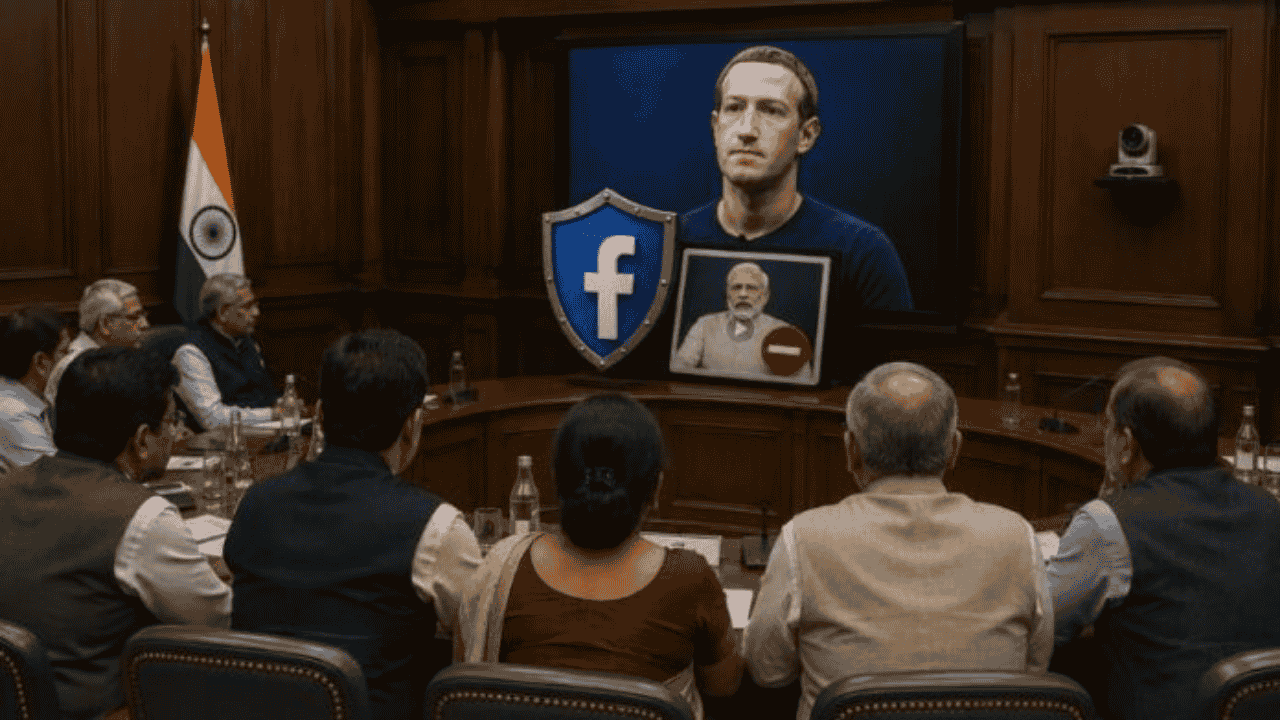
The statutory framework governing India's digital economy is undergoing a structural re-evaluation as the Union Government considers modifying the "safe harbour" immunity granted to internet intermediaries. Safe harbour is a foundational legal doctrine ensuring that online entities—including social media networks, instant messaging platforms, search engines, and e-commerce marketplaces—are shielded from secondary civil or criminal liability for unlawful third-party content hosted or transmitted across their networks.
In the Indian legal ecosystem, this immunity is codified under Section 79 of the Information Technology Act, 2000. Designed when internet platforms functioned predominantly as passive conduits, the provision ensured that technological facilitators were not bogged down by constant litigation over user actions. However, the escalation of cybercrimes, financial frauds, deepfakes, unauthorized digital advertisements, and complex scam structures such as "digital arrests" has prompted both executive and judicial reviews.
In recent proceedings before a Supreme Court-monitored committee, the central government disclosed that it is evaluating statutory amendments to limit absolute intermediary immunity. These amendments aim to establish direct legal liability for platform abuse, creating formal mechanisms through which victims of cyber fraud can claim monetary compensation from intermediaries. For competitive exam aspirants, this policy shift represents a crucial intersection of governance, constitutional rights, administrative law, and internal security.
Statutory Framework of Section 79 under the IT Act 2000
Section 79 of the IT Act, 2000 provides conditional exemption to intermediaries. Exemption from legal liability is contingent upon compliance with strict statutory criteria outlined across three primary sub-sections.
| Section Provision | Legal Scope | Statutory Preconditions and Exceptions |
|---|---|---|
| Section 79(1) | Overriding immunity shield for intermediaries. | Exempts intermediaries from liability for any third-party information, data, or communication link. |
| Section 79(2) | Conditions for claiming safe harbour protection. | Function must be limited to access provision; must not initiate transmission, select receivers, or modify content; must observe prescribed due diligence. |
| Section 79(3) | Statutory forfeiture of immunity. | Safe harbour is revoked if the platform abetted, conspired, or induced the unlawful act, or failed to expeditiously remove content upon acquiring actual knowledge. |
Due Diligence Mandates under the IT Rules 2021
To retain safe harbour immunity under Section 79(2)(c), platforms must comply with procedural due diligence obligations specified by the Union Government under the IT Intermediary Rules 2021. Significant Social Media Intermediaries (SSMIs)—defined as platforms with over 5 million registered users in India—are required to maintain a three-tier localized compliance structure:
Chief Compliance Officer: An Indian resident responsible for ensuring overall statutory adherence to the IT Act and rules.
Nodal Contact Person: A dedicated 24/7 liaison officer for operational coordination with Law Enforcement Agencies (LEAs).
Grievance Redressal Officer: An India-based official mandated to acknowledge and resolve user complaints within statutory timeframes.
Rule 7 of the IT Rules 2021 reinforces these mandates by stipulating that an intermediary's failure to observe due diligence results in the immediate forfeiture of Section 79 safe harbour, exposing the platform to prosecution under general Indian penal laws.
Judicial Jurisprudence and Intermediary Immunity
The interpretation of Section 79 has evolved through key judicial decisions that clarified the boundaries between passive conduits and active content participants.
Shreya Singhal v. Union of India (2015): The Supreme Court read down Section 79(3)(b), ruling that "actual knowledge" requires a formal court order or official notification from an authorized government agency. The Court established that intermediaries are not required to act on private takedown notices, maintaining that platforms have no positive legal duty to proactively monitor user content, preserving freedom of speech under Article 19(1)(a).
Myspace Inc. v. Super Cassettes Industries Ltd. (2017): The Delhi High Court clarified that automated, non-content modifications—such as structural formatting for digital viewing—do not violate Section 79(2)(b)(iii) or constitute content modification.
Christian Louboutin SAS v. Nakul Bajaj (2018): The Delhi High Court articulated a 26-point test to distinguish passive intermediaries from active market participants. E-commerce entities offering value-added services such as inventory management, seller curation, storage, and packaging were categorized as active participants, disqualifying them from claiming safe harbour immunity.
E-Commerce Safe Harbour Precedents: In cases involving platforms like IndiaMart and Snapdeal (Kunal Bahl v. State of Karnataka), courts ruled that marketplace facilitators providing neutral transaction spaces remain entitled to Section 79 protection unless direct involvement in illegal acts is established.
Catalysts for Regulatory Reform: Cyber Crime Trends and Platform Abuse
The push to review Section 79 stems from structural technological changes that challenge traditional regulatory models. Modern digital platforms do not function merely as passive pipes; they utilize algorithmic curation, targeted advertising engines, and automated recommendation systems that actively shape content visibility.
This technological evolution has facilitated modern cyber threats:
Digital Arrest Scams and Forged Documents: Organized cybercriminals exploit messaging networks and VoIP channels to impersonate police or judicial officers, holding citizens under fake "digital arrest" while extracting money using forged official documents.
Fraudulent Digital Advertisements: Unverified paid advertisements on search engines and social platforms frequently promote fake investment schemes, fraudulent recruitment drives, and malicious phishing gateways. Platforms profit from hosting these advertisements while relying on Section 79 to avoid liability for resulting financial losses.
Absence of Victim Compensation Rules: Existing cyber laws focus primarily on penalizing untraceable primary offenders. Victims currently lack statutory remedies to claim financial restitution from intermediaries that profited from hosting fraudulent content.
Law Enforcement Bottlenecks: Investigating agencies encounter obstacles obtaining metadata, IP logs, and subscriber records from foreign-headquartered platforms due to inconsistent compliance protocols.
Government Reform Proposals Before the Supreme Court Committee
The Union Government outlined its reform strategy before the Supreme Court-monitored Inter-Departmental Committee (IDC) in the suo motu proceedings titled 'Victims of Digital Arrest Related to Forged Documents'. The judicial bench—comprising Chief Justice of India Surya Kant, Justice Joymalya Bagchi, and Justice V. Mohana—examined submissions from the Indian Cyber Crime Coordination Centre (I4C) regarding platform accountability.
| Regulatory Initiative | Proposed Statutory Mechanism | Operational Objective |
|---|---|---|
| Platform Abuse Liability | Amendment to the IT Act, 2000. | Restrict safe harbour to enable cyber fraud victims to claim direct compensation from platforms. |
| National Intermediary Registry | Centralized registration database. | Mandatory public registration of verified Chief Compliance, Nodal, and Grievance Officers. |
| Digital Ad Moderation Rules | Enhanced due diligence guidelines. | Mandatory verification protocols for paid digital ads to prevent scam distribution. |
| Section 67C Data Retention Rules | Statutory notifications under IT Act. | Uniform data preservation and sharing standards across all operating intermediaries. |
| Adjudication & Compliance System | MeitY's ACDS Digital Portal. | End-to-end digital system for quasi-judicial workflows under Section 46 of the IT Act. |
| Call Management Protocols | Multi-agency consultations (MeitY, DoT, I4C). | Evaluation of time-based call restrictions and safeguards on audio/video communication. |
These executive steps align with broader legislative inquiries. The Parliamentary Standing Committee on Communications and Information Technology has recommended making social media platforms accountable for curbing fraudulent content. Concurrently, the Department of Telecommunications (DoT) operationalized the Digital Intelligence Portal (DIP) to facilitate real-time coordination among telecom service providers, banks, law enforcement agencies, and OTT platforms.
Strategic Interplay: Section 79 IT Act vs DPDP Act 2023
The enactment of the Digital Personal Data Protection Act, 2023 creates a dual-regulatory environment that impacts Section 79 safe harbour provisions. While Section 79 of the IT Act functions on a reactive model—requiring platforms to remove content only after official notification—the DPDP Act introduces proactive statutory duties regarding personal data processing.
| Dimension | Section 79, IT Act, 2000 | DPDP Act, 2023 |
|---|---|---|
| Regulatory Objective | Exemption from liability for hosting user content. | Governance of personal digital data handling and security. |
| Operational Duty | Reactive: Takedown required upon receiving actual knowledge. | Proactive: Mandatory obligation to protect personal data from misuse under Section 8(1)(c). |
| Compliance Trigger | Receipt of court order or government notification. | Continuous implementation of data protection safeguards. |
| Penal Consequences | Forfeiture of safe harbour leads to general criminal liability. | Direct financial penalties up to ₹250 crore for Significant Data Fiduciaries. |
| Victim Remedy | Criminal prosecution or civil suits against original content creators. | Statutory complaints to Data Protection Board and compensation claims. |
This regulatory intersection implies that if a platform hosts content misusing personal data (such as unauthorized contact details used in financial scams), the intermediary may face direct liability under Section 8(1)(c) of the DPDP Act for failing its proactive duty, preventing it from relying solely on Section 79 safe harbour.
Strategic Implications and Second-Order Policy Effects
Reforming safe harbour protections involves balancing online safety, fundamental rights, and economic considerations.
Diluting safe harbour immunity may compel platforms to deploy automated content moderation filters to minimize legal risk. This presents a second-order risk of private censorship, where intermediaries over-moderate legitimate speech, creative expression, or criticism to avoid compensation claims, potentially impacting rights under Article 19(1)(a).
From an economic perspective, while multinational technology conglomerates can absorb higher compliance costs, domestic startups and smaller online businesses may struggle with extensive moderation and legal infrastructure. Excessive liability settings could create market entry barriers, affecting innovation within India's tech ecosystem.
Key Exam-Oriented Takeaways
Statutory Source: Safe harbour immunity is governed by Section 79 of the Information Technology Act, 2000.
Exemption Criteria: Intermediaries must remain passive conduits without initiating, selecting, or modifying transmissions, and must adhere to prescribed due diligence.
Judicial Benchmark: Shreya Singhal v. Union of India (2015) established that "actual knowledge" requires an official court order or government notification.
Key Nodal Authority: The Indian Cyber Crime Coordination Centre (I4C) under the Ministry of Home Affairs coordinates policy inputs on cybercrime interventions.
Proposed Reform Focus: Amending the IT Act to institute statutory platform liability and enable cyber fraud victims to claim financial compensation.
Regulatory Intersection: Dual compliance mandates created by Section 8(1)(c) of the DPDP Act, 2023, which requires proactive data protection measures.
Why this matters for your exam preparation
Understanding Section 79 safe harbour reforms is highly relevant for aspirants preparing for the UPSC Civil Services Examination and state public service exams across multiple papers:
General Studies Paper II (Governance, Polity, and Constitution):
Statutory frameworks and regulatory policies governing digital public infrastructure.
Judicial review and fundamental rights: Evaluating the balance between free speech under Article 19(1)(a) and reasonable restrictions under Article 19(2).
Delegated legislation mechanisms, including the IT Intermediary Rules, 2021.
General Studies Paper III (Internal Security, Science & Technology, and Economy):
Cyber security challenges: Managing digital arrest scams, financial frauds, deepfakes, and unverified digital ads.
Role of nodal agencies like I4C, MeitY, and DoT in securing the digital ecosystem.
Economic impacts on India's tech startup ecosystem versus Big Tech compliance dynamics.
UPSC Essay & Main Question Preparation:
Mains questions may assess whether modifying safe harbour protections strikes an appropriate balance between victim restitution and maintaining an open internet.
Essay topics addressing platform ethics, digital governance, and regulatory approaches in the AI era benefit from structured analysis of the interaction between the IT Act, 2000 and the DPDP Act, 2023.
Aspirants should track updates from parliamentary committees and Supreme Court proceedings to incorporate structured, policy-focused insights into their answer writing. For deeper analytical coverage and UPSC preparation materials, visit the Atharva Examwise UPSC Current Affairs Portal.