
Current Affairs July 2026: Karnataka to Establish India's First Government-Driven AI University in Bengaluru
Overview of the Historic Announcement
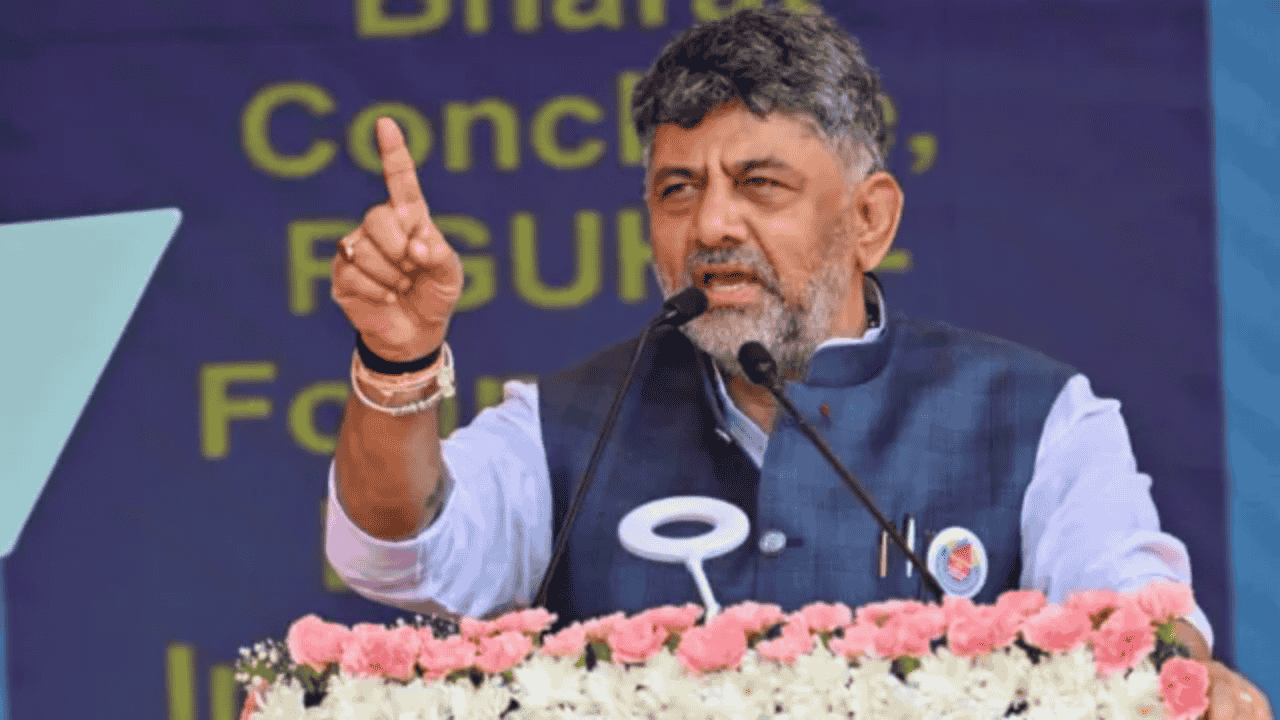
In a major policy initiative aimed at transforming India's technological ecosystem, the Government of Karnataka announced plans to establish the country's first government-driven Artificial Intelligence (AI) University in Bengaluru. The announcement was made during the inauguration of Google I/O Connect India 2026 at the Bangalore International Exhibition Centre (BIEC).
This institutional development forms the cornerstone of a broader policy blueprint to establish Karnataka as an "AI-native State," embedding artificial intelligence directly into public administration, essential services, and educational frameworks. Rather than relying solely on incremental skilling modules, the state is establishing a dedicated public academic institution to foster indigenous research, advanced talent development, and deep-tech entrepreneurship.
The complete policy framework integrates a specialized incubation hub, early-stage school curriculum updates, sustainable green data infrastructure, and a targeted state AI policy. By combining public sector investment with technical infrastructure and private sector partnerships, Karnataka seeks to move beyond software exports toward high-value intellectual property creation. For comprehensive coverage of technological developments in national policy, aspirants can refer to the Atharva Examwise Science & Technology Notes.
Key Pillars of Karnataka's AI Roadmap
Institutional Setup of the AI University
The proposed university will feature a 100-acre main campus in Bengaluru designed to host computational laboratories, advanced research centers, and interdisciplinary faculties. To prevent centralizing technical education in a single urban corridor, the government has planned five regional campuses across strategic urban nodes:
Kalaburagi
Belagavi
Hubballi-Dharwad
Mangaluru
Mysuru
Unlike short-term vocational skilling modules, the university is structured as a full degree-granting institution focusing exclusively on core artificial intelligence, machine learning, deep learning, and automated governance systems. The institutional mission emphasizes a triple-helix collaboration model connecting academia, industry leaders, and state governance.
Incubation and Innovation via the AI Hub
Alongside the university structure, Karnataka is establishing a state-backed AI Hub. Functioning as a dedicated incubator, the AI Hub will provide startups, researchers, and technology firms with access to high-performance computing (HPC) clusters, proprietary public datasets, and regulatory testing sandboxes. The hub aims to accelerate the translation of theoretical research into commercial software solutions and public service tools.
Early Education and Infrastructure Upgrades
To construct a long-term human resource pipeline, the state announced the introduction of foundational AI education in public and private schools starting from Class VI. This curriculum reform aims to build computational thinking and basic algorithmic literacy early in primary education.
Recognizing that advanced computing demands substantial energy and water resources, the state policy mandates the development of two hyperscale green data centres—one near Bengaluru and another along the coastal belt of Karnataka. These data centres will leverage renewable energy inputs and energy-efficient cooling architectures to support large model training while minimizing carbon intensity.
Complementing these initiatives is the 'Nipuna Karnataka' scheme, supported by an initial outlay of ₹300 Crore. Operating on the principle of local skill development for global employment, the scheme funds specialized training programs aligned with international market standards. Candidates can analyze similar policy interventions through the Atharva Examwise Digital Governance Analysis.
Key Facts and Exam-Relevant Data
Headline Project: Establishment of India's first government-led, degree-granting Artificial Intelligence University in Bengaluru.
Campus Distribution: 100-acre main campus in Bengaluru supported by 5 regional campuses in Kalaburagi, Belagavi, Hubballi-Dharwad, Mangaluru, and Mysuru.
Economic Baseline: Karnataka contributes approximately 40% of India's total software exports and hosts over 17,000 startups and Global Capability Centres (GCCs) in Bengaluru.
Educational Reform: Introduction of AI education into state school curricula starting from Class VI onwards.
Green Infrastructure: Proposal for two next-generation hyperscale green data centres in the Bengaluru region and coastal Karnataka.
Financial Outlay: ₹300 Crore allocated under the 'Nipuna Karnataka' program for specialized workforce training.
Target Governance Sectors: Integration of AI tools across healthcare, agriculture, education, climate resilience, urban mobility, and administrative service delivery.
Structural Comparison of State AI Initiatives
| Feature / Parameter | Traditional Vocational Skilling Programs | Karnataka Government AI University Model |
|---|---|---|
| Institutional Depth | Short-term certificates focused on application tools | Degree-granting university centered on core algorithms & foundational R&D |
| Geographic Scope | Concentrated in primary metro cities | Main campus plus 5 regional campuses across tier-2/3 cities |
| Infrastructure Integration | Basic lab setups or cloud access subscriptions | On-site hyperscale green data centres and state-backed AI Hub incubation |
| Governance Alignment | Private sector driven without direct public integration | Direct alignment with state administration to build an "AI-native State" |
| Target Sector Applications | General IT workforce generation | Specialized public service applications (healthcare, agriculture, transit) |
Socio-Economic and Policy Implications
Economic Value Chain Advancement
India's information technology sector has historically built its commercial strength on software maintenance, business process outsourcing, and IT services. While this model generated substantial foreign exchange, it limited domestic intellectual property creation.
By establishing a dedicated public AI university, Karnataka attempts a structural pivot toward high-value technology creation. Fostering domestic competence in foundation models, neural network architectures, and hardware-software co-design allows the domestic ecosystem to capture higher margins in global technology value chains.
Decentralized Regional Growth
Focusing technological infrastructure entirely within Bengaluru has previously increased urban congestion, inflated real estate costs, and created intra-state economic disparities. Distributing regional university campuses to Kalaburagi, Belagavi, Hubballi-Dharwad, Mangaluru, and Mysuru operationalizes balanced regional development. This geographic spread provides technical infrastructure and skill pathways to regional youth, reducing distress migration to metro hubs.
AI-Native Governance and Public Service Delivery
The policy's explicitly stated goal is transforming governance through practical AI deployment rather than abstract technological positioning. Targeted sector applications illustrate a practical orientation toward public goods:
Healthcare: Machine learning algorithms applied to radiological screening in rural Primary Health Centres (PHCs) to accelerate early diagnosis.
Agriculture: Real-time localized advisory systems analyzing satellite imagery, weather patterns, and soil conditions for smallholder farmers.
Urban Logistics: Automated traffic signal synchronization and predictive transit planning to address urban congestion in high-density corridors.
Aspirants tracking developments in science and policy can explore further study materials on the Atharva Examwise Daily Current Affairs Portal.
Why This Matters for Your Exam Preparation
This policy development holds direct relevance across several papers of competitive examinations, particularly the UPSC Civil Services Examination (CSE).
General Studies Paper II (GS-II): Governance, Public Policy, and Education
E-Governance and Administrative Reform: Provides a practical case study of transitioning from basic e-governance (digitization of records) to intelligent governance (predictive service delivery using AI).
Issues Relating to Development and Management of Social Services (Education & Human Resources): Serves as an example of curriculum modernization starting from Class VI and the restructuring of higher education institutions to address technological disruption.
Federalism and Subnational Policies: Demonstrates competitive federalism, where state governments independently initiate sector-specific policies and partner with multinational firms (e.g., Google) to attract investment.
General Studies Paper III (GS-III): Science & Technology, Economy, and Environment
Science and Technology Developments and Applications: Highlights domestic capacity-building in critical and emerging technologies, showing how state institutions foster indigenous R&D.
Industrial Policy and Growth: Illustrates strategies for advancing from low-cost service delivery to high-value technology intellectual property.
Environmental Sustainability and Infrastructure: The integration of hyperscale green data centres offers material for questions on energy-efficient digital infrastructure and sustainable computing footprints.
Inclusive Growth and Inclusive Infrastructure: Regional campus distribution across North and Coastal Karnataka provides factual backing for arguments regarding balanced regional development.
Essay and Personality Test Relevance
Ethical Technology and Digital Inclusion: Candidates can evaluate the balance between rapid AI adoption and public safeguards regarding data privacy, algorithmic bias, and equitable access to technological benefit.
Human Capital Preparation: Offers concrete arguments on aligning national human resources with global technological shifts through targeted fiscal outlays like 'Nipuna Karnataka'.