
UPSC Current Affairs: Rajya Sabha Passes MSME Development (Amendment) Bill 2026 | Atharva Examwise Current News & Daily GK Update
Legislative Overview of the MSME Development (Amendment) Bill 2026
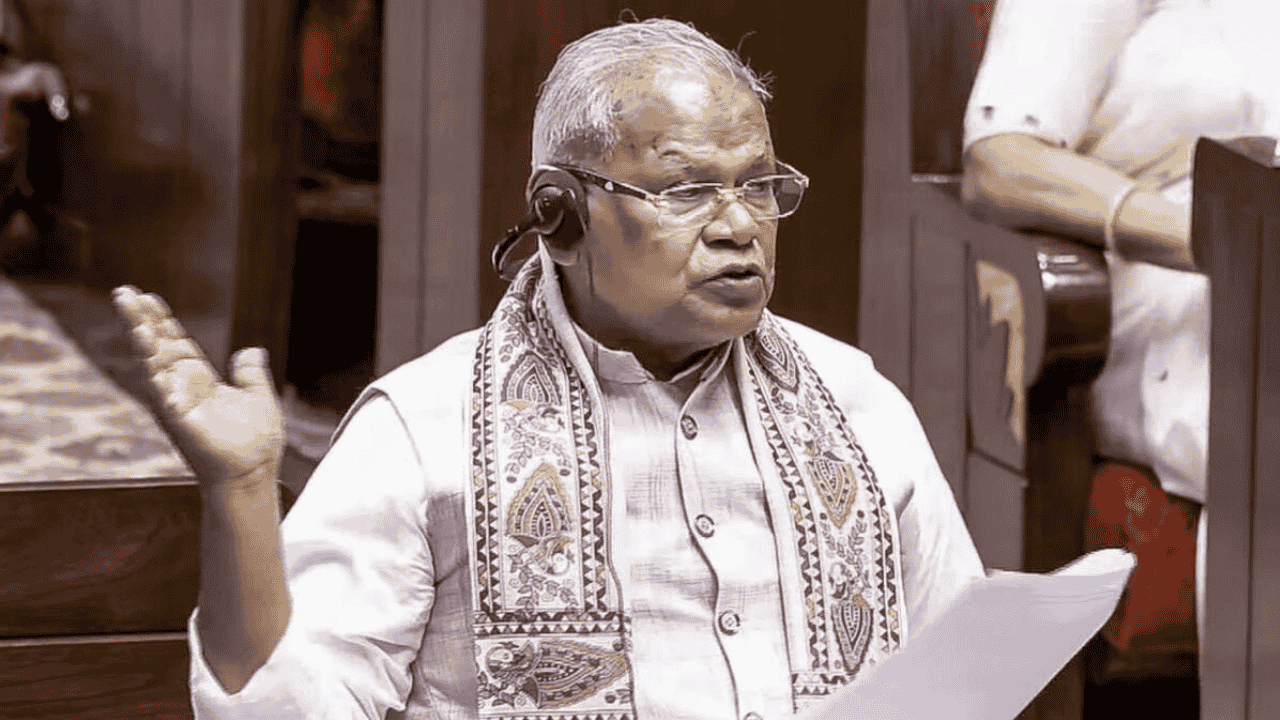
The Upper House of Parliament has passed the Micro, Small and Medium Enterprises Development (Amendment) Bill, 2026 by voice vote, establishing a modernized regulatory architecture for India's small business ecosystem. Moved by the Union Minister for Micro, Small and Medium Enterprises, Jitan Ram Manjhi, the legislation amends the foundational Micro, Small and Medium Enterprises Development (MSMED) Act, 2006. The statutory overhaul addresses long-standing structural challenges, particularly systemic delayed payments, liquidity constraints, prolonged dispute resolution cycles, and administrative compliance burdens.
The 2006 framework provided an initial foundation for sector recognition, but rapid digitalization, evolving supply chain dynamics, and expanding credit needs required substantive legislative updates. The 2026 Amendment aligns statutory mechanisms with contemporary business practices by mandating electronic payment platforms, enforcing strict arbitration timelines, decriminalizing procedural defaults, and providing statutory remedies through land revenue recovery and insolvency frameworks.
Statistical Snapshot of the MSME Ecosystem
The micro, small, and medium enterprise sector serves as a primary driver of economic growth, employment generation, and industrial output across India. Parliamentary discussions highlighted key economic metrics demonstrating the sector's macroeconomic weight and the critical need for operational liquidity.
| Economic Indicator | Volume / Percentage Share | Operational & Policy Context |
|---|---|---|
| GDP Contribution | ~31% of Gross Domestic Product | Foundational pillar of national output and grassroots value creation |
| Manufacturing Output | 35% – 36% of Total Manufacturing | Core supplier base for domestic capital goods and industrial supply chains |
| National Export Share | 41% – 48% of Total Exports | Major foreign exchange earner across textiles, engineering, and handicrafts |
| Registered Enterprises | Over 2.55 Lakh formal MSMEs | Expanding institutional footprint driven by digital registration platforms [cite: 1 (input data)] |
| Female Participation | 49% Women Participation | Critical vector for socio-economic inclusion and economic empowerment [cite: 1 (input data)] |
| Total Credit Flow | > ₹38.35 Lakh Crore (Up from ~₹10 Lakh Cr in 2014-15) | Steady expansion in formal banking credit over the past decade |
| Cumulative CGTMSE Guarantees | > ₹10.47 Lakh Crore (2022-26) vs. ₹3.14 Lakh Cr (2000-22) | Accelerated government-backed credit guarantees for collateral-free loans |
Comparative Analysis of Statutory Provisions
The MSMED (Amendment) Bill, 2026 introduces major changes to the MSMED Act, 2006, replacing outdated compliance structures with enforceable statutory timelines and digital integrations.
| Feature Area | MSMED Act, 2006 Baseline | MSMED (Amendment) Bill, 2026 Framework |
|---|---|---|
| Payment Settlement Routing | Optional usage of trade receivables systems | Mandatory invoice routing via RBI-authorized TReDS for CPSEs |
| Classification Parameters | Fixed statutory capital investment ceilings in law | Flexible Central Government notifications based on investment and turnover |
| Environmental Capital Deductions | No specific exclusions for eco-friendly investments | Expenditure on pollution control and safety devices excluded from investment limits |
| Mediation Timelines | No fixed statutory completion timeframe | Mandatory completion within 90 days of first appearance |
| Post-Mediation Arbitration | Undefined referral and award timelines | Arbitration referral within 30 days; Award issued within 90 days |
| Recovery Mechanism | Standard execution procedures under civil law | Enforceable as Arrears of Land Revenue via District Collectors; IBC debt status |
| Challenging Awards & Payouts | 75% pre-deposit required by non-supplier buyers | Retains 75% pre-deposit; mandates minimum 50% payout if pending > 6 months |
| Offence & Penalty Architecture | Criminal prosecution and conviction-based fines | Decriminalized; administrative graded civil penalties with departmental appeals |
Detailed Examination of Key Structural Provisions
Mandatory Settlement via Trade Receivables Discounting System
The Bill mandates that every Central Public Sector Enterprise (CPSE) must settle all invoices for goods or services procured from MSMEs through the Trade Receivables Discounting System (TReDS). TReDS is an electronic invoice discounting platform regulated by the Reserve Bank of India (RBI) that allows MSMEs to factor their invoices against corporate and government buyers at market-determined rates. The Central Government is empowered to extend this mandatory routing to other statutory authorities, while State Governments can notify similar provisions for State Public Sector Enterprises (SPSEs). Entities subject to this mandate must publicly disclose all invoice settlements routed through the TReDS platform.
Dynamic Classification and Sustainable Investment Exclusions
The legislation removes rigid statutory capital limits from the core text of the law, authorizing the Central Government to adjust MSME criteria based on investment in plant, machinery, or equipment alongside annual turnover. Crucially, the Bill provides that capital expenditures incurred on pollution-control equipment, industrial safety devices, and other notified green technologies will be excluded when calculating investment thresholds. This provision prevents growth penalties and incentivizes small businesses to adopt environmentally sustainable infrastructure.
Time-Bound Dispute Resolution and Recovery Mechanism
Delayed payments represent the primary cause of working capital distress for micro and small suppliers. To streamline dispute resolution, the Bill establishes strict legal timelines:
Mediation proceedings before Micro and Small Enterprises Facilitation Councils (MSEFCs) or accredited mediation providers must conclude within 90 days from the first appearance.
If mediation fails, formal reference to arbitration must occur within 30 days from the date of termination.
Arbitral tribunals are required to issue final awards within 90 days from the completion of pleadings.
Online mediation and virtual arbitration proceedings via audio-video electronic tools are legally recognized.
Mediated settlement agreements and arbitral awards are enforceable as arrears of land revenue, enabling State Governments to issue recovery orders directly through District Collectors or Deputy Commissioners to attach defaulting buyers' assets.
Awards are recognized as legally enforceable operational debts under the Insolvency and Bankruptcy Code (IBC), granting MSMEs legal standing to initiate corporate insolvency proceedings against non-paying buyers.
Non-supplier buyers challenging an award in court must pre-deposit 75% of the awarded sum. If appellate proceedings remain unresolved for more than six months, courts are directed to release at least 50% of the deposited amount directly to the MSME supplier.
Decriminalization and Compliance Framework
The Bill decriminalizes minor procedural non-compliances, replacing criminal conviction with administrative civil penalties. Entities failing to meet TReDS reporting requirements under Section 22 or submitting false registration details face civil fines ranging from ₹50,000 to ₹100,000. The Deputy Commissioner is designated as the primary adjudicating officer, with appellate remedy available before the Secretary of the concerned Union Ministry within 30 days. Furthermore, the legislation establishes a statutory basis for a unified national digital platform providing free, voluntary enterprise registration, complemented by synchronized state-level portals.
Strategic Analysis and Macroeconomic Implications
The passage of the MSME Development (Amendment) Bill, 2026 reflects a policy shift from direct administrative intervention toward structural liquidity enhancement and regulatory reform.
By compelling public sector buyers to settle procurement via TReDS, the policy shifts credit risk away from small suppliers toward high-rated public enterprises. This mechanism enables micro-units to access immediate cash flow at institutional interest rates, reducing reliance on informal credit markets without placing demands on government spending.
The legal framework addressing delayed payments changes the financial incentives surrounding commercial litigation. Historically, large corporate buyers exploited judicial delays to withhold payments from smaller vendors. Mandating a 75% pre-deposit alongside an automatic 50% interim payout to suppliers after six months of pending litigation disincentivizes tactical court delays and preserves supplier working capital.
Furthermore, excluding environmental safety and pollution-control capital expenditures from statutory investment thresholds solves a policy contradiction. Under prior definitions, investing in eco-friendly technology threatened to push a micro or small enterprise beyond statutory threshold caps, causing it to lose government procurement benefits. The new exclusion supports green industrial transitions while preserving regulatory protections.
Related Learning Resources
Aspirants can access additional exam-focused analysis and regulatory updates through these official portals and study materials:
Internal Study Material: Atharva Examwise Daily GK Update Portal
Internal Study Material: Atharva Examwise UPSC Current Affairs & Indian Economy Notes
External Reference: Reserve Bank of India — TReDS Operational Guidelines
External Reference: Ministry of Micro, Small and Medium Enterprises Official Portal
Why this matters for your exam preparation
The passage of the MSME Development (Amendment) Bill, 2026 is directly relevant across multiple papers of the UPSC Civil Services Examination and state competitive examinations:
Key Takeaways for UPSC Prelims (General Studies Paper I)
Statutory Framework: Questions can assess amendments to the MSMED Act, 2006, statutory functions of MSEFCs, and national digital registration portals.
Financial Instruments: High probability of questions testing the operational mechanics of TReDS, RBI discounting regulations, and CGTMSE guarantee limits.
Legal Concepts: Examines legal concepts such as arrears of land revenue recovery, operational debt status under the IBC, and statutory pre-deposit requirements.
Key Takeaways for UPSC Mains (General Studies II & III)
General Studies III (Indian Economy & Growth): Directly covers syllabus topics like Industrial Policy, Growth, Development, and Employment. Candidates can cite sector statistics (~31% GDP contribution, 35-36% manufacturing output, 41-48% export share, and 49% women participation) to analyze credit flow, formalization, and supply chain resilience.
General Studies II (Governance & Statutory Bodies): Relevant for topics concerning Ease of Doing Business, Regulatory Governance, and Alternative Dispute Resolution (ADR). Illustrates legislative decriminalization, administrative adjudication, and statutory time-bound arbitration frameworks.
Strategic Relevance for Essays & Personality Tests
Socio-Economic Themes: Provides factual evidence and policy context for arguments on inclusive growth, rural industrialization, women entrepreneurship, and sustainable technology adoption.