
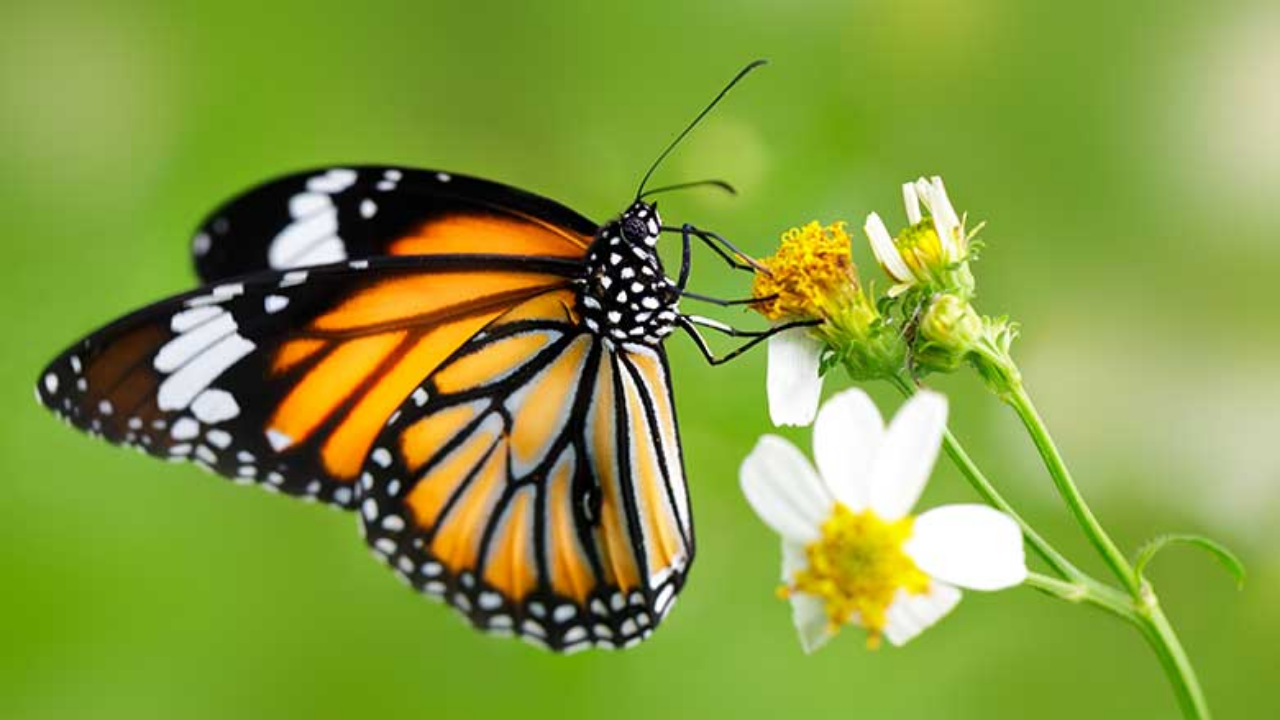
UPSC Current Affairs 2026: ZSI Releases National Catalogue of Indian Lepidoptera | Atharva Examwise Daily GK Update
National Catalogue of Indian Lepidoptera: A Historic Biodiversity Benchmark
In a major milestone for national biodiversity documentation and taxonomic science, the Zoological Survey of India (ZSI), an autonomous organization operating under the Ministry of Environment, Forest and Climate Change (MoEFCC), officially announced the completion of the Catalogue of Lepidoptera (Butterflies & Moths) of India. Authored by ZSI taxonomists Dr. Navneet Singh and Dr. Rahul Joshi, this 12-year scientific initiative synthesized data from intensive field surveys, museum curation, and systematic literature verification across 22 distinct cataloguing volumes.
The publication of the final definitive volume in the peer-reviewed international taxonomy journal Zootaxa resolves long-standing taxonomic ambiguities that persisted for over a century. By consolidating historical records dating back to colonial-era surveys and updating them with modern taxonomic revisions, the project establishes a centralized baseline inventory of the country's lepidopteran diversity. This comprehensive documentation firmly positions India among a select group of megadiverse nations possessing a fully modernized national inventory of insect fauna. Candidates preparing through UPSC Current Affairs Preparation can leverage these findings for environmental science, ecology, and institutional policy topics.
Comprehensive Taxonomic Breakdown of Indian Lepidoptera
The updated national inventory establishes that India hosts 13,703 species of Lepidoptera, accounting for approximately 8.25% of all known butterfly and moth species globally. The underlying taxonomic structure is distributed across 3,705 genera, 240 subfamilies, 102 families, and 31 superfamilies.
A notable aspect of this inventory is the numerical distribution between diurnal butterflies (Rhopalocera) and nocturnal moths (Heterocera). Moths comprise nearly 90% of all recorded lepidopteran species in the Indian subcontinent, reflecting their ecological ubiquity across diverse biomes ranging from the trans-Himalayan zones to the Western Ghats.
Key Facts and Statistical Highlights
Global Share: India accounts for 8.25% of global Lepidoptera species diversity (13,703 out of global estimates).
Butterfly Diversity: 1,417 species of butterflies have been catalogued, representing approximately 10.34% of Indian Lepidoptera.
Moth Diversity: 12,286 species of moths have been documented, constituting 89.66% of the national lepidopteran total.
Taxonomic Spectrum: The inventory spans 3,705 genera, 240 subfamilies, 102 families, and 31 superfamilies.
Final Volume Cataloguing: The concluding volume in Zootaxa catalogued 1,689 species, establishing clear taxonomic resolution across multiple complex families.
Research Duration: The project required 12 years of continuous field exploration, museum taxonomy, and literature validation.
| Taxonomic Parameter | Recorded Figures in India | Proportion / Context |
|---|---|---|
| Total Lepidoptera Species | 13,703 | 8.25% of world total |
| Butterfly Species (Rhopalocera) | 1,417 | ~10.34% of Indian Lepidoptera |
| Moth Species (Heterocera) | 12,286 | ~89.66% of Indian Lepidoptera |
| Total Genera | 3,705 | Broad genetic representation |
| Total Subfamilies | 240 | Comprehensive lineage mapping |
| Total Families | 102 | Covers major environmental niches |
| Total Superfamilies | 31 | Full evolutionary spectrum |
Aspirants can access further study material on wildlife distributions via our dedicated Atharva Examwise Environment Notes.
The Geometroidea Superfamily: India's Nocturnal Pollinators
A primary highlight of the ZSI research initiative is the detailed cataloguing of the moth superfamily Geometroidea, which reinforces India's status as a global sanctuary for nocturnal insects. Geometroidea species act as key nocturnal pollinators, managing ecological reproduction during the "night shift" when diurnal pollinators are inactive.
India hosts 2,205 species of Geometroidea spread across 479 genera, 13 subfamilies, and 4 families. This represents 8.80% of the worldwide species total for this superfamily.
| Family Under Geometroidea | Genera in India | Species in India | Structural & Ecological Characteristics |
|---|---|---|---|
| Geometridae | 445 | 2,100 | Largest family; larvae are commonly referred to as "inchworms" or "loopers" due to their looping locomotion. |
| Uraniidae | 27 | 95 | Includes both diurnal and nocturnal species, many displaying iridescent structural coloration. |
| Epicopeiidae | 6 | 9 | Oriental family featuring specialized mimicry of toxic papilionid butterflies. |
| Pseudobistonidae | 1 | 1 | Monotypic in India, represented exclusively by Heracula heracles (Subfamily Heraculinae). |
Subfamily Distribution and Taxonomic Biogeography
The family Geometridae in India is primarily dominated by three subfamilies: Ennominae with 895 species, Larentiinae with 565 species, and Geometrinae with 309 species. Conversely, two subfamilies maintain monotypic representation in India: Epidesmiinae (within Geometridae) and Heraculinae (within Pseudobistonidae), each represented by a single recorded species.
In terms of global biogeography, the family Sematuridae is completely absent from the Indian fauna, being restricted almost entirely to the Neotropical realm of the New World.
Ecological Significance and Bio-Indicator Roles
Lepidoptera species play crucial roles in maintaining ecological equilibrium across forest, agricultural, and grassland ecosystems. Their multi-stage lifecycle connects plant primary production with higher consumer levels in complex food webs.
Primary ecological functions documented in the catalogue include:
Trophic Support and Consumer Dynamics: As herbivores in their larval stage, caterpillars consume substantial plant biomass, aiding vegetative regulation and leaf detritus decomposition. Subsequently, adult and larval stages serve as primary dietary resources for insectivorous birds, bats, spiders, and small mammals.
Nocturnal and Diurnal Pollination: While diurnal butterflies pollinate day-blooming wild plants and crops, nocturnal moth families—including Geometroidea, Noctuidae, and Sphingidae—fill essential pollination niches for night-blooming flora, ensuring genetic cross-pollination across forest ecosystems.
Bio-Indicators of Environmental Health: Due to high sensitivity to ambient temperature, humidity, and host-plant availability, lepidopteran populations respond rapidly to micro-climatic disruptions. Shifts in their altitudinal distribution serve as early warning markers for climate change impacts in sensitive ecosystems like the Eastern Himalayas and Western Ghats.
Institutional Overview: Zoological Survey of India
Understanding the administrative and legal framework of the reporting body is essential for competitive exam updates.
Organization: Zoological Survey of India (ZSI).
Parent Ministry: Ministry of Environment, Forest and Climate Change (MoEFCC), Government of India.
Date of Establishment: July 1, 1916.
Headquarters: Kolkata, West Bengal.
Regional Footprint: 16 Regional Centres located across distinct biogeographic zones in India.
Leadership: Dr. Dhriti Banerjee, Director.
Statutory Mandate: Undertaking faunal surveys, systematic taxonomy, maintaining National Zoological Collections, and preparing baseline environmental inventories for conservation policy.
For additional details on government statutory bodies, check our compilation on Atharva Examwise Static GK Updates. External scientific documentation and press briefings can be reviewed directly via the Press Information Bureau and official indexes in the Zootaxa Journal.
Why this matters for your exam preparation
This research breakthrough has direct relevance across multiple papers of competitive examinations such as the UPSC Civil Services Examination (CSE), State PSCs, and allied exams.
Exam Relevance for UPSC CSE Prelims (General Studies Paper-I)
Environment & Ecology: Direct factual queries on species diversity figures, monotypic families/subfamilies present in India (e.g., Pseudobistonidae, Heraculinae), absent families (Sematuridae), and global diversity percentages (8.25% overall, 8.80% for Geometroidea).
Science & Technology: Hierarchical biological classification models (Superfamily $\rightarrow$ Family $\rightarrow$ Subfamily $\rightarrow$ Genus $\rightarrow$ Species), scientific cataloguing methodologies, and peer-reviewed journals (Zootaxa).
National Institutions: Questions on ZSI's administrative structure, parent ministry (MoEFCC), headquarters location, and statutory duties under environmental governance frameworks.
Exam Relevance for UPSC CSE Mains (General Studies Paper-III)
Conservation & Biodiversity: Provides empirical evidence for answers discussing biodiversity baselines, Wildlife Protection Act (WPA) implementation, and compliance with the Convention on Biological Diversity (CBD).
Ecosystem Services: Analytical concepts regarding nocturnal pollination ("the night shift"), food web stability, bio-indicators of climate change, and habitat fragmentation impacts.
Key Exam-Relevant Data for Quick Revision
Total Indian Lepidoptera: 13,703 species (~8.25% of global total).
Butterflies vs. Moths: 1,417 butterflies vs. 12,286 moths.
Geometroidea Superfamily: 2,205 species across 4 families (Geometridae, Uraniidae, Epicopeiidae, Pseudobistonidae).
Monotypic Pseudobistonidae: Represented in India by Heracula heracles.
Absent Family: Sematuridae (restricted to New World).
Institutional Details: ZSI established in 1916, headquartered in Kolkata under MoEFCC.
Sample Practice Questions
Prelims Practice Question
Q. With reference to the lepidopteran diversity in India catalogued by the Zoological Survey of India (ZSI), consider the following statements:
Moths represent over 80% of the total recorded species of Lepidoptera in India.
The superfamily Geometroidea in India includes the monotypic presence of the family Pseudobistonidae.
The family Sematuridae is widely distributed across the tropical rainforests of the Western Ghats.
Which of the statements given above are correct?
(a) 1 and 2 only
(b) 2 and 3 only
(c) 1 and 3 only
(d) 1, 2, and 3
Correct Answer: (a) 1 and 2 only
Explanation: Statements 1 and 2 are correct. Moths account for ~89.66% of Indian Lepidoptera, and Pseudobistonidae is represented by a single species. Statement 3 is incorrect because Sematuridae is absent from Indian fauna and restricted to the Neotropical region.
Mains Practice Question
Q. "Accurate taxonomic baselines are essential for designing robust conservation policies and understanding ecosystem services." Analyze this statement in light of the recently completed National Catalogue of Lepidoptera by the Zoological Survey of India. (150 Words, 10 Marks)