
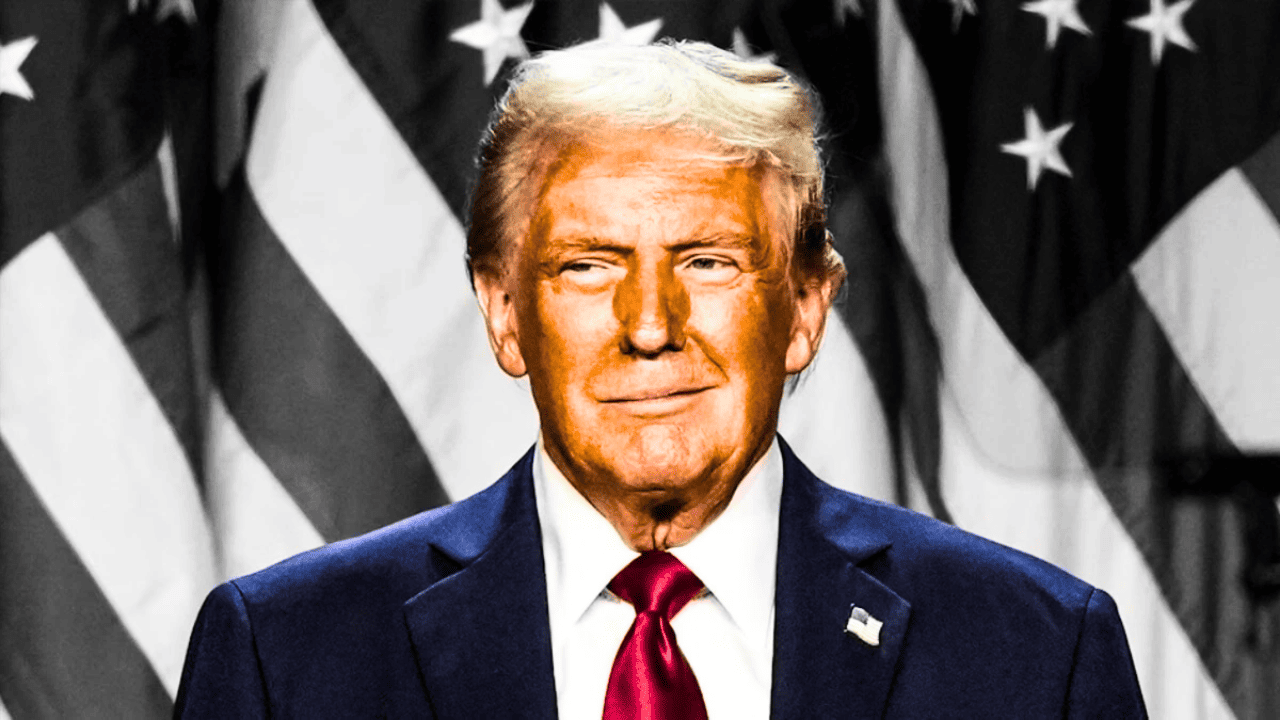
UPSC Current Affairs July 23, 2026: Atharva Examwise Daily GK Update on Trump's 200% Generic Tariff Threat
A major development in global trade policy has occurred as the United States administration under President Donald Trump announced a phased tariff regime targeting imported generic medicines. The proposed measures, which will impose import duties of up to 200% by August 2029, represent the final phase of a broader protectionist pharmaceutical strategy designed to force global drugmakers to reshore manufacturing capabilities to the United States.
For serious aspirants tracking UPSC current affairs and parsing competitive exam news today, this policy shift serves as a critical case study. It highlights how domestic political maneuvers and unilateral trade tools in developed economies directly impact India's export-oriented sectors, global supply chains, and bilateral trade agreements. India, widely recognized as the "Pharmacy of the World," stands as the largest supplier of affordable generic medications to the American healthcare system. The proposed tariff structure introduces severe systemic challenges to the Indian pharmaceutical ecosystem, while simultaneously threatening to disrupt healthcare affordability for millions of American consumers.
The Regulatory Architecture: Section 232 and the Path to the 200% Tariff
The phased tariff plan announced on July 21, 2026, establishes a multi-year countdown designed to compel international pharmaceutical firms to establish physical manufacturing infrastructure within the United States. This policy builds upon previous executive orders and investigations conducted under Section 232 of the Trade Expansion Act of 1962, which empowers the executive branch to adjust imports on national security grounds without requiring legislative consent from the US Congress.
The Department of Commerce initiated a Section 232 national security investigation into pharmaceutical imports in April 2025, concluding that extreme reliance on foreign finished dosages and active pharmaceutical ingredients (APIs) threatened to impair US public health security. This legal framework was left untouched by the Supreme Court ruling in February 2026, which had invalidated other emergency-power-based tariffs, thereby giving the administration a resilient legal tool to execute its trade agenda.
| Feature | Patented & Branded Medicines (April 2, 2026 Proclamation) | Generic Medicines (July 21, 2026 Announcement) |
|---|---|---|
| Legal Authority | Section 232 of the Trade Expansion Act of 1962 | Section 232 of the Trade Expansion Act of 1962 |
| Tariff Rate | 100% ad valorem default rate | Phased: 0% (2026–2028), 100% (2028), 200% (2029) |
| Effective Dates | July 31, 2026 (Large Firms); Sept 29, 2026 (Small Firms) | Transition starts August 1, 2026; major hikes hit August 2028 |
| Exemptions & Preferences | Country-specific deals (e.g., UK at 0%, EU/Japan at 15%) | Currently unspecified; pending formal administrative guidelines |
| Mitigation Mechanisms | Approved Onshoring (20% rate) or HHS MFN Deals (0% rate) | Direct "reshore or pay" penalty; no clear MFN bypass established |
While the April 2, 2026 executive order explicitly carved out generic drugs and biosimilars, the July 21 announcement completes the trade wall, leaving virtually no major pharmaceutical category outside Washington's reshoring strategy. The White House contends that its aggressive Section 232 tariffs on branded medicines have already extracted over $400 billion in domestic investment commitments, presenting this generic tariff plan as the logical expansion of a proven strategy.
The Exposure of the Pharmacy of the World
India's exposure to these changes is highly asymmetric due to its dominant role in the US generic drug market. India exported $25.8 billion worth of pharmaceuticals globally in 2025, of which $9.7 billion, or 37.7%, went to the US, making America India's largest pharmaceutical export market.
Indian manufacturers supply approximately 47% to 50% of all generic prescriptions dispensed in the US, earning the country its reputation as an indispensable provider of low-cost healthcare. However, because generic drugs are highly competitive commodities with thin profit margins, India’s share of the total import value of US generics is estimated at only 30%.
The immediate stock market reaction reflected this structural vulnerability. The Nifty Pharma index fell 1.31% to 1.51%, with nearly all constituent companies closing lower. Major exporters with extensive US generic portfolios—including Lupin, Aurobindo Pharma, Gland Pharma, Cipla, and Dr. Reddy's Laboratories—witnessed sharp drops of up to 4% as investors calculated the long-term impact on export revenues and capital expenditure.
Global Supply Chain Vulnerabilities and Sector Competitiveness
To write high-scoring answers in competitive exams, candidates must understand that the proposed tariffs affect global companies through complex supply networks. Global generic giants are highly exposed, and the economic hurdles of domestic US onshoring remain significant.
| Company / Group | US Revenue Dependency | Manufacturing Setup | Strategic Exposure & Key Targets |
|---|---|---|---|
| Sandoz (Switzerland) | ~22% of total global sales | Highly outsourced; currently closing remaining US facilities in 2026 | High exposure to tariffs; operations are highly dependent on offshore contract manufacturing. |
| Teva (Israel) | ~15% generic revenue | Manufacturing centered primarily in Europe | Moderate direct US tariff exposure; reliant on transatlantic logistics. |
| Viatris (US/Global) | ~25% of total revenue | Approximately 50% of generics imported into the US | Highly exposed despite US headquarters; reliant on global supply chains. |
| Lupin & Glenmark (India) | Highly significant US market share | Multiple FDA-approved domestic and Indian plants | Supply ~65% of all US birth control prescriptions; critical exposure. |
| Dr. Reddy's (India) | Major US revenue driver | Primarily Indian manufacturing; limited US presence | High exposure; CEO states that onshoring is not economically practical. |
The core barrier to the administration's reshoring goal is the structural cost differential between India and the United States. Indian manufacturers enjoy an estimated 40% to 60% cost advantage, allowing them to provide life-saving treatments at a fraction of Western production costs.
Indian-made generics such as Metformin (for diabetes), Atorvastatin (for cholesterol), Losartan (for hypertension), and antibiotics like Amoxicillin and Ciprofloxacin are typically priced seven to ten times lower than their branded equivalents in the US. Even under a 100% or 200% tariff, importing from India may remain more economically viable than manufacturing inside the US, where labor, environmental compliance, and capital construction costs are significantly higher.
As warned by Dr. Reddy's CEO Erez Israeli and Granules India Executive Director Priyanka Chigurupati, if tariffs are enforced, manufacturers will have to pass these costs directly to US consumers, driving up retail prices and causing inflationary pressure across the US healthcare system.
Key Facts and Exam-Relevant Data
To enrich descriptive answers for the civil services examination, candidates should integrate the following verified data points regarding the Indian pharmaceutical industry and its trade performance:
Export Resilience: Despite global challenges, India's overall pharmaceutical exports grew from USD 2.59 billion in January 2025 to USD 2.66 billion in January 2026, marking a year-on-year increase of approximately 2.7%.
Foreign Investment Inflow: Foreign Direct Investment (FDI) in India's drugs and pharmaceuticals sector stood at a strong ₹13,193 crore for the financial year 2025-26 up to September 2025.
USFDA Approvals: India continues to host the largest number of USFDA-compliant manufacturing facilities located outside the United States, cementing its reputation for regulatory compliance and production quality.
PLI Scheme 1.0 Performance: Since its launch in 2021, the umbrella Production Linked Incentive (PLI) scheme for pharmaceuticals has generated cumulative sales of ₹3,16,797 crore as of September 2025, with exports accounting for ₹2,03,730 crore.
Bulk Drug PLI Achievements: To reduce reliance on imported raw materials, the PLI scheme for Bulk Drugs has established a domestic manufacturing capacity of 55,100 metric tonnes per year for 26 critical APIs and Key Starting Materials (KSMs), mobilizing ₹4,763.34 crore in actual investments.
Biopharma Funding: The Union Budget 2026 allocated ₹10,000 crore specifically to power India's Biopharma sector, aiming to capture 5% of the global biopharmaceutical market share.
Affordable Healthcare Expansion: Domestically, the Pradhan Mantri Bhartiya Janaushadhi Pariyojana (PMBJP) has expanded to over 18,646 operational kendras as of February 28, 2026, providing generic medicines at up to 80% lower prices and saving citizens over ₹5,637 crore in the first half of FY26.
Bilateral Trade Friction and Strategic Policy Disconnect
The unilateral tariff threat on generic medicines represents a major shift from recent trade developments between New Delhi and Washington. In January 2026, the bilateral India-US Trade Deal entered into force, establishing tariff rationalization averaging 18.2% across six priority sectors. Under this historic agreement, Indian pharmaceutical exports were expected to benefit from reduced tariffs (falling from 12% to 3%) alongside fast-tracked USFDA approval lanes.
Furthermore, in February 2026, both nations signed a framework for an Interim Trade Agreement designed to enhance supply chain resilience and lower trade barriers. Under this framework, India agreed to reduce import duties on US industrial and agricultural goods, while expecting negotiated, tariff-free outcomes for generic pharmaceuticals and active ingredients.
The latest generic tariff proposal disrupts these negotiated arrangements, adding trade uncertainty just as India refused to fast-track an interim trade agreement during US Trade Representative Jamieson Greer's visit to New Delhi, where India insisted on protecting its long-term sovereign economic interests.
[Global Trade Policy Shift] | +------------------+------------------+ | | [US Reshoring Mandate] [Indian Export Focus] - Section 232 Tariffs - 37.7% Exports to US [cite: 4] - Phase 1: 0% Tariff (to 2028) [cite: 4] - 40-60% Cost Advantage - Phase 2: 100% Tariff (2028) [cite: 1] - Reliance on Chinese APIs - Phase 3: 200% Tariff (2029) [cite: 1] - Domestic PLI Push [cite: 36]
This trade friction also highlights a major structural vulnerability: India's deep reliance on China for raw materials. Despite domestic PLI schemes, Indian generic manufacturers import nearly 70% of their total API requirements from China, with dependency reaching 90% for essential life-saving drugs.
Because chemical-based APIs and biologic inputs are highly concentrated in China, forcing end-to-end generic manufacturing into the US within a two-year window is logistically impractical. Attempting to do so would disrupt global raw material distribution and risk severe drug shortages in both nations.
Why this matters for your exam preparation
Analyzing this development is highly beneficial for aspirants preparing for the civil services and other competitive examinations, as it connects directly to core syllabus topics.
GS Paper II: Bilateral Relations and Policy Impact
Unilateralism vs. Multilateralism: This trade action illustrates the growing global trend of trade nationalism and "near-shoring". Candidates should study how domestic regulatory mechanisms, such as Section 232 investigations, are utilized as non-tariff barriers that bypass World Trade Organization (WTO) dispute systems.
Bilateral Trade Negotiations: It provides an active study of how India handles trade disputes with its largest trading partner. Understanding how India balances its domestic patent regimes with demands from developed nations is crucial for answering international relations questions.
GS Paper III: Economic Development and Technology
Industrial Policy and Supply Chain Security: This topic highlights the importance of India's Production Linked Incentive (PLI) Scheme and the Bulk Drug Parks Scheme. These domestic programs are vital to reducing upstream dependency on China for critical raw materials, such as Key Starting Materials (KSMs) and Active Pharmaceutical Ingredients (APIs).
Intellectual Property Rights (IPR): This issue relates to India's historical transition under the Patents Act of 1970, which allowed process patents and paved the way for India to become a global leader in generic manufacturing. Aspirants should contrast this with the product patent protection regimes enforced in regulated Western markets.
By studying this issue through its regulatory, corporate, and macroeconomic dimensions, candidates can draft comprehensive essays and high-scoring answers for both objective and descriptive competitive exams. For more in-depth analyses of critical global events, continue following Atharva Examwise current news.