
UPSC Current Affairs July 2026: Madhya Pradesh Uniform Civil Code Bill Passed
Strategic Overview of the Madhya Pradesh Uniform Civil Code Bill 2026
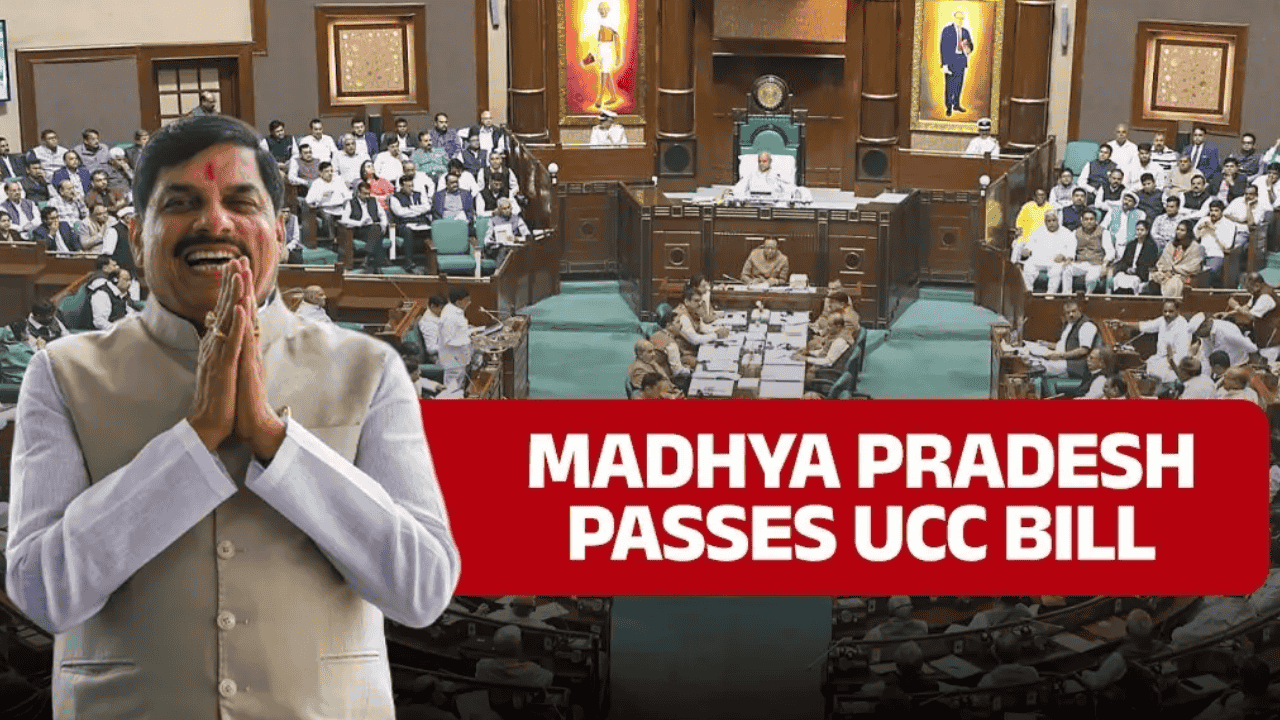
The Madhya Pradesh Legislative Assembly achieved a significant legislative milestone on July 21, 2026, by passing the Madhya Pradesh Uniform Civil Code (UCC) Bill, 2026, via a voice vote. Introduced on the opening day of the monsoon session by Technical Education, Skill Development, and Employment Minister Gautam Tetwal, the bill was cleared following a stormy two-hour debate punctuated by multiple house adjournments. This development marks the fourth instance of a state-level civil code enactment in post-independence India, positioning Madhya Pradesh alongside Uttarakhand, Gujarat, and Assam in a progressive effort to replace religion-specific personal laws with a unified civil framework.
The passage of this bill is a critical subject for those tracking UPSC current affairs, as it demonstrates a decentralized, state-led strategy to implement Article 44 of the Directive Principles of State Policy (DPSP). This state-by-state execution highlights how regional administrations are navigating the complex balance between national integration and local socio-cultural diversity.
The state cabinet, under the chairmanship of Chief Minister Mohan Yadav, initially cleared the draft during a special meeting held in the historic town of Jagdishpur (formerly known as Islam Nagar) on July 19, 2026. The choice of venue was highly symbolic, representing a conscious legislative transition away from historical religious divisions toward a standardized, secular civil code.
Historical Context and the Ranjana Desai Committee
The foundation of the Madhya Pradesh Uniform Civil Code Bill, 2026, rests on the extensive work of a six-member expert committee constituted by the state government on April 27, 2026. The panel was chaired by retired Supreme Court Judge Justice Ranjana Prakash Desai and included key administrative and legal figures, notably Gopal Sharma, Budhpal Singh, Shobha Paithankar, former Chief Secretary of Uttarakhand Shatrughan Singh, Anoop Nair, and member secretary Ajay Katesaria (IAS).
Tasked with evaluating the existing civil and family laws across Madhya Pradesh while studying the operational models of Uttarakhand, Gujarat, and Assam, the committee carried out a major public consultation campaign. Over a two-month period, the panel collected 9.58 lakh individual written suggestions and recorded nearly 3 crore SMS responses.
The findings were compiled into a comprehensive three-volume report submitted to the Chief Minister on July 13, 2026:
Volume I: Contains the primary recommendations across ten dedicated chapters, analyzing the interface of international, national, and regional legal standards.
Volume II: Comprises the draft civil code, structured into four parts, 404 distinct sections, and seven schedules.
Volume III: Formulates a detailed quantitative analysis of the public feedback, cataloging responses by gender, geography, and religious community.
The statistical data extracted from the consultation reveals a significant divergence of opinion across demographic lines, particularly within minority groups, which is crucial for candidates preparing for daily GK update assessments.
Public Consultation Support Trends
The table below outlines the support percentages for the UCC implementation as documented by government records during the public consultation phase:
| Demographic Category | Total Submissions Recorded | Supported UCC Implementation | Percentage Support |
|---|---|---|---|
| All Male Respondents | 5,50,000 | 5,10,000 | 92.00% |
| All Female Respondents | 4,00,000 | 3,80,000 | 95.00% |
| Hindu Male Respondents | 5,20,000 | 4,90,000 | 94.23% |
| Hindu Female Respondents | 3,70,000 | 3,60,000 | 97.30% |
| Muslim Female Respondents | 15,000 | 10,500 | 70.00% |
| Muslim Male Respondents | 29,000 | 11,000 | 37.93% |
| Transgender Respondents | 100 | N/A | N/A |
Note: Data derived from the high-level committee's official consultation reports. Additional claims by state leadership suggested overall public approval stood at 93.54%, with specific supportive sub-cohorts within the minority communities.
Detailed Legislative Analysis of the 2026 Act
The Madhya Pradesh Uniform Civil Code, 2026, introduces systemic changes to personal rights, property division, and cohabitation standards. The provisions aim to establish equality before the law while eliminating gender-discriminatory practices.
Marriage, Matrimonial Dissolution, and Custody Standards
The act establishes monogamy as the absolute legal norm across all communities, declaring that a person may only be married to one living spouse at any given time.
Age Thresholds: The minimum age of marriage is strictly fixed at 18 years for women and 21 years for men.
Prohibition of Exploitative Practices: Traditional, non-statutory matrimonial practices such as triple talaq and nikah halala are completely criminalized. Forcing or promoting conditions of nikah halala to remarry a divorced spouse is treated as a punishable criminal offense.
Compulsory Registration: Both marriages and divorces must be officially registered. In urban regions, this is processed through the MP e-Nagarpalika Portal, whereas in rural districts, the authority is delegated to Sub-Divisional Magistrates (SDMs), municipalities, or panchayats. Informal divorce declarations via community-level panchayats are declared legally void.
Child Custody Jurisprudence: The act mandates that in any custody dispute, the paramount consideration must be the best interests and overall well-being of the child, overriding any pre-existing customary parental rights.
Gender-Neutral Succession and Child Legitimacy
In a major departure from religion-based inheritance laws, the 2026 Act ensures comprehensive gender parity in property devolution:
Equality in Coparcenary and Inheritance: Sons and daughters hold equal rights to inherit property, regardless of their marital status. Widows and widowers are also granted equal inheritance rights over the estate of a deceased spouse.
Class-I Heir Status for Parents: In an unprecedented change to succession rules, both the surviving mother and father are designated as Class-I heirs. This entitles them to an equal share of their deceased child's property alongside the surviving spouse and children.
Abolition of Legal Bastardy: The act formally deletes the term "illegitimate" from all state legal frameworks. Children born of married or unmarried parents—whether biological, adopted, or born through surrogacy or Assisted Reproductive Technology (ART)—receive equal legal status and inheritance rights.
Murderer Disqualification Clause: Any person convicted of murdering or abetting the murder of a relative is automatically disqualified from inheriting that relative's property.
Strict Codification and Surveillance of Live-in Relationships
The bill introduces detailed administrative mechanisms to regulate non-marital cohabitation, reflecting a growing legislative effort to institutionalize live-in relationships:
Mandatory Filing of Declaration: Partners cohabiting in a live-in relationship must submit a formal "Statement of Live-in Relationship" to the local registrar within one month of starting their joint residency.
Parental and Police Intervention: If either partner in the live-in relationship is under 21 years of age, the registrar is legally required to forward details of the commencement or termination of the relationship to their parents or guardians. Additionally, these records are shared with the local police station, a provision that has raised privacy concerns.
Provisions for Abandonment: If a male partner deserts his live-in partner, the woman is legally entitled to claim maintenance through a competent court under the same parameters as a legally wedded wife.
Matrimonial and Cohabitation Penalties under the 2026 Act
To ensure strict compliance with the new rules, the state has established a clear scale of penalties:
| Nature of Offense / Violation | Maximum Term of Imprisonment | Maximum Financial Penalty (INR) | Relevant Act Provisions |
|---|---|---|---|
Cohabitation exceeding one month without submitting a live-in declaration [cite: 4, 6] | Up to 3 months | Up to ₹10,000 | Mandatory cohabitation registration enforcement |
Providing false or misleading details in the live-in relationship declaration [cite: 12, 16] | Up to 3 months | Up to ₹25,000 | Prevention of fraudulent identity declarations |
Failure to submit cohabitation details after receiving an official notice from the Registrar [cite: 12, 16] | Up to 6 months | Up to ₹25,000 | Direct non-compliance with administrative notices |
Securing consent for a live-in relationship through coercion, fraud, or force [cite: 4] | Up to 5 years | Discretionary fine | Criminal protection of personal autonomy |
Entering into a live-in relationship while legally married with a living spouse [cite: 4, 17] | Up to 5 years | Discretionary fine | Suppression of bigamy under the cover of cohabitation |
Live-in relationship involving a minor under 18 years of age [cite: 4] | Strictly governed by POCSO Act penal limits | Deferential to POCSO Act standards | Mandatory protection of minors |
Comparative Matrix of State-Level UCC Enactments
The passing of the Madhya Pradesh UCC highlights a growing trend where individual states are taking the initiative on civil law reform. Although these state-level bills share similar principles, they show subtle differences in how they handle regional customs and enforce compliance.
For candidates analyzing this topic for competitive exam news today, the table below compares the key features of the four enacted UCC state laws:
| State & Passage Year | Mandatory Live-in Registration | Tribal Populations Exemption | Bigamy / Polygamy Penal Limits | Unique State Provisions |
|---|---|---|---|---|
Uttarakhand (2024) [cite: 8] | Yes; registration required within 30 days | Scheduled Tribes under Article 342 are exempted | Handled under general bigamy rules in the Indian Penal Code | First state to pass UCC; set the framework for subsequent legislation |
Gujarat (2026) [cite: 22] | Yes; includes rules for formal relationship termination | Scheduled Tribes and groups with customary protections are exempted | Strictly prohibited across all communities | Features specific parameters for assets in joint cohabitation |
Assam (2026) [cite: 6] | Yes; must register within 30 days | Scheduled Tribes are exempted | Bigamy/polygamy punishable with up to 7 years in prison | Includes expanded grounds for divorce, such as a spouse having prior multiple wives |
Madhya Pradesh (2026) [cite: 2, 3] | Yes; registry records shared with local police | Scheduled Tribes under Articles 342 and 366(25) are exempted | Bigamy is prohibited; includes up to 5 years in prison for cohabitation while married | Mother and father are classified as equal Class-I heirs; removes "illegitimate" from law |
Constitutional Dimensions and the Exemption of Scheduled Tribes
A key feature of the Madhya Pradesh UCC Bill, 2026, is the explicit exemption of Scheduled Tribes (STs) from its provisions, a detail highly relevant to Atharva Examwise current news readers studying tribal governance. Scheduled Tribes make up about 21% of the state's population—totaling approximately 1.53 crore citizens across 45 distinct tribal groups, including the Bhil, Gond, Korku, Baiga, Sahariya, and Bharia.
The exemption is grounded in several constitutional protections:
Articles 342 and 366(25): These articles provide constitutional definitions and safeguards for Scheduled Tribes, shielding their customary laws from general civil legislation.
Part XXI Protection: Communities whose traditional and cultural rights are protected under Part XXI of the Constitution (containing temporary, transitional, and special provisions) are exempted from the code.
Preserving Cultural Identity: Cabinet Ministers and BJP leaders defended the exclusion of tribal populations by emphasizing that Adivasi custom-driven practices in marriage, divorce, and property division are protected constitutional rights that should not be disrupted by a uniform civil framework.
Key Constitutional Concerns Raised by Opponents
Violation of Article 25 and 26: Opposition legislators argued that the UCC directly interferes with religious personal laws, which they view as protected aspects of the right to freely profess, practice, and propagate religion.
Infringement of Article 29: Critics, including senior MLA Arif Masood, argued that the bill violates Article 29 of the Constitution, which guarantees minority groups the right to conserve their distinct language, script, or culture. They questioned the conceptual consistency of a code that claims to be "uniform" while exempting more than one-fifth of the state's population.
Federalism and Legislative Priority: The opposition also raised concerns about federalism, arguing that a state assembly should not rush to pass local civil codes while the national UCC remains under review by the Law Commission of India. Additionally, leaders of the opposition argued that resolving the long-pending issue of 27% reservation for Other Backward Classes (OBCs) should have taken priority over passing the UCC.
Historical Debate and Judicial Journey of Article 44
For civil services candidates, analyzing the UCC requires a solid understanding of its historical origin in the Constituent Assembly and the subsequent rulings of the Supreme Court of India.
Constituent Assembly Debates on Draft Article 35
The proposal for a uniform civil code was originally debated as Draft Article 35 in 1948. The assembly witnessed an intense debate that reflected deep-seated differences over secularism and minority identity:
The Dissenting Minority View: Muslim representatives, including Mohamad Ismail Sahib, Naziruddin Ahmad, and Pocker Sahib Bahadur, strongly opposed the article. They argued that personal laws are inextricably linked to religious identity. They warned that imposing a uniform code without the consent of minority communities would create social friction and violate religious freedom.
The Proponents' Defense: K.M. Munshi argued that a uniform civil code is essential for national unity and secularism, asserting that civil matters like inheritance and marriage are secular activities that should be separated from religion. Alladi Krishnaswami Aiyar supported this view, stating that a common civil code would foster social harmony and national integration.
Dr. B.R. Ambedkar's Balanced Approach: Dr. B.R. Ambedkar supported the long-term goal of a UCC but advocated for a gradual, voluntary approach. He assured the assembly that the code would initially be voluntary, allowing citizens to opt in, thereby giving communities time to accept the reforms. This compromise led to the UCC being placed in the non-justiciable Directive Principles of State Policy as Article 44.
Landmark Supreme Court Jurisprudence on Article 44
The judiciary has played a key role in kept the UCC debate alive through several landmark judgments:
Mohd. Ahmed Khan v. Shah Bano Begum (1985): In this landmark case, a 73-year-old divorced Muslim woman sought maintenance from her husband under Section 125 of the Code of Criminal Procedure (CrPC). The Supreme Court ruled in her favor, declaring that Section 125 is a secular, welfare-oriented law that overrides personal laws. The court expressed regret that Article 44 had remained a "dead letter" and urged the state to implement a UCC to promote national integration.
Sarla Mudgal v. Union of India (1995): The Court addressed the issue of a Hindu husband converting to Islam solely to contract a second marriage without legally dissolving his first marriage. The Supreme Court ruled such marriages invalid under Section 494 of the Indian Penal Code (IPC) and emphasized that a UCC is necessary to prevent the misuse of personal laws.
John Vallamattom v. Union of India (2003): A Christian priest challenged Section 118 of the Indian Succession Act, which restricted Christians from donating property for charitable purposes through a will. The Supreme Court struck down the provision as unconstitutional and reiterated that a uniform civil code would help eliminate discriminatory inequalities in personal laws.
Shayara Bano v. Union of India (2017): The Supreme Court declared the practice of instant triple talaq (talaq-e-biddat) unconstitutional. The ruling reinforced that gender equality, dignity, and constitutional morality take precedence over discriminatory customary practices.
Why this matters for your exam preparation
For candidates preparing for the Civil Services Examination, the passage of the Madhya Pradesh Uniform Civil Code Bill, 2026, is a highly relevant topic across multiple papers of the UPSC syllabus:
General Studies Paper II: Polity, Constitution, and Governance
Directive Principles of State Policy (DPSPs) vs. Fundamental Rights: This topic provides an excellent case study on the ongoing debate between Article 44 (DPSP) and Articles 25-26 (Freedom of Religion). Candidates should be prepared to analyze how the judiciary balances religious freedom with gender justice and equality before the law.
Federalism and State-Led Legislation: Since marriage, divorce, and succession fall under Entry 5 of the Concurrent List, states have the authority to enact local civil codes. Aspirants should evaluate the constitutional implications of having varied state-level civil codes instead of a single, country-wide framework.
Tribal Governance and Special Protections: The exemption of Scheduled Tribes under Articles 342 and 366(25) is a highly testable topic for the Prelims exam. Candidates should study the interactions between the UCC, Fifth and Sixth Schedule areas, and tribal customary rights.
General Studies Paper I: Indian Society and Social Issues
Secularism and Pluralism: This development offers rich material for essays and answers on Indian secularism. Candidates can discuss whether a common civil code promotes national integration or leads to cultural homogenization.
Gender Justice and Women's Rights: The bill's focus on equal inheritance, child legitimacy, and legal protections for women in live-in relationships serves as a strong example of legal reforms aimed at empowering women.
General Studies Paper IV: Ethics and Human Interface
Social Morality vs. Constitutional Morality: The state's decision to regulate, register, and penalize non-compliance in private, consensual live-in relationships presents an interesting ethical debate. Candidates can discuss the ethical boundaries of state intervention in the private lives of adult citizens under the guise of public morality and social security.