
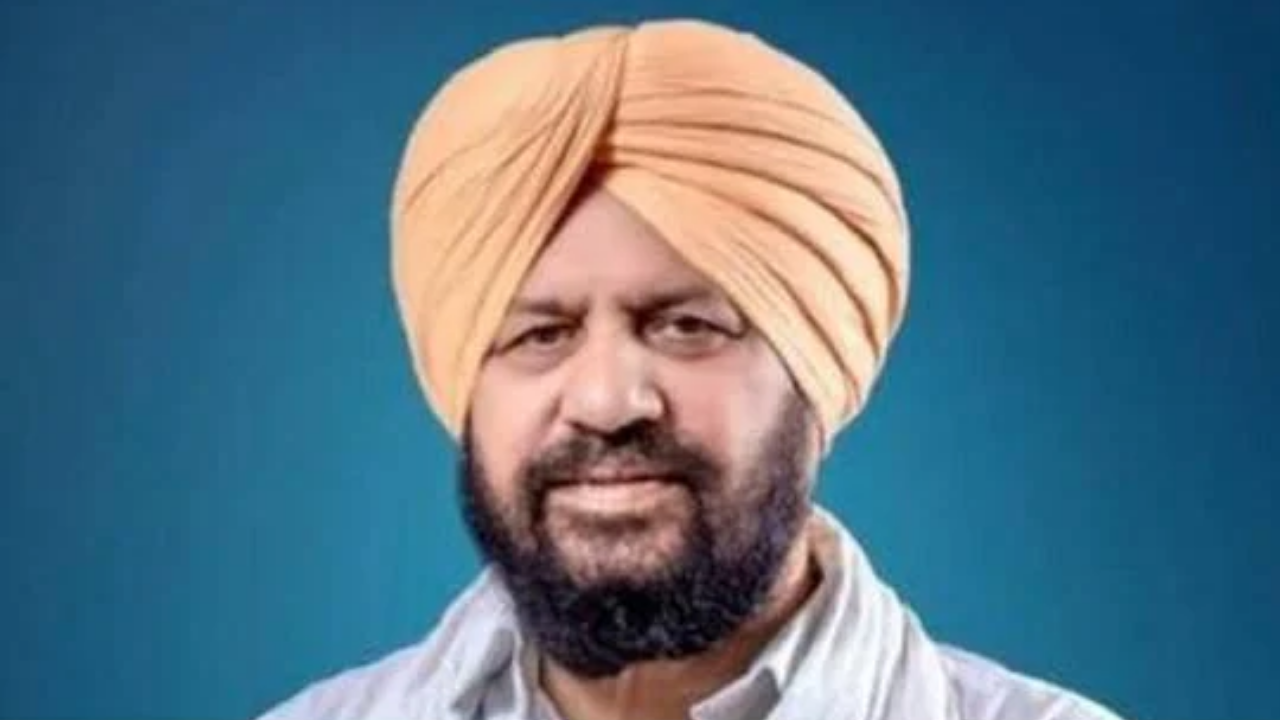
UPSC Current Affairs July 18, 2026 | Daily GK Update: Harjit Singh Grewal Appointed National Commission for Minorities Chief
Context and Key Appointments in the National Commission for Minorities
In a highly significant administrative development, the Union Government has officially appointed senior leader Harjit Singh Grewal as the Chairperson of the National Commission for Minorities (NCM). This crucial appointment, notified by the Ministry of Minority Affairs, successfully fills the statutory body's top post, which had remained vacant since April 2025 following the completion of the tenure of the previous head, Iqbal Singh Lalpura. Grewal’s ascension marks a historic trend as the second successive Sikh leader to head the statutory body.
Alongside the Chairperson, the official notification announced the appointment of S. Munawari Begum as the Commission's Vice-Chairperson, alongside Glenn E. Souza Ticlo, who has been inducted as a member. S. Munawari Begum, previously nominated as an NCM member, represents the Muslim community, while Glenn E. Souza Ticlo represents the Christian community, thereby preserving the plural and multi-faith character of the panel.
All three appointments have been sanctioned for a fixed tenure of three years from the date they assume office or until further orders. With these new inductions, the Commission’s active working strength rises to four members against its total sanctioned strength of seven, which includes a Chairperson, a Vice-Chairperson, and five members. The fourth active member is Berjis Desai, who was nominated in March 2026 to represent the Parsi community.
Profile and Political Trajectory of Harjit Singh Grewal
Harjit Singh Grewal is a veteran leader with deep roots in Punjab’s socio-political landscape. Hailing from Dhanaula in Barnala—the home district of Punjab state BJP President Kewal Singh Dhillon—the 69-year-old leader rose through the ranks of the Sangh Parivar, establishing himself as one of the party's most steadfast loyalists in the region.
Over his thirty-year political career, Grewal has held several key organizational positions. He served as the state general secretary and vice-president of the Punjab BJP, national secretary of the central party, and vice-president of the BJP Kisan Morcha. Beyond party organization, he has occupied notable public offices, including serving as the chairman of the Punjab Khadi and Village Industries Board (2013–2017), chairman of the Punjab Forest Development Corporation, and vice-chairman of the National Agricultural Cooperative Marketing Federation of India (NACOF).
Grewal’s political resilience was particularly tested during the prolonged agricultural agitations of 2020–21. While many local leaders chose to keep a low profile, Grewal consistently championed the central government's policy stand on national television debates and public forums. This unwavering alignment exposed him to severe local backlash, including social boycotts by village panchayats, damage to his family’s standing crops in Dhanaula, and a high-profile incident in 2021 where police had to evacuate him from a Patiala bakery during a massive protest.
Despite these challenges, Grewal remained an active voice on national security and regional agrarian affairs. He openly criticized irresponsible regional remarks, as demonstrated in 2024 when he publicly admonished party MP Kangana Ranaut for her comments on protesting farmers, asserting that legislative representation requires political maturity. Having recently recovered from temporary health challenges, Grewal’s appointment is widely viewed by political observers as a strategic move ahead of the 2027 Punjab Assembly elections to reinforce regional representation in national federal institutions.
Historical Evolution of Minority Watchdog Bodies in India
The institutional framework designed to safeguard minority rights in independent India has transitioned from an executive arrangement to a robust statutory model. This structural evolution is crucial for understanding how the state has progressively formalized its commitment to secular integration.
Chronology of Institutional Safeguards
| Year | Milestone | Legal & Administrative Implications |
|---|---|---|
| 1978 | Executive Resolution | The Ministry of Home Affairs sets up the "Minorities Commission" as a non-statutory advisory body to address minority insecurity. |
| 1984 | Administrative Realignment | The Commission is detached from the Ministry of Home Affairs and placed under the Ministry of Welfare to focus on social empowerment. |
| 1988 | Linguistic Decoupling | The Ministry of Welfare amends the original resolution, excluding linguistic minorities from the Commission’s jurisdiction. |
| 1992 | Legislative Enactment | Parliament passes the National Commission for Minorities Act, 1992, elevating it to a statutory body. |
| 1993 | Formal Commissioning | The first statutory National Commission for Minorities is constituted under the chairmanship of Justice Mohd. Sardar Ali Khan. |
| 2006 | Dedicated Ministry | Administrative oversight of the NCM is transferred to the newly established Ministry of Minority Affairs. |
To analyze how these institutional frameworks correlate with wider national infrastructure and social development allocations, candidates can refer to the Atharva Examwise Analysis of the Rs 2.19 Lakh Crore CCEA Infrastructure Package.
Constitutional Provisions and the Legislative Definition of Minorities
The term "minority" is not explicitly defined anywhere in the Constitution of India. Instead, the legal and operational definition of a minority is derived from Section 2(c) of the National Commission for Minorities Act, 1992, which defines a minority as "a community notified as such by the Central Government".
Currently, there are six religious minority communities notified by the Central Government at the national level. In October 1993, the Ministry of Welfare notified five religious groups: Muslims, Christians, Sikhs, Buddhists, and Zoroastrians (Parsis). Later, in January 2014, the Union Cabinet formally approved the inclusion of Jains as the sixth notified minority community.
Census Demographics of Notified Minorities in India
The demographic weights of these notified groups, according to official census records, dictate the targeted reach of the welfare schemes monitored by the NCM:
| Notified Minority Community | Population (in Crores) | Percentage of Total National Population (%) |
|---|---|---|
| Muslims | 17.22 | 14.20% |
| Christians | 2.78 | 2.30% |
| Sikhs | 2.08 | 1.70% |
| Buddhists | 0.84 | 0.70% |
| Jains | 0.45 | 0.40% |
| Zoroastrians (Parsis) | ~0.0057 (57,000) | 0.006% |
| Total Notified Minority Population | ~23.41 | ~19.30% |
To study how target-group demographics influence state-level governance and policy outcomes, candidates should check the Atharva Examwise Sports Policy and Lord's Test Victory Analysis.
Article 29 versus Article 30: The Cultural and Educational Dichotomy
The fundamental rights enshrined in Part III of the Constitution guarantee distinct protections to these minority communities:
Article 29 (Protection of interests of minorities): Under Clause (1), "any section of the citizens" residing in India with a distinct language, script, or culture has the right to conserve the same. Crucially, the Supreme Court has ruled that Article 29 is not restricted to minorities alone, as the term "any section of the citizens" includes both minorities and the majority community. Clause (2) guarantees that no citizen shall be denied admission into any state-funded or state-aided educational institution on grounds only of religion, race, caste, or language.
Article 30 (Right of minorities to establish and administer educational institutions): Under Clause (1), all religious and linguistic minorities possess the fundamental right to establish and administer educational institutions "of their choice". Unlike Article 29, this right is strictly reserved for notified minorities. However, judicial precedents have established that this right is not absolute; the State can impose reasonable regulations to ensure academic excellence, hygiene, public order, and fair labor conditions for teaching staff.
Landmark Judicial Precedents: The State as the Unit of Determination
The geographical boundary within which a community is declared a "minority" has been a subject of intense constitutional litigation, culminating in landmark Supreme Court judgments that reinforce India's cooperative federal structure.
In Re: Kerala Education Bill (1957)
This landmark advisory opinion of the Supreme Court addressed the territorial unit for determining a minority. The Court rejected the argument that a minority must be determined in relation to a specific local area or municipality. It held that because the legislative competence of a state assembly extends only to the boundaries of that particular state, the minority status of a religious or linguistic community must be determined in relation to the population of the specific State concerned.
T.M.A. Pai Foundation v. State of Karnataka (2002)
An 11-judge Constitutional Bench of the Supreme Court conclusively settled the unit of determination for religious and linguistic minorities.
The State-Centric Ratio: The Court observed that since the reorganization of states in India was executed on linguistic lines (under the States Reorganisation Act, 1956), linguistic minorities must be determined state-wise.
Equating Religion and Language: Reasoning that Article 30(1) places religious and linguistic minorities on par, the Bench ruled that religious minorities must also be determined state-wise.
The Demography Rule: Consequently, a community that is numerically less than 50% of the population of a particular State is entitled to the status of a minority within that state, irrespective of its national demographic dominance. This has significant implications for states where Hindus are a numerical minority (such as Mizoram, Lakshadweep, or Punjab).
The Linguistic Minorities Exception: The Article 350B Framework
The administrative separation of religious and linguistic minorities is a key test of an aspirant's conceptual clarity. While religious minorities are governed by the statutory NCM, linguistic minorities fall under the purview of a dedicated constitutional officer.
The Commissioner for Linguistic Minorities (CLM)
Constitutional Origin: The Constitution of India, 1950, did not originally provide for a Special Officer for Linguistic Minorities. Following the recommendations of the States Reorganisation Commission, the 7th Constitutional Amendment Act, 1956 inserted Article 350B in Part XVII (Official Language).
Appointment & Structure: Under Article 350B(1), the Special Officer is appointed by the President of India. Unlike multi-member commissions, the CLM is a single-person constitutional post, with no qualifications or tenure specified in the Constitution.
Mandate: The officer is tasked with investigating all matters relating to the safeguards provided for linguistic minorities and reporting directly to the President.
Jurisdictional Limit: The CLM has no civil court powers, cannot issue binding instructions, and relies on administrative liaison with state-appointed nodal officers to resolve grievances.
Structural Comparison: NCM vs. CLM
| Institutional Parameter | National Commission for Minorities (NCM) | Commissioner for Linguistic Minorities (CLM) |
|---|---|---|
| Legal Status | Statutory Body (NCM Act, 1992) | Constitutional Post (Article 350B) |
| Staffing Structure | Multi-member (Chairperson, Vice-Chairperson, 5 Members) | Single-person Officer |
| Appointing Authority | Central Government | President of India |
| Investigative Power | Vested with Civil Court powers under Section 9(4) | Lacks Civil Court powers; relies on voluntary state cooperation |
| Administrative Control | Ministry of Minority Affairs | Ministry of Minority Affairs |
Statutory Powers, Functions, and the Constitutional Status Debate
The National Commission for Minorities is vested with specific investigative and advisory powers, but its real-world impact is often constrained by structural limitations.
Quasi-Judicial Powers (Section 9(4) of the NCM Act, 1992)
While investigating complaints regarding the deprivation of rights and safeguards, the Commission has all the powers of a Civil Court trying a suit under the Code of Civil Procedure, 1908. This includes:
Summoning and enforcing the attendance of witnesses from any part of India.
Requiring the discovery and production of any public document or record.
Receiving evidence on affidavits.
Issuing commissions for the examination of witnesses or documents.
The Debate Over Constitutional Status
Despite these civil powers, the NCM has faced criticisms of institutional stagnation and symbolic relevance.
The Standing Committee’s Recommendation: The Standing Committee on Social Justice and Empowerment (2017–18), in its 53rd Report, observed that the NCM is "almost ineffective" in its current state to deal with cases of atrocities against minorities. The committee strongly recommended that the body be accorded constitutional status "without any delay".
Parity with NCSC & NCST: Proponents argue that constitutional status (similar to the NCSC under Article 338 or the NCST under Article 338A) would allow the NCM to penalize or suspend errant officials who do not attend hearings or comply with its orders, instead of relying on other departments to take action.
The Government's Response: The Ministry of Minority Affairs has consistently stated in Parliament (such as in December 2025) that the Commission is sufficiently empowered under the statutory Act of 1992, and there is no active proposal to make it a constitutional body.
Key Facts and Exam-Relevant Data
For quick revision and fact-retrieval, candidates should focus on the following high-yield details:
Statutory Act: The National Commission for Minorities was established under the National Commission for Minorities Act, 1992, and officially constituted on May 17, 1993.
Sanctioned Composition: The Commission is designed to have seven members (Chairperson, Vice-Chairperson, and five members), of whom at least five must belong to the notified minority communities.
The Six Notified Communities: Muslims, Christians, Sikhs, Buddhists, Zoroastrians (Parsis), and Jains (notified in 2014).
Constitutional Officer: The Special Officer for Linguistic Minorities is appointed by the President under Article 350B, which was introduced via the 7th Constitutional Amendment Act, 1956.
State as the Unit: The Supreme Court in the T.M.A. Pai Foundation case (2002) ruled that religious and linguistic minorities must be determined using the State as the basic unit of demographic calculation.
External Reference: For the official executive orders and nomination details of S. Munawari Begum and Berjis Desai, refer to the Gazette of India, Ministry of Minority Affairs Notification.
To compare these administrative parameters with macroeconomic indices such as inflation weight adjustments, candidates can study the Atharva Examwise Daily GK Update on CPI Inflation and Monetary Policy.
Why this matters for your exam preparation
For serious aspirants preparing for the Civil Services Examination, this update is critical for multiple sections of the syllabus:
General Studies Paper I: Social Empowerment
Questions in this paper frequently target the sociological challenges of marginalization, the preservation of pluralistic identities, and the demographic balance of notified communities. This administrative appointment provides context for analyzing how political representation in national bodies addresses regional alienation.
General Studies Paper II: Indian Constitution, Polity, and Governance
Statutory and Quasi-Judicial Bodies: This topic directly covers the roles, powers, and functional challenges of bodies like the NCM. You can use Grewal’s appointment to illustrate the impact of leadership vacancies on grievance redressal backlogs.
Constitutional Status Debate: Quoting the 53rd Report of the Standing Committee on Social Justice and Empowerment is an excellent way to score high marks in Mains when writing about the structural limits of non-constitutional bodies.
Judicial Review and Minority Rights: The state-centric ratio established by the 11-judge bench in T.M.A. Pai Foundation (2002) is a fundamental case law for any question on Article 29 and Article 30. Using this case law showcases a deep, nuanced understanding of the constitutional parity between religious and linguistic minority groups.