UPSC Current Affairs July 17, 2026: China Launches WAICO Alliance | Daily GK Update
UPSC Current Affairs July 17, 2026: China Launches WAICO Alliance | Daily GK Update
Meta Description: Track China's launch of the WAICO alliance to challenge the US-led Pax Silica. Explore key facts, India's AI stance, and essential UPSC current affairs.
Introduction to the Emerging Global AI Divide
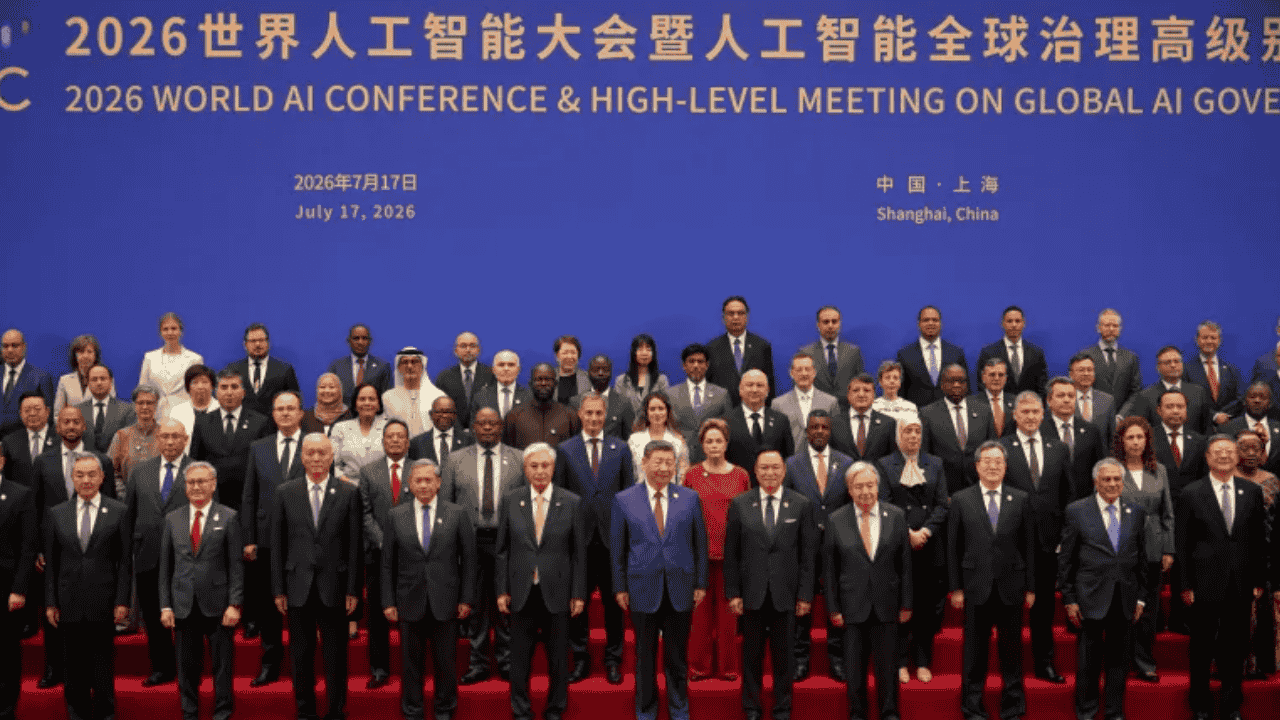
The global technological landscape is undergoing a profound structural fragmentation, shifting from open scientific collaboration to a polarized geopolitical rivalry. On July 16, 2026, on the sidelines of the World Artificial Intelligence Conference (WAIC) in Shanghai, 29 countries signed a foundational agreement establishing the World Artificial Intelligence Cooperation Organisation (WAICO). This intergovernmental alliance, spearheaded by Beijing, represents a calculated strategic move to construct a parallel global governance framework for artificial intelligence.
By positioning WAICO as a platform for the Global South, China is directly challenging the United States-led Pax Silica alliance—an initiative launched in late 2025 to secure critical mineral and semiconductor supply chains among Western allies and democratic partners, including India. For aspirants tracking UPSC Current Affairs, this technological "Cold War" represents a critical intersection of international relations (GS Paper 2) and science and technology policy (GS Paper 3).
What is WAICO: Origin, Membership, and Governance Structure
The establishment of WAICO represents a shift in China’s tech diplomacy. First proposed by Chinese Premier Li Qiang in July 2025, the organization has transitioned from a conceptual proposal into a formalized, independent intergovernmental body headquartered in Shanghai. The foundational agreement was signed by representatives of 29 nations, primarily representing the Global South and middle-income economies across Asia, Africa, Latin America, and Eastern Europe. Notably, United Nations Secretary-General Antonio Guterres attended the high-level signing ceremony, highlighting the organization’s ambition to shape multilateral policy at the UN level.
Membership and Structural Realities
The founding members of WAICO include key geopolitical actors that are increasingly looking to develop their digital sovereignty independent of Western corporations. However, the initial design of the organization leaves several critical administrative areas undefined.
| Parameter | Structural Details and Geopolitical Mapping |
|---|---|
| Lead Nation & Headquarters | China; headquartered in Shanghai. |
| Founding Members (29 Countries) | Asia (12 countries): China, Pakistan, Kazakhstan, Laos, Indonesia, Malaysia, Cambodia, Myanmar, Kyrgyzstan, Tajikistan, Uzbekistan, Oman.
Latin America: Brazil, Cuba, Venezuela, Nicaragua.
Europe/Eurasia: Russia, Belarus, Serbia.
Africa (10 countries): South Africa, Senegal, Algeria, Cameroon, Congo, Ethiopia, Kenya, Lesotho, Mozambique, Zambia. |
| Significant Gaps in Framework | The initial agreement has not disclosed details regarding the operational budget, voting procedures, precise powers of its governing bodies, or the exact timeline for the organization to reach full operational capacity. |
| Institutional Orientation | Formed as an independent intergovernmental organization focusing on AI cooperation in the civilian domain in an inclusive and non-discriminatory manner, anchored in the principles of the UN Charter. |
The complete absence of the United States, members of the European Union, Japan, South Korea, and India indicates a deliberate effort by Beijing to construct a coalition of nations that seek access to AI technologies without complete dependence on American proprietary models, cloud infrastructure, or Western export restrictions.
China's AI Diplomacy: Key Highlights of the WAIC 2026 Keynote
Addressing the opening ceremony of WAIC 2026 in Shanghai—marking his first in-person appearance at the event since its inception in 2018—Chinese President Xi Jinping delivered a speech framing China’s technology ecosystem as a global public good. Key highlights of this technology diplomacy strategy include:
Symphony vs. Solo Performance: Xi Jinping urged the international community to embrace the "historic opportunity" of open-source AI, declaring that AI development "should not be a solo performance by a single country, but a symphony of international cooperation". This was widely interpreted as an implicit critique of the United States’ aggressive use of unilateral export controls and technological blockades.
Rejection of National Security Overstretch: Xi strongly opposed "overstretching the national security concept" in the tech sector, arguing that such measures place the security of a single nation over the collective development of the global community.
Concrete Diplomatic Commitments: To incentivize developing nations to align with Beijing’s technological orbit, China announced several high-impact capacity-building initiatives:
AI Training Opportunities: China will provide 5,000 specialized AI training and seminar opportunities to developing countries over the next five years.
Regional Cooperation Centres: Dedicated AI application cooperation centres will be established in partnership with major regional groupings, including ASEAN, BRICS, the Shanghai Cooperation Organisation (SCO), the Arab League, and the African Union.
Disaster Prevention Tech: China plans to distribute its indigenous AI-based meteorological early-warning system, "Matsu" (妈祖), to 30 developing countries to enhance climate resilience and disaster response.
Multilateral Alignments: Pakistan and China reaffirmed their commitment to digital cooperation, expanding CPEC 2.0 to include trade, investment, the digital economy, and artificial intelligence under the WAICO framework.
Geopolitical Undercurrents: The "Chip War" and the Rise of Pax Silica
To understand the strategic significance of WAICO, it must be analyzed as a direct response to the United States-led Pax Silica initiative. Launched in December 2025 by the US Department of State under Under Secretary for Economic Affairs Jacob Helberg, Pax Silica is Washington's flagship economic-security framework for the AI era.
Core Philosophy of Pax Silica
Unlike traditional diplomatic agreements that focus solely on the software layer of AI, Pax Silica is built on the premise that technological supremacy in the 21st century is determined by the physical "silicon stack". This stack encompasses:
Upstream Inputs: Access to and processing of critical minerals (lithium, cobalt, nickel) and quartz required for semiconductor fabrication.
Manufacturing Physicality: Advanced semiconductor fabrication plants (fabs) and logistics networks.
Computing Infrastructure: Energy infrastructure and high-performance data centres to train and deploy frontier AI models.
Pax Silica now counts 24 formal signatories, including Japan, South Korea, India, Australia, the United Kingdom, Singapore, the Philippines, and several European Union member states. A prominent operational centerpiece of this alliance is a planned 1,600-hectare "AI-native" industrial hub in New Clark City, Philippines, backed by American capital and anchored by Foxconn, which leverages the country's extensive unrefined nickel and copper reserves.
However, this hub has faced local sovereignty challenges, with Philippine farmer groups protesting agricultural land displacement and negotiators debating whether the site will operate under American common law with diplomatic immunity for US personnel.
Comparative Matrix of Global AI Blocs
The technological race between the two powers is characterized by distinct strategies, strengths, and geographical focuses. Refer to the Atharva Examwise Daily GK Update for regular international relations briefs of this nature.
| Feature | World Artificial Intelligence Cooperation Organisation (WAICO) | Pax Silica Initiative |
|---|---|---|
| Lead Nation | China | United States |
| Founding Date | July 16, 2026 | December 12, 2025 |
| Headquarters/Hub | Shanghai, China | Washington, D.C. (Coordinated via US State Dept) |
| Core Strategy | Proposes open-source, low-cost AI infrastructure as a global public good; leverages Global South alignment to set UN policies. | Establishes "trusted interdependence" in hardware supply chains (minerals, fabs, compute) among democratic allies to bypass China. |
| Key Technological Strengths | Abundant cheap electricity (generating twice as much as the US); dominance in processing critical rare earth minerals; massive data centre capacity. | Global dominance in cutting-edge semiconductor design; control of proprietary frontier models (OpenAI, Anthropic); advanced private-sector innovation capital. |
| Recent Tech Milestones | Startup Moonshot AI unveiled Kimi K3, the world's largest open-source model, trailing only proprietary Western giants in raw performance. | Silicon supply-chain credentialing pilot launched in Panama; Foundry School curriculum developed with Stanford University. |
| Regulatory Philosophy | State-centric technology governance; strictly opposes Western unilateral export blockades. | Pro-innovation, market-driven regulations; uses targeted export controls on physical chips and cloud infrastructure. |
India's Balanced Technological Diplomacy
India’s positioning in this emerging tech-bipolarity is characterized by a "dual-track" strategy. While New Delhi has formally aligned with the US-led Pax Silica framework to secure its hardware supply chains, it maintains a highly independent domestic and multilateral policy structured around its own sovereign interests, promoting the concept of "AI for All". This dual approach is highly relevant for GS Paper 3, as detailed in the competitive exam news today portal.
┌────────────────────────────────────────┐ │ INDIA'S DUAL-TRACK TECH DIPLOMACY │ └───────────────────┬────────────────────┘ │ ┌────────────────────────┴────────────────────────┐ ▼ ▼ ┌──────────────────────────┐ ┌──────────────────────────┐ │ PAX SILICA ALIGNMENT │ │ SOVEREIGN "AI FOR ALL" │ │ (Hardware & Supply Chain)│ │ (Domestic & Regulatory) │ └────────────┬─────────────┘ └────────────┬─────────────┘ │ │ ├─ Join Pax Silica (Feb 2026) ├─ Seven Sutras Framework ├─ India-US AI Opportunity ├─ IndiaAI Mission (38k+ GPUs) ├─ $15B Vizag Gigawatt Hub ├─ AIKosh (9,500+ Datasets) └─ Critical Minerals Mission └─ AIGEG, TPEC & AISI Setup [cite: 31, 33]
Alignment with Pax Silica
India formally joined the Pax Silica coalition on February 20, 2026, on the sidelines of the India AI Impact Summit in New Delhi. Concurrently, the Ministry of Electronics and Information Technology (MeitY) signed the India-U.S. AI Opportunity Partnership as a bilateral addendum. This partnership focuses on:
Co-investing in next-generation, green-energy-powered data centres.
Deepening research and development in critical mineral processing to reduce import dependence on China through partnerships like the Belgian Silox Group and N.A.N. GreenMet.
Enhancing Indian access to advanced high-performance GPUs and processors, moving past the restrictions of the US AI diffusion rule.
Fostering massive private-sector momentum, highlighted by Google’s $15 billion investment plan to establish a gigawatt-scale AI hub in Visakhapatnam.
Domestic Regulatory Framework: The "Seven Sutras"
Rather than adopting the European Union's compliance-heavy, high-risk classification model, India has pioneered a "light-touch," principle-based, and techno-legal framework. This philosophy is codified in the India AI Governance Guidelines issued by MeitY, anchored in Seven Sutras:
Trust is the Foundation: Reconciling public and commercial trust to accelerate safe technology adoption.
People First: Centering human dignity, human oversight, and empowerment over algorithmic autonomy.
Innovation over Restraint: Prioritizing responsible experimentation and avoiding over-regulation that stalls economic growth.
Fairness & Equity: Designing systems that identify and eliminate systemic biases, with a focus on caste, gender, and linguistic inclusion.
Accountability: Establishing a graded liability system across the AI value chain (differentiating developers, deployers, and users).
Understandable by Design: Ensuring structural transparency and explainability in algorithmic decision-making.
Safety, Resilience & Sustainability: Developing energy-efficient, lightweight models resilient to external disruptions and environmental degradation.
Institutional Setup and Sovereign Compute
To operationalize this strategy, India has established a three-tier institutional setup under MeitY to ensure unified oversight:
AI Governance and Economic Group (AIGEG): An inter-ministerial apex body chaired by the Minister of MeitY. It aligns technology policy with trade, security, and labor concerns, preventing regulatory overlap and conducting workforce foresight.
Technology & Policy Expert Committee (TPEC): A specialized advisory committee comprising scientists, legal scholars, and public policy experts tasked with briefing the AIGEG on emerging risks.
India AI Safety Institute (AISI): The technical anchor responsible for drafting safety testing standards, performing red-teaming exercises, and coordinating international safety protocols.
Furthermore, under the ₹10,000 crore IndiaAI Mission, India is aggressively building domestic hardware capabilities. The mission has already onboarded over 38,000 GPUs to the IndiaAI Compute Portal (targeting a final capacity of 100,000) and launched AIKosh, a national data-sharing platform hosting thousands of localized datasets to train indigenous, culturally representative models.
For similar structural breakdowns of national missions, refer to the Atharva Examwise Current Affairs Compilation.
Why this matters for your exam preparation
For serious UPSC and competitive exam aspirants, the emergence of WAICO and the parallel solidification of Pax Silica is not merely a tech news event; it is a foundational shift in global geopolitics and technology governance. The following pointers detail how to apply this topic across the papers of the Civil Services Examination:
GS Paper 2: International Relations (IR)
Bilateral and Global Groupings: Analyze the shift from traditional multilateral forums to "bifurcated technocratic alliances" (Pax Silica vs. WAICO). Be prepared to write on how this technological "Cold War" forces middle-power nations into strategic dilemmas.
Effect of Policies of Developed Countries on India: Evaluate how US semiconductor export controls and China’s retaliatory mineral export bans affect India’s domestic manufacturing capabilities, such as the India Semiconductor Mission.
Global South Leadership: Analyze China’s use of "AI Diplomacy" (such as offering 5,000 training slots and the "Matsu" weather tool) as a tool to gain soft power and challenge Western hegemony at the United Nations.
GS Paper 3: Science and Technology (S&T) & Economy
Sovereign Infrastructure Projects: Understand the operational components of the IndiaAI Mission, including the target of 100,000 GPUs, the role of AIKosh, and the National Supercomputing Mission (AIRAWAT and PARAM Siddhi-AI).
Regulatory and Ethical Frameworks: Compare India’s Seven Sutras techno-legal approach with the EU's draft regulations and the US’s private-sector-led model. Explain how the AIGEG prevents regulatory overlap across ministries.
Domestic Applications: Learn how India is driving AI deployment through initiatives like the IndiaAI Innovation Challenge 2026 (partnering with the Ministry of AYUSH and MSME) and the YUVA AI educational initiative to skill one crore citizens via iGOT Karmayogi.
Practice Prelims Quick-Facts
WAICO: Formally signed on July 16, 2026, in Shanghai, consisting of 29 founding member states. India, the US, and EU members are not signatories.
Pax Silica: A US-led initiative focused on supply chain security across the full technology stack (silicon, minerals, fabs, compute). India is a signatory, having joined in February 2026.
Seven Sutras: Trust, People First, Innovation over Restraint, Fairness & Equity, Accountability, Understandable by Design, and Safety, Resilience & Sustainability. Used as the bedrock of India's AI Governance Guidelines.
Aspirants are highly encouraged to link these contemporary developments with their static notes on the Information Technology Act, international summits, and regional economic partnerships. For more daily conceptual updates, bookmark the UPSC Current Affairs syllabus page on Atharva Examwise.