
UPSC Current Affairs Today: India-Indonesia Rs 5,500 Crore Strategic MoUs and Sabang Port Accord | Daily GK Update
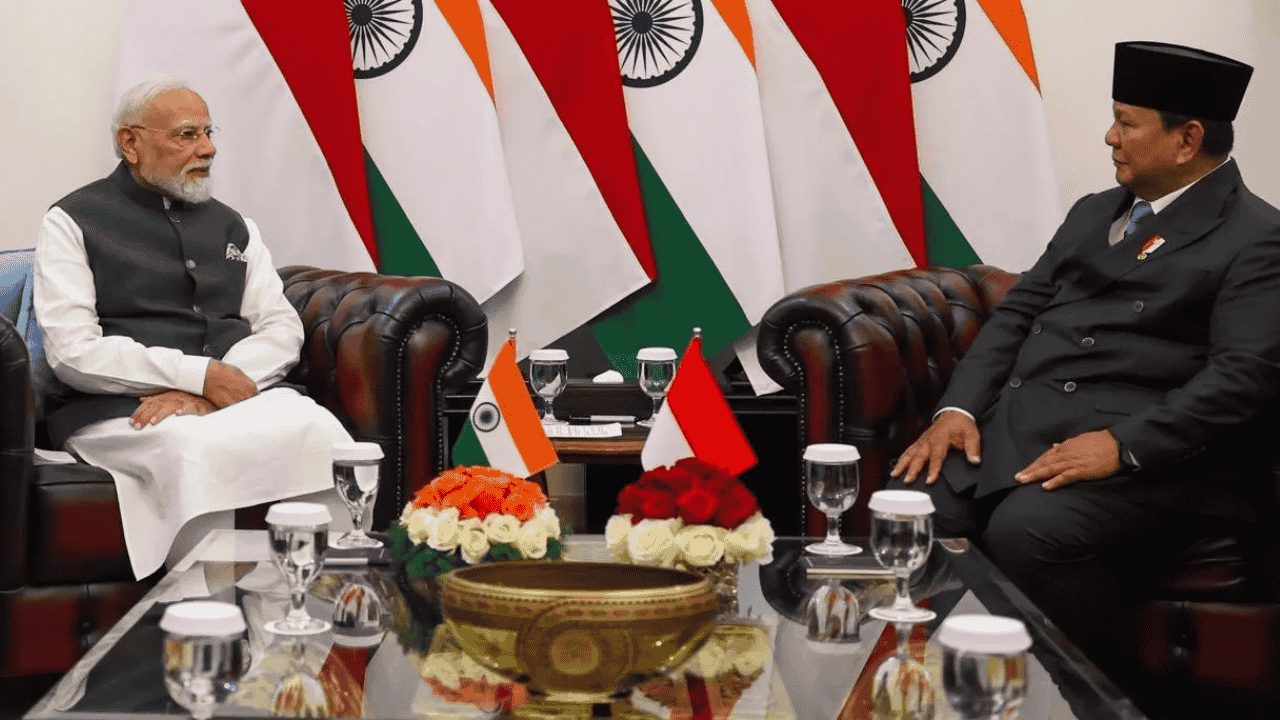
A major milestone in India’s maritime diplomacy unfolded as Prime Minister Narendra Modi embarked on a state visit to Jakarta, Indonesia, from July 6 to 8, 2026, at the personal invitation of President Prabowo Subianto. This high-profile visit marked the first bilateral summit between the two leaders since the elevation of the relationship to a Comprehensive Strategic Partnership in 2018. The diplomatic engagement culminated in the signing of 14 landmark agreements spanning defense industrial cooperation, maritime infrastructure, critical mineral supply chains, cross-border digital financial systems, and educational linkages.
During the bilateral summit, President Subianto conferred the Bintang Republik Indonesia Adipurna (Star of the Republic of Indonesia)—the nation’s highest civilian and military honour—upon Prime Minister Modi. Instituted in 1959, this prestigious decoration is reserved for those who have rendered exceptional service to the unity, stability, and national greatness of Indonesia. The honour underscores the deepening geopolitical trust and civilisational convergence between the two largest democracies in the Indo-Pacific region.
For a structured analysis of India's strategic ties in Southeast Asia, aspirants can access comprehensive study materials on the Atharva Examwise current news repository.
Historic Rs 5,500 Crore Defence Deal: BrahMos and Astra Missiles
The centerpiece of the bilateral engagement was a significant expansion of defense ties, highlighted by two major weapons export contracts estimated to be worth over $600 million (approximately Rs 5,500 crore). Under these agreements, India will supply Indonesia with two batteries of the BrahMos supersonic cruise missile system, valued at approximately $200 million. This deal makes Indonesia the third Southeast Asian nation to procure the BrahMos, following similar successful pacts with the Philippines and Vietnam.
Concurrently, a pioneering agreement was signed between state-run Bharat Dynamics Limited (BDL) and Indonesian defense holding firm Republikorp for the export of the indigenously developed Astra Mk-1 beyond-visual-range (BVR) air-to-air missile. The Astra Mk-1, which operates at speeds of up to Mach 4.5 with a target engagement range of 80 to 110 kilometers, will be integrated into the Indonesian Air Force's fleet of Russian-manufactured Sukhoi (Su-30 and Su-27) fighter aircraft.
[ Operation Sindoor (May 2025) ] Real-world combat proof for BrahMos and Astra Mk-1 in contested airspace │ ▼ [ Strategic Procurement Decision ] Indonesia selects battle-proven Indian missile systems over global competitors │ ▼ [ Hard-Power Security Export ] India arms Southeast Asian maritime partners to maintain regional balance
A critical analytical trend highlighted by these defense agreements is the direct impact of active combat validation on defense procurement decisions. Indonesian defense planners opted to procure the Astra and expand their BrahMos inventories following the proven operational performance of both systems during the Indian military's "Operation Sindoor" in May 2025. Operation Sindoor was an 88-hour high-intensity kinetic conflict triggered by a cross-border terrorist strike in Jammu and Kashmir, during which the Indian Air Force and Army utilized precision-guided weapons to neutralize hostile command infrastructure deep within Pakistan. The real-world combat success of these systems in penetrating layered airspace and destroying Pakistani assets established India as a competitive, reliable exporter of advanced military hardware under the Atmanirbhar Bharat framework.
| Feature | BrahMos Supersonic Cruise Missile | Astra Mk-1 BVR Missile |
|---|---|---|
| Type | Supersonic cruise missile (terrain-hugging profile) | Beyond-visual-range air-to-air missile (BVRAAM) |
| Joint Venture / Origin | DRDO (India) and NPOM (Russia) | Indigenously developed by DRDO |
| Speed | Mach 2.8 to 3.0 | Mach 4.5 |
| Operational Range | 290 km (upgraded variants up to 500 km) | 80 to 110 km (extended-range variants up to 160 km) |
| Platform Integration | Land-based launchers, naval warships, submarines, and Su-30MKI | Su-30 and Su-27 fighter aircraft fleets |
For additional scientific notes on India's missile defense systems, refer to the UPSC current affairs technological database.
Geopolitics of the Strait of Malacca: Joint Development of Sabang Port
The most geographically consequential outcome of the summit is the formal agreement to partner on the integrated development of the strategically located Sabang Port on Weh Island, situated off the northern tip of Sumatra, Indonesia.
[ Indira Point (Andaman & Nicobar) ] │ │ ~90 to 100 Nautical Miles │ (Critical Geostrategic Squeeze) │ ▼ [ Sabang Deepwater Port (Aceh) ] │ ▼ [ Strait of Malacca Entryway ] Controls 25% of global seaborne trade and 80% of East Asian crude imports
Strategic Value Beyond Commerce
Sabang Port sits at the western gateway of the Strait of Malacca, a critical global shipping corridor through which an estimated 25% of global seaborne trade and as much as 80% of China's crude oil imports transit each year. Geographically, Sabang is located only 150 km (approximately 90 to 100 nautical miles) from India's southernmost point, Indira Point, and the upcoming $9 billion Great Nicobar transshipment port project at Galathea Bay. Together, Great Nicobar on Indian territory and Sabang on Indonesian soil give New Delhi a persistent strategic presence on both flanks of the northern entrance of the strait.
This collaborative deep-water infrastructure project narrows the room for maneuver for foreign naval assets, particularly Chinese submarines and surface warships expanding their operations into the Indian Ocean. Sabang's deep-water access is well-suited to host large naval vessels and submarines, serving as a vital forward logistics and intelligence-sharing node for the Indian Navy. The integrated development plan encompasses cruise and marine tourism facilities, ship-repair services, shipbuilding industries, and shore-based facilities supporting offshore energy activities in the Andaman Sea.
Coast Guard and Intelligence Integration
To bolster this maritime buffer, the two countries extended their MoU on maritime safety and security, establishing deeper coordination in search and rescue, coast guard operations, and joint patrols. Crucially, Indonesia agreed to deploy an International Liaison Officer at India's Integrated Fusion Centre – Indian Ocean Region (IFC-IOR) in Gurugram, bridging the real-time maritime domain awareness networks of both countries.
| Parameter | Great Nicobar Island Project | Sabang Port Project |
|---|---|---|
| Sovereignty | Indian Territory (Andaman and Nicobar Command) | Indonesian Territory (Aceh Province) |
| Infrastructure Focus | Container transshipment terminal, dual-use military airport, township | Deep-water port, cruise/marine tourism, ship-repair, energy support |
| Primary Role | Sovereign forward military and commercial base at the western Malacca gateway | Collaborative deep-water logistics node on the southern flank of the Malacca Strait |
| Status | Environmental clearance granted; Phase I target completion by 2028 | Joint task force scope, implementation, and financing fast-tracked |
Economic, Technological, and Digital Public Infrastructure Synergies
Beyond traditional defense frameworks, the bilateral talks aligned India’s "Viksit Bharat 2047" vision with the "Indonesia Emas 2045" development roadmap across 14 key sectors:
Critical Minerals and Supply Chain Resilience: New Delhi will invest in the extraction and processing of nickel, steel, and rare-earth permanent magnets in Indonesia. This agreement, backed by a tripartite MoU between India's Non-Ferrous Materials Technology Development Centre (NFTDC), Midwest, and Indonesia's PT Perusahaan Mineral Nasional (PERMINAS), secures critical inputs for India’s domestic electric vehicle (EV) motors, wind turbines, and advanced electronics industries.
Steel Joint Venture: The Steel Authority of India Limited (SAIL) signed a strategic joint venture with Indonesia's state-backed PT Krakatau Steel to establish a major stainless-steel slab manufacturing facility in Indonesia.
Financial and Digital Connectivity: The Reserve Bank of India (RBI) and Bank Indonesia are fast-tracking a Cross-Border QR Payment Linkage, integrating India's Unified Payments Interface (UPI) with Indonesia's local payment networks. This will reduce transactional dependence on third-party reserve currencies like the US Dollar. Furthermore, Indonesia launched the "Indonesia Open Network" (ION), built on the architecture of India's Open Network for Digital Commerce (ONDC), designed to empower local MSMEs.
Democratic Infrastructure: The Election Commission of India (ECI) signed an MoU with Indonesia's KPU to share best practices and assist in developing customized, Indonesia-specific Electronic Voting Machines (EVMs), reflecting high confidence in India's electoral technology.
Civilisational Linkages, Education, and Soft Power Diplomacy
The summit demonstrated how India utilizes its civilisational history to project strategic influence throughout Southeast Asia:
[ Cultural & Educational MoUs ] │ ┌────────────────────────────┼────────────────────────────┐ ▼ ▼ ▼ [ Prambanan Temple ] [ IIMB Malang Campus ] [ Tagore-Dewantara Centenary ] ASI to conserve 10th- First global business Commemorates intellectual & century Shaivite monument hub in Singhasari SEZ educational legacy (1927-2027)
IIM Bangalore International Campus: Marking a significant step in the internationalisation of India's higher education under the National Education Policy (NEP) 2020, the Indian Institute of Management Bangalore will set up its first international campus at the Singhasari Special Economic Zone (SEZ) in Malang, Indonesia. The campus will offer programs focusing on Global Supply Chains, Digital Transformation, Artificial Intelligence, Climate and Sustainability, and Healthcare Management.
Prambanan Temple Conservation: India and Indonesia signed a Letter of Intent under which the Archaeological Survey of India (ASI) will assist in the conservation and restoration of the 10th-century Prambanan Temple Complex in Yogyakarta. As the largest Hindu temple compound dedicated to Shiva in Indonesia, it stands as a timeless symbol of shared heritage.
Tagore-Dewantara Cultural Centenary: The two nations announced the joint commemoration of the "Tagore–Dewantara Year of Cultural and Educational Diplomacy". This year-long initiative marks the centenary of Gurudev Rabindranath Tagore's historic 1927 visit to Indonesia, celebrating his influence on Ki Hajar Dewantara, Indonesia’s first Minister of Education and pioneer of its national school system.
Agricultural Food Security: In a direct move to support Indonesian food security, India will supply 100 tonnes of high-yield, climate-resilient DWR 162 wheat seeds directly to Indonesia.
Bilateral Warmth and Shared Governance: Highlighting the close political chemistry, President Prabowo Subianto noted during the state banquet that he has closely followed and "copied" many of India’s development programs, particularly in transforming arid land into productive permaculture, noting with humor that he was glad there was "no copyright" on successful governance models.
Bulleted Facts for Daily GK Update
For candidates keeping track of quick factual developments for upcoming competitive exams, the key takeaways from the summit include:
Bilateral Trade Target: The two countries resolved to expand bilateral trade beyond the current $25 billion to reflect the true scale of their respective economies.
Bintang Adipurna Award: Conferred upon PM Modi, this represents Indonesia's highest civilian honor.
First BVR Missile Export: Indonesia's purchase of the Astra Mk-1 marks the first international export of India's indigenous beyond-visual-range air-to-air missile.
Sabang-Nicobar Corridor: Geographically, only 150 km separates India’s Great Nicobar Island from Aceh province, establishing them as direct maritime neighbors.
Prambanan Restoration: Built in the 10th century and dedicated to Shiva, the Prambanan temple complex is a UNESCO World Heritage Site in Yogyakarta.
IIMB Malang Location: The first overseas campus of IIM Bangalore will be located in the Singhasari Special Economic Zone, Malang, East Java.
ION Network: The "Indonesia Open Network" is the first international digital commerce system modeled directly on India’s ONDC architecture.
Why this matters for your exam preparation
Understanding the multidimensional nature of these bilateral developments is essential for writing high-scoring analytical answers in the UPSC Civil Services Mains.
General Studies Paper II (International Relations)
Evolution of the "Act East" Policy: The transition from economic linkages to hard-power security partnerships indicates that India is emerging as a net security provider and defense industrial hub in Southeast Asia.
Strategic Autonomy and the Indo-Pacific: This partnership shows how middle powers like India and Indonesia are building resilient bilateral security corridors to navigate the intensifying US-China competition without choosing sides.
Civilisational and Soft Power Projection: The conservation of the Prambanan Temple and the Tagore-Dewantara Centenary are excellent examples of how India utilizes historical and cultural links to build long-term strategic goodwill.
General Studies Paper III (Security & Technology)
Defence Indigenisation as a Diplomatic Tool: The export contracts for BrahMos and Astra Mk-1 show how the Atmanirbhar Bharat initiative is helping India build strategic influence across the Global South.
Chokepoint Geopolitics: Candidates must be prepared to analyze how the dual development of Great Nicobar and Sabang Port creates a strategic bottleneck at the Strait of Malacca, directly addressing security challenges in the Indian Ocean Region.
Digital Public Infrastructure (DPI) Export: The integration of UPI-QRIS and the adoption of the ONDC architecture (via ION) serve as strong case studies on how India is exporting digital governance frameworks to developing markets.