
Atharva Examwise daily GK update: UPSC current affairs analysis of India-Indonesia Prambanan Temple restoration, Sabang Port deal, and bilateral ties.
The bilateral relationship between India and Indonesia reached a significant milestone during the high-level state visit of Indian Prime Minister Narendra Modi to Jakarta and Yogyakarta from July 6 to 8, 2026. At the invitation of Indonesian President Prabowo Subianto, the two maritime neighbors expanded their Comprehensive Strategic Partnership. This visit, building upon President Prabowo's state visit to India as the Chief Guest for the 76th Republic Day celebrations in January 2025, resulted in the formalization of more than a dozen bilateral agreements.
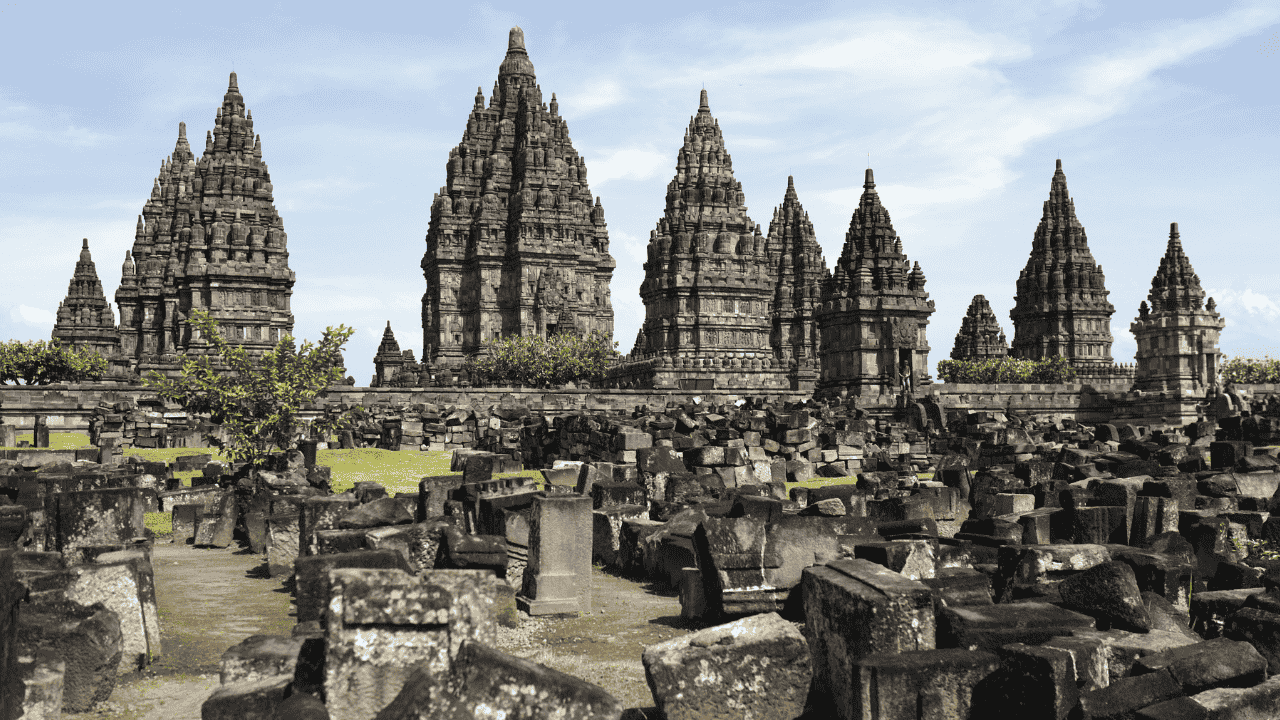
At the center of these agreements is a collaborative project for the restoration and conservation of the ancient Prambanan Temple complex in Yogyakarta, a UNESCO World Heritage Site. This project, spearheaded by the Archaeological Survey of India (ASI) in partnership with the Indonesian Heritage Agency and Ministry of Culture, serves as a prominent example of India's cultural diplomacy under its Act East Policy and MAHASAGAR vision.
On July 7, 2026, President Prabowo Subianto conferred the Bintang Adipurna (Star of Adipurna)—Indonesia's highest civilian honor—on Prime Minister Modi, highlighting the historic civilizational bonds between the two nations.
Historical Context and Dynastic Heritage of Prambanan
To comprehend the significance of this heritage initiative, aspirants preparing for UPSC current affairs must analyze the historical, architectural, and socio-political context of the Prambanan Temple complex.
Dynastic Reassertation and Geopolitical Transitions
Constructed in the mid-9th century CE (circa 850 CE), the Prambanan Temple complex was initiated during the reign of King Rakai Pikatan of the Sanjaya Dynasty within the Mataram Kingdom. The construction served as a grand architectural statement marking the return of Hindu Shaivite rule in Central Java after decades of political dominance by the Buddhist Sailendra Dynasty. The Sailendras were responsible for the construction of the nearby Borobudur temple complex.
However, the transition was characterized by cultural synthesis rather than absolute conflict. King Pikatan's marriage to the Sailendra princess Pramodhawardhani effectively unified the rival dynasties. This dynastic merger fostered an integrated sacred landscape where Hindu and Buddhist monuments coexisted in close geographic proximity.
Symmetrical Mandala and Sacred Cosmography
The temple layout is designed as a three-dimensional mandala, structured in three concentric squares representing the layers of Hindu cosmology:
Bhurloka (The Outer Compound): Representing the mortal sphere of humans, dominated by daily life and worldly desires.
Bhuvarloka (The Middle Compound): Representing the transitional realm of purification. This zone historically contained four concentric rows of 224 identical smaller shrines, known as perwara.
Svarloka (The Innermost Platform): Representing the elevated realm of the gods. It holds eight main temples and eight minor shrines, with their rising spires mimicking Mount Meru—the cosmic center of the universe.
At the heart of the innermost platform stand the three primary temples dedicated to the Hindu Trimurti:
The Shiva Temple: Centered in the compound, this structure rises to a height of 47 meters, making it one of the tallest classical Hindu structures in Southeast Asia. It houses the main deity of Shiva Mahadeva, alongside chambers dedicated to Ganesha, Agastya, and the goddess Durga Mahishasuramardini.
The Brahma Temple: Situated to the north of the Shiva temple.
The Vishnu Temple: Situated to the south of the Shiva temple.
The Legend of Roro Jonggrang and Local Folklore
Locally, the Prambanan complex is known as Candi Roro Jonggrang (Temple of the Slender Virgin). This designation is tied to Javanese folklore.
According to the legend, Prince Bandung Bondowoso killed King Boko and demanded the hand of his daughter, Princess Roro Jonggrang. To evade the marriage, she set an impossible condition: the prince must construct 1,000 temples in a single night before the rooster crowed. Utilizing supernatural spirits, Bondowoso completed 999 temples. To halt his progress, the princess ordered the palace women to light fires and pound rice to simulate dawn. The spirits fled, leaving the project incomplete. Realizing the deception, a furious Bondowoso cursed Roro Jonggrang into stone, turning her into the final statue—historically identified by locals as the Durga image inside the central Shiva temple.
This legend historically links Prambanan with the nearby archaeological sites of Ratu Boko (the hillside palace of King Boko) and Candi Sewu (a Buddhist temple compound whose name translates to "thousand temples").
Technical and Architectural Details of the Restoration Project
As reported in the competitive exam news today, the collaborative conservation effort is a structured technical partnership. The temple complex suffered structural degradation over a millennium due to seismic activity (including the devastating 2006 Java earthquake), volcanic eruptions from Mount Merapi, and centuries of jungle overgrowth following the relocation of the Mataram power base to East Java.
The Technical Method of Anastylosis
The technical methodology guiding the ASI-led restoration is Anastylosis. This specialized architectural conservation method involves:
Original Reassembly: Reconstructing damaged structural elements using the original fallen stone blocks scattered around the site.
Structural Integrity: Maintaining the authentic, historical construction values of the classical period.
Minimal Modern Interventions: Restricting the use of modern materials (such as reinforced concrete or chemical epoxies) to critical load-bearing locations where structural collapse is imminent.
The Cataloging Challenge: Identifying and cataloging thousands of mixed, volcanic stone blocks using modern digital mapping and artificial intelligence-based structural reconstruction tools.
The current phase of the restoration specifically targets the perwara (the outer companion shrines) to restore the symmetrical layout of the middle courtyard.
Bilateral and Strategic Outcomes of the July 2026 Summit
The state visit was not limited to cultural diplomacy. It aimed to translate shared civilisational links into strategic capability in the Indo-Pacific region.
Strategic Infrastructure: The Sabang Port Development
One of the most geographically significant outcomes was the agreement to partner on the integrated development of the Sabang Port on Weh Island, situated at the northern tip of Sumatra.
Sabang Port overlooks the northern entrance of the Strait of Malacca, a global maritime artery through which approximately 22.5 million barrels of oil and more than 1,000 transport vessels pass daily. This location is less than 100 nautical miles (~160 km) from India's southernmost territory of Indira Point and the upcoming Great Nicobar Transshipment Port Project (Galathea Bay), which is being developed at an estimated cost of $9 billion to $9.7 billion.
The joint development of Sabang Port—including cruise ship terminals, marine-tourism facilities, ship-repair yards, and energy services—allows India to establish a permanent maritime footprint on the Sumatran shore. This infrastructure complements the Naval Communication Network and security facilities in the Andaman and Nicobar Islands, acting as a strategic stabilizer near the Malacca Strait.
Advanced Defense and Technology Cooperation
The bilateral summit witnessed agreements across defense manufacturing and technology transfer. The table below provides a comparison of the key strategic outcomes of the July 2026 meeting:
| Strategic Domain | Key Project / Agreement | Strategic Significance and Details |
|---|---|---|
| Defense Acquisition | BrahMos Cruise Missile System | A phased acquisition agreement valued at approximately $630 million, including batteries, infrastructure, and operator training. This follows the missile's combat deployment in Operation Sindoor in 2025. |
| Air Combat Integration | Astra Mk-1 Beyond-Visual-Range Missiles | Integration of India's indigenous air-to-air missiles into Indonesia's fleet of 16 Su-30 fighter jets, executed by Bharat Dynamics Limited (BDL). |
| Maritime Infrastructure | Sabang Port Joint Development | Integrated development of deepwater port facilities on Weh Island, linking Sumatra with the Andaman & Nicobar Islands. |
| Digital Economy | Indonesia Open Network (ION) | Launching Indonesia's digital network using India's Open Network for Digital Commerce (ONDC) architecture to support Indonesian MSMEs. |
| Financial Integration | Cross-Border QR Payment Linkage | Operationalization of direct local currency and QR transaction links between the Reserve Bank of India (RBI) and Bank Indonesia. |
| Higher Education | IIM Bangalore Branch Campus | Establishment of a campus in the Singhasari Special Economic Zone, expanding India's educational footprint in ASEAN. |
| Industrial Supply | Stainless-Steel Slab Joint Venture | Joint venture between Steel Authority of India Limited (SAIL) and PT Krakatau Steel to build a production facility in Indonesia. |
| Democratic Governance | Election Management MoU | Collaboration between the Election Commission of India (ECI) and Indonesia's KPU, including EVM development tailored to Indonesian requirements. |
India's Soft Power and Heritage Diplomacy in Southeast Asia
The restoration of the Prambanan Temple complex is part of a broader foreign policy strategy that employs archaeological conservation to strengthen ties with Southeast Asian nations. The Archaeological Survey of India (ASI), operating under the Ministry of Culture, has built a track record of conserving historical sites across Asia.
ASI'S SOUTHEAST ASIAN HERITAGE FOOTPRINT │ ┌────────────────────────┼────────────────────────┐ ▼ ▼ ▼ Angkor Wat My Son Sanctuary Wat Phou (Cambodia) (Vietnam) (Laos) Restored stone chambers Conserved tower Shaivite site and bas-reliefs groups; discovered restoration near the (1986-1993) Shiva Linga [cite: 29] Mekong River [cite: 28]
The Nalanda-Sumatra Connection
To emphasize these historic ties, the National Museum of India presented a replica of the Nalanda Copper Plate (dating to approximately 860 CE) to be exhibited at the Muara Jambi museum in Indonesia. Written in the Devanagari script and Sanskrit language, the copper plate records the Pala King Devapaladeva granting villages for the maintenance of a monastery built at Nalanda by the Sailendra King Balaputradeva of Sumatra. This historical artifact highlights the academic and spiritual exchanges that connected India and Sumatra over a thousand years ago.
The G20 Kashi Cultural Pathway
During the bilateral talks, the two leaders recalled the principles of the Kashi Cultural Pathway, which was adopted at the G20 Culture Ministers' Meeting in Varanasi in August 2023. The pathway advocates for the protection of cultural heritage, the prevention of illicit trafficking of antiquities, and the use of living heritage to achieve sustainable development goals.
The Tagore-Dewantara Year (2026-2027)
The declaration of 2026–2027 as the Tagore-Dewantara Year of India-Indonesia Cultural and Educational Diplomacy commemorates the centenary of Gurudev Rabindranath Tagore's historic visit to Java and Bali in 1927.
Tagore's interactions with Ki Hajar Dewantara, the founder of the Taman Siswa (Garden of Pupils) school system, laid the groundwork for modern, nationalistic education models in Indonesia. Furthermore, Tagore's fascination with Javanese Batik led to the introduction of this wax-resist textile art in Shantiniketan, West Bengal. This synthesized style became known as Shantiniketan Batik, combining Indonesian techniques with Indian motifs like the lotus.
Key Facts for UPSC and Competitive Exams
Aspirants should note the following structured, factual details for quick revision:
Prambanan Complex Location: Special Region of Yogyakarta, Java Island, Indonesia.
Dynasty of Origin: Sanjaya Dynasty of the Hindu Mataram Kingdom.
Temple Dedication: The Hindu Trimurti—Shiva, Vishnu, and Brahma.
UNESCO Inscription Year: 1991.
Primary Restoration Method: Anastylosis (reassembly utilizing original stone blocks).
Associated Folk Myth: Legend of Roro Jonggrang (The Slender Virgin).
Sabang Port Geography: Weh Island, Sumatra, overlooking the entrance to the Strait of Malacca.
Nalanda Copper Plate Date: Circa 860 CE, issued by Pala King Devapaladeva.
G20 Cultural Framework: Kashi Cultural Pathway (Varanasi, August 2023).
Indonesian Civil Honor: Bintang Adipurna, conferred upon Prime Minister Modi in July 2026.
Why this matters for your exam preparation
For serious aspirants following the Atharva Examwise current news, this development integrates several key areas of the competitive exam syllabus:
GS Paper I (Indian Heritage and Culture)
Temple Architecture: The structural features of Prambanan reflect South Indian Pallava and Chola architectural influences. Understanding the diffusion of Indian art, religious iconography, and epic narratives (such as the Javanese Ramayana reliefs) to Southeast Asia is a recurring theme in the Art and Culture paper.
Restoration Methodologies: The technical aspects of the Anastylosis technique and the challenges of conserving stone heritage structures are highly relevant for Prelims conceptual questions.
GS Paper II (International Relations & Bilateral Ties)
Act East Policy and Soft Power: The ASI's preservation of archaeological sites across Vietnam, Cambodia, Laos, and Indonesia highlights the role of heritage conservation in India's regional diplomacy.
Indo-Pacific Maritime Strategy: The development of Sabang Port near the Malacca Strait, alongside the Great Nicobar Port Project at Galathea Bay, carries strategic significance for maritime domain awareness and trade security.
Bilateral Frameworks: The transition of historical agreements into security pacts (such as the BrahMos and Astra missile deals) reflects India's role as a net security provider and defense supplier in Southeast Asia.
Aspirants should practice structuring answers that connect cultural initiatives, like the Prambanan restoration, with hard-power strategic assets, like the Sabang Port development, to demonstrate a comprehensive understanding of India's foreign policy dynamics.