
UPSC Current Affairs July 3, 2026: Lebang Boomani Dance of Tripura and the Dynamics of Jhum Cultivation | Daily GK Update
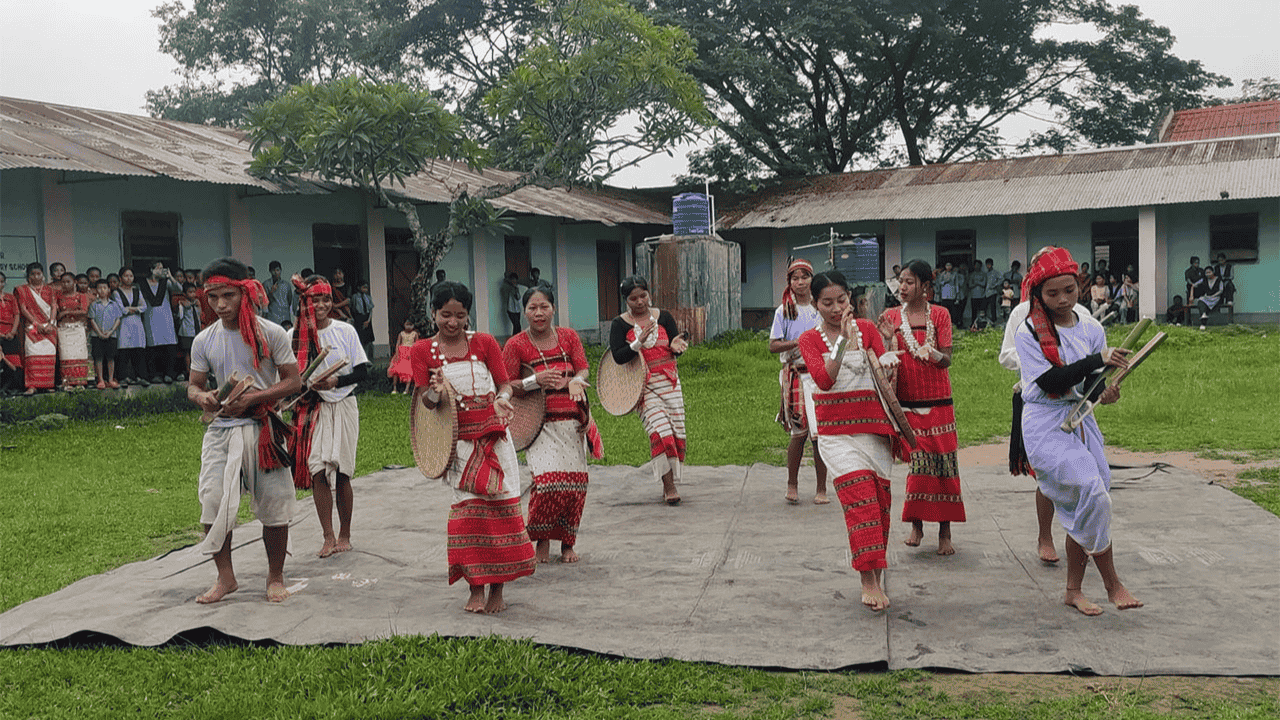
The performance traditions of Northeast India represent a profound intersection of tribal identity, seasonal agricultural cycles, and ecological survival. Prominent among these is the Lebang Boomani dance (also known as Lebang Bumani), a traditional harvest and pest-control dance of the Tripuri community in Tripura. With tribal life heavily anchored in shifting cultivation, this dance serves as both an artistic expression and a ritualistic measure of agricultural planning. As cultural heritage and indigenous ecological practices increasingly feature in the competitive exam news today, understanding these tribal performance arts is essential for candidates navigating the modern civil services examination landscape. This analysis explores the cultural, socio-economic, and ecological dimensions of this unique art form as part of the Atharva Examwise current news coverage.
Core Traditional Performance: The Lebang Boomani Dance
The cultural fabric of the Tripuri community is deeply intertwined with shifting cultivation, known locally as Jhum. Following the conclusion of the Garia Puja in April, which marks the initiation of the seed-sowing season, agricultural activities experience a brief lull as the community awaits the arrival of the monsoon. During this ecological window, hordes of bright, multi-colored grasshopper-like insects called "Lebangs" descend upon the hilly slopes to feed on the freshly sown seeds.
According to traditional folklore, a larger catch of these insects signals a highly prosperous harvest. This belief prompts the tribal youth to engage in a unique ritualistic dance that artistically replicates the process of capturing these pests to protect their crops. The dance serves a practical dual purpose: it acts as a rhythmic method of pest control while fostering community cohesion and merry-making during the agricultural off-season.
Mechanisms, Choreography, and Tribal Roles
The performance dynamics of the Lebang Boomani dance are characterized by a strict, gender-specific division of labor that reflects traditional ecological management and agricultural roles.
Rhythmic Play and the Role of Men
The male dancers establish the structural rhythm of the performance, typically forming the outer circle of the arena to maintain the core tempo for the group. They utilize specialized bamboo clappers known as tokkas (or bamboo chips) to generate rapid, high-pitched rhythmic sounds. This acoustic frequency mimics the natural auditory signals of the grasshoppers, drawing the Lebangs out from their subterranean and foliar sanctuaries. Simultaneously, to deter predatory birds that are naturally drawn to the emerging swarms of insects, the men operate a specialized bamboo idiophone called the Tak-dutreng.
Acoustic Grace and the Role of Women
The female dancers, positioned in the inner circle, execute delicate and undulating physical movements. They wave colorful hand-woven scarves to disorient the insects, mimic the act of trapping them, and guide them into handwoven bamboo baskets integrated directly into their traditional attire. This rhythmic synchronization is captured in traditional Tripuri lyrics, such as:
"Tinile tinile nokha pilala. Phaidi bai kotor, phaidi bai kwar. Phidi bai chikon phaidi. Buphang sakha lebang bakha. Lebang romna phaidi"
[cite: 3]
This traditional song serves as a poetic invitation to gather and capture the fortune-bearing insects from the tree branches and hill slopes.
Visual Heritage and Ornaments
The visual identity of the performers is a testament to the rich handloom and metallurgical heritage of Tripura. The female dancers wear the Rignai, a draped lower-body garment, and the Risa, an details-rich hand-woven upper-body cloth. These garments are traditionally woven on household waist looms using hand-spun cotton collected from the Jhum fields.
The dancers are adorned with elaborate indigenous ornaments, including necklaces composed of silver chains and real coins, heavy silver bangles, and bronze nose and ear rings. To complete their festive appearance, the women adorn their hair with fresh, locally sourced flowers prior to the performance. The primary musical accompaniment relies on a double-headed drum known as the Khamb (or Pung), alongside the bamboo flute, the Sarinda (a traditional bowed string instrument), and the Pungi.
Comparative Analysis of Tripura's Traditional Dances
In the context of UPSC current affairs preparation, candidates must remain vigilant against common conceptual traps. Test-takers frequently confuse the tribal associations and agricultural timings of Tripura's diverse folk dances. To facilitate clear conceptual distinction, the table below maps the key folk dances of the state:
| Folk Dance | Primary Tribe / Community | Timing & Agricultural Context | Core Performance and Ritualistic Focus | Key Props & Instruments |
|---|---|---|---|---|
| Lebang Boomani | Tripuri Tribe | Post-sowing, pre-monsoon lull | Mimicking the attraction, capture, and control of seed-eating grasshoppers. | Bamboo clappers (tokkas), Tak-dutreng, Khamb, Sarinda. |
| Garia Dance | Tripuri Tribe (multi-ethnic participation) | Sowing season (April / Chaitra) | Praying to Baba Garia for agricultural prosperity, fertility, and livestock protection. | Ceremonial bamboo poles, drums, flutes. |
| Hojagiri | Reang (Bru) Clan | Post-harvest (Bhadra / Durga Puja / Lakshmi Puja) | Extraordinary physical balancing acts by female dancers to invoke the goddess of wealth. | Earthen pitchers, oil lamps, bottles, small plates. |
| Mamita | Tripuri Tribe | Harvest completion (Karthik / Agrahayana) | Celebrating the processing and communal consumption of newly harvested Jhum rice. | Handwoven bamboo baskets (Langa). |
| Tangbiti | Tripuri Tribe | Active Jhum cultivation phase | Physical enactment of clearing, burning, and preparing steep hillside plots. | Langa (back basket), Da (large ceremonial knife). |
| Mosak Sulmani | Tripuri Tribe | Hunting ritual (historical) | Stylized depiction of animal tracking and antelope hunting. | Traditional hunting gear and physical gestures. |
| Bizhu | Chakma Tribe | Chaitra Sankranti / New Year | Celebrating the transition of the new year with floral patterns and rhythmic hand claps. | Traditional flutes and drums. |
| Hai-hak | Halam (Malsum) Community | Post-harvest | Honoring the goddess Lakshmi at her place of worship after the annual harvest. | Traditional percussion and hand gestures. |
| Owa Dance | Marma (Mog) Clan | Full moon day of Ashwin | Buddhist festival celebration involving temple visits and launching paper boats. | Ceremonial lamps and paper boats. |
| Sangrai | Marma (Mog) Tribe | April (Chaitra) | Celebrating the Sangrai festival, symbolizing purification and community unity. | Traditional Marma musical ensembles. |
| Meladom (Meladan) | Keipeng Community | Post-harvest (Karthik) | Enacting the traditional process of cotton harvesting, thread spinning, and weaving. | Traditional waist looms and hand spinning tools. |
Socio-Ecological Dimensions: Jhum Cultivation and its Environmental Impact
The survival of performance arts like the Lebang Boomani is intrinsically linked to the continuation of shifting cultivation, known as Jhum in Northeast India. This traditional form of subsistence farming involves clearing a patch of forested hillside, allowing the cut vegetation to dry, and burning it prior to the first monsoon rains to enrich the soil with nutrient-rich ash.
Historically, under low population densities, Jhum was ecologically sustainable because land was left fallow for 10−15 years, allowing complete forest and soil regeneration. However, modern demographic pressures and land scarcity have compressed these fallow cycles to a critical 2−5 years. This reduction prevents complete forest and soil recovery, triggering severe ecological consequences such as rapid topsoil erosion, nutrient loss, and increased vulnerability to landslides and downstream flooding.
To address these concerns, NITI Aayog's policy report, "Mission on Shifting Cultivation: Towards a Transformational Approach", recommends recognizing Jhum lands under agro-forestry frameworks rather than classifying them strictly as forest lands. This policy shift enables tribal farmers to access structural credit, state agricultural subsidies, and modern ecological training, thereby facilitating a gradual, sustainable transition to settled agro-forestry.
The table below details the regional nomenclature of shifting cultivation across India and the globe, which is a frequent area of evaluation in competitive exams:
| Local Name | State / Region (India) | Global Analogue | Country / Region |
|---|---|---|---|
| Jhum | Northeast India (Tripura, Assam, Mizoram, Nagaland, Meghalaya) | Milpa | Central America & Mexico |
| Podu / Penda | Andhra Pradesh, Odisha | Ladang | Malaysia & Indonesia |
| Bewar / Dahiya / Mashan | Madhya Pradesh | Conuco | Venezuela & parts of South America |
| Kumari | Western Ghats (Kerala, Karnataka, Maharashtra) | Roca | Brazil |
| Pamlou | Manipur | Masole | Congo Basin (Africa) |
| Dipa | Bastar (Chhattisgarh), Andaman & Nicobar Islands | Taungya | Myanmar (Forestry-crop integration) |
Key Facts and Exam-Relevant Data
To consolidate the factual database for daily GK update revisions, candidates should prioritize the following points:
State and Tribe: The Lebang Boomani dance originates in Tripura and is performed primarily by the Tripuri community.
Core Motif: The dance is a seasonal, post-sowing performance that artistically mimics the process of catching "Lebang" insects (grasshoppers) to protect crops.
Instruments & Accoutrements: Performers utilize bamboo clappers (tokkas), the Tak-dutreng idiophone, double-headed drums (Khamb/Pung), and the Sarinda string instrument.
Traditional Attire: Female dancers wear the Rignai (lower garment) and the Risa (upper garment) woven in traditional loin-looms, paired with silver coin necklaces and bronze ear/nose rings.
Associated Agriculture: The dance is structurally tied to Jhum (shifting cultivation) and takes place in the seasonal lull between Garia Puja (April seed sowing) and the arrival of the monsoon.
Official Reference: The dance is recognized on national platforms, such as the National Portal of India, as a significant intangible cultural heritage of Northeast India.
Why this matters for your exam preparation
For candidates preparing for the Civil Services Examination (UPSC) and state-level public service commission exams, the study of indigenous traditions like the Lebang Boomani dance is highly relevant across several papers:
GS Paper I (Art and Culture & Geography)
Performing Arts: Questions regularly evaluate the distinct tribal dances of Northeast India, their specific communities (e.g., distinguishing Tripuri's Lebang Boomani from the Reang clan's Hojagiri), and the seasonal contexts of their performance.
Human Geography: The correlation between tribal lifestyle, handloom traditions (Rignai and Risa), and subsistence farming patterns highlights the direct relationship between human groups and their environment.
GS Paper III (Environment, Agriculture & Internal Security)
Sustainable Agriculture: The analysis of Jhum cultivation, its environmental fallout due to reduced fallow cycles, and the policy shift toward agro-forestry are core areas of examination under agricultural reforms and ecological preservation.
Tribal Development: Understanding tribal rights, land tenure systems, and the preservation of intangible cultural heritage aligns with standard questions on inclusive growth and social justice.