
UPSC Current Affairs Today: Salar de Uyuni, the Lithium Triangle, and India’s Strategic Critical Mineral Diplomacy | Atharva Examwise Daily GK Update
The global transition toward clean energy technologies has elevated the geostrategic value of critical minerals, placing the hyper-arid salt flats of South America at the center of international diplomacy. Foremost among these natural formations is Salar de Uyuni in Bolivia, the world's largest salt flat, which represents both a geomorphological wonder and a massive reservoir of lithium—often termed "white gold". As major economies seek to secure resilient supply chains and reduce their reliance on single-source import dependencies, India has actively expanded its domestic exploration and overseas mining footprints. This comprehensive geographical and geopolitical analysis provides serious aspirants with the essential concepts required for competitive examinations, linking physical geography with global economic strategies and bilateral relations.
Aspirants can access further study resources and keep pace with evolving syllabus dynamics on the Atharva Examwise Daily GK Update platform, which provides comprehensive daily reporting tailored specifically for competitive examinations.
Geomorphological Profile and Formation of Salar de Uyuni
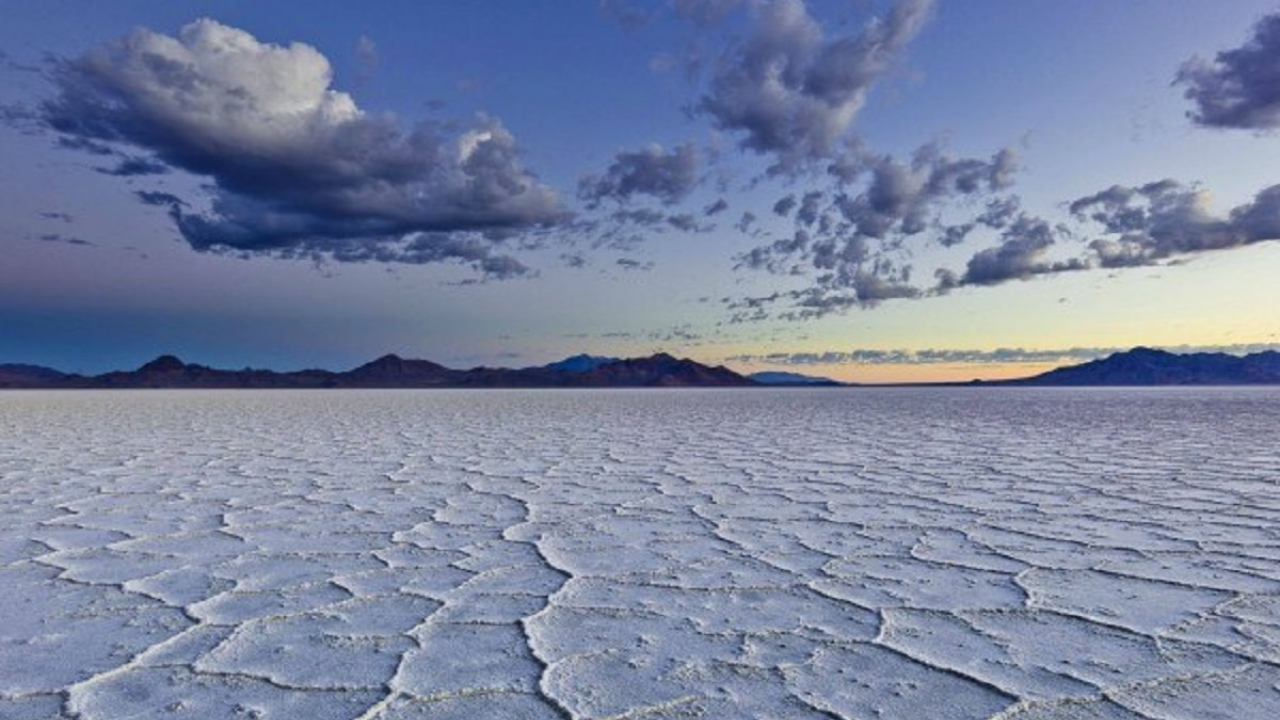
Located in southwestern Bolivia adjacent to the Andes mountain range, Salar de Uyuni is established as the largest salt flat globally, encompassing a surface area of approximately 10,582 square kilometers. Situated in the Daniel Campos Province of the Potosí Department at an elevation of approximately 3,656 meters above sea level, this high-altitude plain is a defining feature of the Andean Altiplano. The geological origin of the salt flat is linked to the sequential desiccation of a series of late Pleistocene prehistoric lakes, primarily Lake Minchin and Lake Tauca, which occupied the basin between 30,000 and 42,000 years ago. As changing climatic patterns led to hyper-arid conditions, progressive evaporation concentrated dissolved mineral salts, leaving behind two modern lakes, Poopó and Uru Uru, alongside the vast evaporitic salt deserts of Salar de Coipasa and Salar de Uyuni.
The physical structure of Salar de Uyuni consists of a solid, highly uniform salt crust varying in thickness from 2 to 10 meters. Beneath this crust lies an extensive, porous halite aquifer completely saturated with a dense, mineral-rich brine containing sodium chloride, lithium chloride, and magnesium chloride. The topography of the basin is extraordinarily flat, with average elevation variations of less than one meter over the entire expanse. During the wet season, which runs from December to March, the Altiplano experiences seasonal overflow from Lake Titicaca into Lake Poopó, which subsequently discharges into the salt flats. The deposition of a thin, superficial water layer over the flat, impermeable surface creates the largest natural mirror on Earth, spanning approximately 129 kilometers across. This reflects the sky and generates an optical illusion wherein observers experience the visual sensation of walking directly on clouds.
Due to its high surface uniformity, high reflectivity, and minimal atmospheric interference at high altitude, Salar de Uyuni serves as a primary target for the calibration of altimeters on Earth observation satellites. The center of the salt flat features several rocky volcanic islands, such as Incahuasi Island and Fish Island (Isla Pescado), which represent the summits of ancient volcanoes submerged during the era of Lake Minchin. These islands are covered in fragile, coral-like structures, fossilized algae, and giant cacti (such as Trichocereus pasacana) that can grow up to 10 meters in height. Detailed cartographic analyses and map studies of these unique landforms can be explored in the Atharva Examwise Geography Section.
Electrochemical and Industrial Significance of Lithium
Lithium (Li) is a highly reactive alkali metal located at atomic number 3 on the periodic table, representing the lightest metal and the least dense solid element under typical atmospheric conditions. It has a shiny, silvery-white appearance when freshly cut, but quickly tarnishes to a dull grey and black patina upon exposure to atmospheric moisture. Because of its high reactivity, it never occurs in its elemental state in nature and is found only within ionic mineral compounds or dissolved in liquid brines.
The physical properties of lithium give it a unique position in the global energy transition. Its standard electrode potential and physical density compare favorably to alternative alkali metals such as Sodium (Na), making it the optimal medium for high-density electrochemical storage.
The fundamental physical contrasts between these two elements are expressed in the following scientific values:
Density of Lithium (ρLi)≈0.53 g/cm3
Density of Sodium (ρNa)≈0.97 g/cm3
[cite: 11]
The standard reduction potentials are defined as:
Li++e−→Li(E∘=−3.04 V)
Na++e−→Na(E∘=−2.71 V)
[cite: 11]
These physical characteristics allow lithium-ion batteries to deliver high voltage, low weight, and superior energy density compared to alternative battery designs. According to data published in the USGS Mineral Commodity Summaries 2026, the global battery manufacturing sector accounts for approximately 88% of total lithium consumption. The remaining portion is distributed across several key industrial sectors, as detailed in the table below:
| Industrial Sector | Global Consumption Share (%) | Key Applications and Technical Functions |
|---|---|---|
| Batteries | 88% | Electric vehicles (EVs), grid-scale energy storage, consumer electronics |
| Ceramics and Glass | 4% | Enhancing durability, adhesion, and thermal shock resistance in technical glassware |
| Lubricating Greases | 2% | Formulating high-pressure, high-temperature industrial greases |
| Air Treatment | 1% | Moisture absorption and humidity control in specialized HVAC systems |
| Continuous Casting | 1% | Mold flux powders utilized in steel manufacturing to prevent oxidation |
| Medical Applications | 1% | Formulating lithium carbonate as a mood stabilizer for bipolar disorder |
| Other Uses | 3% | Specialized aerospace alloys, organic synthesis, and chemical catalysis |
Geopolitical Architecture of the South American Lithium Triangle
The "Lithium Triangle" is a strategically critical, lithium-rich region in the Andean Altiplano, spanning the bordering territories of Bolivia, Chile, and Argentina. Together, these three countries hold over 50% of the world's identified lithium resources beneath their expansive salt flats. Despite this shared geological wealth, the commercial development, investment climates, and regulatory frameworks of each country differ significantly.
The table below provides a comparative analysis of the geological, economic, and policy dynamics across the three nations:
| Comparative Parameter | Bolivia | Chile | Argentina |
|---|---|---|---|
| Identified Resources | ~21 million tonnes | ~7.5 million tonnes | ~17 million tonnes |
| Primary Salt Flats | Salar de Uyuni | Salar de Atacama | Salar del Hombre Muerto, Salar de Olaroz |
| Global Reserve Rank | Lower due to undeveloped reserves | 1st globally in commercial reserves | 3rd globally in commercial reserves |
| State Regulatory Model | Strict state monopoly under YLB | Highly regulated concession system | Decentralized, provincial ownership |
| Major Extraction Challenges | High magnesium-to-lithium ratio | Environmental water use restrictions | Infrastructure and logistical bottlenecks |
| Foreign Investment Climate | Historically restrictive and politically complex | Stable, dominated by SQM and Albemarle | Highly favorable with export tax incentives |
Bolivia holds the largest single concentration of lithium resources in Salar de Uyuni. However, its commercial development has been limited by a high magnesium-to-lithium ratio in the brine, which complicates the chemical separation process, as well as political instability and a state-controlled investment model that limits private multinational participation.
Chile, by contrast, has leveraged the hyper-arid climate of the Atacama Desert to maximize solar evaporation, establishing itself as the world’s second-largest commercial producer. The industry in Chile is managed by major private operators under state concession agreements.
Argentina has emerged as a key destination for new mining investment. By granting resource ownership to its provinces and lowering mineral export taxes, Argentina has accelerated the development of its salt flats, achieving a 66% annual increase in production to reach 23,000 tonnes of lithium metal in 2025.
India’s Multi-Pronged Critical Mineral Strategy
India has adopted a comprehensive critical mineral strategy to secure its clean technology supply chains and support its domestic manufacturing goals. This strategy balances overseas asset acquisition with domestic exploration.
Overseas Assets: The KABIL Mandate
To reduce its near-total reliance on imported lithium, India established Khanij Bidesh India Limited (KABIL) in 2019. KABIL is a public-sector joint venture comprising National Aluminium Company Ltd. (NALCO), Hindustan Copper Ltd. (HCL), and Mineral Exploration and Consultancy Limited (MECL) under the Ministry of Mines.
The Argentina Agreement: In January 2024, KABIL signed an agreement with Catamarca Minera y Energética (CAMYEN SE), the state-owned mining enterprise of Argentina’s Catamarca province. The deal granted KABIL exclusive exploration and commercial exploitation rights for five lithium brine blocks: Cortadera-I, Cortadera-VII, Cortadera-VIII, Cateo-2022-01810132, and Cortadera-VI, spanning approximately 15,703 hectares.
Project Execution and Milestones: Supported by a ₹200 crore (≈$24 million) investment, KABIL established a branch office in Catamarca. In April 2026, KABIL obtained formal environmental clearance from the Argentine government, permitting deep exploratory borehole drilling and geohydrological surveys. This initiative represents India's first government-led overseas lithium extraction project, with commercial production targeted for 2029.
Chilean Partnerships: KABIL has also signed a non-disclosure agreement with the Chilean state mining company ENAMI to evaluate joint exploration and processing opportunities in Chile’s salt flats.
Further updates on international mineral agreements are analyzed weekly in the Atharva Examwise International Relations Analysis.
Bilateral Relations: India-Bolivia Strategic Engagement
Bilateral cooperation between India and Bolivia has grown steadily, particularly in the critical minerals and technology sectors. Key developments include:
Embassy of India in La Paz: In September 2024, India formally opened its resident embassy in La Paz, fulfilling a commitment from the 2019 presidential state visit and enhancing on-the-ground mineral diplomacy.
Joint Working Groups: Multiple Joint Working Group meetings have been held to advance MoUs in geology, space technology, and traditional medicine. The Indian Space Research Organisation (ISRO) has provided training to Bolivian technical personnel in nano-satellite fabrication in Bengaluru.
Mining Technology Transfer: Given that much of Bolivia’s domestic mining remains artisanal, India has offered technical training and mechanized equipment to support more modern, efficient extraction. The two countries are also negotiating commercial agreements for the direct supply of Bolivian lithium carbonate to Indian battery manufacturing plants.
Domestic Exploration and the UNFC Framework
In tandem with its overseas initiatives, the Geological Survey of India (GSI) has advanced domestic exploration using the United Nations Framework Classification (UNFC) for Resources. The UNFC system classifies mineral deposits along a three-digit numerical code representing Economic Viability (E), Feasibility (F), and Geological Certainty (G):
High Certainty (G1) ◄─────── Low Certainty (G4) │ ├── G1: Detailed Exploration ├── G2: General Exploration (Reasi, J&K) ├── G3: Prospecting └── G4: Reconnaissance
Jammu & Kashmir (Reasi District): The GSI has established an inferred lithium resource of 5.9 million tonnes in the Salal-Haimana area under the G2 (General Exploration) stage.
Chhattisgarh (Katghora): In 2026, Katghora transitioned toward active development, making it India’s first operational domestic lithium mining project.
Karnataka (Mandya): The Atomic Minerals Directorate (AMD) has identified a smaller hard-rock lithium resource of approximately 1,600 tonnes in the Marlagalla area.
The table below contrasts the physical and economic profiles of India's domestic deposits with those of South America’s Lithium Triangle:
| Extraction Metric | Domestic Deposits (India) | South American Brines (Lithium Triangle) |
|---|---|---|
| Geological Medium | Hard-rock pegmatites (spodumene) and clay deposits | Liquid brine hosted in porous subterranean halite aquifers |
| Primary Extraction Process | Open-pit mining, crushing, and high-temperature roasting | Pumping brine to the surface followed by solar evaporation |
| Operational Costs | High energy requirements and processing costs | Low operational cost due to natural solar evaporation |
| Development Timeline | 5 to 8 years from initial discovery to commercial production | Established supply chains; KABIL projects targeted for 2029 |
Environmental Degradation and Indigenous Rights Conflicts
The rapid expansion of lithium mining has introduced complex environmental and social challenges in South America’s fragile Altiplano ecosystems. The standard evaporation method is highly water-intensive, requiring the evaporation of approximately 500,000 to 2,000,000 liters of brine water for every single ton of lithium carbonate produced.
This massive extraction has led to several critical environmental issues:
Groundwater Depletion: Extensive pumping draws down freshwater tables, threatening to salinize surrounding fresh drinking water aquifers. In Chile’s Salar de Atacama, regional water tables have fallen by more than 10 meters over the past 15 years.
Ground Subsidence: Interferometric synthetic aperture radar (InSAR) and GPS monitoring show that parts of the Atacama Salt Flat are sinking at a rate of 1 to 2 centimeters per year due to the rapid removal of subsurface brine.
Loss of Biodiversity: The drawdown of water tables has led to the drying up of high-altitude wetlands, reducing the nesting habitats of protected Chilean, Andean, and James's flamingos, and threatening native species such as vicuñas.
Social and Indigenous Rights Violations
The High Andes salt flats are the ancestral territories of various indigenous groups, including the Aymara, Quechua, Lickanantay, and Colla peoples. These communities depend on fragile high-altitude aquifers for traditional agro-pastoral practices, such as camelid herding (llamas and alpacas) and the cultivation of drought-resistant crops like quinoa and maize.
The expansion of commercial mining operations often infringes upon local land rights. Under the ILO Convention No. 169—to which Bolivia, Chile, and Argentina are signatories—indigenous populations have the right to free, prior, and informed consent (FPIC) before mining activities begin on their ancestral lands.
In practice, mining concessions have frequently been granted without meaningful consultation, leading to social unrest, localized water conflicts, and legal challenges. While newer technologies like Direct Lithium Extraction (DLE) are being explored to extract lithium and reinject the depleted brine back into the aquifers, they remain highly customized to specific brine chemistries, and their commercial scalability has not yet been demonstrated across different salt flats.
Key Facts and Exam-Relevant Data
Salar de Uyuni: Located in Bolivia, it is the world’s largest salt flat, spanning 10,582 square kilometers at an elevation of 3,656 meters above sea level.
The Satellite Calibration Target: Due to its extreme flatness (elevation variance of less than one meter), Salar de Uyuni is used by NASA to calibrate satellite altimeters.
The Lithium Triangle: Spans Argentina, Bolivia, and Chile, holding over 50% of global lithium resources.
KABIL JV: Created in 2019 under the Ministry of Mines, it is a joint venture of NALCO, HCL, and MECL.
Argentina Agreement: KABIL secured exploration rights for five lithium brine blocks (15,703 hectares) in Catamarca, Argentina, with commercial production targeted for 2029.
Indian Resident Mission: India opened its formal Embassy in La Paz, Bolivia, in September 2024 to strengthen bilateral ties and critical mineral cooperation.
Domestic Discoveries: GSI identified an inferred resource of 5.9 million tonnes of lithium in Reasi, Jammu & Kashmir (G2 stage), while Katghora in Chhattisgarh is set to become India's first active domestic lithium mine.
Environmental Footprint: Evaporation-based extraction requires the loss of 500,000 to 2,000,000 liters of water per ton of lithium carbonate.
Why this matters for your exam preparation
The geographical, ecological, and geopolitical dynamics of Salar de Uyuni and the Lithium Triangle are directly relevant to several papers in the UPSC Civil Services Examination:
GS Paper I (Physical and World Geography):
Geomorphology: The geomorphological processes behind the formation of salt flats (evaporites, playa lakes, lacustrine landforms) in closed basins.
Resource Distribution: The global distribution of critical minerals, comparing South American brine deposits with hard-rock resources in Australia and India.
GS Paper II (International Relations):
Strategic Mineral Diplomacy: The role of state-led ventures like KABIL in securing critical minerals to bolster energy security and diversify supply chains away from monopolistic control.
South-South Cooperation: India's bilateral engagements with Latin American countries (Argentina, Bolivia, Chile) and platforms like BRICS and the International Solar Alliance.
GS Paper III (Economy, Environment, Science & Technology):
Science & Technology: The electrochemical advantages of Lithium-ion over alternative battery chemistries, such as Sodium-ion, utilizing standard electrode potentials and density metrics.
Sustainable Development: The environmental and social costs of the green energy transition, specifically groundwater depletion, land rights issues under ILO Convention 169, and the transition toward alternative extraction technologies.
Exploration Classifications: The application of the United Nations Framework Classification (UNFC) for Resources to domestic mineral exploration (G1 to G4 stages).