
UPSC Current Affairs March 29, 2026 | Daily GK Update: Noida International Airport Becomes India’s First Mega Project to Use Low-Carbon Green Cement (LC3) | Atharva Examwise Current News
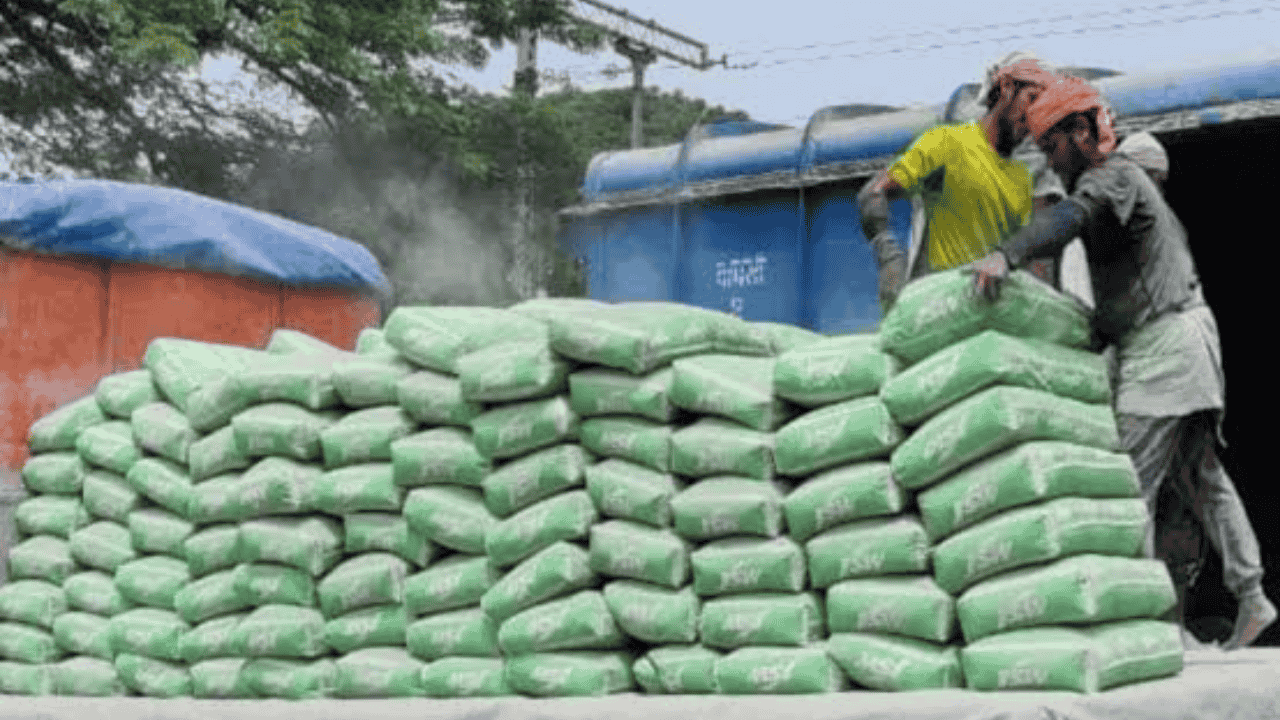
On March 28, 2026, Prime Minister Narendra Modi officially inaugurated Phase I of the Noida International Airport (IATA: DXN) located in Jewar, Gautam Buddh Nagar, Uttar Pradesh. Developed with an initial investment of approximately ₹11,282 crore, this greenfield infrastructure marvel represents a milestone in India's aviation sector. Beyond expanding regional transit capacity, the project has achieved a critical engineering and environmental milestone. Noida International Airport has become the first large-scale civil engineering and infrastructure project in India to systematically integrate low-carbon Limestone Calcined Clay Cement (LC3), colloquially known as green cement, across its terminal buildings and airside infrastructure. This transition matches India’s target to reduce the carbon intensity of its economy, mirroring parallel technological initiatives such as Soylification technology for desertification mitigation designed to address terrestrial degradation across the subcontinent.
Infrastructure Overview and Institutional Framework
The administrative, operational, and financial frameworks of the Noida International Airport are structured through a public-private partnership (PPP) model. The institutional structure is led by Yamuna International Airport Private Limited (YIAPL), a 100% subsidiary of Zurich Airport International AG, operating in close coordination with the Government of Uttar Pradesh and the Government of India. The concession period commenced on October 1, 2021, and spans 40 years.
The construction of Phase I was executed by Tata Projects as the primary Engineering, Procurement, and Construction (EPC) contractor. The structural and logistics metrics of Phase I are detailed below:
| Project Parameter | Structural and Financial Specifications | Source Citation |
|---|---|---|
| IATA Code / Status | DXN / Greenfield Infrastructure | [cite: 3, 4] |
| Phase I Capital Expenditure | ₹11,282 Crore (Total Project Estimated at ₹29,560 Crore) | [cite: 1] |
| Terminal 1 Area | 1.37 lakh square meters | [cite: 5, 6] |
| Operational Capacity | 12 million passengers annually (expandable to 6 runways) | [cite: 3, 4] |
| Initial Cargo Capacity | 2.5 lakh metric tonnes annually | [cite: 1, 6] |
| Primary Contractors | Tata Projects (EPC); Consortium of Nordic, Grimshaw, Haptic, and STUP (Design) | [cite: 1, 5] |
| Security Cover | Central Industrial Security Force (CISF) (effective September 2025) | [cite: 1, 10] |
| Regulatory Clearances | Aerodrome License issued by DGCA on March 6, 2026 | [cite: 1, 6] |
The integration of LC3 at Noida International Airport has transformed Terminal 1 into a model for eco-friendly public infrastructure. By embedding sustainable construction materials in its runways and passenger terminals, the project advances India's commitment to net-zero carbon operations.
The Chemical Science of LC3 Cement: Composition and Mechanism
To understand the environmental superiority of Limestone Calcined Clay Cement, its chemical composition and thermal mechanics must be analyzed. Conventional Ordinary Portland Cement (OPC) is highly carbon-intensive because its primary binder, clinker, requires limestone to be heated to extremely high temperatures. The calcination process of limestone releases massive amounts of carbon dioxide (CO2) as a direct chemical byproduct.
LC3 addresses this vulnerability by replacing up to 50% of the clinker with a blend of calcined clay and uncalcined limestone. The standard dry mix ratio for a typical LC3-50 blend is detailed in the table below:
| Material Component | Dry Weight Composition (%) | Function and Quality Parameters | Source Citation |
|---|---|---|---|
| Portland Clinker | 50% | Primary structural binder and calcium source | [cite: 15] |
| Calcined Clay | 30% | Low-grade kaolinitic clay heated to transform into reactive metakaolin | [cite: 15, 16] |
| Limestone Powder | 15% | Fine, uncalcined low-grade limestone acting as an active reactant | [cite: 15, 16] |
| Gypsum | 5% | Hydration control and setting regulator | [cite: 15] |
The science of LC3 lies in the synergistic reaction between clinker hydration products, calcined clay, and limestone. When kaolinitic clay containing 40% to 60% kaolinite is heated to temperatures between 700∘C and 800∘C, it undergoes dehydroxylation, transforming into metakaolin:
Al2Si2O5(OH)4Δ Al2Si2O7+2H2O
During concrete hydration, the soluble aluminates released from the metakaolin react with the calcium carbonate (CaCO3) from the finely ground limestone. This reaction forms carboaluminate phases (specifically mono-carboaluminate and hemi-carboaluminate) that fill the pore structures of the concrete, producing a denser, less porous microstructure that matches the structural strength of traditional cement.
Key Facts and Exam-Relevant Data on Green Cement (LC3)
For aspirants analyzing infrastructure and environmental developments, the following facts highlight the strategic utility of LC3 cement:
Emissions Mitigation: LC3 reduces carbon dioxide emissions by up to 40% compared to traditional OPC, and by approximately 11% compared to standard Portland Pozzolana Cement (PPC).
Thermal Energy Efficiency: While traditional clinker requires rotary kilns to run at 1450∘C, kaolinitic clay for LC3 calcines at a lower threshold of 700∘C to 800∘C, reducing thermal energy consumption by nearly 20%.
Resource Optimization: The technology utilizes low-grade kaolinitic clays and limestone with as little as 65% carbonate content, which are typically rejected as mining waste by traditional cement manufacturers, thereby extending the life of mining reserves.
Superior Durability: Due to its dense, refined pore structure, LC3 concrete has high resistance to chloride penetration and sulfate attack, making it suitable for marine, coastal, and harsh industrial environments.
Production Adaptability: LC3 does not require setting up new greenfield manufacturing units; it can be integrated into existing cement plants with minimal modification to existing grinding and blending systems, requiring lower capital expenditure (CAPEX).
Aviation Logistics Link: At Jewar, the terminal construction is supported by a 40-acre Maintenance, Repair, and Overhaul (MRO) facility, established in partnership with Akasa Air, strengthening India's self-reliance in aviation engineering.
Policy Integration, Standardization, and Value Chain Hurdles
The transition of LC3 from a laboratory concept to industrial application required structural policy changes. In 2023, the Bureau of Indian Standards (BIS) published the exclusive national standard code IS 18189:2023 (titled "Portland Calcined Clay Limestone Cement — Specification"). This standard provided the formal technical foundation for the material's structural deployment across India, giving developers and government bodies the regulatory confidence to authorize its use in mega-projects.
This standard was developed after research conducted through an international partnership, including the École Polytechnique Fédérale de Lausanne (EPFL) in Switzerland, the Swiss Agency for Development and Cooperation (SDC), IIT Delhi, IIT Madras, and the Society for Technology and Action for Rural Advancement (TARA).
Following standardisation, Indian private sector leaders—including JK Cement, JK Lakshmi Cement, UltraTech, Dalmia Bharat, and Shree Cements—initiated commercial manufacturing of LC3. For example, in February 2026, JK Lakshmi Cement launched "JK Lakshmi Green PRO LC3" in New Delhi. Similarly, the Lodha Group successfully deployed India's first commercial-scale LC3 pilot project by constructing a heavy-duty concrete road at Palava City in Maharashtra.
However, analyses from RMI India indicate that value chain readiness to deploy LC3 at scale faces challenges:
Rheological Sensitivity: LC3 concrete shows high water demand and rapid slump loss within 60 minutes. This requires specialized admixtures, such as polycarboxylate ether-based dispersants combined with phosphoric acid modifiers, to extend workability to a standard three-hour window.
Operational and Asset Adjustments: Incorporating a new binder requires additional storage silos at ready-mix concrete (RMC) plants, operator retraining, modified quality control workflows, and revised batching protocols, which are often perceived as operational risks in high-speed projects.
Incentivization: To accelerate adoption, LC3 has been included in the clean technology targets of India's Carbon Credit Trading Scheme (CCTS), providing a direct economic incentive by linking low-carbon manufacturing to carbon markets.
Why this matters for your exam preparation
For serious UPSC Civil Services aspirants, this topic represents a multi-dimensional current affairs theme bridging environment, science, and governance. It directly correlates with several pillars of the General Studies Paper III (GS-3) Syllabus:
Infrastructure and Investment Models: The execution of the Jewar Airport project under the PPP concession framework and its design as a net-zero logistics hub are prime examples of sustainable infrastructure development. It provides empirical material for answers addressing structural growth and infrastructure-led economic expansion.
Environment, Ecology, and Climate Change: The integration of low-carbon cement is a practical application for mitigating industrial pollution. As India strives to reduce its carbon emission intensity by 45% by 2030 and achieve carbon neutrality by 2070 under its Nationally Determined Contributions (NDCs), understanding green technologies like LC3 is essential for answering questions on climate mitigation and policy frameworks.
Science and Technology: The academic collaboration between IIT Delhi, IIT Madras, and Swiss research institutes to develop IS 18189:2023 demonstrates the indigenisation of technology and scientific translation. This provides candidates with contemporary examples of technology transfers and standardisation.
Aspirants are encouraged to analyze these industrial shifts alongside other structural economic updates, such as Atharva Examwise's daily GK update on India's rising digital economy and Slovakia's support for India's NSG membership, to develop a comprehensive understanding of India's development and foreign policy.