UPSC Current Affairs June 16, 2026 | Daily GK Update: Slovakia Reaffirms Support for India’s NSG Membership | Atharva Examwise Current News
Introduction: Historic Diplomatic Realignment in Central Europe
A landmark diplomatic breakthrough has unfolded in Central Europe, carrying profound implications for the global non-proliferation architecture and India's long-standing strategic ambitions. During an official state visit to the Slovak Republic from June 14–15, 2026, the Indian Prime Minister secured a crucial diplomatic endorsement. Slovak Prime Minister Robert Fico officially reaffirmed his nation's "constructive approach" toward India’s formal membership in the Nuclear Suppliers Group (NSG).
This state visit represents the first-ever visit by an Indian Prime Minister to Slovakia since the country's independence in 1993, marking a watershed moment in bilateral relations. The visit builds on a series of high-level political exchanges, including the state visit of Indian President Droupadi Murmu to Slovakia in April 2025 and Slovak President Peter Pellegrini’s participation in the AI Impact Summit in India in February 2026.
To signify the deep strategic convergence between the two democracies, President Peter Pellegrini conferred Slovakia’s highest state decoration, The Order of the White Double Cross, First Class, upon the Indian Prime Minister at the Presidential Palace in Bratislava. This prestigious award, presented in recognition of exceptional contributions to building the India-Slovakia relationship, represents the 33rd global honor bestowed upon the Indian Prime Minister. For serious civil services aspirants analyzing bilateral relations, this visit signals a dramatic shift in India's engagement with Central Europe and its overlapping security, tech, and energy frameworks.
For comprehensive analysis of similar strategic developments, candidates should regularly consult the UPSC Current Affairs library on Atharva Examwise.
The Slovakia-India Comprehensive Partnership: Bilateral Outcomes
During delegation-level talks held at the historic Bratislava Castle, the two leaders formally decided to elevate their traditional bilateral relationship to a Comprehensive Partnership. This upgraded framework aims to modernize existing bilateral cooperation mechanisms and open new avenues of strategic coordination across defense, technology, green energy, and human resource mobility.
Historically, India and Slovakia have maintained warm ties, anchored in structural cooperation during moments of crisis. Notably, the Slovak government provided critical logistics and evacuation assistance to Indian nationals fleeing neighboring Ukraine during Operation Ganga in 2022. Furthermore, Slovakia’s condemnation of the cross-border terror attacks in Pahalgam, Jammu and Kashmir, on April 22, 2025, underscored their shared commitment to combating global terror. This mutual trust has culminated in the announcement of 14 key outcomes and MoUs during the 2026 visit.
The key MoUs and bilateral agreements signed during this state visit are structured in the table below:
| Cooperation Domain | Specific Bilateral Agreement / MoU | Operational Mechanism & Strategic Objectives |
|---|---|---|
| Defense & Security | Letter of Intent (LoI) on Defense Cooperation | Enhances joint R&D, military capacity building, and technology transfer, leveraging Slovakia's competitive defense manufacturing corridors. |
| Counter-Terrorism | Joint Working Group on Counter-Terrorism | Focuses on intelligence-sharing and signals joint support for the early conclusion of the Comprehensive Convention on International Terrorism (CCIT). |
| Post-Quantum Tech | MoU on Quantum Communication & Critical Infrastructure | Establishes collaborative R&D in secure post-quantum cryptographic systems to protect critical digital infrastructure. |
| Artificial Intelligence | India Chair on Artificial Intelligence | Establishes the first-ever academic chair on AI at the Technical University of Bratislava to promote human-centric joint research. |
| Naturopathy & Health | MoU on Naturopathy and Traditional Systems | Signed between Pune's National Institute of Naturopathy and Slovak Health Spa Piešťany, linking traditional Indian systems with European wellness networks. |
| Labor & Skill Mobility | MoU on Labour Migration & Mobility | Eases structural frameworks for the movement of Indian skilled professionals; negotiations are ongoing for a bilateral Social Security Agreement (SSA). |
Cultural and Soft Power Bridges
Soft power diplomacy remained central to the visit. Prime Minister Modi and President Pellegrini toured a specialized painting exhibition in the Presidential Palace dedicated entirely to "Varanasi City," featuring works by Slovak artists who recently visited India's spiritual capital. Additionally, in anticipation of the International Day of Yoga on June 21, Slovak schoolchildren demonstrated a special Yoga performance in the Presidential Garden, reflecting the growing global popularity of traditional Indian wellness systems.
Detailed Overview of the Nuclear Suppliers Group (NSG)
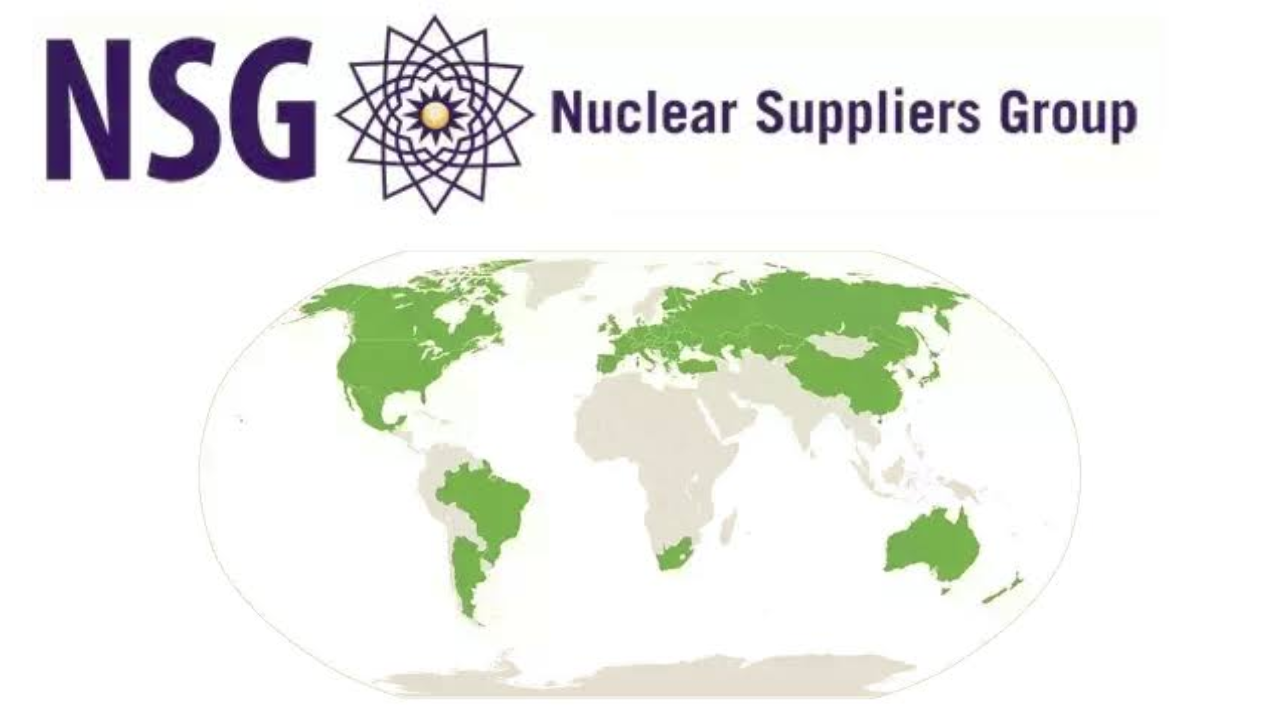
To understand why Slovakia's endorsement is strategically significant, one must examine the role of the Nuclear Suppliers Group (NSG) in the global non-proliferation architecture. The NSG is an elite, multilateral export control regime comprising 48 participating governments. It is not a formal treaty under the United Nations but rather an informal, consensus-based cartel of supplier nations that regulates global nuclear commerce.
Origin and Historical Context
The founding of the NSG was a direct reaction to India's first nuclear test, "Smiling Buddha," in May 1974. That test demonstrated how nuclear technology transferred strictly for peaceful, civilian purposes could be diverted to develop weapons. Consequently, several major nuclear supplier states—signatories to the Nuclear Non-Proliferation Treaty (NPT)—sought to establish stricter guidelines for the export of nuclear equipment, materials, and technology. The group held its inaugural meeting in November 1975 (popularly known as the "London Club") and published its first set of guidelines in 1978.
Operating Guidelines and Control Mechanisms
The NSG governs global nuclear trade through two distinct sets of export control guidelines, published by the International Atomic Energy Agency (IAEA) as the INFCIRC/254 series:
Part 1 Guidelines: The Trigger List These guidelines govern the export of items designed or prepared specifically for nuclear uses. The transfer of any item on this list "triggers" the requirement for comprehensive, full-scope IAEA safeguards in the recipient state to ensure no diversion to military activities. Controlled items include plutonium, enriched uranium, heavy water, and nuclear reactors.
Part 2 Guidelines: The Dual-Use List Adopted in 1992 following revelations about Iraq's clandestine weapons program, these guidelines govern the export of dual-use equipment and technology. These are non-nuclear items that have legitimate civilian applications but can also contribute to a nuclear weapons program. These include high-precision machine tools, lasers, and flow-forming machines used in rotor fabrication for gas centrifuges.
The 2008 Clean Waiver: A Turning Point for India
For decades, India remained isolated from global nuclear trade due to its status as a non-signatory to the NPT. However, in September 2008, following intense diplomatic lobbying by the United States under the framework of the India-US Civil Nuclear Deal (123 Agreement), the NSG granted India a historic "clean waiver". This waiver exempts India from the full-scope safeguards requirement, allowing it to engage in civilian nuclear commerce with NSG members, provided it places its civilian reactors under IAEA monitoring.
India’s Engagement with Multilateral Export Control Regimes
While the 2008 clean waiver allowed India to sign civil nuclear fuel and technology supply pacts with nations like Russia, France, and Kazakhstan, it did not grant India voting rights or a role in the NSG’s decision-making process. Consequently, India has spent over a decade seeking full integration into the world's four primary multilateral export control regimes.
The table below illustrates India’s current standing across these four key global export regimes:
MULTILATERAL EXPORT CONTROL REGIMES (MECRs) +------------------------------------+------------------------------------+ | | | MTCR (Joined 2016) Wassenaar (Joined 2017) Australia Group (Joined 2018) Limits WMD delivery Regulates conventional arms Prevents chemical/biological systems and missiles [cite: 19, 28]. and dual-use technologies. weapon proliferation. | | | +------------------------------------+------------------------------------+ | NSG (Candidate Status) Regulates nuclear materials and peaceful transfers.
| Export Control Regime | Year Established | India’s Membership Year | Primary Objectives & Control Scope |
|---|---|---|---|
| Missile Technology Control Regime (MTCR) | 1987 | 2016 [cite: 28] | Restricts the proliferation of unmanned delivery systems and missiles capable of carrying a 500 kg payload over a 300 km range. |
| Wassenaar Arrangement (WA) | 1996 | 2017 [cite: 11, 31] | Promotes transparency and responsibility in transfers of conventional arms and dual-use goods and technologies. |
| Australia Group (AG) | 1985 | 2018 [cite: 30] | Harmonizes national export controls to ensure chemical precursors and biological agents do not contribute to weapons development. |
| Nuclear Suppliers Group (NSG) | 1974 | Candidate (Applied in 2016) | Prevents nuclear weapons proliferation by regulating exports of nuclear-grade and dual-use materials. |
Aspirants reading the Atharva Examwise Current News will recall that joining the MTCR, Wassenaar Arrangement, and Australia Group has strengthened India's non-proliferation credentials. However, the NSG remains the only regime where India does not yet have a seat at the table.
Key Roadblocks to India's NSG Ambitions
Despite strong support from major powers like the US, UK, France, and Russia, India's bid for NSG membership is stalled due to structural and political hurdles:
The NPT Crux: The current NSG guidelines list NPT signatory status as a key factor for admission. India remains one of the few nuclear-armed states that has not signed the NPT, viewing it as fundamentally discriminatory.
The Consensus Principle: Because the NSG operates strictly by consensus, a single veto can block an applicant.
China's Veto Policy: China has consistently blocked India’s entry by raising procedural objections. Beijing insists on a non-discriminatory "two-step" formula, arguing that if an exception is made for non-NPT India, it must also apply to Pakistan, despite Pakistan's history of nuclear proliferation.
NPT Purists: A small group of small, non-proliferation-oriented European nations (such as New Zealand, Austria, and Ireland) have historically raised concerns that admitting a non-NPT state could weaken the global treaty framework.
Geopolitical Implications of Slovakia's Constructive Support
Slovakia's renewed support for India's NSG bid during the June 2026 visit carries several deeper geopolitical implications that extend beyond bilateral diplomacy:
Challenging NPT-Centric Rigidity in Europe: Slovakia’s constructive approach signals a growing pragmatism within the European Union. By prioritizing strategic partnerships over rigid adherence to the NPT, Central European states are helping dismantle the European bloc's historical resistance to India's inclusion.
Central Europe as a Gateway for Advanced Manufacturing: Elevating relations to a Comprehensive Partnership allows India to leverage Slovakia’s position as a major European industrial and transport hub. Slovakia's advanced automotive, railway, and engineering ecosystems complement India's large-scale manufacturing and "Make in India" goals.
Civil Nuclear and Green Energy Cooperation: Both countries are committed to net-zero carbon goals. Slovakia's experience with nuclear and geothermal energy presents a valuable avenue for joint research and technology transfer, reducing India's dependence on fossil fuels.
Engagement with Overlapping Regional Groupings: The joint statement highlighted India's interest in collaborating with Central and Eastern European frameworks:
| Regional Grouping | Member States | Key Focus & Strategic Relevance to India |
|---|---|---|
| Slavkov 3 (S3) | Slovakia, Austria, and the Czech Republic. | Focuses on regional tri-lateral transport, connectivity, and energy infrastructure in Central Europe. |
| Visegrad 4 (V4) | Slovakia, Poland, the Czech Republic, and Hungary. | A powerful political alliance that coordinates security, trade, and digital policy within the broader European Union. |
| Three Seas Initiative (3SI) | 13 EU states situated between the Baltic, Adriatic, and Black Seas. | Promotes infrastructure, digital networks, and energy connectivity to counter Russian influence and diversify supply chains. |
Key Facts & Exam-Relevant Data for UPSC Prelims
To assist serious candidates with their revision, the core facts from this development are summarized below:
Bilateral Milestone: Prime Minister Modi's June 2026 visit was the first-ever visit by an Indian Prime Minister to an independent Slovakia since 1993.
Highest Civilian Honor: Slovakia conferred The Order of the White Double Cross, First Class upon the PM. This is the 33rd global state honor received by the Prime Minister.
Strategic Upgradement: The bilateral relationship was formally elevated to a Comprehensive Partnership.
Bilateral Trade: Total trade between India and Slovakia crossed the $1 billion milestone for the first time in 2024, reaching $1.28 billion.
Establishment of AI Chair: The Technical University of Bratislava will host the first-ever India Chair on Artificial Intelligence.
Space Cooperation History: In June 2017, India's PSLV-XL successfully launched Slovakia's first-ever satellite, SKcube, into orbit.
NSG Profile: Founded in 1974 in response to India's "Smiling Buddha" test, the NSG has 48 member states and regulates nuclear exports through its Trigger and Dual-Use lists.
Why this matters for your exam preparation
For aspirants preparing for the UPSC Civil Services Examination and other competitive exams, this development is highly relevant to multiple sections of the syllabus:
UPSC GS Paper II (International Relations):
Bilateral, Regional, and Global Groupings: Analyzes India's expanding diplomatic footprint in Central and Eastern Europe, specifically its engagement with the Visegrad 4 (V4), Slavkov 3 (S3), and the Three Seas Initiative (3SI).
Global Governance and Institutional Reforms: Explores India’s ongoing campaigns for a permanent seat in a reformed United Nations Security Council (UNSC) and admission to the Nuclear Suppliers Group (NSG).
Indian Diaspora: Examines the role of the 7,700-strong Indian community in Slovakia as a bridge for cultural and economic diplomacy.
UPSC GS Paper III (Science & Technology and Security):
Technology & Innovation: Covers bilateral cooperation in emerging fields like post-quantum cryptography, AI research, semiconductors, and 5G/6G applications.
Energy Security: Explores clean energy transition strategies, civil nuclear energy regulations, and the geothermal power sector.
Security & Defense: Evaluates the strategic significance of the Joint Working Group on Counter-Terrorism and the signing of the Letter of Intent on Defense Cooperation.
For more daily GK updates and comprehensive mock tests, visit the Atharva Examwise Daily GK Update page.