
UPSC Current Affairs: China's LineShine Tops Global Supercomputing List in Daily GK Update
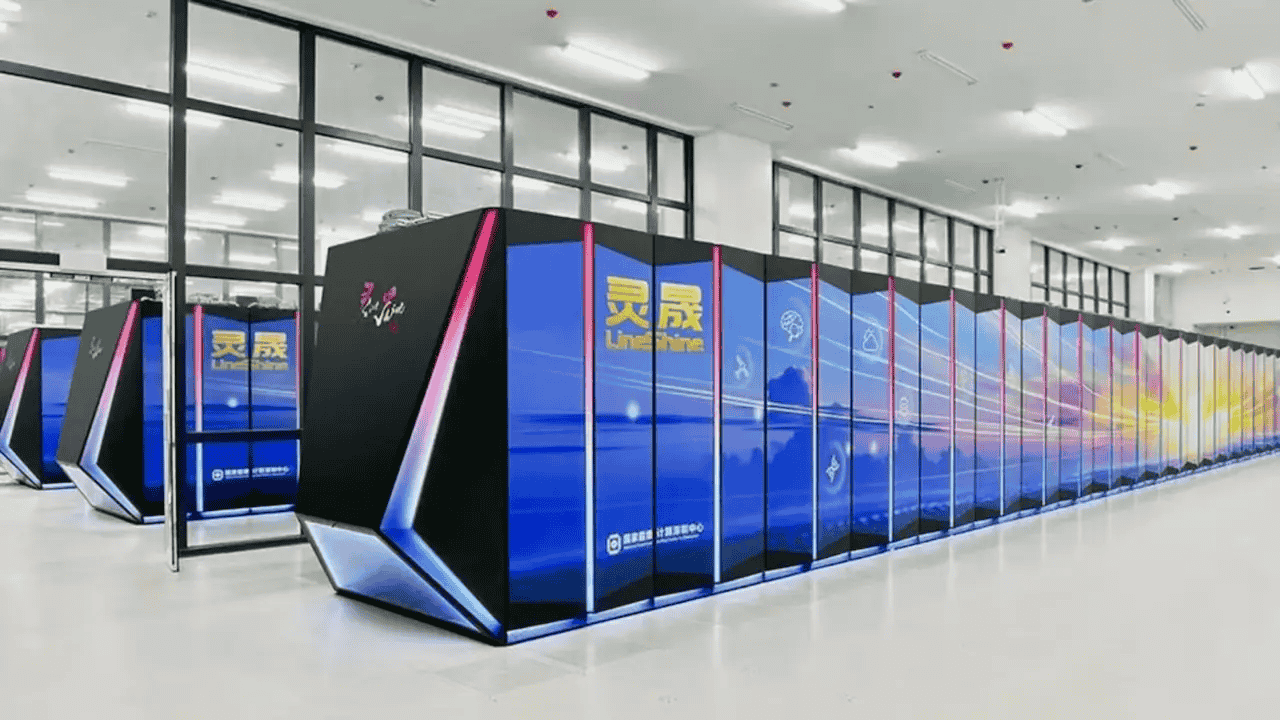
The global high-performance computing landscape underwent a dramatic shift at the International Supercomputing Conference (ISC 2026) in Hamburg, Germany, where the 67th edition of the prestigious TOP500 list was officially unveiled. Marking a significant geopolitical and technological milestone, the newly debuted Chinese supercomputer, LineShine, secured the top position as the world's most powerful publicly listed supercomputer. Housed at the National Supercomputing Centre in Shenzhen (NSCS) and developed by the Shenzhen Cloud Computing Center, LineShine has successfully displaced the United States' premier system, El Capitan, which now occupies the second rank.
This historic achievement represents the first time since 2017—when the Sunway TaihuLight system held the summit—that a Chinese supercomputer has officially claimed the number-one spot. For serious aspirants preparing for the Union Public Service Commission (UPSC) and other high-tier competitive examinations, this development serves as an excellent case study in technological sovereignty, the geopolitics of advanced semiconductors, and the rapid evolution of high-performance computing (HPC) ecosystems.
Understanding LineShine: Core Architectural Innovations
The defining characteristic of LineShine lies not merely in its raw processing capacity, but in its unique, highly integrated architectural design. Unlike contemporary American and European exascale systems, which rely heavily on specialized graphics processing units (GPUs) acting as accelerators alongside central processing units (CPUs), LineShine achieves its record-breaking benchmarks using a pure, CPU-only architecture.
The system clocked a sustained double-precision performance of $2.198 \text{ Exaflops}$ (exaflops) on the High Performance Linpack (HPL) benchmark, against a theoretical peak performance of $2.736 \text{ Exaflops}$. This translates to a sustained efficiency rate of approximately $80\%$, showcasing outstanding system-level engineering and communication protocols that significantly outperform typical GPU-hybrid architectures, which generally operate in the $50\%$ to $65\%$ efficiency range. Mathematically, one exaflop represents $10^{18}$ floating-point operations per second, meaning LineShine is capable of executing more than two quintillion calculations every second.
Key Factual Takeaways for Competitive Exams
Name & Facility: LineShine, operated by the Shenzhen Cloud Computing Center at the National Supercomputing Centre in Shenzhen, China.
Performance Benchmark: Sustained performance of $2.198 \text{ Exaflops}$ ($R_{max}$) and a theoretical peak of $2.736 \text{ Exaflops}$ ($R_{peak}$).
Processing Architecture: Built entirely on the custom "LingKun" platform featuring $13.79 \text{ million}$ physical cores across $304\text{-core}$ homegrown LX2 processors running at a clock rate of $1.55 \text{ GHz}$.
Instruction Set & Interconnect: Runs on KylinOS (a specialized Chinese Linux distribution) utilizing ARMv9 instruction set designs licensed from Britain's Arm Holdings, connected via the proprietary "LingQi" interconnect network.
Power & Efficiency: Draws approximately $42.2 \text{ Megawatts}$ (MW) of electricity, yielding an energy efficiency ratio of $52.07 \text{ Gigaflops/Watt}$.
AI vs. Scientific Precision: Secures the top position in double-precision workloads (FP64) but ranks fourth on the HPL-MxP mixed-precision benchmark, which is more representative of artificial intelligence (AI) training performance.
Geopolitical Implications: Navigating the Semiconductor Trade War
The public emergence of LineShine carries profound geopolitical connotations. Following years of increasingly stringent export controls enacted by the United States Department of Commerce—which deliberately targeted China’s access to advanced AI-focused GPUs and high-end fabrication tooling from manufacturers like NVIDIA, AMD, and Intel—the design of LineShine signals a strategic pivot by Beijing towards total technological self-reliance.
By leveraging an extensively parallel CPU-only architecture built on custom domestic processors rather than relying on GPU accelerators, Chinese engineers have demonstrated a viable alternative pathway to exascale performance. Analysts observe that while Washington’s blockades have severely disrupted China’s access to advanced monolithic AI chips, system-level innovations, architectural optimization, and advanced packaging techniques can effectively bypass single-component limitations.
However, scientific and policy experts urge caution before declaring a total shift in AI supremacy. While LineShine dominates traditional scientific simulations (such as weather modeling and quantum physics calculations), it is less optimized for the lower-precision tensor calculations fundamental to modern Generative AI models.
Furthermore, hyperscale cloud enterprises in the West (including Microsoft, Amazon, and Google) construct massive proprietary computing clusters specifically tuned for AI training that do not participate in the voluntary TOP500 rankings. Consequently, the TOP500 serves as a reliable metric for state-funded scientific research platforms rather than a comprehensive map of global commercial AI capacity.
For detailed analyses of global scientific pacts and technological corridors, candidates may refer to the Atharva Examwise competitive exam news today section.
Comparative Analysis of the Global Exascale Club
As of the June 2026 TOP500 iteration, only five supercomputing systems worldwide have officially crossed the exascale threshold, meaning they can sustain more than $1 \text{ Exaflop}$ of double-precision computational power.
| Rank | System Name | Host Institution / Country | Architecture & Hardware Platform | Sustained Performance (HPL - Rmax) | Theoretical Peak (Rpeak) | Power Consumption |
|---|---|---|---|---|---|---|
| 1 | LineShine [cite: 4] | NSCS, Shenzhen, China | LingKun Platform, LX2 304-Core CPUs, KylinOS | $2.198 \text{ Exaflops}$ [cite: 1] | $2.736 \text{ Exaflops}$ [cite: 1] | $42.2 \text{ MW}$ [cite: 1] |
| 2 | El Capitan [cite: 4] | Lawrence Livermore National Lab, USA | HPE Cray EX255a, AMD EPYC CPUs, AMD Instinct MI300A | $1.809 \text{ Exaflops}$ [cite: 1] | $2.821 \text{ Exaflops}$ [cite: 12] | $29.7 \text{ MW}$ [cite: 4] |
| 3 | Frontier [cite: 4] | Oak Ridge National Lab, USA | HPE Cray EX235a, AMD EPYC CPUs, AMD Instinct MI250X | $1.353 \text{ Exaflops}$ [cite: 1] | $2.056 \text{ Exaflops}$ [cite: 14] | $24.6 \text{ MW}$ [cite: 14] |
| 4 | Aurora [cite: 4] | Argonne National Lab, USA | HPE Cray EX, Intel Xeon Max CPUs, Intel Max GPUs | $1.012 \text{ Exaflops}$ [cite: 1] | $1.980 \text{ Exaflops}$ [cite: 14] | $38.7 \text{ MW}$ [cite: 14] |
| 5 | JUPITER Booster [cite: 4] | Jülich Supercomputing Centre, Germany | BullSequana XH3000, NVIDIA Grace CPUs, NVIDIA GH200 | $1.000 \text{ Exaflops}$ [cite: 1] | $1.226 \text{ Exaflops}$ [cite: 4] | $15.8 \text{ MW}$ [cite: 4] |
This distribution highlights the geographic diversification of extreme-scale computing. While the United States maintains a dominant presence with three exascale machines in the top five, China's return to the summit and Europe’s consolidation of its exascale capability via the German JUPITER system highlight a tripolar tech race.
Concurrently, on the Green500 index, which ranks supercomputers based on energy efficiency, France's KAIROS system continues to lead the world, delivering $73.28 \text{ Gigaflops/Watt}$ utilizing specialized NVIDIA Grace Hopper GH200 superchips, proving that hybrid accelerator configurations remain far superior in terms of computational green transition.
India's Supercomputing Landscape: National Supercomputing Mission (NSM)
For civil services aspirants, tracing India's domestic parallel developments under the National Supercomputing Mission (NSM) is of paramount educational importance. Jointly steered by the Department of Science and Technology (DST) and the Ministry of Electronics and Information Technology (MeitY), and implemented by the Centre for Development of Advanced Computing (C-DAC) and the Indian Institute of Science (IISc), the NSM aims to build a robust high-performance computing grid.
India’s roadmap is guided by a triple-phase implementation strategy, progressively shifting from system assembly to absolute indigenous design and manufacturing of critical components, including homegrown processors.
India's Major Supercomputing Assets (2025–2026)
| System Name | Operating Site / Institution | Computational Capacity | Technology Stack & Key Highlights |
|---|---|---|---|
AIRAWAT – PSAI [cite: 18] | C-DAC, Pune | $8.50 \text{ PFLOPS}$ (Sustained) / $13.17 \text{ PFLOPS}$ (Peak) | India's fastest publicly listed system; acts as the primary hub for national AI research and model training. |
PARAM Siddhi – AI [cite: 19] | C-DAC, Pune | $6.5 \text{ PFLOPS}$ (Sustained) / $210 \text{ PFLOPS}$ (AI Peak) | High-end GPU-accelerated system dedicated to deep learning and advanced bioinformatics. |
PARAM Pravega [cite: 19] | IISc, Bengaluru | $3.3 \text{ PFLOPS}$ [cite: 19] | Hosted at one of India's premier academic institutions to support advanced material sciences and aerospace simulations. |
PARAM Rudra [cite: 20] | IIT Bombay & IIT Madras | $3.0 \text{ to } 3.1 \text{ PFLOPS}$ [cite: 20, 21] | Developed under Phase-3 of the NSM build initiative, utilizing indigenously designed "Rudra" server platforms. |
Arka / Arunika [cite: 18] | IITM (Pune) & NCMRWF (Noida) | $5.94 \text{ PFLOPS}$ each | Critical systems designed primarily for climate projections, real-time monsoon tracking, and agricultural planning. |
The inauguration of the PARAM Rudra systems across multiple key research institutes (such as IIT Bombay, IIT Madras, and SNBNCBS Kolkata) represents India's transition to technological self-reliance. These facilities are powered by the indigenously designed "Rudra" servers and C-DAC's proprietary system software stack. The integration of advanced Direct Contact Liquid Cooling (DCLC) technology allows these systems to achieve highly efficient Power Usage Effectiveness (PUE) scores ranging between 1.2 and 1.4, aligning India’s infrastructure with modern green-computing paradigms.
Why this matters for your exam preparation
For serious aspirants tracking the UPSC civil services syllabus, particularly General Studies Paper III (Science and Technology), this high-performance computing milestone holds multidimensional significance:
1. Indigenization of Technology and Cyber Sovereignty
LineShine's ability to achieve exascale processing using homegrown CPUs demonstrates how a nation can bypass restrictive global supply chains and semiconductor embargos. This offers a vital comparative case study for India's own initiatives under the "Make in India" banner, specifically Phase-3 of the National Supercomputing Mission, which focuses on designing native microprocessors and high-speed "Trinetra" interconnect networks.
2. Geopolitical and Strategic Tech Cold War
Advanced computing has emerged as a crucial metric of national power. The competition between the US and China—evidenced by the timing of LineShine’s entry alongside new US Executive Orders and initiatives like the Quantum Genesis program—illustrates how scientific assets are leveraged as instruments of strategic deterrence.
3. Conceptual Clarity: HPC vs. Artificial Intelligence
UPSC often designs questions to test candidates' understanding of foundational technological concepts. Understanding the difference between traditional double-precision scientific workloads (measured in HPL benchmarks at FP64) and low-precision AI workloads (which are measured via benchmarks like HPL-MxP or hosted within unlisted corporate hyperscaler farms) is a critical conceptual differentiator.
4. Direct GK and Current Affairs Questions
For the Prelims examination and other competitive state-level tests (such as State PCS, SSC, and Banking exams), direct questions may be asked regarding:
The world's fastest supercomputer (LineShine) and its operating speed ($2.198 \text{ Exaflops}$).
The official developer and location of the system (Shenzhen, China).
The ranking and capacity of Indian supercomputers, as well as the mandate of the implementing agencies of the National Supercomputing Mission (DST, MeitY, C-DAC, and IISc).
To further strengthen your preparation on digital sovereignty, semiconductor corridors, and high-performance networks, explore our comprehensively compiled notes on the Atharva Examwise UPSC current affairs study center, which are updated daily to align with the latest exam patterns.