
UPSC Current Affairs June 20, 2026: NCRB Abhigyan App and the Digital Revolution in Indian Policing
Introduction to Modernized Policing and internal Security Reforms
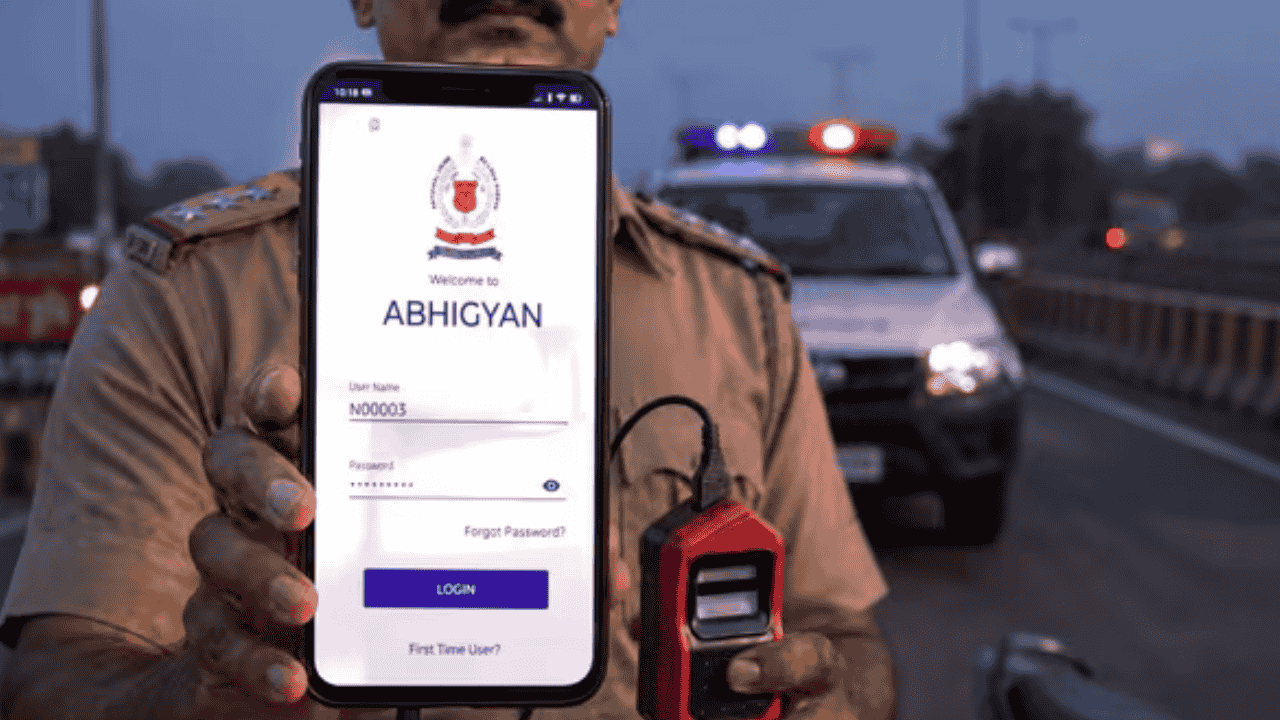
The landscape of Indian law enforcement and the criminal justice delivery system has entered an advanced technological era. On June 19, 2026, the Union Home Minister launched the National Crime Records Bureau's (NCRB) new mobile application, Abhigyan, at the 26th All India Fingerprint Conference held in New Delhi. This digital application provides police and investigative agencies with real-time, fingerprint-based suspect verification capabilities directly on the field.
This technology marks a structural departure from traditional, physical station-bound identification protocols. The initiative forms part of the central government's ongoing campaign to overhaul colonial-era criminal frameworks. Following the implementation of India's three new criminal laws—the Bharatiya Nyaya Sanhita (BNS), the Bharatiya Nagarik Suraksha Sanhita (BNSS), and the Bharatiya Sakshya Adhiniyam (BSA)—the administration has targeted completing the entire process from the registration of a First Information Report (FIR) to judicial conviction within three years. The introduction of the Abhigyan application, linked to a massive national biometric database, represents a key operational asset in achieving this objective. For a comprehensive assessment of these legislative changes, readers may refer to the Atharva Examwise Daily GK Update: India's New Criminal Laws.
Operational Mechanism of the Abhigyan Application
The Abhigyan application is designed to optimize ground-level policing by mobilizing biometric search infrastructure. Previously, checking a suspect's fingerprints against national records required detaining the individual and transporting them to one of only 1,556 designated static workstations deployed at district headquarters or major police stations across the country. The new app removes this delay through a decentralized, mobile-first design.
Key Technical and Operational Features
Portable Handheld Scanning: Field officers utilize portable, certified biometric scanners connected via Bluetooth to their smartphones. During routine checks or vehicle stops, an officer can capture the fingerprint or thumb impression of a suspicious individual on-the-spot.
Two-Step Authentication Security: To prevent unauthorized database access and secure sensitive information, the application requires two-step authentication for all authorized personnel.
NAFIS Database Querying: Once scanned, the biometrics are sent over a secure network to query the National Automated Fingerprint Identification System (NAFIS).
35-Second Identification: The database matches the print and returns the suspect’s real-time identity and criminal history to the officer’s smartphone in approximately 35 seconds. This fast loop provides immediate warning if the officer is confronting a wanted or hardened offender.
Real-Time Integration: As new criminal records are logged by police departments nationwide, the database updates in real-time, ensuring information remains current across state lines.
Technical Fact Sheet: Databases and Infrastructure
To build an actionable intelligence network, the Ministry of Home Affairs is focusing on integrating legacy records with artificial intelligence (AI) and machine learning. According to reports from the Press Information Bureau and official NCRB presentations, the scale of India's centralized digital police databases has reached a highly advanced level:
NAFIS Fingerprint Records: Currently hosts over 1.29 crore unique criminal fingerprint records.
Specialized Databases: Includes dedicated files on approximately 9.91 lakh narcotics offenders and 3.65 lakh human trafficking cases.
CCTNS Legacy Data: Reaches across all 17,840 police stations in India, maintaining a repository of 37.68 crore digital FIR records.
e-Prisons Integration: Tracks real-time data for 2.29 crore prison inmates.
e-Forensics Database: Contains scientific data and chain-of-custody tracking for over 34.48 lakh cases.
e-Courts System: Connects 22,000 judicial courts to streamline trial scheduling and reduce procedural delays.
The Four-App Digital Push: Expanding the Investigative Toolkit
The release of the Abhigyan app occurred alongside the deployment of three other digital platforms developed by the NCRB. Together, these applications seek to standardize and accelerate scientific investigation, forensic integration, and prosecution workflows.
| Application | Core Institutional Purpose | Key Features and Capabilities |
|---|---|---|
NCRB-Abhigyan [cite: 10] | Real-time, portable suspect identification. | Mobile fingerprint capture; NAFIS integration; 35-second matching capability. |
CrPI (Criminal Procedure Identification) [cite: 10, 16] | Multi-modal biometric compilation and search. | Integrates facial recognition, iris scans, and DNA profile matching. |
e-Prosecution 2.0 [cite: 10] | Digital integration between police, prosecutors, and courts. | Automated chargesheet filing; case tracking; real-time notifications for trial proceedings. |
e-Forensics 2.0 [cite: 10] | Digitization of evidence collection and lab analysis. | Connects field investigators with forensic laboratories; records digital chain of custody. |
Comparative Legal Analysis: Colonial Laws vs. Modern Statutes
The statutory authority for capturing and storing biometric measurements is derived from the Criminal Procedure (Identification) Act, 2022 (CrPI Act). This modern legislation repealed the colonial-era Identification of Prisoners Act, 1920, reflecting advances in biometric science and forensic capabilities.
| Legal Dimension | Identification of Prisoners Act, 1920 (Repealed) | Criminal Procedure (Identification) Act, 2022 (In Force) |
|---|---|---|
| Permitted Measurements | Limited to finger impressions, footprint impressions, and physical photographs. | Expanded to fingerprints, palm prints, iris/retina scans, DNA profiling, behavioral attributes, and signatures. |
| Target Population | Convicted persons or those arrested for offenses carrying rigorous imprisonment of one year or more. | Any person convicted, arrested for any offense, or detained under preventive detention laws. |
| Authorized Personnel | Limited to Officers-in-Charge of police stations or investigators above the rank of Sub-Inspector. | Broadened to Head Constables and above, and jail wardens of Head Warder rank and above. |
| Database Management | Decentralized, state-level physical cards; lack of real-time national synchronization. | Centralized digitally under the NCRB, which manages storage, sharing, and destruction. |
| Data Retention Limits | Records destroyed upon acquittal or discharge unless otherwise ordered by a Magistrate. | Stored in digital format for 75 years; records of non-convicted persons destroyed only after exhausting all appeals. |
The Legal Penalty for Refusing Biometric Capture
Under the CrPI Act 2022, providing authorized measurements is a legal requirement for designated individuals. If a suspect resists or refuses biometric capture, it is treated as a criminal offense of obstructing a public servant in the discharge of their duty.
With the replacement of the Indian Penal Code (IPC) by the Bharatiya Nyaya Sanhita (BNS) on July 1, 2024, this offense is prosecuted under Section 221 of the BNS (the modern equivalent of Section 186 of the IPC). Section 221 of the BNS prescribes that voluntarily obstructing a public servant in the discharge of public functions is punishable with simple imprisonment of up to three months, a fine of up to ₹2,500 (an increase from the ₹500 limit under the previous IPC), or both.
Technical Distinction: NAFIS Forensic Database vs. UIDAI Aadhaar Database
A notable administrative and legal issue arises regarding the use of biometric databases for criminal investigations. During investigations of unclaimed deceased individuals or unidentified suspects, law enforcement agencies have occasionally petitioned the courts to match recovered biometrics against the Aadhaar database administered by the Unique Identification Authority of India (UIDAI).
However, the judiciary has clarified that the UIDAI database cannot be utilized for forensic investigation. In a notable ruling, the Madras High Court dismissed a police petition seeking to run fingerprint scans of an unidentified deceased body against the Aadhaar database, characterizing the expectation as structurally unfeasible. The court and technical experts highlighted distinct structural differences between the two databases:
Query Architecture (One-to-One vs. One-to-Many): UIDAI is built strictly for one-to-one verification. It takes a provided 12-digit Aadhaar number and checks if the live biometric scan matches the specific profile linked to that number. It does not possess the database architecture to run a one-to-many search, which would require querying a sample print against the entire repository of over 100 crore enrolled citizens to identify a match. Conversely, NAFIS is designed specifically for automated, one-to-many forensic searches across its 1.29 crore criminal records.
Forensic Data Standards: The UIDAI does not capture or store biometric data using the forensic-grade resolutions or standards required for criminal investigation and court admissibility. NAFIS, managed by the NCRB, utilizes standardized, high-resolution forensic biometric imaging specifically designed to support prosecution and stand legal scrutiny in a court of law.
Constitutional Analysis and Civil Liberty Concerns
While the speed of the Abhigyan application improves operational efficiency, its deployment in street policing introduces constitutional questions under the Right to Privacy and Protection against Self-Incrimination. For a deeper look at these doctrines, refer to the Atharva Examwise Polity Notes: Right to Privacy and Article 21.
The Issue of Warrantless Street-Level Scanning
The primary legal concern regarding the Abhigyan app is its potential use during routine street patrols and vehicle checks. The operational demonstration of the app showed that field police officers can scan the fingerprints of "any suspicious individual" encountered on the street.
However, legal experts point out that Section 3 of the Criminal Procedure (Identification) Act, 2022, restricts mandatory biometric collection to individuals who have been formally arrested, convicted, or placed under preventive detention. The statute does not explicitly authorize the random, warrantless testing of citizens on public streets without prior evidence linking them to a specific, punishable offense. Performing biometric searches on citizens without statutory backing or reasonable cause raises privacy concerns under the landmark supreme court ruling in K.S. Puttaswamy v. Union of India, which held that any state intrusion into personal privacy must satisfy the three-fold test of legality, necessity, and proportionality.
Biometric Evidence and the Right Against Self-Incrimination (Article 20(3))
Another constitutional debate center on whether forcing an individual to provide biometric markers or biological samples under the CrPI Act, 2022, violates Article 20(3) of the Constitution, which guarantees that no person accused of an offense shall be compelled to be a witness against himself.
The primary judicial standard on this issue is the eleven-judge bench ruling in State of Bombay v. Kathi Kalu Oghad (1961). The Supreme Court ruled that the protection under Article 20(3) applies only to "communicative" evidence—meaning testimonies, spoken statements, or documents within the personal cognitive knowledge of the accused. The court held that providing physical, "non-communicative" markers—such as thumb impressions, handwriting specimens, or footprint scans—does not constitute self-incrimination because these markers are objective physical constants that do not convey cognitive testimony. While this classic precedent protects standard fingerprint databases, modern civil liberties advocates argue that the collection of behavioral attributes, voice samples, and complex DNA profiling under e-Forensics and the CrPI system pushes these traditional legal boundaries.
Why this matters for your exam preparation
For candidates preparing for the UPSC Civil Services Examination and other competitive exams, the launching of the Abhigyan app and the expansion of the NAFIS database represent highly relevant topics across multiple syllabus papers.
For UPSC Prelims (General Studies Paper I)
Aspirants should focus on:
Institutional Roles: The administrative mandate of the National Crime Records Bureau (NCRB) under the Ministry of Home Affairs.
Key Databases: The functioning of the NAFIS database, its distinction from UIDAI, and its integration with systems like CCTNS, e-Prisons, and e-Forensics.
Statutory Details: Key differences between the colonial-era Identification of Prisoners Act, 1920, and the Criminal Procedure (Identification) Act, 2022, specifically the 75-year retention period and data collection protocols.
Modern Legal Penalties: The integration of the BNS and BNSS, with specific emphasis on Section 221 of the BNS for obstruction of public duty.
For UPSC Mains (General Studies Paper II & Paper III)
Candidates must develop structured arguments regarding:
Governance and E-Technology: Analyzing how digital platforms like the e-Prosecution 2.0 and e-Forensics 2.0 databases streamline criminal investigations and reduce case pendency.
Constitutional Balance: Evaluating the conflict between state-driven internal security measures and individual fundamental rights, particularly the Right to Privacy (Article 21) and the Right against Self-Incrimination (Article 20(3)).
Judicial Precedents: Referencing the Kathi Kalu Oghad (1961) and K.S. Puttaswamy (2017) rulings to evaluate the legality of digital policing tools.
Internal Security and Federalism: Examining the coordination between central databases (NCRB) and state law enforcement agencies, who bear primary responsibility for database security, quality, and field execution.