
UPSC Current Affairs June 2026: Daily GK Update on India’s Historic Phase-II Ballistic Missile Defence Milestone
Introduction to India’s Phase-II Ballistic Missile Defence Milestone
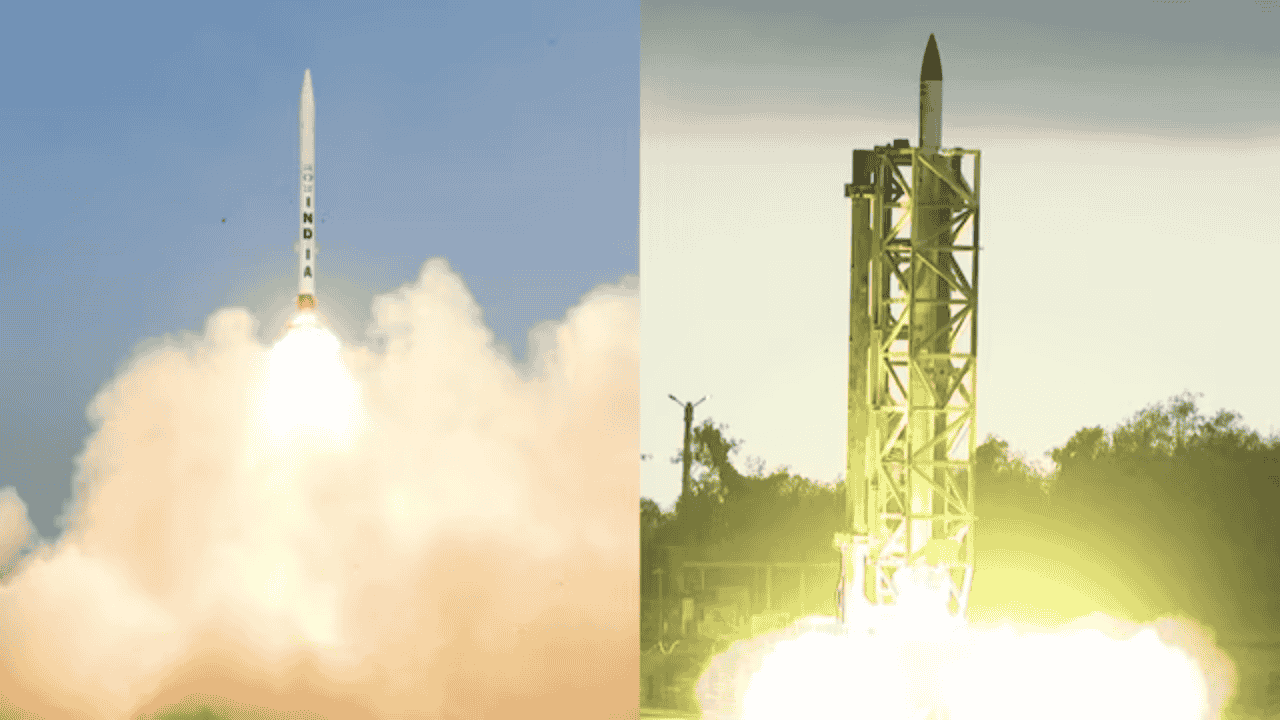
The global strategic landscape underwent a significant shift on June 10 and 11, 2026, as the Defence Research and Development Organisation (DRDO) successfully conducted three consecutive flight trials of its next-generation defense platforms. These tests successfully demonstrated India's multi-layered Ballistic Missile Defence (BMD) capability to intercept and neutralise incoming long-range ballistic missile threats, including those in the Intercontinental Ballistic Missile (ICBM) class. With the validation of these advanced technologies, India has entered an elite category of military powers possessing operational-level ballistic missile defence systems capable of engaging ICBM-level threats. This group has historically been restricted to the United States, Russia, China, and Israel.
The consecutive trials, conducted from the Integrated Test Range (ITR) in Chandipur and APJ Abdul Kalam Island off the coast of Odisha, validated a multi-layered missile defence architecture designed to destroy hostile projectiles both outside (exo-atmospheric) and within (endo-atmospheric) the Earth’s atmosphere. According to official releases from the Ministry of Defence, the interceptor platforms successfully engaged high-speed targets simulating advanced ballistic missile profiles.
Alongside the strategic BMD trials, the DRDO also conducted the successful maiden flight test of the indigenous Naval Anti-Ship Missile-Medium Range (NASM-MR). This parallel achievement highlights a coordinated effort to strengthen both offensive and defensive components of the national security grid. As covered in the Atharva Examwise daily GK update, these developments represent an important step in India's pursuit of technological self-reliance under the Atmanirbhar Bharat initiative, fundamentally altering regional deterrence dynamics in the Indo-Pacific.
Evolution of the Indian Ballistic Missile Defence Programme
The Indian BMD programme was initiated in 1999 following the Kargil War, primarily to protect strategic urban centers and critical installations from the expanding missile capabilities of regional adversaries. Over nearly three decades, the DRDO has developed and refined a double-tiered defensive shield designed to engage incoming targets at varying altitudes and ranges. The progression of this program is divided into two operational phases.
| Parameter | Phase-I BMD Architecture | Phase-II BMD Architecture |
|---|---|---|
| Developmental Timeline | Initiated in 1999; developmental trials completed in April 2019. | Conceptualized in the 2010s; final developmental trials completed in June 2026. |
| Threat Engagement Range | Designed to counter short- and medium-range ballistic missiles up to 2,000 km. | Designed to counter intermediate-range (IRBMs) and limited ICBM-class threats up to 5,000+ km. |
| Primary Interceptors | Prithvi Air Defence (PAD) / Prithvi Defence Vehicle (PDV) and Advanced Air Defence (AAD). | AD-1 and AD-2 Interceptor Missiles. |
| Operational Altitudes | Exo-atmospheric: 50–100 km; Endo-atmospheric: 15–30 km. | Endo- and low exo-atmospheric (AD-1) to high exo-atmospheric (AD-2). |
| Target Intercept Speeds | Up to Mach 5. | Exceeding Mach 6.5. |
| Deployment Status | Limited operational deployment around strategic hubs like New Delhi and Mumbai. | Transitioning to limited serial production and initial deployment planning as of 2026. |
Technical Specifications of Phase-II Interceptors and Sensors
The Phase-II BMD architecture relies on two newly designed high-speed interceptor platforms, the AD-1 and the AD-2, which work alongside advanced tracking radars and command networks to create a responsive, network-centric system.
AD-1 Interceptor Missile
The AD-1 is a long-range, two-stage solid-propelled interceptor missile engineered to operate across a large kill altitude bracket. It is designed for both low exo-atmospheric and endo-atmospheric interception. Driven by indigenously developed navigation, guidance algorithms, and an advanced control system, the AD-1 is capable of destroying long-range ballistic missiles as well as high-altitude aircraft, including Airborne Warning and Control Systems (AWACS).
AD-2 Interceptor Missile
The AD-2 is designed for high exo-atmospheric interception. This platform is optimized to engage intermediate-range ballistic missiles (IRBMs) and select ICBM-class threats travelling at hypersonic speeds in outer space before they begin their re-entry phase into the Earth's lower atmosphere.
The physical and operational parameters of India's anti-ballistic missile platforms are compared in the table below:
| Interceptor Platform | Operational Stage | Propulsion System | Max Speed (Mach) | Maximum Target Range (km) | Interception Altitude (km) | Guidance and Terminal Seekers | Target Class |
|---|---|---|---|---|---|---|---|
PAD (Pradyumna) [cite: 2] | Phase-I (Exo) | Two-stage: Liquid (1st), Solid (2nd) | Mach 5 | 300–2,000 | 50–80 | INS + Ground Updates + Active Radar Homing | MRBM & IRBM |
AAD (Ashwin) [cite: 2, 19] | Phase-I (Endo) | Single-stage: Solid Propellant | Mach 4.5 | 150–200 | 15–30 | INS + Ground Updates + Active Radar Homing | MRBM |
PDV [cite: 2, 17] | Transition (Exo) | Two-stage: Solid Rocket Motor | High Supersonic | 2,000+ | 50–180 | Ring Laser Gyro (RLG) INS + IIR Terminal Homing | MRBM & IRBM |
PDV Mk2 [cite: 2] | Anti-Satellite (ASAT) | Two-stage Solid + Kinetic Kill Vehicle | Mach 8–10 | 5,000+ | >1,200 | High-precision INS + Kinetic Interception | Low-Earth Satellites |
AD-1 [cite: 2] | Phase-II (Endo/Low-Exo) | Two-stage Solid Rocket Motor | Mach 6.5 | 1,000–3,000 | Low-Exo & Endo | Advanced Control System + Kinetic Hit-to-Kill | MRBM, IRBM, & AWACS |
AD-2 [cite: 2] | Phase-II (High-Exo) | Two-stage Solid Rocket Motor | > Mach 6.5 | 3,000–5,500 | High Exo-atmospheric | Advanced Guidance + Kinetic Hit-to-Kill | IRBM & ICBM |
Radar and Sensor Architecture
The tracking capabilities of India's BMD system rely on the Swordfish Long-Range Tracking Radar (LRTR), an active phased array radar derived from Israeli Green Pine technology. This active phased array system is capable of acquiring and tracking up to 200 targets simultaneously at an extended range of up to 1,500 km. During the Phase-II tests, the DRDO integrated sea-based sensors alongside land-based tracking radars, expanding situational awareness across maritime approaches in the Indo-Pacific. Real-time telemetry data is processed by the MCC, which utilizes low-latency communication networks to link sensors, launch platforms, and interceptors.
National Integration: The Sudarshan Chakra Air Defence Shield
The validation of Phase-II BMD interceptors is a key component of India's larger air defense initiative, known as the Mission Sudarshan Chakra. This initiative aims to establish a integrated, multi-layered air and missile defense shield by 2035. This architecture coordinates tactical very short-range weapons with strategic long-range systems, protecting Indian airspace from drones, fighter aircraft, cruise missiles, and ballistic warheads.
This national security grid integrates several key defensive networks, details of which are regularly analyzed in the Atharva Examwise competitive exam news today:
Strategic Outer Shield (BMD Phase-I & II): Targets incoming medium, intermediate, and intercontinental ballistic threats at altitudes ranging from 30 km to over 180 km.
Long-Range Area Defence (S-400 Triumf & Project Kusha): Provides area defense against high-performance aircraft, stealth platforms, and cruise missiles at ranges between 150 km and 400 km.
Medium-to-Short Range Shielding: Comprises the indigenous Akash SAM system (45 km range) and the Indo-Israeli Barak-8 MRSAM (70–100 km range) for protecting key military installations and command hubs.
Point Defence & Terminal Layer: Combines QRSAM, SPYDER, and VSHORAD platforms with directed-energy weapons (DEWs) to neutralize low-altitude cruise missiles, precision munitions, and drone swarms.
To understand how India balances domestic developmental programs with imported platforms, the table below compares the Russian-procured S-400 Triumf with the DRDO's upcoming Project Kusha:
| Parameter | S-400 Triumf (Sudarshan in Indian Service) | Project Kusha (Extended Range Air Defence System - ERADS) |
|---|---|---|
| Country of Origin | Russia | India (Indigenously developed by DRDO & BEL) |
| Primary System Role | Long-range Area Air Defence System | Indigenous Long-range Surface-to-Air Missile (SAM) |
| Radar Technology | Active Phased Array Radar | Gallium Nitride (GaN) based Multi-Function Radar (MFR) |
| Tracking Capacity | Up to 300 targets simultaneously | Up to 200 targets simultaneously (600 km range for 2m² RCS) |
| Engagement Capacity | Can engage up to 36 targets simultaneously | Can guide up to 24 interceptor missiles in flight |
| Interceptor Variants | Layered missiles: 9M96E (40 km), 9M96E2 (120 km), 48N6DM (250 km), 40N6 (400 km) | Three variants: M1 (120–150 km), M2 (250 km), M3 (350–400 km) |
| Target Profile | Fighter jets, stealth platforms, UAVs, cruise & ballistic missiles | Stealth aircraft, cruise missiles, drones, hypersonic glide vehicles |
| Operational Timeline | Three out of five procured squadrons active as of 2026 | First guided trials in 2026; planned induction from 2028 to 2030 |
The operational coordination of these systems was demonstrated during "Operation Sindoor"—a 2025 tri-services military campaign launched following a terror attack in Pahalgam. During the operation, long-range air defense networks successfully intercepted hostile drones and rocket barrages, proving the utility of real-time data fusion through the Integrated Air Command and Control System (IACCS).
Tactical Advances in Maritime Warfare: NASM-MR
Alongside the strategic BMD trials, the DRDO successfully conducted the maiden flight test of the Naval Anti-Ship Missile-Medium Range (NASM-MR) on June 10, 2026. This subsonic, sea-skimming anti-ship weapon is designed for use by the Indian Navy against surface combatants such as frigates, corvettes, and destroyers.
The missile features several key technological components:
Strike Range & Profile: Operates with a strike range of approximately 300 km. It maintains a low-altitude, sea-skimming flight profile to stay below hostile radar horizons.
Guidance Systems: Employs an integrated Inertial Navigation System (INS) combined with GPS updates and a high-precision radar altimeter for midcourse flight.
Terminal Seeker: Features an active X-band Active Electronically Scanned Array (AESA) Radio Frequency (RF) terminal seeker. This represents an upgrade over the shorter-range NASM-SR, which utilizes an Imaging Infrared (IIR) terminal seeker.
Propulsion & Payload: Equipped with a two-way datalink and a penetration-cum-blast warhead. While initial flight-testing utilizes a Safran-built turbojet engine, series-production models are designed to use the DRDO's indigenous Active Turbine Gas Generator (ATGG) turbofan engine.
Launch Platform: Designed primarily as an air-to-ship weapon integrated with naval fighter jets like the MiG-29K, which can carry up to four NASM-MR missiles.
+--------------------------------------------------------------------------+ | NASM-MR Flight Trajectory | | | | [Air Launch MiG-29K] | | │ | | ▼ (Midcourse: INS + GPS + Radar Altimeter Sea-Skimming) | | ~~~~~~⎓⎓⎓⎓⎓⎓⎓⎓⎓⎓⎓⎓⎓⎓⎓⎓⎓⎓⎓⎓⎓⎓⎓⎓⎓⎓⎓⎓⎓⎓⎓~~~~~~~~~~~~~~~~~~~~~~~~~~ | | (Terminal: X-Band AESA Seeker)| | ▼ | | [Hostile Combatant] | +--------------------------------------------------------------------------+
Geopolitical and Strategic Implications in the Indo-Pacific
The development of India's Phase-II BMD system and its integration into the national defense grid carries several broader geopolitical and strategic implications:
Altering Regional Deterrence Dynamics
The introduction of a verified defensive shield capable of intercepting long-range, high-velocity missiles alters the deterrence calculations in South Asia. In alignment with India's "No First Use" (NFU) nuclear doctrine, a robust BMD capability provides protection against potential pre-emptive counter-force strikes, helping secure the country's retaliatory second-strike capability. This reduces the risk of nuclear blackmail and raises the threshold of strategic stability.
Countering Advanced Missile Arsenals
The Phase-II BMD trials were designed to address complex regional threat profiles, including Pakistan's MIRV-equipped Ababeel missile system and China's expanding intermediate-range inventory, such as the DF-26B anti-ship ballistic missile.
By developing Phase-III interceptors (AD-AH and AD-AM), the DRDO is preparing to address next-generation threats like Hypersonic Glide Vehicles (HGVs) and maneuvering re-entry warheads.
┌────────────────────────────────────────┐ │ REGIONAL THREAT SPECTRUM │ └───────────────────┬────────────────────┘ │ ┌────────────────────────┴────────────────────────┐ ▼ ▼ ┌─────────────────────────┐ ┌─────────────────────────┐ │ PAKISTANI ARSENAL │ │ CHINESE ARSENAL │ ├─────────────────────────┤ ├─────────────────────────┤ │ • Ababeel (MIRV Tech) │ │ • DF-26B (Anti-Ship BM) │ │ [cite: 15] │ │ │ │ • Tactical short-range │ │ • DF-41 (ICBM Class) │ │ systems │ │ [cite: 15] │ └─────────────────────────┘ └─────────────────────────┘
Expanding Maritime Domain Security
Integrating sea-based sensors into the BMD architecture increases overall survivability and radar coverage. By utilizing mobile naval tracking assets, India can extend its early-warning radar horizon into critical chokepoints in the Indian Ocean, mitigating the vulnerability of static land-based radar stations to pre-emptive targeting. This maritime capability aligns with other strategic initiatives, such as the induction of India's third nuclear-powered ballistic missile submarine, INS Aridaman.
Promoting Technological Autonomy and Strategic Alliances
Developing key technologies domestically—including GaN-based radars, dual-pulse solid motors, and seeker systems—strengthens India's strategic autonomy. This reducing import dependence also allows India to pursue balanced international cooperation, such as the technical partnerships with Israel and joint exercises under the QUAD framework, while maintaining a strong domestic industrial defense base.
Why this matters for your exam preparation
For candidates preparing for the UPSC Civil Services and other state-level administrative examinations, this development is highly relevant to several areas of the syllabus under General Studies (GS) Paper 3 (Science & Technology, Indigenization of Technology, and Internal Security).
Aspirants are advised to keep track of these developments through the Atharva Examwise current news portal, which offers detailed coverage of strategic defense issues alongside other key administrative topics such as Panchayat Unnati Index 2025 and Venezuela's strategic energy procurement.
Potential Mains Practice Question
"Examine the strategic significance of India's indigenous Phase-II Ballistic Missile Defence (BMD) programme. How does the development of a multi-layered aerospace shield, complemented by area air defence systems like Project Kusha, strengthen India's doctrine of credible minimum deterrence?" (250 Words | 15 Marks)
Key Prelims Pointers
Elite Club Status: The successful validation of Phase-II BMD makes India the fifth nation in the world with demonstrated capabilities to intercept long-range, high-velocity ballistic missiles up to the ICBM class, joining the USA, Russia, Israel, and China.
Atmospheric Regimes: Endo-atmospheric interceptions occur within the Earth's atmosphere (altitudes below 100 km), whereas exo-atmospheric interceptions occur in outer space (above 100 km).
AD-1 vs. AD-2 Interceptors: The AD-1 operates in endo-atmospheric and low exo-atmospheric regimes to engage MRBM and IRBM targets. The AD-2 is designed for high exo-atmospheric interception targeting IRBMs and ICBMs.
Phase-III Interceptors: Next-generation AD-AH and AD-AM interceptor missiles are currently under development to counter hypersonic glide vehicles (HGVs) and MIRV payloads.
NASM-MR Characteristics: A subsonic, sea-skimming anti-ship missile developed by the DRDO with a range of 300 km. It utilizes midcourse INS/GPS guidance with a radar altimeter, and terminal guidance via an X-band AESA RF seeker.
Integration Framework: The BMD system operates under "Mission Sudarshan Chakra" and is linked through the Integrated Air Command and Control System (IACCS) to coordinate joint operations across the Army, Navy, and Air Force.