
UPSC Current Affairs June 11, 2026 | Daily GK Update: First Made-in-India Airbus C295 Tactical Transport Aircraft Completes Successful Test Flight | Atharva Examwise Current News
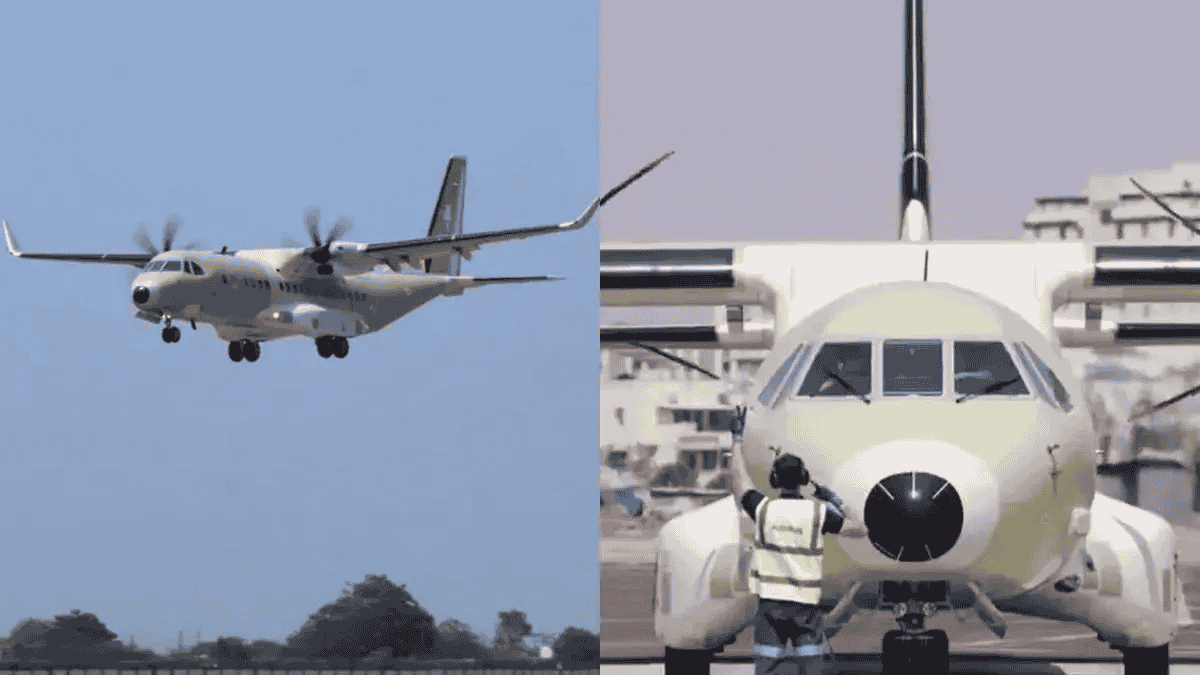
June 11, 2026, marks a historic milestone in the annals of Indian aviation and national defense. On this day, India’s first "Made-in-India" Airbus C295 military transport aircraft successfully completed its maiden test flight from the Final Assembly Line (FAL) in Vadodara, Gujarat. As the first military aircraft manufactured in India by a private-sector enterprise, this successful flight represents a critical post-production testing milestone ahead of its official induction into the Indian Air Force (IAF) later this year.
For serious civil services and state PSC aspirants, this development serves as an exceptional case study in technology transfer, public-private partnership (PPP) in strategic sectors, and the practical implementation of the Atmanirbhar Bharat (self-reliant India) vision in defense manufacturing. This comprehensive analysis explores the C295 program's technical parameters, strategic implications, and relevance to competitive examinations.
The C295 Procurement Program: A Comprehensive Overview
The successful test flight from the Vadodara facility is the realization of a landmark capital procurement agreement signed in September 2021 between the Ministry of Defence and Airbus Defence and Space, valued at ₹21,935 crore ($2.4 billion). Under this contract, the IAF is slated to acquire a total of 56 C295 medium tactical transport aircraft to modernize its aging logistical transport fleet.
The structural and geographical division of the production program is detailed in the table below:
| Production Phase | Aircraft Volume | Manufacturing & Assembly Hub | Timeline & Delivery Milestone |
|---|---|---|---|
| Direct Fly-Away Condition | 16 | Airbus Defence and Space Facility, Seville, Spain | Fully delivered to the IAF by August 2025 |
| Indigenous Assembly & Production | 40 | Tata-Airbus Final Assembly Line (FAL), Vadodara, Gujarat | First aircraft flight-tested in June 2026; complete delivery scheduled by August 2031 |
The industrial ecosystem for the domestic manufacturing of these 40 aircraft is managed by Tata Advanced Systems Limited (TASL), acting as the primary Indian Aircraft Contractor (IAC) in close coordination with Airbus. The specialized Vadodara assembly complex was formally inaugurated in October 2024 by Prime Minister Narendra Modi and Spanish Prime Minister Pedro Sánchez, initiating the domestic integration of advanced aerospace parts and assemblies.
Technical Specifications: Bridging the Tactical Airlift Gap
The primary operational mandate of the C295 fleet is to replace the IAF's legacy British-origin Hawker Siddeley HS-748 "Avro" transport fleet, which has been in service since 1964. While the legacy Avro fleet has served as a reliable workhorse, its design parameters are inadequate for modern, high-altitude tactical environments. Additionally, the C295 provides a viable domestic alternative to match or exceed the logistical capacity of the aging Soviet-origin Antonov An-32 transport fleet.
The following comparative table contrasts the capabilities of the legacy HS-748 Avro against the newly tested Airbus C295:
| Technical Parameter | Legacy HS-748 Avro Fleet | Modern Airbus C295 Platform |
|---|---|---|
| Primary Powerplant | 2 × Rolls-Royce Dart Turboprop Engines | 2 × Pratt & Whitney Canada PW127G Turboprops |
| Engine Power Output | ~2,100 shaft horsepower (shp) per engine | 2,645 shp per engine |
| Maximum Payload | ~5.0 tonnes | Up to 9.0 to 9.25 tonnes |
| Troop / Paratrooper Capacity | ~40–50 troops | 71 troops (or 48 fully equipped paratroopers) |
| Evacuation Capability | Highly constrained medical configuration | 24 medical stretchers with 7 attendants |
| Airstrip Compatibility | Primarily restricted to paved/semi-prepared runways | Short Take-Off and Landing (STOL) on unpaved, soft, or sandy runways |
| Avionics & Cockpit Suite | Legacy analog instrumentation | Digital Thales Topdeck-based Highly Integrated Avionics System (HIAS) |
In addition to its raw performance, the C295 incorporates advanced safety and operational mechanisms, such as six-bladed composite scimitar-shaped propellers, an auto-reverse capability that allows the plane to perform a 180-degree turn on runways as narrow as 12 meters, and a highly durable retractable undercarriage engineered for unpaved terrain. These features make the aircraft highly suited for deploying resources to remote, forward-deployed mountain bases where infrastructure remains severely constrained.
Deep Localization: Restructuring the Indian Aerospace Supply Chain
Historically, military aerospace manufacturing in India was dominated by the public-sector state enterprise, Hindustan Aeronautics Limited (HAL). The C295 India program breaks this monopoly by introducing the private sector into full-scale military aircraft assembly and manufacturing. This shift is paving the way for advanced industrial transformations across India, similar to the nationwide transitions discussed in the Atharva Examwise Side Report on the Digital Economy.
The localization strategy of the program is anchored by several structural and industrial pillars:
High Structural Indigenization: The contract mandates that more than 85% of the structural fabrication and final assembly of the 40 domestic aircraft takes place within India. This ensures that the domestic aerospace industry absorbs critical manufacturing technologies rather than acting as a simple assembly hub.
Decentralized Production Value Chain: The manufacturing lifecycle is geographically distributed to optimize regional industrial expertise. For instance, the production of structural detail parts and major component assemblies (MCA) begins at the TASL facility in Hyderabad, Telangana. These sub-assemblies are subsequently transported to the Vadodara FAL for final integration, painting, system installation, and flight testing.
MSME Integration and Job Creation: The program has onboarded 37 India-based suppliers, spanning both the public and private sectors, and certified 21 specialized manufacturing processes. Over 13,000 distinct components are being developed indigenously, integrating several Indian micro, small, and medium enterprises (MSMEs) into the global aerospace supply chain.
This indigenization effort is expected to reduce complete import reliance over time. While the IAF currently relies on heavy-lift strategic transport aircraft imported from American manufacturers—namely the Lockheed Martin C-130J Super Hercules and Boeing C-17 Globemaster III—the domestic assembly of the C295 establishes a sustainable, self-reliant medium tactical airlift ecosystem within the country.
For further learning on technological advancements and cultural updates across the subcontinent, aspirants can refer to the Atharva Examwise Competitive Exam Study Materials Portal.
Strategic Significance: Operational Logistics and Regional Diplomacy
From a defense perspective, the operationalization of the C295 fleet yields profound tactical advantages. The transport matrix of the IAF is structured hierarchically, and the C295 sits perfectly as a bridge between light utility aircraft (such as the Dornier 228) and the massive, high-payload strategic airlifters.
Defense analysts highlight three key strategic dimensions of the C295 program:
Enhanced Border Readiness: The capability to operate from rugged, unpaved, and extremely short forward landing grounds allows the IAF to rapidly mobilize troops, heavy equipment, and medical aid to vulnerable border sectors, particularly along the mountainous northern and northeastern frontiers.
Multi-Role Adaptability: The C295 is a highly modular platform. It can be rapidly reconfigured to perform maritime surveillance, electronic warfare (ELINT), airborne early warning, search and rescue (SAR), and humanitarian aid and disaster relief (HADR) missions across the Indian Ocean Region (IOR).
Aerospace Diplomacy and Export Potential: With India emerging as the largest global operator of the C295, the domestic production infrastructure under TASL creates a foundation for India to become a regional maintenance, repair, and overhaul (MRO) hub. This opens doors for defense exports and aerospace diplomacy, as neighboring nations and global operators look to source maintenance services and components directly from Indian facilities.
These milestones are critical components of India’s growing geopolitical influence, which can be studied in detail through the comprehensive Atharva Examwise Coaching Platform.
Key Facts and Exam-Relevant Data
Aspirants preparing for competitive examinations should note the following high-priority facts concerning the C295 program:
Consortium Partners: Built under a joint venture between European aerospace major Airbus and Tata Advanced Systems Limited (TASL).
First Private-Sector FAL: This program marks the first time a private-sector company has established a full-scale military aircraft production and assembly line in India.
Base Facilities: Component fabrication occurs in Hyderabad (Telangana), while the Final Assembly Line (FAL) operates in Vadodara (Gujarat).
Total Procurement: 56 aircraft, with 16 delivered in fly-away condition from Spain and 40 manufactured in India by 2031.
Indigenization Metrics: Over 85% structural localization, involving the domestic manufacture of 13,000+ parts and integration of 37 domestic suppliers.
Operational Role: Intended primarily to replace the legacy HS-748 Avro fleet and eventually supplement or replace aging medium-range tactical airlifters like the An-32.
Technical Highlights: Powered by twin Pratt & Whitney Canada PW127G turboprop engines, featuring STOL, auto-reverse maneuverability, and a maximum payload capacity of 9.0 to 9.25 tonnes.
Why this matters for your exam preparation
Understanding the C295 military transport aircraft program is highly relevant for candidates preparing for the UPSC Civil Services Examination and other premier competitive exams. The multidimensional nature of this project allows it to intersect several critical areas of the syllabus:
1. GS Paper 3: Science and Technology — Defense Indigenisation
The program is a primary case study for the indigenisation of technology and the "Make in India" policy push in defense manufacturing. Candidates can utilize this program to illustrate how joint ventures can successfully facilitate the transfer of advanced technology to domestic private industries. It highlights a practical solution to the historical challenges of public-sector monopoly and low R&D investment in defense.
2. GS Paper 3: Internal Security — Border Infrastructure & Logistics
A key component of national security is rapid-response capability during crises. The C295's ability to operate from short, rugged, and semi-prepared runways at high altitudes directly relates to discussions on improving logistical infrastructure along the Line of Actual Control (LAC) and remote island territories.
3. GS Paper 2: Bilateral Relations & Strategic Partnerships
The deal represents a significant milestone in India-Spain strategic cooperation, reflecting how defense trade can elevate bilateral economic ties, encourage foreign direct investment (FDI), and promote collaboration under regional security initiatives.
4. Practice Questions for Aspirants
Preliminary Exam Focus:
Question: Consider the following statements regarding the C295 aircraft program:
It is the first military aircraft assembly project in India executed entirely by a private-sector enterprise.
The aircraft is designed to replace the Indian Air Force's aging fleet of C-130J Super Hercules.
The assembly line is established in Vadodara, Gujarat. Which of the statements given above are correct? (a) 1 and 2 only
(b) 2 and 3 only
(c) 1 and 3 only
(d) 1, 2, and 3
Answer: (c) 1 and 3 only. (The C295 is designed to replace the legacy Avro HS-748 fleet, not the C-130J Super Hercules).
Mains Exam Focus (GS Paper 3 - Technology/Security):
Question: "The transition from a state-dominated defense manufacturing sector to one that actively integrates private-sector players is crucial for India’s strategic autonomy." Evaluate this statement in the context of the indigenously manufactured Airbus C295 program.