UPSC Current Affairs June 2026: Know What is Viability Gap Funding and Why the Ministry of Finance Rejected VGF for Great Nicobar Port | Daily GK Update
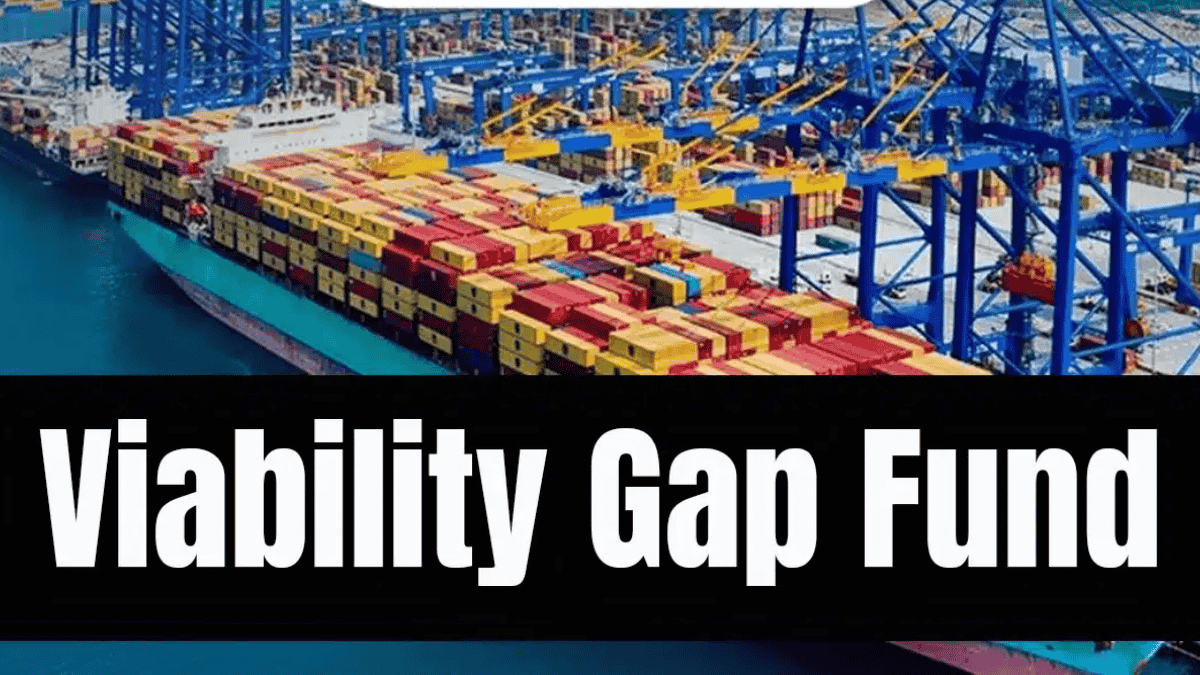
India's infrastructure development has always stood at the crossroads of economic benefit, environmental balance, and geopolitical necessities. The biggest and most recent example of this is the proposed International Container Transshipment Port (ICTP) at Galathea Bay on Great Nicobar Island. Although the Public-Private Partnership Appraisal Committee (PPPAC) has unanimously approved this ambitious project, the Ministry of Finance has flatly refused to provide the ₹12,230 crore Viability Gap Funding (VGF) requested for it. This decision sparks a serious debate on the limits of public funding and the categorization of strategic projects.
The analysis of this development is extremely crucial for serious candidates preparing for UPSC and other competitive exams. This topic is directly linked to the Indian economy, infrastructure financing, federal budget, Environmental Impact Assessment (EIA), and India's strategic security in the Indian Ocean. For regular analysis of such news of national importance, candidates can visit the special section of Atharva Examwise (https://www.atharvaexamwise.com).
What is Viability Gap Funding? Concept, Evolution, and Eligibility Rules
Infrastructure projects are typically capital-intensive, with long gestation periods and very low initial financial returns. Despite being socially and economically necessary, these projects fail to attract private investors solely on a commercial basis. In economic terms, these projects create positive externalities, leading to a large gap (market failure) between the private marginal cost and the social marginal benefit. The one-time or deferred financial assistance provided by the government to bridge this gap is called Viability Gap Funding (VGF).
The "Scheme for Financial Support to PPPs in Infrastructure" (VGF Scheme) was launched in 2006 by the Department of Economic Affairs (DEA), Ministry of Finance, Government of India. In November 2020, the Union Cabinet revamped this scheme, under which special sub-schemes were introduced to attract private investment in social infrastructure (such as health, education, wastewater management). To view the official guidelines regarding this scheme, candidates can refer to the data available on the DEA website (http://dea.gov.in).
Limits of VGF Assistance for Economic and Social Sectors
Under the revamped VGF scheme, maximum financing limits and eligibility conditions have been fixed according to the requirements of different sectors:
| Sector Category | Eligible Sub-Sectors | Minimum Operational Cost Recovery | Maximum Central VGF Assistance (Capital Grant) | Additional Government/Ministry Support (Sponsoring Support) | Total Maximum Financial Assistance (Total VGF Limit) |
|---|---|---|---|---|---|
| Economic Sectors | Roads, Railways, Ports, Aviation, Power | User Fee / Tariff-based | Up to 20% | Up to 20% | 40% of Total Project Cost (TPC) |
| Social Sector (Sub-Scheme 1) | Wastewater Treatment, Water Supply, Solid Waste Management, Health and Education | Minimum 100% | Up to 30% | Up to 30% | 60% of Total Project Cost (TPC) |
| Social Sector (Sub-Scheme 2 - Pilot) | Demonstration/Pilot projects in Health and Education sectors | Minimum 50% | Up to 40% (+ 25% Operational Support for the first 5 years) | Up to 40% (+ 25% Operational Support for the first 5 years) | Up to 80% of Total Project Cost (TPC) and up to 50% of Operational Cost |
Key Rule: An important rule of the VGF scheme is that its actual disbursement begins only after the private developer (concessionaire) has spent their entire equity share and the debt proportion is being released by the lending financial institutions.
Great Nicobar Port Project: Reasons for Rejection of ₹12,230 Crore VGF Demand
The Ministry of Ports, Shipping and Waterways (MoPSW) and its implementing agency, Kamarajar Port Limited (KPL), had sought ₹12,230 crore in VGF assistance for the development of this International Container Transshipment Port (ICTP) being built at Galathea Bay in Great Nicobar, which was 25% of the estimated cost of the first and second phases of the project.
The Public-Private Partnership Appraisal Committee (PPPAC) and the Department of Economic Affairs (DEA) refused to grant this large sum from the regular VGF scheme due to the following reasons:
Demand Exceeding the Scheme's Total Budgetary Outlay: The total national budgetary allocation for the revamped VGF scheme until the year 2024–25 was set at just ₹8,100 crore. The VGF demand for this single port project (₹12,230 crore) was far higher than the entire national budget allocated for the scheme.
Demand for Exceptional Concessions (Material Deviations) from the Standard Framework: The Shipping Ministry had sought several major concessions outside the scope of the VGF scheme. These included financing above the prescribed 20% limit for the economic sector, exemption to implement independently market-determined tariffs, demand to release VGF on an annual basis even before private equity is fully invested, and an exemption from returning 90% of the VGF grant in case of project cancellation.
Institutional Revenue and Commercial Viability: The DEA believes that the general VGF scheme is meant only for medium and small-sized PPP projects. Since the developer is expected to receive a large dividend and revenue share starting from the 17th year of the port's operation, the PPPAC recommended that MoPSW bridge this gap from its own internal budget instead of relying on general financial assistance.
Project Cost, Phased Development, and Joint Venture Structure
Although the Ministry of Finance refused to grant funds from the regular VGF scheme, considering the strategic importance of the project, the PPPAC has unanimously approved its development. The project will be based on the Design-Build-Finance-Operate-Transfer (DBFOT) model for a total concession period of 50 years.
The cost and phased details of this project can be understood from the following table:
| Project Phase | Estimated Cost | Capacity Target | Construction Period | Other Key Features |
|---|---|---|---|---|
| Phase-I | ₹27,793 crore | 5.6 Million TEUs | Sub-Phase IA: 60 months; Sub-Phase IB: 108 months | Construction of an initial container berth length of 2,300 meters and 7 container berths. |
| Phase-II | ₹21,069 crore | 6.2 Million TEUs | Integrated with the total construction period | Container berth length of 1,750 meters, 5 new berths, and a 3 MTPA POL (Petroleum, Oil, and Lubricants) berth facility. |
| Total Project Cost | ₹48,862 crore | 14.2 Million TEUs | Subject to the total estimated timeline | It is integrated with a township, greenfield airport, and power plant under the Island Development Programme (supported by ANIIDCO). |
To maintain security and strategic control, as per the directives of the Ministry of Home Affairs, an Indian-owned private company will hold a 55% stake in the Joint Venture (JV) company developing this port, while major government ports (including Kamarajar Port) will hold a 45% stake. This will completely prevent the interference of foreign powers.
Shift from Commercial Project to Strategic Asset: Security vs. Environment
The most notable aspect of this project is its rapid transition from a commercial to a strategic entity. In the initial concept reports of 2021–23, it was presented merely as a commercial transshipment hub, with an estimated annual foreign exchange savings of around $200 million. However, in August 2024, when the Public Investment Board (PIB) of the Finance Ministry questioned its lack of "strategic objectives," the Ministry of Defence subsequently notified it officially as a "strategic project" in March 2026.
This geopolitical shift is primarily due to its proximity to the Strait of Malacca, through which approximately 80% of China's energy imports pass. Chinese defense experts refer to this as the 'Malacca dilemma'. India's robust naval and commercial presence in Galathea Bay will play a crucial role in balancing China's growing influence in the Indian Ocean.
Ecological and Tribal Welfare Concerns
Ever since the project was declared "strategic," the government has faced allegations of withholding information and ignoring environmental regulations. Environmentalists claim that under this pretext, the report of the High-Powered Committee (HPC) and information sought under the Right to Information (RTI) Act were denied public disclosure.
Ecological Imbalance: This project will affect 1.82% of the total forest area of the Andaman and Nicobar Islands, leading to an estimated felling of nearly 7.11 lakh trees across an area of 49.86 square kilometers. Galathea Bay is a prime nesting site for the Giant Leatherback Turtle, the largest turtle in the world. Critics allege that the baseline data was collected over just three months (December 2020 to February 2021), which goes against the regulatory standards of Environmental Impact Assessments (EIA).
Tribal Protection: Particularly Vulnerable Tribal Groups (PVTGs) such as the Shompen and Nicobarese inhabit this island. Although the government claims that their habitats will not be displaced under the Shompen Policy 2015, the National Commission for Scheduled Tribes' refusal to share details, citing security and privilege, has fueled mistrust among environmental activists.
For a more authentic analysis of the government's stance and defense-related announcements, candidates can also refer to the press releases on the PIB website (https://www.pib.gov.in). To cover a wide range of current topics, the official website of Atharva Examwise current news is an excellent platform.
Why This Matters for Your Exam Preparation
The topic holds multidimensional importance for aspirants preparing for the UPSC Civil Services Examination and other competitive exams:
General Studies Paper III (Indian Economy and Infrastructure): Direct analytical questions can be asked on the concept of VGF, the role of PPPAC and PIB, and the financial and regulatory bottlenecks faced by PPP projects in India.
General Studies Paper III (Environment and Biodiversity): This is an ideal case study for understanding burning issues like the balance between infrastructure development and environmental protection (sustainable development), failures of Environmental Impact Assessments (EIA), and the role of the Forest Conservation Act.
General Studies Paper II (Security and International Relations): Important notes for the Mains examination can be prepared on India's maritime security policy in the Indian Ocean, the strategic role of the Andaman and Nicobar Command, and how India is balancing China's 'Malacca dilemma'.
For an in-depth study of current topics and regular practice of Mains answer writing, candidates can routinely use the daily updates on Atharva Examwise (https://www.atharvaexamwise.com).