
UPSC Current Affairs June 3, 2026: Daily GK Update & Atharva Examwise Current News on India's New IIP Series
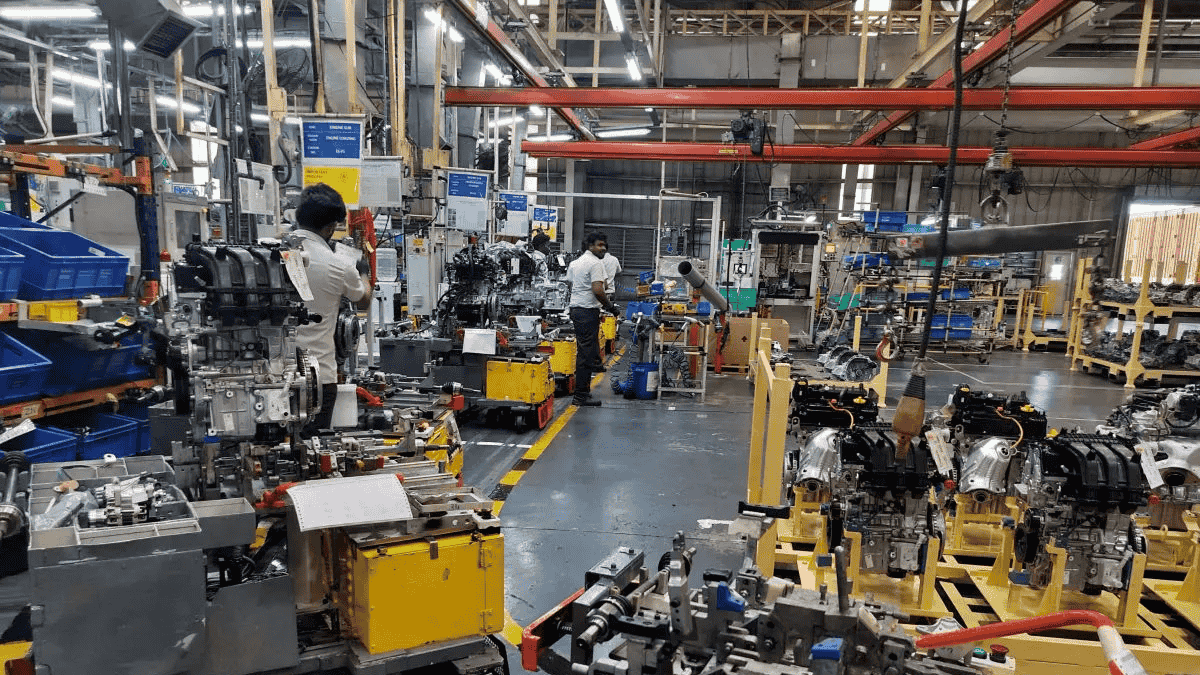
On June 1, 2026, the Ministry of Statistics and Programme Implementation (MoSPI) officially launched the revised Index of Industrial Production (IIP) series, transitioning the baseline benchmark from the outdated 2011-12 series to the post-pandemic normal of 2022-23. Under this newly inaugurated framework, India's factory output expanded by 4.9% year-on-year in April 2026. While this represents a solid recovery from the 3.2% growth recorded in March 2026 under the old series, the growth rate is slower than the 5.8% expansion recorded in April 2025 under the 2011-12 base year.
This structural recalibration marks the tenth base year revision since the initial compilation in 1937. It is designed to align economic metrics with contemporary reality, capturing emerging high-growth manufacturing segments, green energy deployment, and modernized waste management practices. The update is part of a coordinated macroeconomic transition that includes the Gross Domestic Product (GDP) and the upcoming Wholesale Price Index (WPI) and Producer Price Index (PPI) frameworks.
To aid candidates preparing with the Atharva Examwise daily GK update, this report provides a comprehensive analysis of the revised IIP series, its sectoral implications, and its relevance to competitive examinations.
The Shift to the 2022-23 Base Year: Why Now?
Periodic revision of economic indices is essential to prevent structural divergence, where obsolete production patterns artificially distort macroeconomic growth metrics. The selection of the fiscal year 2022-23 as the new baseline is highly strategic. It represents the first macroeconomic "normal year" following the severe, non-linear disruptions of the COVID-19 pandemic. This baseline provides a robust, comprehensive, and non-skewed dataset across various industrial classifications.
Historically, base year shifts have resolved the persistent divergence between volume-based industrial indices and value-added national accounts. Under the older 2011-12 series, the IIP failed to capture the emergence of new manufacturing hubs, technological progress, and supply chain alterations. The updated baseline has already corrected historical growth assessments. Revised data shows that industrial growth in 2023-24, 2024-25, and 2025-26 reached 6.7%, 6.4%, and 4.3% respectively, marking a substantial upward correction from the 5.9%, 4.0%, and 4.1% calculated under the 2011-12 series.
To maintain continuity and prevent artificial statistical jumps, the government has adopted a geometric mean-based approach to formulate linking factors. These mathematical links allow researchers and policymakers to compare historical trends across the 2011-12 and 2022-23 series seamlessly.
For more foundational concepts, aspirants can refer to the Atharva Examwise competitive exam news today dashboard. Detailed official announcements can be accessed directly on the(https://www.mospi.gov.in) portal.
| Structural Parameter | Old Series (2011-12 Base) | New Series (2022-23 Base) |
|---|---|---|
| Base Year | 2011-12 | 2022-23 |
| Total Mapped Products | 839 | 1,042 |
| Total Item Groups | 407 | 463 |
| New Item Groups Added | — | 120 |
| Item Groups Removed | — | 64 |
| Sectoral Composition | Mining, Manufacturing, Electricity | Mining, Manufacturing, Electricity, Gas Supply, Water Supply, Sewerage & Waste Management |
Sectoral Architecture and April 2026 Industrial Performance
The revised framework has broadened the definition of industrial activity. While retaining the core pillars of Mining, Manufacturing, and Electricity, the index now formally incorporates Gas Supply alongside Water Supply, Sewerage, and Waste Management activities.
The manufacturing sector, which holds the largest share of the index at 76.06%, grew by 6.2% in April 2026, solidifying its role as the primary engine of industrial expansion. Out of 23 distinct sub-industries within manufacturing, 17 posted positive growth. The expansion was driven by the electrical equipment industry, which surged by 19.2%, followed by machinery and equipment at 12.9%, and motor vehicles, trailers, and semi-trailers at 12.7%. Conversely, six sub-industries experienced a contraction. The production of wood products dipped by 12.5%, the wearing apparel industry shrank by 7%, and coke and refined petroleum products contracted by 0.4%.
The mining and quarrying sector, accounting for an 11.1% weight, registered a contraction of 5.1% in April 2026, marking its fourth consecutive month of decline. This contraction was heavily influenced by fuel minerals, which dropped 5.7% due to seasonal variations and high base effects. However, the metallic minerals segment, which now includes rare earth elements, showed strong performance with a growth of 12.3%.
The combined electricity and gas supply sector expanded by 4.9%. Notably, the electricity index provides a detailed split to track the country's green energy transition: in April 2026, renewable energy generation grew by 18%, far outpacing the 2.8% growth in non-renewable sources. However, non-renewable power still holds a larger share of the weight within the IIP (7.8% compared to 2.3% for renewables). Gas supply experienced an 11.2% contraction during the month, indicating supply chain disruptions and energy rationing linked to the geopolitical crisis in West Asia.
The newly added sector of Water Supply, Sewerage, and Waste Management, with a 2% weight, grew by 6.6%. This highlights the increasing formalization and economic output of urban utility and recycling industries.
| Sectoral Components of IIP | Weight in New Series (%) | April 2026 Growth Rate (%) | Key Sub-Sector Drivers & High-Frequency Trends |
|---|---|---|---|
| Manufacturing | 76.06% | 6.2% | Driven by Electrical Equipment (+19.2%) and Automobiles (+12.7%). Dragged down by Wood Products (-12.5%) and Apparel (-7%). |
| Mining & Quarrying | 11.10% | -5.1% | Suppressed by Fuel Minerals (-5.7%). Supported by Metallic and Rare Earth Minerals (+12.3%). |
| Electricity & Gas Supply | 10.90% | 4.9% | Renewable power surged by 18% vs. 2.8% for non-renewables. Gas supply fell 11.2% due to West Asian disruptions. |
| Water Supply, Sewerage & Waste Management | 2.02% | 6.6% | Reflects growing economic contribution of municipal utilities and waste processing sectors. |
| Overall IIP Index (Quick Estimate) | 100.00% | 4.9% | April 2026 index level stood at 118.9, compared to 113.1 in April 2025. |
Evolving Use-Based Dynamics and the Capex-Consumption Divide
The use-based classification of the IIP groups industrial production into six functional categories. The performance across these segments in April 2026 reveals a distinct divergence between public investment-led growth and private consumption demand.
Capital goods output, which serves as a proxy for business investment and capacity expansion, surged by 16% year-on-year. This marks the sixth consecutive month of double-digit expansion, demonstrating robust investment momentum. Similarly, infrastructure and construction goods grew by 7.1%, supported by the government's continued capital expenditure on transport corridors and public works. Intermediate goods, representing manufacturing inputs, grew by 7.7%.
Conversely, consumer-facing segments point to a slower recovery in household consumption. Consumer durables expanded by 4.3%, indicating a gradual increase in urban demand for high-value items. However, consumer non-durables—covering daily essentials and fast-moving consumer goods (FMCG)—grew by only 2.8%, following a slow growth of 0.7% over the course of 2025-26. This sluggish growth in non-durables suggests that rural and low-income consumer demand remains muted, creating an uneven recovery where capital expenditure leads while general consumption lags behind.
| Use-Based Category | Weight in New Series (%) | April 2026 Growth Rate (%) | Structural Interpretation |
|---|---|---|---|
| Primary Goods | 31.1% | 0.8% | Muted growth reflecting contraction in mining and basic fuel extraction. |
| Capital Goods | 8.1% | 16.0% | Highly robust growth, signaling strong business confidence and capacity creation. |
| Intermediate Goods | 22.4% | 7.7% | Steady demand for raw materials and industrial inputs. |
| Infrastructure/Construction Goods | 10.9% | 7.1% | Fueled by public sector infrastructure projects and real estate development. |
| Consumer Durables | 11.3% | 4.3% | Moderate performance, indicating steady but selective urban retail demand. |
| Consumer Non-Durables | 16.1% | 2.8% | Sluggish growth, pointing to persistent weakness in mass consumption and rural demand. |
Product Basket Overhaul: Additions and Exclusions
To accurately represent the industrial structure of a modernizing economy, MoSPI reorganized the items included in the IIP. Items were selected based on their production share in the 2021-22 and 2022-23 rounds of the Annual Survey of Industries (ASI), replacing outdated weights from over a decade ago.
The revised product basket includes 120 new item groups and has excluded 64 obsolete ones. The additions highlight high-value technological and strategic components, which are discussed in detail on the(https://www.atharvaexamwise.com/science-tech-current-affairs) portal:
Key Additions: CCTV cameras, medical stents, vaccines, magnetic stripe cards (credit and debit cards), aircraft and spacecraft parts, articles of non-woven textiles, rare earth minerals (such as Monazite), and minor minerals.
Key Exclusions: Kerosene, fluorescent tubes, compact fluorescent lamps (CFLs), sewing machines, and tubes for bicycle, tricycle, and rickshaw tyres.
These selections reflect the structural transition of Indian industry away from low-technology assembly and obsolete lighting toward advanced electronics, domestic defense manufacturing, and specialized healthcare manufacturing.
Methodological Advancements in Data Compilation
The revamped IIP series introduces several statistical and methodological improvements aligned with international best practices:
Dynamic Factory Sampling: To address the challenge of closed or non-responsive industrial units, the updated methodology allows statistical authorities to replace permanently closed factories with comparable operating units in real-time. This dynamic sampling keeps the database representative.
Classification Standards: The series is aligned with the National Industrial Classification (NIC)-2025 framework, ensuring international comparability of sectoral data.
Energy Mix Tracking: By splitting electricity generation into separate sub-indices for renewable and non-renewable sources, MoSPI provides a clearer view of the country’s progress in green energy transition.
Granular Mining Sub-Indices: The mining and quarrying segment has been split into separate sub-indices for fuel minerals, metallic minerals, and non-metallic minerals, allowing for better tracking of upstream industrial inputs.
Coordinated Inflation and GSDP Overhaul
The statistical modernization of the IIP is part of a broader, coordinated realignment of India's macroeconomic data framework. This transition is designed to improve consistency across different datasets:
* Base Year: 2022-23 (Feb 2026) │ ┌─────────────────┴─────────────────┐ ▼ ▼ Index (WPI)] * Base Year: 2022-23 (Jun 2026) * Base Year: 2022-23 (Jun 15, 2026) * Upgraded product basket * 957 commodities (Gross Value * Integrated utility sectors of Output weighting) │ ▼ [Producer Price Index (PPI)] * Measures factory-gate prices * Aligned with IMF standards
In February 2026, MoSPI transitioned the National Accounts (GDP) series to the 2022-23 base year. Following this, the Department for Promotion of Industry and Internal Trade (DPIIT) announced that on June 15, 2026, it will release the revised WPI series under the 2022-23 base year and introduce the country's first Producer Price Index (PPI). This timeline was officially verified during media briefings by DPIIT Principal Economic Adviser Praveen Mahto.
To prevent statistical discrepancies, the statistics ministry has integrated 2022-23 WPI deflators internally to compile the April 2026 IIP figures. Consequently, the reported 4.9% factory growth will not require statistical revision once the revamped WPI series is officially launched.
Additionally, the transition from WPI to PPI brings India in line with international standards. WPI has faced criticism for failing to track service sector activity and for capturing intermediate trade margins and taxes. The PPI framework, which includes the Output Producer Price Index (OPPI), Trial Input Producer Price Index (IPPI), and Service Producer Price Index (Service PPI), addresses these limitations:
Price Compilation Methods: WPI, Output PPI, and Service PPI are compiled using basic prices, which exclude net taxes, transport costs, and wholesale/retail trade margins. This isolates pure producer-level price changes. In contrast, Input PPI is calculated using purchasers' prices, as it tracks the actual market costs industries pay to acquire raw materials and inputs.
Service Sector Tracking: The Service PPI will initially track inflation across seven key service sectors: banking, securities transactions, insurance, pension fund management, railways, air passenger transport, and telecommunications.
National Coverage and Regional Accounts: On May 7, 2026, MoSPI issued uniform guidelines requiring all 34 States and Union Territories to adopt the 2022-23 base year for compiling Gross State Domestic Product (GSDP). This ensures consistency between national and state-level economic statistics.
These structural reforms are taking place alongside positive trends in foreign capital inflows. DPIIT Secretary Amardeep Singh Bhatia announced that foreign direct investment (FDI) inflows are on track to exceed $90 billion for the fiscal year ending March 2026 (FY26), with over $88 billion received during the April-February period alone. This consistent inflow of foreign investment supports India's industrial transition and reinforces its position as a global manufacturing hub.
Daily GK Update: Key Facts to Memorize
For quick revision, candidates should note the following key facts:
April 2026 Industrial Growth: 4.9% (under 2022-23 base year).
Old vs. New Growth Revision: IIP growth for 2023-24, 2024-25, and 2025-26 revised upward to 6.7%, 6.4%, and 4.3%.
Manufacturing Weight & Growth: 76.06% weight; grew 6.2% in April 2026.
Mining Weight & Growth: 11.10% weight; contracted 5.1% in April 2026.
Electricity & Gas Weight & Growth: 10.90% weight; grew 4.9% in April 2026.
Water & Waste Management Weight & Growth: 2.02% weight; grew 6.6% in April 2026.
Index of Eight Core Industries (ICI): Comprises 40.27% of the total IIP weight.
Primary Goods Weight & Growth: 31.1% weight; grew 0.8% in April 2026.
Capital Goods Weight & Growth: 8.1% weight; grew 16% in April 2026.
Intermediate Goods Weight & Growth: 22.4% weight; grew 7.7% in April 2026.
Infrastructure/Construction Goods Weight & Growth: 10.9% weight; grew 7.1% in April 2026.
Consumer Durables Weight & Growth: 11.3% weight; grew 4.3% in April 2026.
Consumer Non-Durables Weight & Growth: 16.1% weight; grew 2.8% in April 2026.
Publishing Authority: NSO (under MoSPI) compiles the IIP. The WPI and PPI are compiled by the Office of the Economic Adviser under the DPIIT.
Why this matters for your exam preparation
For candidates preparing for competitive exams like the UPSC Civil Services Examination (specifically GS Paper III: Indian Economy, Infrastructure, and Industrial Growth), understanding the restructuring of macroeconomic metrics is critical. Questions on these indicators often focus on conceptual definitions, institutional roles, and structural trends.
High-Yield Areas for Prelims
Institutional Distinctions: Candidates must distinguish between compiling authorities. The IIP is released monthly by the NSO (under MoSPI) with a 28-day lag. The WPI and the PPI are compiled by the Office of the Economic Adviser under the DPIIT (Ministry of Commerce and Industry).
Structural Changes: Questions may test details of the product basket overhaul (such as the addition of critical minerals like Monazite, medical stents, and the inclusion of waste management and gas supply).
Weighting Schemes: Candidates should memorize the sectoral weights (Manufacturing at 76.06%, Mining at 11.10%, Electricity & Gas at 10.90%, and Water & Waste at 2.02%).
Core Industries: Understand that the Index of Eight Core Industries (ICI) comprises Coal, Crude Oil, Natural Gas, Refinery Products, Fertilizers, Steel, Cement, and Electricity. These sectors collectively represent 40.27% of the weight in the broader IIP.
Analytical Frameworks for Mains
Statistical Integrity and Policy Formulation: Selecting 2022-23 provides a post-pandemic baseline that avoids the statistical distortions of the COVID-19 years. This is essential for accurate economic forecasting and policy formulation.
The Capex-Consumption Divide: The sharp divergence between robust capital goods growth (16%) and slow consumer non-durables growth (2.8%) highlights an uneven economic recovery. Public capital expenditure is driving industrial expansion, while mass consumption remains soft, complicating monetary policy decisions.
The WPI-to-PPI Transition: Moving toward a PPI framework brings India's inflation metrics in line with global standards. Tracking service sector inflation and separating trade margins and taxes from producer prices provides a clearer picture of supply-side inflation pressures.
Fiscal Federalism and GSDP: The alignment of state GSDP estimations with the new 2022-23 base year is critical. Because state borrowing limits are tied to a percentage of GSDP, standardized and accurate state-level GDP estimations ensure equitable fiscal devolution and balanced regional development.
For guided notes on these concepts, aspirants can access the(https://www.atharvaexamwise.com/upsc-current-affairs) at Atharva Examwise.