UPSC Current Affairs May 19, 2026: 3rd India-Nordic Summit in Oslo – Daily GK Update and Atharva Examwise Current News Today
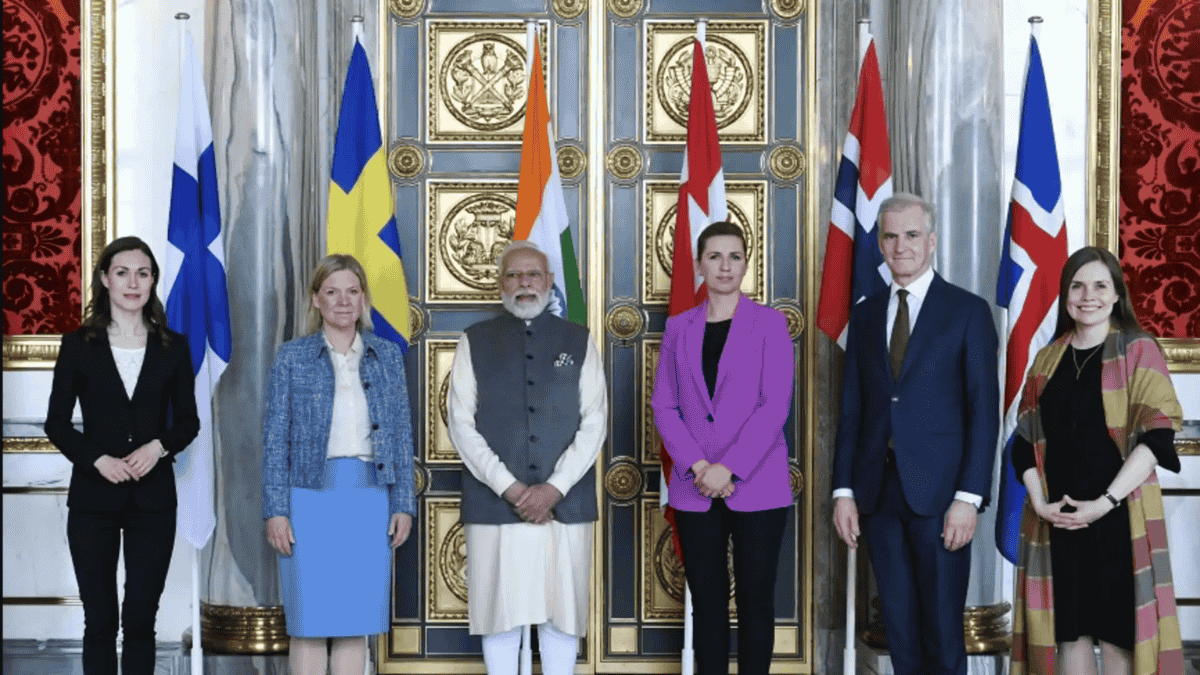
The shifting equilibrium of global geopolitics has prompted a significant recalibration in India's foreign policy, characterized by a strategic pivot toward Northern Europe. On May 19, 2026, Prime Minister Narendra Modi participated in the 3rd India-Nordic Summit in Oslo, Norway. This landmark event marks the first visit by an Indian Prime Minister to Norway in 43 years, since Indira Gandhi's historic visit in 1983. Hosted by Norwegian Prime Minister Jonas Gahr Støre, the summit brought together Prime Minister Modi and the heads of government from all five Nordic nations: Denmark, Finland, Iceland, Norway, and Sweden.
Originally scheduled for mid-2025, the summit was postponed following regional security tensions. Its successful execution in May 2026 comes at a critical juncture, as the global economy grapples with the fallout of the West Asia war, energy security challenges stemming from the closure of the Strait of Hormuz, and the prolonged war in Ukraine. For candidates preparing for the UPSC Civil Services Examination and other competitive exams, this summit represents a vital topic under General Studies Paper II (Bilateral and Regional Groupings) and Paper III (Economic Development and Environment).
Evolution of the India-Nordic Partnership
The institutionalized engagement between India and the "Nordic Five" has transitioned from standard developmental cooperation into a deep, implementation-oriented strategic alliance. The historical trajectory of these summits demonstrates a clear shift toward problem-solving, pairing India's market scale with Nordic technological expertise.
| Summit Edition | Date & Host City | Key Participants | Primary Strategic Focus & Strategic Outcomes |
|---|---|---|---|
| 1st India-Nordic Summit | April 2018
Stockholm, Sweden | India and the Nordic Five (Co-organized with Sweden) | Focused on "Shared Values, Mutual Prosperity"; initiated high-level dialogue on green technology, maritime security, and digital innovation. |
| 2nd India-Nordic Summit | May 2022
Copenhagen, Denmark | India and the Nordic Five (Hosted by Denmark) | Evaluated post-pandemic economic recovery; prioritized the blue economy, digital governance, and clean energy transition. |
| 3rd India-Nordic Summit | May 19, 2026
Oslo, Norway | India and the Nordic Five (Hosted by Norway) | Operationalizing EFTA-TEPA; addressing Arctic security, supply chain resilience, and critical technologies (6G, AI, and semiconductors). |
This partnership is highly complementary. The Nordic region, though small in population, boasts a combined GDP exceeding $1.9 trillion and holds some of the world's most substantial capital reserves, including Norway’s Government Pension Fund Global (GPFG), valued at approximately $1.8 trillion. Conversely, India offers a rapidly growing economy, massive manufacturing infrastructure under "Make in India," and a large pool of skilled professionals, establishing a natural framework of "innovation meets scale".
Geopolitical Context and the "Northward Turn"
The 2026 summit highlights what foreign policy analysts term India’s "Northward Turn," a calculated move to deepen ties with Northern Europe amid shifting global alignments.
┌────────────────────────┐ │ Arctic Ice Depletion ├────────┐ └───────────┬────────────┘ │ │ │ ▼ ▼ ┌────────────────────────┐ ┌───────────────┐ │ Northern Sea Route Open│ │Monsoon Shift │ │ (40% Shorter Route) │ │(Barents-Kara) │ └───────────┬────────────┘ └───────┬───────┘ │ │ ▼ ▼ ┌────────────────────────┐ ┌───────────────┐ │Diversified Supply Chain│ │Climate Risks │ │ (Critical Minerals) │ │ (Indian Agri) │ └────────────────────────┘ └───────────────┘
Changing Security Architecture of Northern Europe
The entry of Finland and Sweden into NATO has reshaped the security environment of Northern Europe, turning the Baltic and Arctic regions into active zones of strategic competition. The deepening of Russia-China cooperation in the polar region has further heightened geopolitical tensions. By institutionalizing relations with the Nordic states, India strengthens its strategic autonomy and secures a diplomatic voice in northern polar governance without joining military blocs.
The Polar-Monsoon Scientific Connection
India's interest in the Arctic is driven by ecological necessity. The Arctic region is warming more than three times faster than the global average. Scientific research indicates that ice-cover loss in the Barents-Kara Sea is directly linked to variations in the Indian summer monsoon. Because changes in polar temperature gradients impact agricultural productivity across India, collaborative atmospheric research with Nordic partners is crucial. India has maintained a scientific presence in the region through the Himadri Research Station in Svalbard, Norway, since 2008 and has been an Observer in the Arctic Council since 2013.
Commercial Transit and Resource Security
The melting of polar ice is opening the Northern Sea Route (NSR) along Russia’s Arctic coast. The NSR can reduce maritime transit distance between Europe and Asia by nearly 40% compared to the traditional Suez Canal route, enhancing trade efficiency. Furthermore, the Arctic contains vast deposits of critical minerals and rare earth elements. Partnering with resource-rich Nordic nations—such as Sweden, which boasts significant rare earth reserves, and Norway, which has deep-sea mining potential—allows India to secure the critical raw materials required for its semiconductor and green technology industries, reducing its dependence on China.
For detailed study material on polar science, aspirants can refer to the comprehensive Atharva Examwise India's Arctic Policy Analysis.
The Four-Point Strategic Agenda of the 2026 Roadmap
The 3rd India-Nordic Summit established a clear framework to translate diplomatic intent into concrete industrial projects, structured around four primary pillars.
1. Operationalizing the EFTA-TEPA
The summit provided an essential platform to review the implementation of the India-EFTA Trade and Economic Partnership Agreement (TEPA), which entered into force on October 1, 2025. EFTA consists of Switzerland, Norway, Iceland, and Liechtenstein. TEPA is a highly innovative free trade agreement as it includes a legally binding commitment from EFTA nations to invest $100 billion in India and generate one million direct jobs over 15 years. During the bilateral meetings in Oslo, Prime Minister Modi announced the establishment of a dedicated Norway-focused Trade Facilitation Desk under Invest India to accelerate these investments.
2. Blue and Green Economy
The clean energy transition represents a key area of industrial synergy. The Nordic states operate as advanced laboratories for decarbonization, while India provides scale, demand, and rapid infrastructure expansion.
Offshore Wind and Hydrogen: Collaborative projects are being scaled up with Denmark in offshore wind energy and with Norway in green hydrogen ecosystems. Prime Minister Modi highlighted India’s targets to produce 500 GW of clean energy and 5 million tonnes of green hydrogen by 2030, inviting Norway's sovereign wealth fund to expand its investments in Indian green infrastructure.
Maritime Cooperation: Port modernization, green shipping corridors, and sustainable fisheries are being aligned with India’s Sagarmala Project. Currently, nearly 10% of Norway’s commercial vessels are built in Indian shipyards; the two nations have set a target to increase this figure to 25% within the next five years.
Geothermal energy: Leveraging Icelandic expertise to develop deep geothermal systems for sustainable energy generation in India.
3. The Digital-Innovation Triangle
This pillar coordinates advanced technology co-development to build secure, resilient supply chains.
6G, AI, and Quantum Computing: Focused partnerships, particularly with Finland, on the co-development of 6G standards and secure quantum networks. The discussions build on Finland's vision for "Just AI," promoting ethical, inclusive, and public-interest artificial intelligence systems.
Semiconductors: Collaboration with Sweden's industrial innovation ecosystem (including companies like Ericsson and Saab) to support India’s domestic semiconductor fabrication goals. This is supported by the Sweden-India Technology and AI Corridor (SITAC) and agreements such as the partnership between TATA Electronics and ASML of the Netherlands to equip India’s semiconductor plant in Dholera, Gujarat.
4. Mobility Framework
The summit finalized a comprehensive "Talent Strategy" to benefit the 20-million-strong Indian diaspora and skilled professionals. By implementing Mutual Recognition Agreements (MRAs) in professional qualifications (such as nursing, architecture, and chartered accountancy), the framework simplifies the migration of skilled Indian manpower to the high-income Nordic economies.
Detailed Analysis of the India-EFTA TEPA
To evaluate the economic underpinnings of India's engagement with Northern Europe, it is crucial to analyze the specific provisions of the India-EFTA Trade and Economic Partnership Agreement (TEPA).
| Core Dimension | TEPA Key Features & Commitments |
|---|---|
| Investment Pledge | A binding commitment of $100 billion in Foreign Direct Investment (FDI) over 15 years ($50 billion in the first 10 years and an additional $50 billion in the succeeding 5 years). |
| Employment Generation | Creation of approximately 1 million direct jobs in India, focused on manufacturing, innovation, and research. |
| EFTA Tariff Concessions | Duty-free access on 92.2% of tariff lines, covering 99.6% of India’s exports, including all non-agricultural products and processed food. |
| India Tariff Concessions | Extended tariff reductions on 82.7% of tariff lines (95.3% of EFTA exports) with duty cuts phased over 5 to 10 years to protect domestic industries. |
| Domestic Safeguards | Sensitive sectors—including dairy, soya, coal, and key agricultural products—are completely excluded from tariff concessions; effective duty on gold remains unchanged. |
| Services & Mobility | Commitments secured in over 100 sub-sectors (IT, business, education) facilitating digital delivery (Mode 1), commercial presence (Mode 3), and personnel mobility (Mode 4). |
For a comparative perspective on trade agreements, read the(https://www.atharvaexamwise.com).
Key Bilateral Engagements Across the Five-Nation Tour
Prime Minister Modi's trip to Oslo was part of a broader five-nation official tour spanning May 15 to May 20, 2026, aimed at deepening India's strategic ties with key global partners.
UAE (May 15) ──► Netherlands (May 15-17) ──► Sweden (May 17-18) │ Italy (May 19-20) ◄── Norway (May 18-19) ────────┘
1. United Arab Emirates (May 15)
The Prime Minister held discussions with UAE President Sheikh Mohamed bin Zayed Al Nahyan in Abu Dhabi. The talks focused on expanding the India-UAE Comprehensive Strategic Partnership, focusing on energy security, food corridors, and regional developments in West Asia.
2. The Netherlands (May 15-17)
The Prime Minister met King Willem-Alexander, Queen Maxima, and Dutch Prime Minister Rob Jetten. Key agreements were signed in water management, green hydrogen, and semiconductors. A landmark contract was finalized between TATA Electronics and ASML to provide lithography equipment to the Dholera chip fabrication facility in Gujarat.
3. Sweden (May 17-18)
At the invitation of Swedish PM Ulf Kristersson, the Prime Minister visited Gothenburg. The two leaders officially elevated bilateral relations to a Strategic Partnership based on four pillars:
Strategic Dialogue for Stability and Security
Next-Generation Economic Partnership
Emerging Technologies and Trusted Connectivity (including the Sweden-India Technology and AI Corridor - SITAC)
Shaping Tomorrow Together – People, Planet and Resilience
They endorsed the Joint Action Plan 2026-2030 and announced a bilateral summit, "India-Sweden: Stronger Together - towards 2047," to be held in India in 2027. Additionally, the Prime Ministers announced a new four-year phase of the Leadership Group for Industry Transition (LeadIT 3.0) to be launched at COP31 and welcomed the joint ISRO-Swedish collaboration on the Indian Venus Orbiter Mission. Prime Minister Modi was also conferred Sweden's highest civilian honor for foreign nationals, the Royal Order of the Polar Star, Commander Grand Cross.
4. Norway (May 18-19)
Prime Minister Modi met King Harald V and PM Jonas Gahr Støre, and co-addressed the India-Norway Business and Research Summit. The bilateral relationship was elevated to a Green Strategic Partnership to accelerate cooperation in renewable energy, green shipping, and the blue economy. The Prime Minister was conferred Norway's highest honor for foreign Heads of Government, the Grand Cross of the Royal Norwegian Order of Merit. Space cooperation was also highlighted, noting that ISRO has successfully installed tracking antennas at the KSAT facility in Svalbard.
5. Italy (May 19-20)
Concluding the tour, the Prime Minister met Italian PM Giorgia Meloni and President Sergio Mattarella. The discussions reviewed the implementation of the Joint Strategic Action Plan 2025-2029, focusing on defence manufacturing, maritime security in the Mediterranean-Indo-Pacific transit corridors, and clean energy technology transfer.
Geopolitical Challenges and Diplomatic Frictions
While the summit marked progress, the diplomatic engagements occurred alongside several geopolitical and communication challenges.
Global Disruptions
The ongoing war in West Asia and threats to maritime security along global chokepoints like the Strait of Hormuz have created energy supply volatility, highlighting the need for India to diversify its energy partnerships. Concurrently, the four-year-long Russia-Ukraine war continues to disrupt supply chains, testing India's diplomatic capacity to balance its ties with Russia and Western partners.
Press Conference Controversy in Oslo
The visit experienced a brief moment of tension during a joint media statement in Oslo when a Norwegian commentator, Helle Lyng, bypassed scheduled procedures to direct spontaneous questions to Prime Minister Modi regarding human rights and freedom of the press in India. The Prime Minister did not respond and departed the room, leading to some critical commentary by domestic opposition leaders.
The Indian Embassy in Oslo subsequently hosted an official press briefing where MEA Secretary (West) Sibi George strongly defended India’s democratic record. He emphasized that India’s commitment to fundamental rights, gender equality, and universal voting rights has been constitutionally guaranteed since independence. He characterized criticisms from certain foreign non-governmental organizations as biased and lacking a complete understanding of India's civilizational history and democratic institutions.
Geographic Definitions: Understanding the Nordic Region
For geography and map-based questions in the civil services examination, candidates must maintain clear distinctions regarding the regional geography of Northern Europe.
| Country & Territory | Capital | Sovereign Status | Key Maritime & Land Features |
|---|---|---|---|
| Norway | Oslo | Sovereign State | Mountainous terrain with deep, narrow coastal inlets (fjords); shares land borders with Sweden and Finland. |
| Sweden | Stockholm | Sovereign State | Largest Nordic nation by area and population; characterized by extensive river networks, lakes, and forests. |
| Denmark | Copenhagen | Sovereign State | Smallest and southernmost Nordic country; comprises the Jutland Peninsula and an archipelago of over 400 islands. |
| Finland | Helsinki | Sovereign State | Broadly forested landscape containing thousands of glacial lakes; bordered by Russia to the east. |
| Iceland | Reykjavik | Sovereign State | Volcanic island nation located in the North Atlantic; known for glaciers, hot springs, and active geysers. |
| Greenland | Nuuk | Autonomous Territory | World's largest island; exists as an autonomous territory under the Kingdom of Denmark. |
| Faroe Islands | Tórshavn | Autonomous Territory | An island group in the North Atlantic; operates as a self-governing territory of Denmark. |
| Åland Islands | Mariehamn | Autonomous Territory | An archipelago at the entrance to the Gulf of Bothnia; exists as a self-governing, Swedish-speaking province of Finland. |
Scandinavian Peninsula: Geographically includes Norway, Sweden, and northern Finland.
Scandinavia (Cultural/Linguistic): Culturally encompasses Norway, Sweden, and Denmark.
Fennoscandia: Comprises the Scandinavian Peninsula, Finland, the Kola Peninsula, and Karelia.
Nordic Countries (Norden): The comprehensive grouping of all five sovereign nations (Norway, Sweden, Denmark, Finland, Iceland) and their three autonomous territories.
Why this matters for your exam preparation
The outcomes of the 3rd India-Nordic Summit and the broader five-nation European tour have direct relevance across multiple sections of competitive examinations, particularly the UPSC Civil Services Examination.
UPSC GS Paper II (International Relations)
Strategic Autonomy and Multi-Alignment: The summit provides a clear example of India's multi-aligned foreign policy. It shows how New Delhi can build deep strategic partnerships with NATO-aligned nations (Finland and Sweden) while maintaining its independent bilateral ties with Russia.
Constitutional Underpinnings: Candidates should study the constitutional framework governing international affairs, specifically Article 51 of the Directive Principles of State Policy (promoting international peace, security, and treaty obligations) and Article 253 (parliamentary power to legislate to implement international treaties).
UNSC Reforms: The Nordic countries have consistently supported India’s claim for permanent membership in a reformed United Nations Security Council (UNSC).
UPSC GS Paper III (Economy, Environment, and Technology)
Free Trade Agreements: The transition of the India-EFTA TEPA into active implementation represents a template for modern, balanced trade negotiations. Candidates should understand how India secures massive long-term investment commitments ($100 billion) while safeguarding sensitive domestic sectors like agriculture and dairy.
The Blue Economy: The World Bank defines the Blue Economy as the "sustainable use of ocean resources for economic growth, improved livelihoods, and ocean ecosystem health". Candidates should be prepared to link Nordic maritime technologies directly to India’s Sagarmala Project and green port initiatives.
Climate Science: The direct scientific connection between Arctic ice melt (especially in the Barents-Kara Sea) and the variability of the Indian Summer Monsoon is a key concept for geography and climate change questions.
Key Facts at a Glance (UPSC Prelims)
Svalbard Observatory: India's primary polar research footprint is maintained through the Himadri Station in Svalbard, Norway. Additionally, ISRO has installed ground antennas at the KSAT facility in Svalbard to support satellite communications.
Arctic Council Status: India has held Observer status since 2013; it is not a permanent member.
EFTA Membership: Consists of four nations: Switzerland, Norway, Iceland, and Liechtenstein. It is a distinct trade bloc from the European Union (EU).
India's Arctic Policy (2022): Titled "India and the Arctic: Building a Partnership for Sustainable Development," it is built on six pillars: science & research, climate & environmental protection, economic & human development, transportation & connectivity, governance & international cooperation, and national capacity-building.
Sovereign Wealth Funds: Candidates should distinguish between Norway's GPFG (valued at $1.8 trillion, funded by North Sea oil revenues) and traditional foreign exchange reserves.
State Honours: During the tour, Prime Minister Modi received the Grand Cross of the Royal Norwegian Order of Merit (Norway) and the Royal Order of the Polar Star, Commander Grand Cross (Sweden).
For additional daily GK updates, expert-led analysis of international relations, and comprehensive mock tests, candidates can visit the official portal of Atharva Examwise.