UPSC Current Affairs 18 May 2026: India-Netherlands Strategic Partnership and PM Modi's Swedish Honor | Daily GK Update
India's Growing Influence in Global Diplomacy
Amidst recent global geopolitical shifts, India has elevated its bilateral and technological ties with Europe to a historic new level. In mid-May 2026, Prime Minister Narendra Modi’s bilateral visits to the Netherlands and Sweden provided immense strength to India's foreign policy. This comprehensive analysis, via Atharva Examwise current news, presents an in-depth account of current developments, which are highly crucial from the perspective of UPSC (https://www.atharvaexamwise.com) and other central examinations.
Transformation of India-Netherlands Relations into a Strategic Partnership
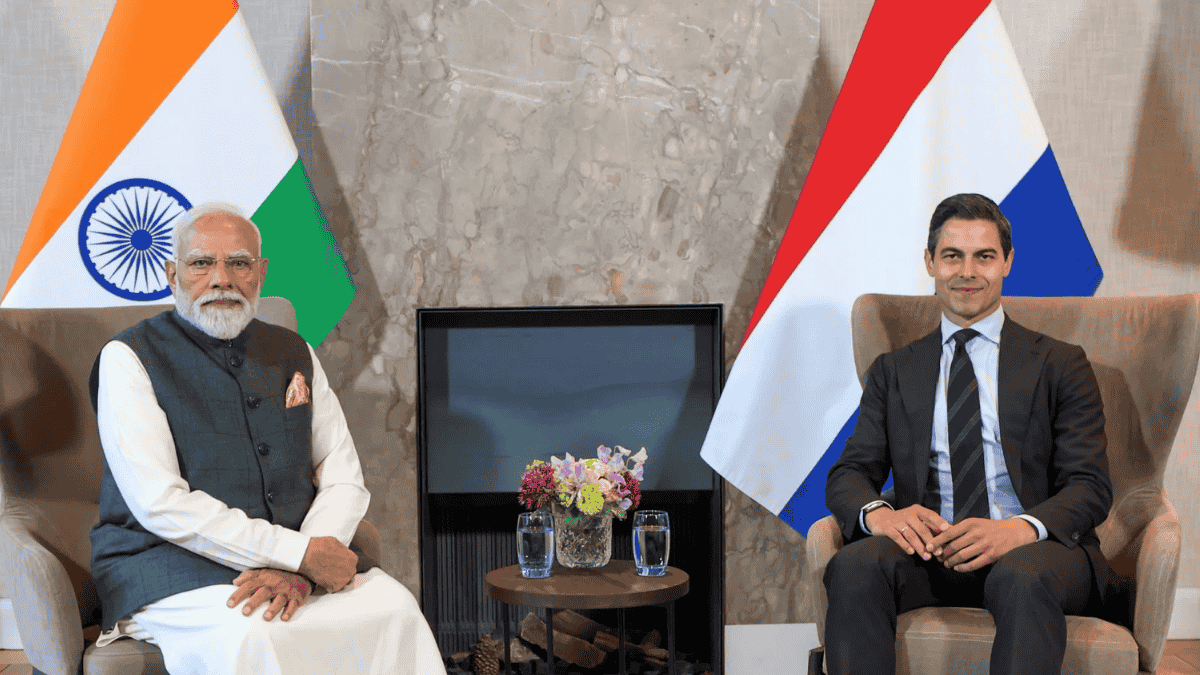
During high-level talks held between Prime Minister Narendra Modi and his Dutch counterpart Rob Jetten in the Dutch city of The Hague, both nations officially elevated their bilateral relations to the level of a 'Strategic Partnership'. On this historic occasion, both countries released the "India-Netherlands Strategic Partnership Roadmap 2026–2030", which outlines the framework for cooperation over the next five years.
Under this strategic partnership, the two nations signed a total of 17 agreements and Memorandums of Understanding (MoUs), linking technological innovation, security, and economic interests.
Semiconductor Manufacturing and Academic 'Brain Bridge' Initiative
The most significant outcome of this visit for the India Semiconductor Mission (ISM) is the agreement signed between Dutch chip-making equipment manufacturer ASML and Tata Electronics. Under this agreement, cutting-edge technical assistance will be provided to India's first semiconductor fab project being established in Dholera, Gujarat. Furthermore, the Dutch Semicon Competence Centre will be directly linked with the India Semiconductor Mission.
For the development of research and human resources, an advanced "Brain Bridge" initiative has been formed. Under this initiative, scientific cooperation has been established between leading Dutch universities and six premier Indian institutes:
| Indian Academic Institutions | Dutch Universities | Key Industry Collaborators |
|---|---|---|
| IISc Bangalore, IIT Bombay, IIT Delhi, IIT Gandhinagar, IIT Guwahati, IIT Madras | Eindhoven University of Technology, University of Twente | NXP, ASML, Tata Electronics, CG Semicon |
This multi-institutional network will help create a sustainable and highly skilled workforce for semiconductor research and manufacturing in India.
Regional Classification of the 17 Important Agreements
To strengthen the partnership, the details of other key agreements signed are classified in the following table, forming a vital part of today's competitive exam news:
| Sector | Description of Agreement | Main Objective |
|---|---|---|
| Migration & Mobility | Migration and Mobility Partnership Agreement | To facilitate the legal migration of skilled professionals and students, and to prevent human trafficking. |
| Customs & Trade | Mutual Administrative Assistance in Customs Matters | To make bilateral trade more secure and transparent, and to prevent customs violations. |
| Defense Cooperation | Joint Tri-Services Interaction and Defense Industrial Roadmap | To enhance institutional cooperation between the defense ministries of both countries and promote joint military manufacturing. |
| Defense Cooperation | Mutual Logistics Support Agreement (MLSA) | To explore the feasibility of providing logistics support to each other's military units during joint military exercises. |
| Water Management | Kalpasar Project Cooperation | To leverage Dutch maritime technology for the development of Gujarat's massive freshwater reservoir scheme. |
| Green Energy | Green Hydrogen Export Roadmap | To develop the necessary infrastructure for exporting eco-friendly hydrogen from India to Europe. |
| Agriculture & Forestry | Centre of Excellence for Flowers in Tripura | To modernize horticultural techniques and boost regional exports. |
| Dairy Industry | Indo-Dutch Dairy Training Centre in Bengaluru | To increase milk productivity and provide training in modern dairy practices. |
| Cultural Heritage | Return of Chola Period Copper Plates | To bring back historic and cultural Chola artifacts from the Netherlands to India. |
Sweden's Highest Honor: 'Royal Order of the Polar Star'
Following his historic visit to the Netherlands, Prime Minister Narendra Modi arrived in Gothenburg for a two-day visit to Sweden, where he was personally received at the airport by Swedish Prime Minister Ulf Kristersson. During a special ceremony organized during this visit, Sweden's Crown Princess Victoria honored Prime Minister Modi with Sweden's highest civilian honor, the 'Royal Order of the Polar Star, Degree Commander Grand Cross'.
Historical Context and Distinct Facts of the Honor
This diplomatic honor marks a significant milestone in taking India-Sweden relations to new horizons:
Establishment: This royal order was established in the year 1748 by King Fredrik I.
Objective: This honor is conferred upon exceptional foreign leaders who promote Sweden's national interests, render extraordinary public service, and foster global peace.
Motto: The Latin motto of this order is 'Nescit occasum', which translates to 'It knows no decline'.
A Unique Historical Achievement: Prime Minister Narendra Modi has become the first Asian leader to receive this 278-year-old Swedish honor.
31st International Honor: This award marks the 31st international honor conferred upon Prime Minister Modi globally, underscoring India's indispensable position in international diplomacy.
During delegation-level talks with the Swedish Prime Minister, both sides reviewed bilateral trade, which reached USD 7.75 billion in 2025. The discussions placed special emphasis on the green transition, Artificial Intelligence (AI), and resilient supply chains. Additionally, both nations exchanged special cultural gifts to mark the 100th anniversary of Rabindranath Tagore's 1926 visit to Sweden.
Geopolitical Implications and India's Multi-Alignment Policy
India's growing ties with these two key European nations reflect major contemporary diplomatic strategies:
Strategic Technology Diplomacy (Tech-Diplomacy): Traditionally, India's relations with Europe have been confined to defense procurement and general trade. However, the semiconductor partnership with the Netherlands, along with the green transition and innovation partnership with Sweden, demonstrates that India is now placing advanced technology transfer and supply chain security at the center of its diplomacy.
Successful Implementation of Multi-Alignment: Even in a deeply divided global order, India has successfully received the top civilian honors of the USA ('Legion of Merit'), Russia ('Order of St. Andrew'), and key EU nations simultaneously. This proves the effectiveness of its multi-alignment policy, where India prioritizes its sovereignty and economic interests without becoming part of any single power bloc.
Consensus on Global Peace and Maritime Security: During both visits, India and its European partners emphasized the need to establish peace in Ukraine based on the principles of the UN Charter and to de-escalate tensions in West Asia. Along with this, a shared consensus was reached on ensuring 'Freedom of Navigation' in crucial maritime trade routes such as the Strait of Hormuz.
Why this matters for your exam preparation
This entire sequence of events is highly relevant for competitive examinations, especially the Union Public Service Commission (UPSC) Civil Services Main and Preliminary examinations. It can be understood through the following dimensions under the daily GK update:
General Studies Paper-II (GS Paper II - International Relations): The 'India-Netherlands Strategic Partnership Roadmap 2026-30' and bilateral relations serve as crucial examples for India-European Union (India-EU) diplomacy. These developments and agreements can be cited while writing answers on India's multi-alignment policy and Strategic Autonomy in the Main examination.
General Studies Paper-III (GS Paper III - Science & Technology and Environment): The agreement between Tata Electronics and ASML is essential for understanding the practical progress of the India Semiconductor Mission (ISM). Additionally, the agreements on green energy, the hydrogen roadmap, and climate change between the two countries are highly useful for the environment section.
Preliminary Examination (UPSC Prelims / State PCS): From the Prelims perspective, direct questions can be asked about the Kalpasar Project, the return of Chola period copper plates, the historical background of Sweden's 'Royal Order of the Polar Star' (established in 1748, 1975 rules, and the motto 'Nescit occasum'), and the list of the total 31 international awards received by PM Modi.