UPSC Current Affairs 16 May 2026: Wangala Festival, Meghalaya's Linguistic Revolution, and Daily GK Update | Atharva Examwise
The cultural diversity and tribal customs of India's northeastern states have always been exceptionally significant topics for the Union Public Service Commission (UPSC) and other state-level competitive examinations. In today's special bulletin dated 16 May 2026, we will provide a comprehensive analysis of the famous 'Wangala Festival' of Meghalaya's Garo tribe, the epoch-making changes in the state's recent linguistic policy, and the latest achievements in the defense sector. This article has been specially curated for serious aspirants who aim to elevate their preparation to the benchmarks of "Atharva Examwise."
Wangala Festival: The Dance of 100 Drums and Cultural Heritage
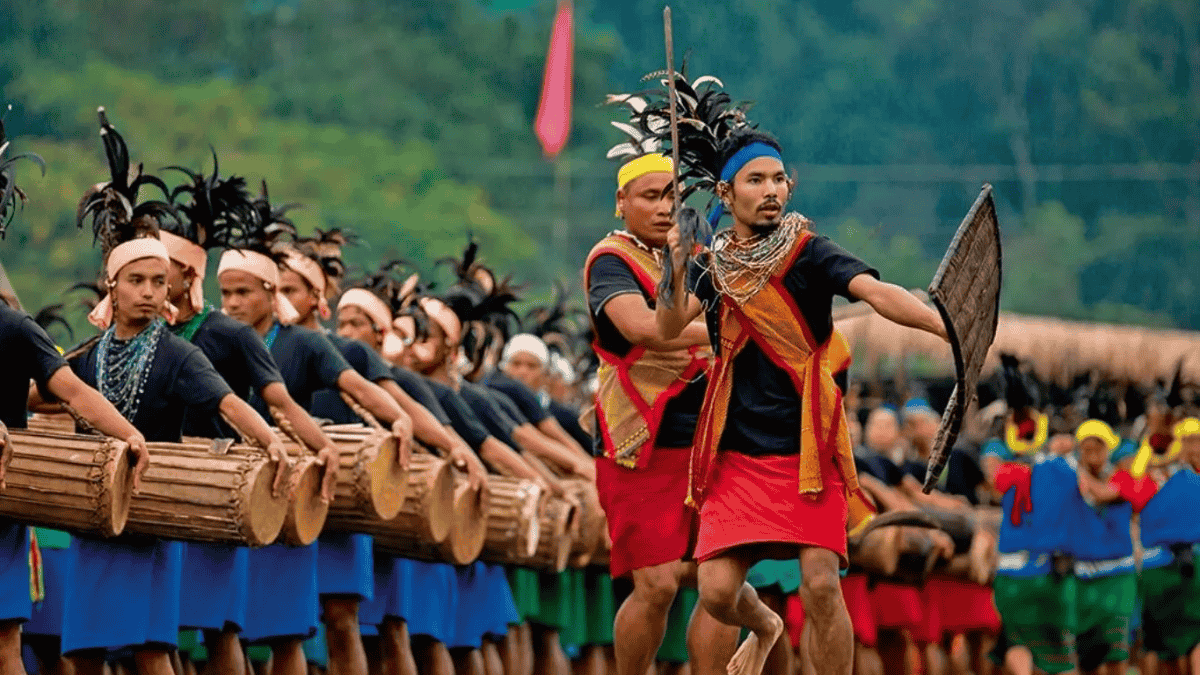
The Wangala Festival, also popularly known as 'The 100 Drums Festival', is the most important post-harvest festival of the Garo tribe of Meghalaya. This festival is not merely a social gathering; it is a living symbol of the Garo community's deep religious faith and their profound gratitude toward nature.
Historical Background and Religious Significance
The primary objective of the Wangala Festival is to offer thanks to 'Misi Saljong', who is revered as the God of the Sun and Fertility. The Garo community believes that 'Misi Saljong' is the supreme power who bestowed the knowledge of agriculture upon mankind and rendered the land fertile. This festival marks the end of the 'Jhum' (shifting) cultivation cycle, signaling the arrival of winter and the conclusion of agricultural operations.
According to an ancient legend, the Sun God promised that he would return during every harvest season, in commemoration of which this festival is celebrated annually. Although the influence of Christianity in modern times has introduced changes to several traditions, the festival continues to be celebrated with its original animistic (nature-worship) spirit in traditional 'Songsarek' villages.
Different Stages and Rituals of the Festival
The Wangala Festival can span a week-long process involving complex and sacred rituals. Aspirants should take special note of the names and significance of these rituals:
Rugala: This marks the first day of the festival. The village chief, known as the 'Nokma', offers the first harvest of new grains, rice beer brewed from the fresh yield, cooked rice, and vegetables to the Sun God 'Misi Saljong' inside his house. This exhibits a deep sense of devotion.
Sasat Sowa: On the second day, the Nokma burns incense (resin from the Sasat tree) near the main pillar of the house. This ritual acts as a collective prayer for the continuous protection of crops and social harmony.
Kakkat: This is the most energetic phase of the festival. Men and women across all age groups don traditional attire and dance in synchronization to the synchronized beats of long, oval-shaped drums.
| Name of the Ritual | Key Feature | Spiritual Objective |
|---|---|---|
| Rugala | Offering of the first harvest | Expressing gratitude |
| Sasat Sowa | Burning of incense | Seeking blessings and protection |
| Kakkat | Collective mass dance | Demonstrating the festival's energy and joy |
Structure of Garo Society: Matrilineal System and Social Justice
For the UPSC Main Examination General Studies Paper-1 (Indian Society), analyzing the social fabric of the Garo tribe is indispensable. The Garo community stands as one of the few select societies in India that practice a 'Matrilineal' tradition.
The Principle of Lineage and Inheritance
In Garo society, lineage and ancestry are traced through the mother rather than the father. However, it is vital to understand a nuanced distinction: Garo society is 'matrilineal', but it is not entirely 'matriarchal'. This implies that while lineage and property inheritance trace through the female line, political and administrative authority is heavily driven by men.
The right to inherit ancestral property is vested in one designated daughter of the family, known as the 'Nokna'. Generally, the youngest daughter is selected for this role, though parents reserve the right to choose another daughter. The husband of the Nokna is called the 'Nokrom', who relocates to reside in his wife's household after marriage (Matrilocal residence).
Clans and Marriage Regulations
The Garo community is primarily segregated into five exogamous clans (known as 'Chatchi'): Sangma, Marak, Momin, Areng, and Shira. Marrying within the same clan is strictly forbidden. The Chatchi is further subdivided into 'Machong' or sub-clans. Every Garo individual automatically becomes a member of their mother's Machong by birth.
| Term | Meaning and Significance | Relevance for the Examination |
|---|---|---|
| Nokna | Inheritor Daughter | Guardian of property and lineage |
| Nokrom | Husband of the inheritor daughter | Manages property while residing at the in-laws' house |
| Chatchi | Main Exogamous Clan | Core foundation of marriage laws |
| Machong | Sub-clan/Lineage | Source of individual identity |
Meghalaya's Linguistic Revolution 2026: A Historic Policy Shift
In May 2026, the Meghalaya government executed a landmark decision that reoriented the state's political and administrative landscape. On 16 April 2026, the Cabinet chaired by Chief Minister Conrad K. Sangma approved the 'Meghalaya Official Languages Ordinance, 2026'.
Key Features of the Ordinance
Under this new legislation, the state's two major indigenous languages—Khasi and Garo—have been granted full official language status alongside English. Prior to this, under the 2005 Act, these languages merely served as 'Associate Official Languages'.
Administrative Usage: Government notifications, orders, and official correspondence can now be formally issued in all three languages (English, Khasi, and Garo).
Legislative Impact: Members of the Meghalaya Legislative Assembly can now actively debate and deliberate in these native languages on the floor of the House.
Competitive Exams: State-level competitive examinations will now be conducted in Khasi and Garo in addition to English, directly benefiting rural and tribal students.
Demand for the Eighth Schedule and Constitutional Aspects
This decision goes beyond administrative convenience; it sends a strong signal to the Union Government. Meghalaya has long been advocating for the inclusion of Khasi and Garo languages in the Eighth Schedule of the Indian Constitution. The Chief Minister emphasized that obtaining full official status at the state level will reinforce their case at the national level. For aspirants, the reference to 'Article 345' is highly critical, as it empowers states to adopt their own official languages.
Ecosystem and Geography of Garo Hills
Situated in the western part of Meghalaya, the Garo Hills is a global biodiversity hotspot alongside its cultural richness. It hosts two major national parks that are vital for the UPSC Preliminary Examination.
Nokrek Biosphere Reserve
Located in West Garo Hills, Nokrek is Meghalaya's sole UNESCO-listed Biosphere Reserve. Its crowning feature is the 'National Citrus Gene Sanctuary'. Here, scientists discovered 'Citrus indica' (the wild Indian orange), which is deemed the mother of all citrus species worldwide.
The wildlife here includes the Red Panda, Hoolock Gibbon (India’s only ape), Clouded Leopard, and Asian Elephant. The 'Simsang River', which is the longest river in the Garo Hills, originates directly from the Nokrek range.
Balpakram National Park
Situated in South Garo Hills, this park is revered by the Garo community as the "abode of dead souls." The park is celebrated for its deep gorges and breathtaking landscapes. It is home to tigers, Sangai deer (Marbled Cat), and massive wild water buffaloes. This park features on the tentative list of UNESCO World Heritage Sites.
| Name of the Park | District | Key Feature | Core Wildlife |
|---|---|---|---|
| Nokrek | West Garo Hills | Citrus Gene Sanctuary | Hoolock Gibbon, Red Panda, Citrus Indica |
| Balpakram | South Garo Hills | Abode of dead souls / Deep gorges | Tigers, Wild Water Buffalo, Marbled Cat |
The 2026 Golden Jubilee Celebration of 1000 Drums
The Wangala Festival scheduled for November 2026 marks its 50th year (Golden Jubilee). To commemorate this historic milestone, the Meghalaya Government has decided to host it at an unprecedented scale as the "1000 Drums Wangala Festival."
Chief Minister Conrad Sangma announced that this grand iteration will realize the dream of the late P.A. Sangma, who envisioned taking the festival to the global stage. Infrastructure projects worth ₹20 crore and a special financial grant of ₹25 lakh have already been sanctioned for this mega event. The festival is fast transitioning from a regional symbol of Garo identity into a major pillar of Northeast India's cultural diplomacy.
Daily GK Update: Important News of 16 May 2026
Beyond the cultural updates, here are the vital national and international developments from today necessary for your exam preparation:
Defense and Science & Technology
Agni-VI Missile Readiness: DRDO has confirmed the technical readiness for the Agni-VI missile program. It is projected to have a strike range spanning 10,000 to 12,000 kilometers and will feature MIRV (Multiple Independently Targetable Re-entry Vehicle) technology.
Kaal Bhairav AI Fighter Jet: Under 'Operation 777' in collaboration with European partners, India successfully tested 'Kaal Bhairav', an AI-powered autonomous fighter aircraft. It boasts an operational range of 3,000 kilometers.
Hydrogen Bus Service: The Delhi Metro Rail Corporation (DMRC), backed by Indian Oil Corporation Limited (IOCL), has rolled out a hydrogen-powered shuttle bus service in Delhi.
Economy and Governance
Digital Census 2027: The 'Self-Enumeration' phase for India's first-ever fully digital census commenced in Meghalaya on 1 May and wrapped up successfully on 15 May 2026.
RBI's New Remittance Policy: The Reserve Bank of India has eased overseas remittance guidelines for non-bank entities, clearing roadblocks for smoother global trade.
Semiconductor Cluster: Rajasthan's first semiconductor cluster has been inaugurated in Bhiwadi, accelerating the momentum of India’s semiconductor and chip-manufacturing mission.
| Missile / Technology | Capacity / Range | Key Feature |
|---|---|---|
| Agni-VI | 10,000–12,000 KM | MIRV Technology, Global Strike Capability |
| Kaal Bhairav | 3,000 KM | AI-driven, Autonomous Fighter Jet |
| LR-AShM | 1,500 KM | Supersonic Long-Range Anti-Ship Missile |
Musical Instruments of Wangala Festival: An Introduction
Granular knowledge of tribal musical instruments is vital for the UPSC Art & Culture segment. The prominent instruments played during the Wangala dance include:
Dama: A long wooden drum measuring 4–5 feet, notably thick at the center and tapering towards both ends.
Kram: A sacred drum strictly reserved for solemn religious rituals and funeral ceremonies.
Adil: A trumpet or flute crafted from a buffalo horn, traditionally blown by the village chief to summon community gatherings.
Otokra: A large bamboo flute engineered to emit a characteristic deep, resonant bass sound.
These instruments are handcrafted using locally available natural materials like bamboo, indigenous wood, and animal hides, reflecting the Garo community's symbiotic relationship with nature.
Comparative Analysis of Major Northeastern Festivals
Competitive examinations frequently evaluate candidates using comparative questions based on various regional festivals of the Northeast. The table below serves as a quick reference:
| Name of the Festival | State | Tribe | Core Theme |
|---|---|---|---|
| Wangala | Meghalaya | Garo | Post-harvest worship of the Sun God |
| Hornbill | Nagaland | All Naga Tribes | Collective showcase of cultural heritage |
| Chapchar Kut | Mizoram | Mizo | Celebration marking the completion of Jhum clearing |
| Nongkrem | Meghalaya | Khasi | Festivity praying for a bountiful harvest |
| Saga Dawa | Sikkim | Buddhist Community | Commemorating the birth and enlightenment of Lord Buddha |
Conclusion: The Future and Global Outreach of Wangala
The Wangala Festival has transcended its origins as a localized tribal dance to establish itself as a vital component of Meghalaya’s "soft power." Its feature in IndiGo Airlines' in-flight magazine and widespread global promotion via social media highlight how indigenous cultures can navigate and preserve their identity within the currents of globalization. Concurrently, challenges regarding commercialization and cultural dilution persist, which both the local community and the state administration are actively trying to mitigate.
Why This Matters for Your Exam Preparation
From the standpoint of the UPSC and other competitive examinations, the topics covered above connect directly with multiple syllabus segments:
Art and Culture (GS Paper 1): Tribal festivals, traditional dance forms, and indigenous musical instruments are explicit parts of the syllabus. Descriptive questions concerning the socio-religious significance of Wangala can be anticipated.
Indian Society (GS Paper 1): The matrilineal system of the Garo tribe serves as an excellent case study for Sociology and Anthropology sub-topics.
Polity and Governance (GS Paper 2): Meghalaya's linguistic ordinance, the constitutional demand for the Eighth Schedule, and the application of Article 345 are highly relevant for political science sections.
Ecology and Geography (GS Paper 3): The geographical features of Nokrek Biosphere Reserve and Balpakram National Park, along with endangered species found there (e.g., Hoolock Gibbon, Citrus indica), are crucial for the Environment segment.
Defense and Technology (GS Paper 3): Updates on Agni-VI and AI-powered fighter jets fall squarely under the umbrella of Science & Technology developments.
Integrating these dimensions ensures a holistic edge across the Preliminary, Mains, and Interview stages of the examination. Atharva Examwise remains committed to guiding you through your preparation journey. Stay aligned with our 'Daily Current Affairs' and 'Map Practice' modules to consolidate your learning.