Current Affairs May 13, 2026: Daily GK Update & UPSC Current Affairs Analysis | Atharva Examwise
The global strategic landscape is currently undergoing a period of profound volatility, characterized by the collapse of long-standing arms control frameworks and the emergence of next-generation delivery systems that challenge the traditional understanding of nuclear deterrence. For aspirants preparing for the UPSC Civil Services Examination and other competitive exams, the events of May 12 and 13, 2026, offer a critical intersection of international relations, defense technology, and domestic governance. The successful test-firing of Russia’s RS-28 Sarmat intercontinental ballistic missile (ICBM) on May 12, 2026, serves as the primary focal point of this update, as it represents a significant shift in the power dynamics between the world's major nuclear powers following the expiration of the New START treaty earlier this year.
Simultaneously, India's strategic circles are abuzz with the Defence Research and Development Organisation's (DRDO) declaration of readiness regarding the Agni-VI missile, a development that signifies India's transition from a regional to a global strike capability. Domestically, the cancellation of the NEET-UG 2026 examination by the National Testing Agency (NTA) due to a paper leak scandal has sparked a nationwide debate on the integrity of large-scale competitive examinations, a topic frequently revisited in the UPSC Ethics and Governance papers. This report provides an exhaustive analysis of these developments, weaving technical specifications, geopolitical implications, and administrative context into a single, student-focused narrative.
The RS-28 Sarmat: Engineering and Strategic Impact
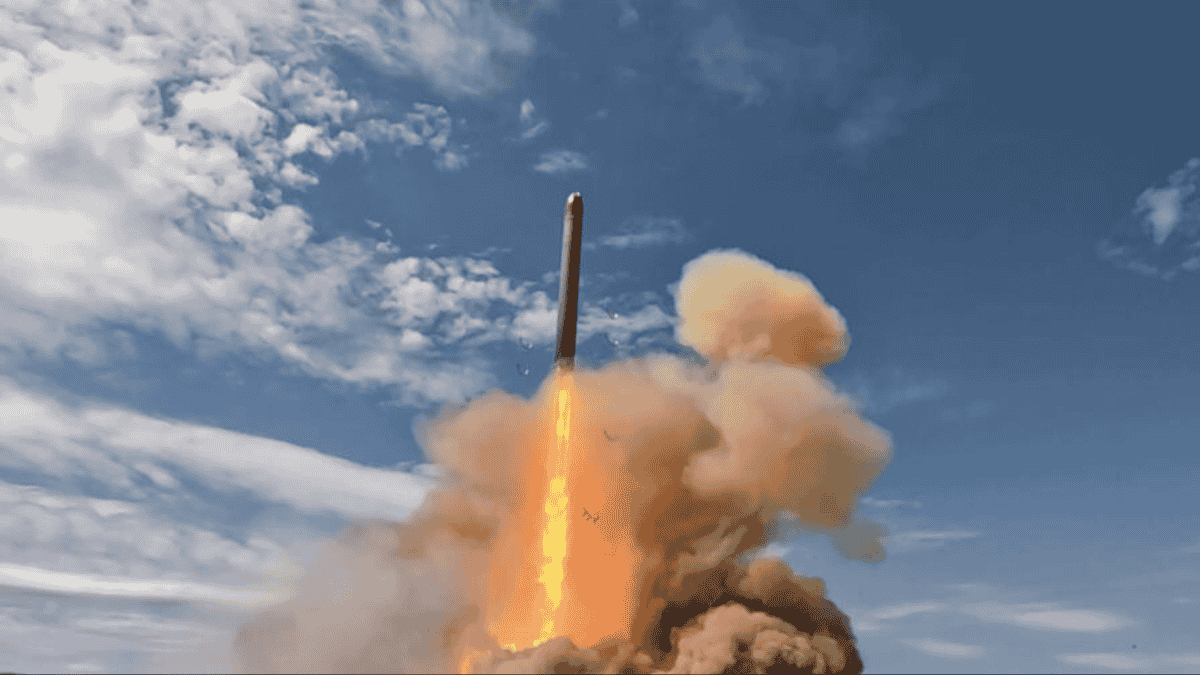
On Tuesday, May 12, 2026, at 11:15 Moscow time, the Russian Strategic Missile Forces carried out a successful test launch of the RS-28 Sarmat from the Plesetsk state test cosmodrome in the Arkhangelsk region. The missile successfully reached its target at the Kura test range on the Kamchatka Peninsula, approximately 30 minutes after launch. This successful test is particularly significant given the system's history of developmental delays and failed tests, including a catastrophic failure in September 2024 and a reported unsuccessful attempt in February 2023.
The RS-28 Sarmat, often referred to as "Satan II" by Western analysts and NATO (classified as SS-X-29 or SS-X-30), is a silo-based, liquid-fueled, super-heavy intercontinental ballistic missile. It was developed by the Makeyev Rocket Design Bureau specifically to replace the R-36M2 Voyevoda, the aging Soviet-era missile that currently holds the record for the world’s most powerful silo-launched system.
Technical Specifications of the RS-28 Sarmat
The Sarmat is distinguished by its immense throw-weight and its ability to carry a diverse array of warheads and penetration aids. The use of liquid fuel, while requiring more complex storage and handling than solid-fuel systems, allows for greater payload capacity and thrust flexibility.
| Parameter | Metric / Specification |
|---|---|
| Length | $35.3$ meters |
| Diameter | $3.0$ meters |
| Launch Weight | $208,100$ kg ($208.1$ metric tons) |
| Payload Capacity | $10,000$ kg ($10$ tons) |
| Operational Range | $18,000$ km (Standard) to $35,000$ km (FOBS) |
| Warhead Type | MIRV (Multiple Independently Targetable Re-entry Vehicles) |
| HGV Compatibility | Avangard Hypersonic Glide Vehicle |
| Fuel System | Three-stage Liquid-fueled |
Key Facts for Competitive Exams
FOBS Technology: The Sarmat is capable of Fractional Orbital Bombardment, allowing it to enter a low Earth orbit and de-orbit over a target from any direction.
Warhead Capacity: The missile can carry up to $10$ heavy warheads or $16$ lighter MIRVs, or a combination of warheads and $3$ Avangard hypersonic glide vehicles.
Deterrence Capability: President Putin stated that the Sarmat's yield is more than four times greater than any Western equivalent, such as the American Minuteman III.
Short Boost Phase: The design features a shortened initial launch phase, reducing the time available for enemy space-based infrared sensors to track the missile.
The Strategic Calculus of FOBS and South Pole Trajectories
A defining feature of the Sarmat that has drawn intense interest from defense analysts is its sub-orbital flight capability, enabling a trajectory over the South Pole. Traditional ICBMs follow a ballistic arc that takes them over the North Pole, a route that is heavily monitored by American and NATO early warning systems like the Ballistic Missile Early Warning System (BMEWS) and the North American Aerospace Defense Command (NORAD).
By utilizing the South Pole route, the Sarmat can approach the continental United States from the south, effectively bypassing the primarily north-facing radar arrays in Alaska and Greenland. This capability is achieved through the Fractional Orbital Bombardment System (FOBS) mechanism, where the missile enters a low Earth orbit (LEO) at an altitude of approximately $160$ km to $200$ km—significantly lower than the $1,300$ km apogee of traditional ballistic trajectories. Just before reaching the target, a retrograde engine burn causes the warhead to de-orbit and descend upon the target. This maneuver not only conceals the target location until the final moments but also reduces the warning time for decision-makers.
The Geopolitical Context: Expiration of New START and the Arms Race
The timing of the Sarmat test launch is inextricably linked to the expiration of the New START (Strategic Arms Reduction Treaty) on February 4, 2026. New START was the last remaining legally binding agreement between the United States and Russia that capped the number of deployed strategic nuclear warheads at $1,550$ for each side and limited delivery systems like ICBMs and heavy bombers. Its expiration has left the world in "uncharted territory," with no caps on the world's two largest atomic arsenals for the first time in over half a century.
UN Secretary-General António Guterres has characterized this as a "grave moment" for international peace, warning that the absence of verification measures like on-site inspections and data exchanges increases the risk of catastrophic miscalculation. This sentiment is echoed in the ongoing 11th NPT (Non-Proliferation Treaty) Review Conference, where non-nuclear weapon states are calling for nuclear-armed nations to honor their disarmament obligations under Article VI of the treaty.
Russia’s insistence on deploying the Sarmat at the Uzhur missile division in Krasnoyarsk Krai by the end of 2026 is viewed by Western analysts as a signal of strategic resolve. The Institute for the Study of War (ISW) suggests that the Russian leadership uses such tests as "nuclear saber-rattling" to project strength and mask vulnerabilities in conventional military operations, particularly in the context of the ongoing conflict in Ukraine.
India’s Strategic Transformation: The Road to Agni-VI
While the global community observes Russia's nuclear modernization, India is preparing for its own significant leap in strategic deterrence. In May 2026, the DRDO confirmed its complete technical readiness for the Agni-VI missile program, awaiting final approval from the Government of India. This announcement marks a transition in India's defense doctrine from regional deterrence to a "Global Strike" capability.
Comparative Evolution of the Agni Series
The Agni series has evolved from the regional-focused Agni-I to the intercontinental Agni-V, which demonstrated MIRV technology during "Mission Divyastra" in March 2024. The Agni-VI is designed to be the most advanced in this series, incorporating technologies that ensure survivability against modern anti-ballistic missile (ABM) defenses.
| Feature | Agni-V (Current) | Agni-VI (Proposed) |
|---|---|---|
| Range | $5,500$ – $8,000$ km | $10,000$ – $12,000$ km |
| Warhead Configuration | $3-6$ MIRV warheads | $10-12$ MIRV warheads |
| Propulsion | Three-stage Solid Fuel | Four-stage Solid Fuel |
| Mobility | Road-mobile/Canisterized | Land and Submarine-launched |
| Special Technology | MIRV (Mission Divyastra) | MaRV, Stealth, and Decoys |
Exam-Relevant Data on Agni-VI
Survivability Features: Agni-VI will be equipped with radar-absorbent coatings and Maneuverable Re-entry Vehicles (MaRV), which allow the warhead to change its trajectory during the re-entry phase to evade interceptors like the S-500 or THAAD.
Intercontinental Reach: With a range exceeding $10,000$ km, India will join a select group of nations (US, Russia, China, France, UK) capable of striking targets across continents.
Strategic Doctrine: The Agni-VI program is seen as essential for providing greater credibility to India’s "No First Use" (NFU) doctrine, ensuring a robust second-strike capability.
Solid Fuel Advantage: Unlike the liquid-fueled Sarmat, the Agni-VI's solid-fuel system allows for faster launch readiness and easier transportability.
Hypersonic Milestones: India's New Strike Capability
In addition to traditional ballistic missiles, India is making strides in hypersonic technology. In May 2025, DRDO successfully tested an 'Actively Cooled Scramjet' combustion chamber, which was followed by a 12-minute test in January 2026. This technology is critical for both long-range hypersonic cruise missiles and reusable launch vehicles. On May 1, 2026, India successfully tested its Long-Range Anti-Ship Missile (LR-AShM), capable of neutralizing maritime targets at a distance of $1,500$ km with speeds exceeding $Mach$ $5$. These advancements demonstrate India's maturation into a pioneer of "niche" military technologies.
Domestic Update: NEET-UG 2026 Cancellation and the NTA Crisis
For millions of students in India, the most impactful news of May 13, 2026, is the National Testing Agency's (NTA) decision to cancel the NEET-UG 2026 exam following a massive paper leak scandal. The scandal came to light after it was discovered that a guess paper circulated in Rajasthan matched the actual examination questions, leading to nationwide protests and a demand for a complete restructuring of the NTA.
This incident has profound implications for the governance and ethics of competitive examinations in India. The NTA, established to ensure high-quality and transparent testing, now faces a credibility crisis. For UPSC aspirants, this case study is relevant for discussing "Integrity in Public Service" and "Accountability in Institutions" in the Ethics paper.
Key National News Highlights (May 13, 2026)
Somnath Amrut Mahotsav: Prime Minister Modi participated in the 1,000-year celebration of the Somnath Temple's enduring faith and the 75th anniversary of its post-Independence reconstruction. A commemorative stamp and a $Rs. 75$ coin were released to mark the occasion.
PMGSY-IV Allocation: Union Minister Shivraj Singh Chouhan announced the approval of $973$ roads covering over $2,117$ km in Madhya Pradesh, with an investment of $Rs. 1,763$ crore under the Pradhan Mantri Gram Sadak Yojana-IV to enhance rural connectivity.
One Case One Data: The Ministry of Law and Justice launched a unified digital identity system for court cases, integrating information from high courts to taluka courts to improve judicial efficiency. An AI chatbot, "Su Sahay," was also introduced to assist litigants.
SEHAT Mission: A joint initiative by the Health and Agriculture Ministries was launched to improve rural health through agricultural transformation, focusing on nutritional security.
Economic Indicators: Geopolitical Turbulence and Growth Forecasts
The Indian economy is currently navigating a complex environment characterized by high energy costs and global geopolitical instability. Moody’s has recently slashed India’s 2026 GDP growth forecast to $6\%$, citing weak consumption and the rising cost of energy imports due to the ongoing West Asia crisis.
Economic Data Snapshot (Q4 FY26)
| Indicator | Status / Value |
|---|---|
| Labour Force Participation Rate (LFPR) | $55.5\%$ (Overall) |
| Rural LFPR | $58.2\%$ |
| Urban LFPR | $50.2\%$ |
| Jobless Rate | $5\%$ |
| Bank Credit Growth | $16.1\%$ |
| LPG Import Risk | $90\%$ threatened by Hormuz closure |
The West Asia crisis, particularly the failed US-Iran ceasefire talks, has brought the security of the Strait of Hormuz back into focus. Since India imports nearly $90\%$ of its LPG through this route, any disruption could lead to an energy security crisis and further inflationary pressure.
The Science of Deterrence: HGV, FOBS, and MIRV Explained
For the Science and Technology section of the UPSC exam, aspirants must have a clear understanding of the mechanisms behind these advanced weapon systems.
MIRV (Multiple Independently Targetable Re-entry Vehicle): This technology allows a single ballistic missile to carry several warheads, each of which can be programmed to hit a different target. This makes it exponentially harder for defense systems to intercept all incoming threats simultaneously.
MaRV (Maneuverable Re-entry Vehicle): Unlike a standard MIRV that follows a predictable ballistic path once released, a MaRV can perform maneuvers within the atmosphere during its final descent, making it nearly impossible to predict its point of impact.
HGV (Hypersonic Glide Vehicle): These are launched into the upper atmosphere by a rocket but then "glide" to their target at speeds exceeding $Mach$ $5$. Because they fly at lower altitudes than traditional ICBMs and can maneuver, they stay below the horizon of most radar systems until it is too late to react.
Scramjet Engine: A Supersonic Combustion Ramjet (Scramjet) uses the missile’s high speed to compress incoming air for combustion, allowing for efficient hypersonic flight within the atmosphere.
For further reading on India’s defense masterplan, you can visit related articles on the(http://www.atharvaexamwise.com/defense-news).
International Crisis: Failures in Diplomacy
The failure of ceasefire talks between the United States and Iran on May 13, 2026, has significant ramifications for regional stability. The British Prime Minister Keir Starmer is facing a major internal revolt as members of his party demand accountability for the collapse of these peace efforts. Meanwhile, the UN has condemned the rising civilian death toll as regional conflicts escalate, highlighting the failure of the international community to maintain the "rules-based order".
In West Asia, the potential for a full-scale energy crisis is looming. Prime Minister Modi has recently urged Indian citizens to prioritize domestic travel and abandon foreign holidays to help stabilize the Rupee, which is under pressure due to the energy-linked trade deficit. This economic nationalism is a response to the "New Normal" of global instability, where regional conflicts have immediate domestic consequences.
For a deep dive into the historical context of West Asia relations, see our archived guide on(http://www.atharvaexamwise.com/international-relations/india-iran).
Why this matters for your exam preparation
The events of May 12-13, 2026, provide a wealth of material for various papers in the UPSC Civil Services Examination and other State PSCs:
GS Paper I (History and Culture): The Somnath Amrut Mahotsav is a perfect example of the intersection of cultural heritage and national identity. Understanding the historical destruction and post-1947 reconstruction of the Somnath Temple (led by Sardar Patel and K.M. Munshi) is vital for the Art and Culture section.
GS Paper II (International Relations & Governance): The expiration of the New START treaty and the subsequent Sarmat test illustrate the "Realist" perspective of international relations, where power and deterrence dictate state behavior. The NEET-UG scandal is a critical case study for governance and administrative reform.
GS Paper III (Science, Tech, and Economy): The technical nuances of ICBMs, FOBS, and Scramjet engines are high-yield topics for Science and Technology. Economic indicators like LFPR and GDP forecasts are essential for the Indian Economy section.
GS Paper IV (Ethics and Integrity): The NTA paper leak scandal raises questions about the ethical duty of public institutions to provide a level playing field. Aspirants can use this to discuss "Institutional Ethics" and the impact of corruption on social trust.
Current Affairs Prelims: Factual data such as the range of the Sarmat ($35,000$ km), the classification of "Satan II," and the specifics of the PMGSY-IV road projects are direct candidates for objective-type questions.
To ensure you are fully prepared for the upcoming 2026 Prelims on May 24, we recommend taking our(http://www.atharvaexamwise.com/test-series/prelims-2026), which now includes specialized modules on "Emerging Defense Technologies" and "Global Nuclear Policy." Staying updated with a daily GK update is the best way to connect static subjects like "Nuclear Doctrine" to the rapidly evolving dynamic world.