
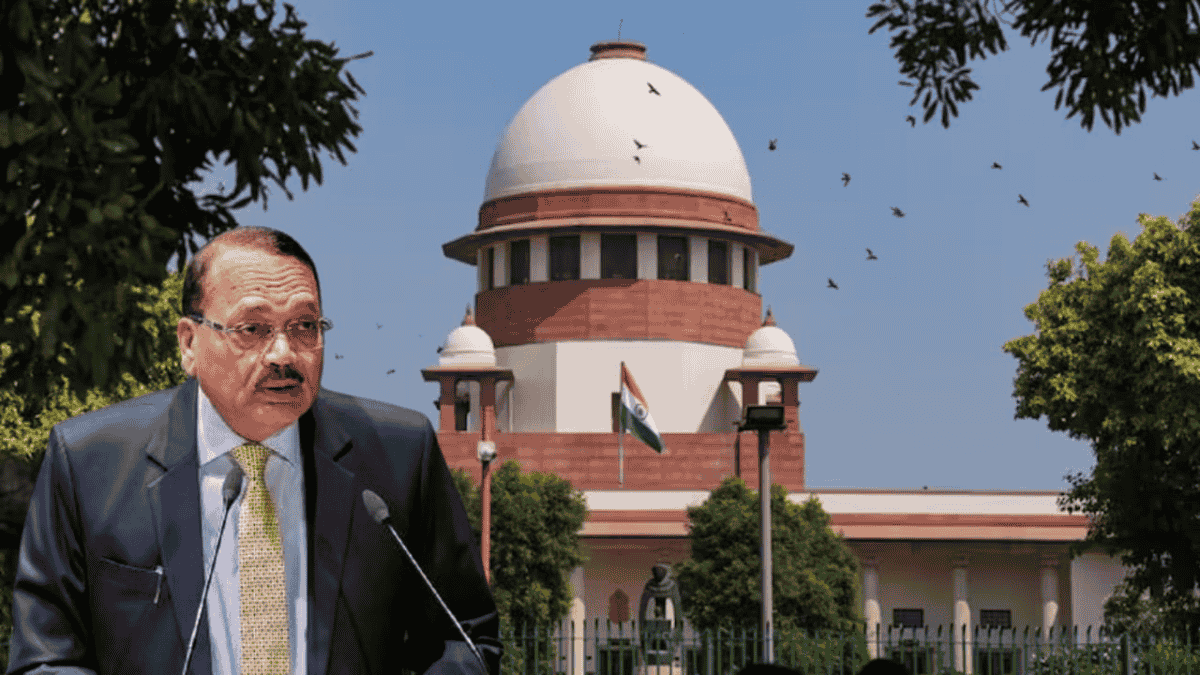
UPSC Current Affairs 11 May 2026: CJI Launches 'Su-Sahay' AI Chatbot and 'One Case One Data' | Atharva Examwise Daily GK Update
May 11, 2026, has proven to be a historic milestone in the history of the Indian judicial system. During Supreme Court proceedings, the 53rd Chief Justice of India (CJI), Justice Surya Kant, announced the launch of two extremely significant digital initiatives—'Su-Sahay' and 'One Case One Data.' These initiatives are set to not only transform how data is managed within the judiciary but also simplify and streamline the process for common citizens to access Supreme Court services. Justice Surya Kant, who took office on November 24, 2025, has identified reducing judicial pendency and integrating modern technology as his top priorities. This article provides a detailed, exam-oriented analysis of the technical aspects, potential benefits, and challenges facing these two initiatives.
Digital Rejuvenation of the Indian Judiciary: Dawn of a New Era
Over the last decade, the Indian judiciary has evolved from basic computerization to real-time data systems, virtual courts, and multilingual judgment access. Under Phase-III of the e-Courts Project, launched in 2023-24, the judiciary adopted a systematic approach toward emerging technologies like Artificial Intelligence (AI) and Blockchain. In this continuum, the launch of 'Su-Sahay' and 'One Case One Data' reflects the judiciary's dedication to the 'Digital India' vision.
While announcing these initiatives, Justice Surya Kant clarified that these systems were developed in collaboration with the National Informatics Centre (NIC) and the Supreme Court Registry. This partnership acts as a bridge between government technical expertise and judicial requirements, ensuring that the tools developed are not only technologically advanced but also aligned with judicial values and procedures.
Su-Sahay AI Chatbot: A Step Toward Citizen-Centric Justice
'Su-Sahay' (also referred to as 'Su-Sahayak' in some contexts) is an AI-based chatbot integrated specifically with the Supreme Court website. Its primary objective is to provide a simple and intuitive interface for litigants, lawyers, and common citizens to access various e-services of the court. Finding information on legal websites is often a daunting task for ordinary citizens; 'Su-Sahay' provides 'front-end' guidance to navigate this complexity.
Key Features and Functionality of Su-Sahay
This chatbot is not merely an informational tool but functions as an interactive assistant. Its functionality can be understood through the following data:
| Feature | Description and Impact |
|---|---|
| Developer | National Informatics Centre (NIC) and Supreme Court Registry |
| User Base | Litigants, Advocates, and General Citizens |
| Key Functions | Instant guidance on Case Status, Filing Procedures, and E-services |
| Interface | Simple and convenient prompt-based interface |
| Goal | To facilitate 'Access to Justice' |
The 'Su-Sahay' chatbot utilizes Natural Language Processing (NLP), enabling it to understand user queries and provide relevant data. It is particularly useful for individuals who lack a deep understanding of legal terminology, as it provides guidance in simple language.
'One Case One Data' Initiative: Integrated Judicial Data Management
The second major initiative announced by the CJI is 'One Case One Data,' which is being regarded as one of the most significant reforms toward data integration within the judiciary. Currently, data across different levels of India's judicial system—Taluka courts, District courts, High Courts, and the Supreme Court—is fragmented and scattered. This isolation leads to delays in case management and makes maintaining data accuracy challenging.
Technical Architecture and Functionality
'One Case One Data' is a comprehensive digital platform that links case-related information from all courts in the country into a single integrated system. Its operational nuances include:
Multi-level Integration: This system integrates judicial administration from the Taluka level up to the apex court. According to the CJI, full case details from the District and Taluka levels can now be viewed directly from the Supreme Court.
Reciprocal Access: Information flow is not just top-down; Taluka courts will also be granted access to necessary data from High Courts and the Supreme Court.
Automated Retrieval: This new module automates the process of fetching information from various court databases, reducing the possibility of manual errors.
Instant Verification: It facilitates rapid online verification of case-related information, which is essential for accelerating legal proceedings.
| Benefit Area | Impact of 'One Case One Data' |
|---|---|
| Data Integrity | Uniform data across all levels will eliminate discrepancies |
| Case Management | Easier for courts to organize records and hearing statuses |
| Govt. Coordination | Data access will be provided to government departments when necessary |
| Transparency | The integrated framework will increase transparency in the entire judicial ecosystem |
This initiative will serve as the backbone of the future digital justice system, handling current data while preparing the ground for predictive analytics.
The Pendency Crisis: The Necessity of Digital Reforms
The primary driver behind these digital initiatives is the heavy burden of pending cases in India. Statistics as of March 2026 depict a dire situation that challenges the effectiveness of the justice delivery system.
Statistical Data on Judicial Pendency (March 2026)
According to data analysis, the number of pending cases in Indian courts has reached new records:
Total Pending Cases: The total number of pending cases across all courts nationwide has exceeded 5.58 crore (55.8 million).
Lower Court Burden: Approximately 85% of the total cases (about 4.9 crore) are pending in District and Subordinate courts alone.
Supreme Court Status: By the end of March 2026, the number of pending cases in the Supreme Court reached 93,143, the highest in the last three decades.
Legacy Cases: There are more than 1.8 lakh cases in District and High Courts that have been pending for over 30 years.
| Court Level | Pending Cases (Estimated 2026) | % of Cases Older than 5 Years |
|---|---|---|
| Supreme Court | 93,143 | ~25% |
| High Courts | ~65 Lakh | ~50% |
| District/Subordinate | ~4.9 Crore | ~33% |
The increase in pendency is attributed to several factors, including the shortage of judges (33% vacancies in High Courts and 21% in lower courts) and outdated manual processes. Technologies like 'One Case One Data' aim to reduce administrative delays by streamlining these processes.
Evolution of AI in the Judiciary: From SUVAS to Su-Sahay
The evolution of judicial technology in India is not a sudden change but a deliberate process of digital transformation. The Supreme Court has successfully utilized several AI-based tools over the past few years, which served as the foundation for 'Su-Sahay.'
Important Judicial AI Tools:
SUVAS (Supreme Court Vidhik Anuvaad Software): An AI-driven translation tool that translates English judgments into regional languages (Hindi, Marathi, Tamil, etc.). By 2024, it had translated thousands of judgments to make legal information accessible.
SUPACE (Supreme Court Portal for Assistance in Court Efficiency): This tool helps judges extract facts from documents and find relevant legal precedents. It is currently in a pilot phase, primarily for criminal cases.
LegRAA (Legal Research Analysis Assistant): Developed by NIC, this software assists judges in complex legal research and document analysis.
Adalat AI: AI is being used in several High Courts to transcribe oral arguments and witness statements in real-time.
The judiciary maintains a clear stance that these tools will not replace the 'decision-making' role of judges but will only enhance their administrative and research efficiency. "Human discretion" remains at the center of justice delivery.
AI Risks and Challenges: 'Mercy vs Mankind' Case Study
While AI offers immense opportunities, its unregulated use also poses serious threats. In February 2026, a case came before the Supreme Court that shocked the legal fraternity.
The Danger of AI 'Hallucinations'
During a hearing, a petition submitted by lawyers cited a judgment titled 'Mercy vs Mankind.' After a thorough investigation, the bench led by CJI Surya Kant found that no such case ever existed. It was a purely fictional citation generated by a Generative AI tool.
This incident of AI hallucination warned the judiciary that:
Lawyer Accountability: Lawyers cannot hide behind technology; they are personally responsible for the accuracy of every fact they present.
Fake Citations: Citing fictional cases will be considered professional misconduct and will have legal consequences.
Manual Verification: Human verification of any legal document prepared by AI must be mandatory.
Additionally, there is a fear of 'cognitive offloading,' where judges and lawyers might gradually surrender their critical thinking and research capabilities to machines.
Broader Landscape: India’s AI Mission and MANAV Vision
Judicial reforms should be viewed as integrated with India's broader technical vision. India currently ranks third globally in the field of AI, reflecting its growing technological maturity.
MANAV Vision 2026
Prime Minister Narendra Modi unveiled the M.A.N.A.V. Vision during the 'India AI Impact Summit' in February 2026. This vision sets ethical standards for AI use across all sectors, including the judiciary:
| Pillar | Full Form | Judicial Relevance |
|---|---|---|
| M | Moral and Ethical Systems | AI use must be fair and bias-free |
| A | Accountable Governance | Clear accountability framework for technical decisions |
| N | National Sovereignty | Data sovereignty and use of indigenous models |
| A | Accessible and Inclusive AI | Accessible tech for the masses, like Su-Sahay |
| V | Valid, Safe and Legitimate Systems | Safeguards against fake data and hallucinations |
The Government of India has approved an outlay of over ₹10,300 crore for the IndiaAI Mission, which could provide judicial infrastructure with facilities like supercomputing and massive dataset platforms in the future.
The Road Ahead: Synthetic Intelligence and 6G Networks
As we move toward 2030, the judiciary's digital journey is set to become even more complex and advanced.
Synthetic Intelligence (SI): In 2026, experts are discussing 'Synthetic Intelligence,' which is far more advanced than traditional AI. While AI works only on data patterns, SI attempts to provide machines with human qualities like 'sensitivity' and 'willpower.' In the future, this could help in making even more 'fair decisions' in the judicial system.
6G Vision 2030: India is preparing for 6G technology, which will offer speeds up to 1 Terabit per second. This will enable 'real-time remote hearings' and data sharing with ultra-low latency in the judiciary, multiplying the effectiveness of 'One Case One Data.'
Conclusion: Commitment to Digital Justice
'Su-Sahay' and 'One Case One Data' are not just technical tools; they symbolize the Indian judiciary's resolve toward a more transparent, efficient, and accessible justice system. Under the leadership of CJI Surya Kant, the judiciary has made it clear that it is ready to adopt modern solutions to face modern challenges. However, incidents like 'Mercy vs Mankind' remind us that technology must always remain subordinate to human ethics and discretion. In the coming years, these digital reforms will not only help reduce case pendency but also establish India as a leading nation on the global map of 'judicial innovation.'
Why this matters for your exam preparation
As a UPSC and competitive exam aspirant, this topic is vital for the following reasons:
GS Paper II (Governance and Judiciary): 'E-governance' and 'Judicial Reforms' are crucial parts of the syllabus. You can cite 'Su-Sahay' and 'One Case One Data' as excellent examples of e-governance in the judiciary. Pendency statistics can be used to bolster answers in the Mains.
GS Paper III (Science and Technology): Questions are often asked on the applications of AI, Machine Learning, and NLP. The benefits of AI and risks like hallucinations in a judicial context provide significant 'content' for the Science-Tech section.
Essay and Ethics (GS IV): This material provides rich thoughts for writing essays on topics like "Technology vs. Human Discretion in Justice." Ethical challenges of AI (like bias and accountability) can be used as 'case studies' in the Ethics paper.
Prelims: Factual details such as CJI Surya Kant (53rd CJI), the role of NIC, specifics of 'Su-Sahay,' and the objectives of 'One Case One Data' can be asked directly. Definitions of terms like 'IndiaAI Mission' and 'MANAV Vision' and their pillars are essential to remember.
Stay connected with Atharva Examwise for more such detailed news and analysis. Regular practice and updated information are the keys to your success.