
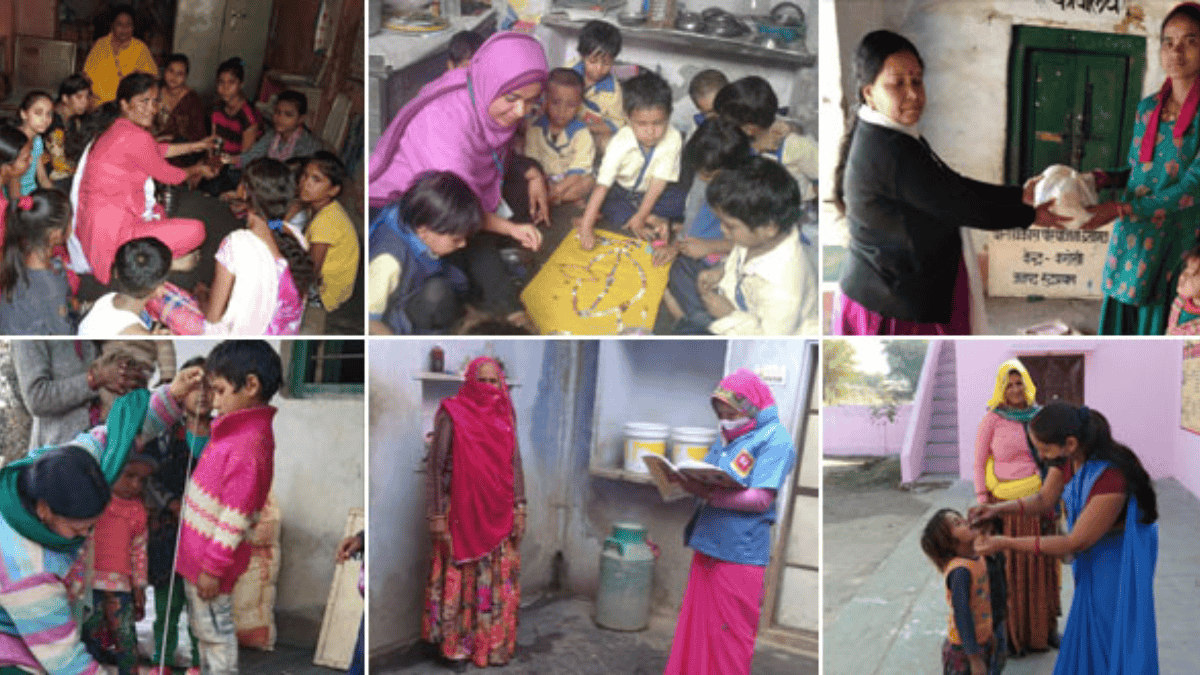
UPSC Current Affairs May 2026: Madhya Pradesh Tops Anemia Mukt Bharat Index 2025-26 – A Detailed Analysis and Daily GK Update
The Global and National Public Health Challenge of Anemia in India
Anemia remains one of the most widespread and challenging public health problems globally. It is a condition in which the number of red blood cells (RBCs) or their oxygen-carrying capacity is insufficient to meet the body's physiological needs. In the Indian context, the severity of this condition has long been a focus of policy intervention due to its significant impact on morbidity and mortality, especially among vulnerable groups such as women and children.
According to the World Health Organization (WHO), women of reproductive age are considered anemic if their hemoglobin level is less than $12.0\text{ g/dL}$, and children under five years of age are considered anemic if it is less than $11.0\text{ g/dL}$.
The consequences of anemia are multi-dimensional. It impairs cognitive and motor development in infants, reduces work capacity in adults, and causes serious complications such as prenatal loss, premature birth, and low birth weight in pregnant women. Data from the National Family Health Survey-5 (NFHS-5) highlighted this alarming burden, revealing that 67.1% of children and 57% of women of reproductive age in India were anemic. To tackle this challenge, the Government of India launched the Anemia Mukt Bharat (AMB) strategy in 2018 under the National Nutrition Mission (Poshan Abhiyaan).
Madhya Pradesh: The Nation's New Health Model for Anemia Control
The recent report of the Anemia Mukt Bharat (AMB) Index 2025-26 has highlighted a significant shift in India’s public health landscape. Madhya Pradesh, which was once under scrutiny for high rates of malnutrition and anemia, has emerged as the country’s best-performing state. The state secured the first position with a score of 92.1, which is not only higher than the national average but has also surpassed last year's top state, Andhra Pradesh.
Madhya Pradesh Performance Indicators 2025-26
The main reason for the state's success is comprehensive coverage across all target groups and precise data management. Madhya Pradesh has achieved the "ceiling value" (maximum possible reporting limit) in several categories, reflecting the effective reach of health services at the grassroots level.
| Beneficiary Group | Coverage Percentage in MP (2025-26) | National Status / Special Remarks |
|---|---|---|
| Children (6–59 months) | 80.4% | Highest ranking in the country |
| Children (5–9 years) | 95.0% | Achieved Ceiling Value |
| Adolescents (10–19 years) | 95.0% | Achieved Ceiling Value |
| Pregnant Women | 95.0% | Achieved Ceiling Value |
| Lactating Mothers | 95.0% | Achieved Ceiling Value |
| Total AMB Index Score | 92.1 | Ranked 1st in the country |
This performance is the result of sustained efforts over two consecutive quarters, where the state maintained its top position in the Government of India's Health Management Information System (HMIS) rankings.
6x6x6 Strategy: The Core Framework of Anemia Mukt Bharat
The success of the Anemia Mukt Bharat program is based on its "6x6x6" strategy. This is a detailed framework designed to target six beneficiary groups through six specific interventions and six institutional mechanisms. This strategy addresses not only nutritional causes but also focuses on non-nutritional factors such as malaria and hemoglobinopathies.
Six Target Beneficiaries
The program adopts a Life-cycle approach, ensuring that no vulnerable group is left behind. These groups were identified based on their high iron requirements and susceptibility to deficiency-related complications:
Children (6–59 months): Crucial for preventing cognitive impairment during early development.
Children (5–9 years): Focuses on both school-going and out-of-school children.
Adolescents (10–19 years): Targets rapid growth phases and the onset of menstruation in girls.
Women of Reproductive Age (20–49 years): Specifically for building iron stores in non-pregnant and non-lactating women.
Pregnant Women: Essential for maternal health and preventing low birth weight.
Lactating Mothers (0–6 months): To ensure postpartum recovery and infant health.
Six Strategic Interventions
The interventions are both preventive and curative, addressing both nutritional and non-nutritional causes:
Prophylactic Iron and Folic Acid (IFA) Supplementation: The backbone of the strategy, providing age-appropriate dosages.
Regular Deworming: Targeting parasitic infections that cause blood loss and malabsorption.
Intensive Behavior Change Communication (BCC): The "Swasth Tan, Prakhar Man" campaign focuses on four key behaviors: IFA compliance, appropriate infant feeding, iron-rich diet, and delayed cord clamping during childbirth.
Testing and Treatment: Using digital methods like digital hemoglobinometers at care centers for rapid diagnosis.
Food Fortification: Mandating the use of iron and folic acid-fortified foods in government programs like Mid-Day Meal (PM-POSHAN) and ICDS.
Addressing Non-Nutritional Causes: Special screening for malaria, hemoglobinopathies (like Sickle Cell Disease), and fluorosis in endemic areas.
Six Institutional Mechanisms
Six institutional pillars have been established to ensure accountability and effective delivery:
Inter-ministerial Coordination: Convergence between Health, Education, and Women & Child Development departments.
National Anemia Mukt Bharat Unit: A dedicated central body for policy and monitoring.
National Centers of Excellence: Academic and research support for advanced interventions.
Convergence with other Ministries: Ensuring holistic implementation across various social sectors.
Supply Chain and Logistics Strengthening: Reducing stock-out situations of IFA tablets and syrups.
AMB Dashboard and Digital Portal: Real-time data tracking and state/district-level report cards.
Technical Specifications: IFA Dosage and Regimen
Specific dosages provided to different groups are frequently asked in exams. A precise understanding of these protocols is essential for UPSC and other competitive exams.
| Target Group | Dosage and Composition | Frequency and Arrangement |
|---|---|---|
| Children (6–59 months) | $1\text{ mL}$ syrup ($20\text{ mg}$ iron + $100\text{ mcg}$ folic acid) | Twice a week; via auto-dispenser |
| Children (5–9 years) | Pink tablet ($45\text{ mg}$ iron + $400\text{ mcg}$ folic acid) | Weekly; in schools or Anganwadi |
| Adolescents (10–19 years) | Blue tablet ($60\text{ mg}$ iron + $500\text{ mcg}$ folic acid) | Weekly; for both school-going and out-of-school |
| Women (20–49 years) | Red tablet ($60\text{ mg}$ iron + $500\text{ mcg}$ folic acid) | Weekly; Red sugar-coated tablets |
| Pregnant Women | Red tablet ($60\text{ mg}$ iron + $500\text{ mcg}$ folic acid) | Daily; for 180 days from the 4th month |
| Lactating Mothers | Red tablet ($60\text{ mg}$ iron + $500\text{ mcg}$ folic acid) | Daily; for 180 days postpartum |
Operational Excellence: "Dastak Abhiyan" in Madhya Pradesh
The primary vehicle for Madhya Pradesh's success has been the Dastak Abhiyan, a door-to-door health campaign conducted between July 22 and September 16, 2025. This initiative mobilized a massive workforce, including ASHA workers, Anganwadi workers, and Auxiliary Nurse Midwives (ANMs), to reach remote households.
Screening and Treatment Outcomes
During the first phase of the campaign, over 7 million children and nearly 1 million pregnant women were screened.
Children (6–59 months): $7.062$ million children were tested using digital hemoglobinometers. Of these, $3.521$ million children with mild or moderate anemia were treated immediately, while $3,575$ children with severe anemia were referred to district hospitals for management.
Pregnant Women: $9.42$ lakh women were screened. The campaign identified $3.02$ lakh women with moderate to severe anemia and $10,660$ women with very severe anemia, who were given targeted treatment through IFA, Iron Sucrose, or FCM (Ferric Carboxymaltose) as required.
The multi-pronged strategy adopted by the state was not limited to distribution; it created a holistic safety net for maternal and child health by integrating regular health check-ups, deworming, and the promotion of nutritious diets.
The Role of Digital Governance and HMIS Reporting
A key insight from the 2025-26 report is that Madhya Pradesh's top rank was earned not just through fieldwork, but also through a "Full Reporting" system. While many states struggled with data entry, all 52 districts of Madhya Pradesh ensured monthly reporting on the AMB portal for 12 consecutive months.
Impact of Accurate Data Entry
The Health Management Information System (HMIS) serves as a "single window" for public health data in India. In the context of AMB, this system tracks the coverage of IFA distribution and deworming against state-specific targets. Madhya Pradesh's ability to ensure 100% reporting from schools, Anganwadis, and health centers allowed for accurate performance tracking and timely corrective actions.
In contrast, other major states showed significant gaps in reporting:
Uttar Pradesh: 74 out of 75 districts were placed in the "Non-reporting" or "Incomplete reporting" category, resulting in a very low index score.
Rajasthan: Previously a strong performer, it slipped to the 23rd rank due to reporting challenges and gaps in anemia screening.
Comparative Federalism: State Performance Analysis
The AMB Scorecard 2025-26 reveals a competitive landscape where Southern and Central states are outperforming the Northern and Eastern regions.
| State | AMB Index Score (2025-26) | Rank | Key Observation |
|---|---|---|---|
| Madhya Pradesh | 92.1 | 1 | Consistent top performance over two quarters. |
| Andhra Pradesh | 90.6 | 2 (Joint) | Previous top performer; maintained high coverage. |
| Telangana | 90.6 | 2 (Joint) | Significant improvement in IFA coverage. |
| Tamil Nadu | 89.9 | 3 | Strong position in adolescent and maternal health. |
| Haryana | 85.2 | 4 | Rose up with improvements in reporting and child coverage. |
| Uttar Pradesh | ~4.9 | Low | Massive lack of data reporting in 74 districts. |
| Rajasthan | ~23 | Dropped | Fell from 19th due to gaps in monitoring mechanisms. |
Haryana's performance is particularly noteworthy; it improved its rank by focusing on IFA coverage among children aged six months to five years, achieving 90.5% coverage—more than double the national average of 38.7% during the same period.
Linkage with National Sickle Cell Anemia Elimination Mission
A critical component of Madhya Pradesh's health model is the integration of anemia control with the National Sickle Cell Anemia Elimination Mission, launched in July 2023. Since non-nutritional causes like hemoglobinopathies are significant in tribal areas, the state has prioritized screening for Sickle Cell Disease (SCD).
Milestone: By July 2025, India completed 6 crore screenings under the SCD Mission against a target of 7 crore for 2025-26.
Regional Focus: Madhya Pradesh, along with Odisha and Chhattisgarh, reports the highest incidence of SCD. The mission aims to eliminate the disease by 2047 through universal screening of individuals aged 0-40 years in affected tribal areas.
Point-of-Care Testing: Use of validated POCT kits ensures quick and reliable results, which are then synced with a dedicated dashboard, mirroring AMB's digital strategy.
Comprehensive Policy Interventions and Nutrition Programs
The fight against anemia is not an isolated issue; it is bolstered by several other major initiatives aimed at improving maternal and child nutrition.
Mission Poshan 2.0: This program seeks to address malnutrition challenges through community engagement, outreach, and behavior change. It provides supplementary nutrition to bridge nutrient gaps among children, pregnant women, and adolescent girls, especially in Aspirational Districts.
Rice Fortification Initiative: To provide a sustainable solution for iron deficiency, the government has launched the supply of fortified rice in a phased manner under the Targeted Public Distribution System (TPDS), PM-POSHAN, and ICDS. This rice is enriched with iron, folic acid, and Vitamin B12.
Ayushman Bharat and Health Infrastructure: The strengthening of Ayushman Arogya Mandirs (formerly Health and Wellness Centers) has provided the necessary infrastructure for AMB implementation. With over 1.81 lakh operational centers, these facilities offer a "single window" for screening infectious and non-communicable diseases, including anemia.
Challenges and the Road Ahead
Despite the progress highlighted in the 2025-26 report, significant hurdles remain. The national average for IFA coverage in some groups, such as children, is still lower than expected (around 57.6%), although it is a major increase from the 35.5% recorded in 2018-19.
Key challenges identified include:
Supply Chain Gaps: Ensuring continuous availability of all colors of IFA tablets (pink, blue, red) and syrups across all districts remains a logistical challenge.
Behavioral Resistance: Overcoming misconceptions about iron supplements and ensuring compliance with the full course demands sustained BCC efforts.
Data Accuracy: Mismatches between census estimates and real-time targets (denominators) on the ground can lead to discrepancies in coverage data.
Non-nutritional Burden: High prevalence of malaria and fluorosis in certain regions diminishes the impact of nutritional interventions.
Why this matters for your UPSC preparation?
For UPSC GS Paper 2: Governance and Social Justice
Health and Nutrition: AMB’s success is an excellent case study in implementing large-scale health programs through a life-cycle approach.
Role of Frontline Workers: The involvement of ASHA workers in "Dastak Abhiyan" highlights the importance of community health delivery.
Digital Governance: The use of HMIS and the AMB Dashboard illustrates the "Technology in Governance" theme.
For UPSC GS Paper 3: Science, Technology, and Economy
Bio-fortification: The science behind fortified rice and its role in food security.
Health Infrastructure: The role of Ayushman Bharat in economic growth through a healthy workforce.
Biotechnology: Screening techniques for genetic disorders like Sickle Cell Anemia and Thalassemia.
For Prelims: Current Affairs and General Science
Fact Check: Remember the 6x6x6 strategy components (6 groups, 6 interventions, 6 mechanisms).
Data Check: MP (1st), Andhra/Telangana (2nd), and Tamil Nadu (3rd) are the top states in the 2025-26 index.
Scientific Details: Hemoglobin thresholds for anemia and the specific composition of IFA tablets (e.g., $60\text{ mg}$ iron + $500\text{ mcg}$ folic acid for adults).
For Essay and Ethics (GS Paper 4)
Case Study: Madhya Pradesh can be cited as a "Health Model" for transforming from a "BIMARU" state status to a leader in maternal and child health.
Equity: Focusing on tribal areas for Sickle Cell screening addresses the ethical principles of distributive justice and reaching the last mile.
For more detailed insights and daily updates on such critical topics, stay connected with Atharva Examwise, dedicated to your success in UPSC and competitive examinations.